Elvis Mania 2014 Tournament: Create your bracket predictions

[March 18, 2014, Update: Predictions are now locked.]

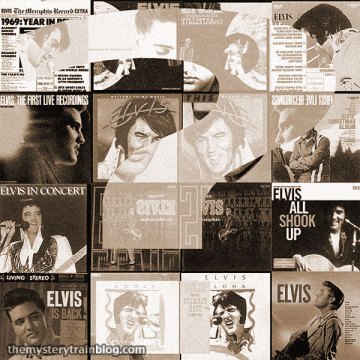
I spend much time on The Mystery Train giving my opinion of all things Elvis. Now, readers have a chance to stake out their own positions.

Introducing the Elvis Mania 2014 tournament. Sixty-four selections will compete for the title of Best Elvis Song, with readers of The Mystery Train choosing winners in each round. Voting begins tomorrow evening (March 18), so now is your chance to fill out a bracket and lock in your predictions using the link below.

Go to the Elvis Mania 2014 Tournament page on challonge.com

At the end of the tournament, the person with the highest score will receive a Sony Legacy Edition CD of an Elvis title, courtesy of The Mystery Train. The tie-breakers will be number of correct picks and order in which predictions were locked. Though I have created a predictions bracket for fun, the CD will simply go to second place should I happen to achieve the highest score.

Good luck!

Who will win Elvis Mania 2014?

Who will win Elvis Mania 2014?

Alan Leatherwood rocks on with TEX MEX BREAKAWAY

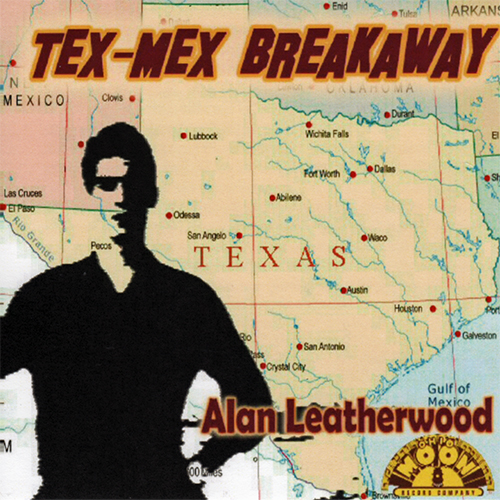
Cover of TEX MEX BREAKAWAY - Alan Leatherwood

Cover of TEX MEX BREAKAWAY – Alan Leatherwood (2013)

Tex Mex Breakaway, Alan Leatherwood’s new album, is available now in CD and digital from the independent Ohio Moon Record Company label.

Leatherwood specializes in rockabilly, folk, Tex Mex, and country music. He is also a virtual encyclopedia of musical knowledge for 1950s & 1960s recordings and artists.

Tex Mex Breakaway is a strong release that celebrates Leatherwood’s 50th year in the music business. He recently hit number one on the Cleveland Reverbnation Folk Charts.

As regular readers of this blog will know, I am a sucker for sad songs, so one of my favorites on this album is “How I Loved You And I,” which mourns the loss of a friend by celebrating time spent together.

“Voice Of An Angel” is another highlight, one of those songs that perfectly fit the mood of the after midnight to predawn hours. It features a haunting vocal by Leatherwood along with adept guitar work by the late Frank Parisi.

“Anita’s On My Mind” is a fun song led by the guitar of Paul Penfield. “We’re gonna rock it all night, we’ll make everything right,” sings Leatherwood, which sums up rock ‘n’ roll as well as any two lines can.

Other favorites include “Chance,” “Tell Me How,” and “Love You Till I Die.” The mark of a stellar album is that it just seems to get better with every play. Alan Leatherwood’s Tex Mex Breakaway is such an album. Be sure to check it out.

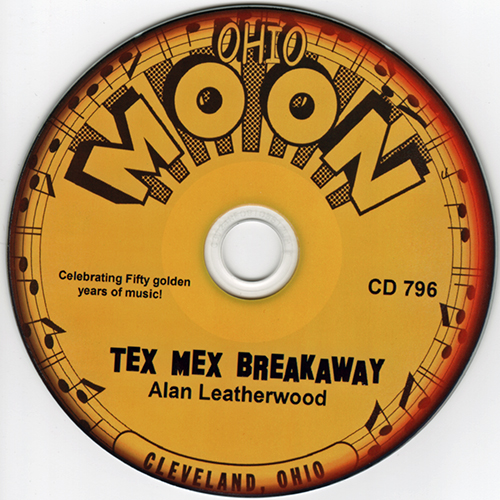
TEX MEX BREAKAWAY CD - Alan Leatherwood

TEX MEX BREAKAWAY CD – Alan Leatherwood (2013)

Tracks

01. Anita’s On My Mind (Leatherwood)
02. I’ve Had My Moments (Orbison/Melson/Rush)
03. My Baby’s Gone (Bowen)
04. Hickory Dickory Dock (Leatherwood)
05. No Teeth And All (Leatherwood)
06. Gotta Lotta That (Bedwell)
07. Loves Made A Fool Of You (Holly/Montgomery)
08. Breakaway (Leatherwood)
09. Paper Boy (Orbison)
10. Chance (Leatherwood)
11. White Bobby Socks (Owens)
12. Sentence Of Love (Leatherwood)
13. How I Loved You And I (Leatherwood)
14. Tell Me How (Allison/Holly/Petty)
15. What To Do (Holly)
16. I Gambled My Life On Rock And Roll (Leatherwood)
17. Love You Till I Die (Leatherwood)
18. Pearly Little Baby (Leatherwood)
19. Voice Of An Angel (Etherial)
20. I Wonder Why (Tharp/Tomsco)

Musicians

Vocals/Guitar: Alan Leatherwood
Drums: Max Bangwell (1-6, 8-10, 12, 15, 17-20), Bill “Smitty” Web (5, 7, 11, 16), Rick Harper (13, 14)
Bass (Acoustic): Randy Chestnutt (5, 11, 16, 19), Slaps Metzger (6, 9)
Bass (Electric): Rick Harper (1-4, 7, 8, 12, 13, 15, 16, 18), Frank Thedford (10, 14)
Lead Guitars (Electric): David Loy (3, 5, 7, 10, 18), Memphis Mike Metzger (4, 6, 11), Paul Penfield (1), Frank Parisi (16, 19), Ricky Santon (7, 10), Tom Fallon (8), Jeff Green (20), Alan Leatherwood (2, 15, 8, 17), Jimmy Murray (13, 14)
Piano/Keyboards: Bobbie Antes (1, 5), Don Heddesheimer (6, 10, 11, 20), Erich Overhultz (12, 13)
Harmonica: Rick Harper
Vocal Harmony: Jimmy Murray (14)

ELVIS RECORDED LIVE ON STAGE IN MEMPHIS Legacy Edition to include Richmond, Virginia concert

ELVIS RECORDED LIVE ON STAGE IN MEMPHIS (2014 Legacy Edition)

ELVIS RECORDED LIVE ON STAGE IN MEMPHIS (2014 Legacy Edition)

One of my favorite CD releases on the Follow That Dream collectors label for Elvis Presley fans is 2011’s Forty-Eight Hours To Memphis, which captures a March 18, 1974, concert that Elvis performed at the Richmond Coliseum in Virginia.

The confusing album title reflects that Elvis closed out his tour two days after the Richmond concert with a show in Memphis at the Mid-South Coliseum, portions of which became the 1974 album Elvis Recorded Live On Stage In Memphis. Elvis earned his third and final Grammy Award for his stellar performance of “How Great Thou Art” in Memphis on the original 1974 album.

The link between the two shows continues, for Sony announced last week that it will reissue the Richmond concert on the second disc of a Legacy Edition of Elvis Recorded Live On Stage In Memphis. While the FTD collectors label has very limited distribution, this new 2-CD release on the main Sony label hits mainstream retail stores on March 18, the 40th anniversary of the Richmond concert. Amazon and other outlets are accepting pre-orders now.

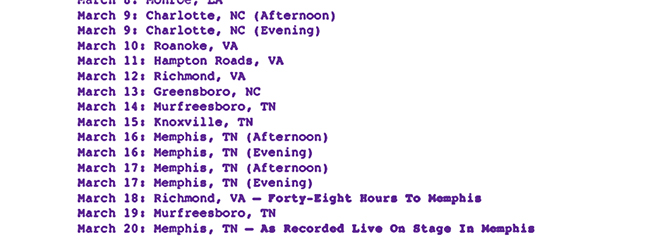
The Elvis Presley Show crisscrossed back and forth from Virginia to Tennessee on that leg of his tour. Tickets for his March 12 appearance at the Richmond Coliseum sold out so quickly that the tour was re-routed to accommodate a second show there on March 18. Elvis performed four shows in Memphis on March 16 and 17, hit Richmond, Virginia, again on March 18, and then returned to Tennessee for concerts in Murfreesboro and Memphis on March 19 and 20, respectively.

Elvis Presley's March 1974 tour schedule (partial)

Elvis Presley’s March 1974 tour schedule (partial)

For space considerations on the original LP, RCA edited several songs out of the March 20 Memphis concert for the 1-record release in July 1974. The album also featured overdubbed audience reactions that detracted from the sound quality. FTD restored the missing tracks and removed the unnecessary overdubs in a 2004 Classic Albums CD release of the concert, including a new mix. The same label also issued the expanded show in vinyl format as a 2-record set last year.

It turned out that RCA chose well in 1974 which performances to use on the original record, though. The performance quality of many of the excised songs was underwhelming, with the exception of a fine rendition of “Steamroller Blues,” first released on Platinum: A Life In Music over two decades later. The energetic Memphis version was superior to his live recording of the song in Hawaii that served as a single in 1973.

This new Elvis Recorded Live On Stage In Memphis Legacy Edition will also include the previously omitted songs, but whether a new or an existing mix will be featured is unclear.

In fact, Sony’s press release for this album is riddled with errors, an issue far too common these days in the marketing of Elvis music releases, so it is difficult to trust any of its statements. For that reason, I am not even including Sony’s alleged track listing at this point. Suffice it for now to say that Disc 1 will contain the Memphis show, while Disc 2 will contain the Richmond show and some low-fidelity bonus tracks recorded on a personal cassette player of Elvis rehearsing a few months later for yet another Las Vegas stint.

RCA professionally recorded the March 20 Memphis concert for the album project. It is a 16-track recording (audio elements recorded on separate channels) that can be tweaked for optimum sound quality. Though I enjoyed the 2004 FTD mix over the original 1974 version, another new mix could be revealing. The Memphis show is presented in stereo.

Though the background story remains mysterious, the March 18 Richmond concert was supposedly captured as a 16-track recording, too. If so, it remains missing from the Sony vaults – lost, stolen, or erased.

The Richmond concert audio source on both the 2011 and 2014 releases is a tape copy of a mono mix-down of the 16-track recording, with artificial reverb applied. In other words, no further changes can be made to the Richmond mix or reverb since the 16-track original is unavailable. The Richmond concert is not likely to sound very different from Forty-Eight Hours To Memphis on this reissue, if at all.

While Elvis’s sound engineers often made informal reference tapes of his shows from the soundboard mixing console, the Forty-Eight Hours To Memphis liner notes in 2011 only speculated about why RCA apparently recorded the Richmond concert in multitrack.

However, the 2014 Sony press release refers to the Richmond show as a “test run concert” for the subsequent Memphis recording. Some have theorized that the test copy is in mono due to Elvis’s preference for that format over stereo, though his previous live albums had been stereo releases. Perhaps the accompanying Legacy Edition booklet will reveal new information.

Elvis at the Richmond Coliseum, March 18, 1974 (FTD)

Elvis at the Richmond Coliseum, March 18, 1974 (FTD)

In the years leading up to 1974, many of Elvis’s concerts were superior to this particular show in Richmond. However, as with the Memphis show, the fun concert features Elvis in a fantastic mood interacting with fans. Music highlights in Richmond include “Steamroller Blues,” “Polk Salad Annie,” and “Suspicious Minds.”

Over the course of 21 years, Elvis performed 15 concerts in Richmond. The 14th of these shows was captured on Forty-Eight Hours To Memphis and, from what I have read, this was Elvis’s last great concert in Richmond. He performed in Richmond one final time in 1976, but, by that point, his rising prescription drug addiction and abuse had diminished the power of his shows. Therefore, I consider the March 18, 1974, appearance to be Elvis’s true “last hurrah” in Richmond.

Legacy Questions

I am looking forward to the reissues of both the Richmond and Memphis concerts. Despite my personal enthusiasm as an Elvis fan, I find myself wondering whether these two concerts are appropriate choices for mainstream release in 2014.

I fear that the repetitive nature of these shows compared to other recent Sony releases will use up some of the goodwill shown by music critics in reviews of Elvis At Stax, Prince From Another Planet, and certain other titles released in the last few years.

Will mainstream critics and listeners understand Elvis’s sense of humor? For instance, will some misinterpret his joke in Richmond about it being a pleasure to be back in Hampton Roads as an out-of-it singer not knowing which town he was playing?

By following up 2012’s As Recorded At Madison Square Garden reissue with 2013’s Aloha From Hawaii via Satellite reissue and now 2014’s Elvis Recorded Live On Stage In Memphis reissue, is Sony simply committing the same release blunders in the 2010s that RCA made in the 1970s? Has locking into an “anniversary” theme for release choices doomed them to repeat history’s mistakes going forward?

Keep in mind that the 40th anniversary of Having Fun With Elvis On Stage is later this year as well.

All Those Lonely Times: Elvis Presley’s 20 Best Country Songs

“You see, country music was always a part of the influence on my type of music, anyway. It’s a combination of country music and gospel and rhythm & blues. All combined, that’s what it really was. As a child, I was influenced by all of that. […] Of course, the Grand Ole Opry was the first thing I ever heard, probably, but I liked the blues, and I liked the gospel music – gospel quartets and all that.” –Elvis Presley, 1970

Elvis at the Houston Astrodome, 1970

Elvis discussing country music at the Houston Astrodome, 1970

Elvis would have turned 79 today. In honor of the anniversary of his birth, here is a ranking of what I consider his 20 best country music recordings.

#1 Always On My Mind [Rehearsal] (1972)
This Is Elvis
Other notable version: 1972 Master (Separate Ways)

#2 Tryin’ To Get To You (1955)
Elvis Presley
Other notable performance: 1968 Live [rock ‘n’ roll version] (A Life In Music)

#3 I Really Don’t Want To Know (1970)
I’m 10,000 Years Old: Elvis Country
Other notable versions: 1970 Undubbed Master (I’m 10,000 Years Old: Elvis Country [2008 FTD Edition]), 1977 Live (Elvis In Concert)

#4 Kentucky Rain (1969)
Worldwide 50 Gold Award Hits, Volume 1
Other notable version: 1970 Live (Elvis Aron Presley)

#5 Tomorrow Never Comes (1970)
I’m 10,000 Years Old: Elvis Country
Other notable version: 1970 Take 2 (The Nashville Marathon)

#6 Funny How Time Slips Away (1970)
I’m 10,000 Years Old: Elvis Country
Other notable versions: 1969 Live (Today, Tomorrow & Forever), 1972 Rehearsal (Elvis On Tour: The Rehearsals)

#7 Don’t Cry Daddy (1969)
Worldwide 50 Gold Award Hits, Volume 1
Other notable versions: 1970 Live (Greatest Hits, Volume One), 1970 Live (Polk Salad Annie)

#8 Guitar Man (1967)
Clambake
Other notable performances: 1967 Undubbed/Unedited Master (Elvis Sings Guitar Man), 1968 Re-recording [rock ‘n’ roll version] (ELVIS-TV Special [Track 1]), 1968 Live [rock ‘n’ roll version] (Burbank 68), 1967 Take 5 (Elvis Sings Guitar Man)

#9 Early Morning Rain (1971)
Elvis Now
Other notable version: 1973 Re-recording (Mahalo From Elvis)

#10 Bringing It Back (1975)
Today

#11 Separate Ways (1972)
Separate Ways
Other notable version: 1972 Rehearsal (Elvis On Tour: The Rehearsals)

#12 It’s Midnight (1973)
Promised Land

#13 Good Time Charlie’s Got The Blues (1973)
Good Times
Other notable versions: 1973 Undubbed/Unedited Master (Good Times [2009 FTD Edition]), 1973 Take 7 (Good Times [2009 FTD Edition])

#14 You Don’t Know Me (1967)
Clambake

#15 Long Black Limousine (1969)
From Elvis In Memphis

#16 Pieces Of My Life (1975)
Today
Other notable version: 1975 Rough Session Mix (Today [2005 FTD Edition])

#17 Make The World Go Away (1970)
I’m 10,000 Years Old: Elvis Country
Other notable versions: 1970 Take 3 (Welcome To My World), 1970 Live (That’s The Way It Is [2000 Special Edition])

#18 For Ol’ Times Sake (1973)
Raised On Rock

#19 Clean Up Your Own Backyard [Undubbed Master] (1968)
Double Features: Live A Little, Love A Little/Charro/The Trouble With Girls/Change Of Habit
Other notable versions: 1980 Remix (Guitar Man), 1968 Master (Almost In Love)

#20 You Asked Me To [Take 2B] (1973)
Rhythm & Country
Other notable version: 1973 Master (Promised Land)

* * *

While it is fun to make themed lists, a performance does not always fit within a definitive genre, particularly when it comes to Elvis music. Some of these selections, therefore, may not be considered “strictly country.” When in doubt, refer to the Elvis quote at the top of this post.

Happy Elvis Day 2014, everyone! May the Music be with you, always.

“Elvis Song Of The Year” for 2013

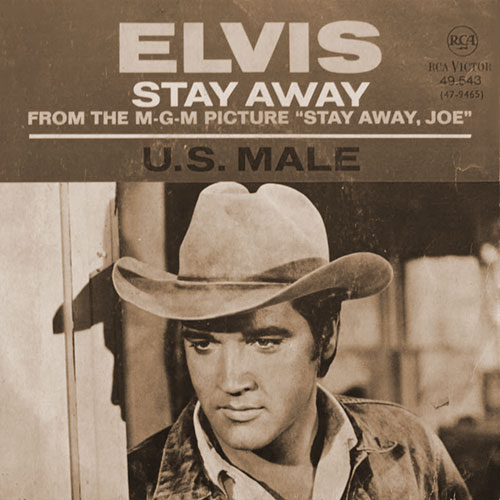
According to iTunes, out of 3,572 unique Elvis tracks in my collection, the one I played most often in 2013 was “Stay Away,” the flip side of “U.S. Male” in 1968. I played the track 22 times.

Based on the traditional melody of “Greensleeves,” which also inspired the 19th century Christmas classic “What Child Is This,” “Stay Away” played over the opening titles of Stay Away, Joe, Elvis’ 26th movie.

Considering how little time I have had for this blog lately, “Stay Away” indeed seems like the perfect Elvis song to represent 2013 for me.

Stay Away (1968)

Stay Away (1968)

I listened to 8,499 Elvis songs using iTunes or my iPods in 2013 (including duplicates). That is an average of 23 Elvis songs a day. I listened to 2,353 different Elvis tracks during the year.

Out of 3,700 non-Elvis tracks in my collection, my most played piece in 2013 was Michael Giacchino’s “Spock Drops, Kirk Jumps,” from his 2013 Star Trek Into Darkness film score. I played that one 26 times.

Among vocal performances, the non-Elvis track I played most was 2008’s “All I Want” by Darius Rucker (20 plays), from his Learn To Live album.

Overall, I listened to 12,629 songs using iTunes or my iPods this year. That works out to 35 songs a day.

* * *

Thank you for reading. May 2014 be your best year yet!

In The Station/The Season Of Light

“It was the best of times, it was the worst of times….”

The Mystery Train is currently on hiatus while I am busy in the offline world. I hope to return in 2014 with some occasional posts.

Until that time, here’s hoping you have a Wonderful Christmas and a Merry New Year!

Elvis rehearsing in 1970

Elvis rehearsing in 1970

iTunes Speedway: Race for the Elvis Cup

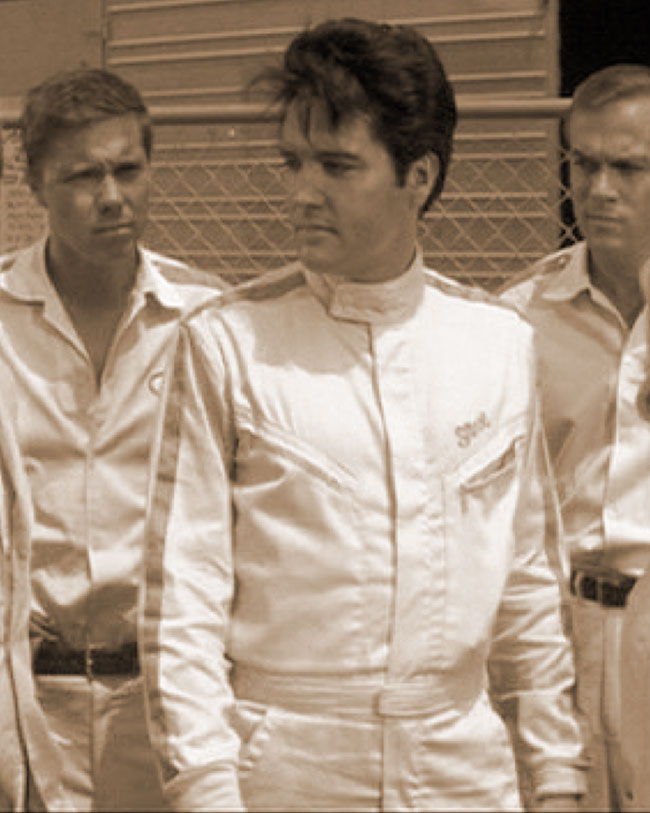
Elvis Presley is Steve Grayson in SPEEDWAY (1968)

Elvis Presley is Steve Grayson in SPEEDWAY (1968, MGM)

On the iTunes Speedway

Ever since I finished backing up all of my Elvis music to iTunes, I have been wanting to do some number-crunching. I usually rate a song when I first place it on iTunes, using the built-in star ratings of 1-5 (I reserve 0 stars to mean “not yet rated”). I then update the rating, if necessary, whenever the track plays.

For updates, I only allow myself to move the song one star rating in either direction per play. That way, if I am in an extremely bad or good mood, it will not overly influence the rating of a given song.

I now have nearly five years worth of data about how I really feel about the songs within my Elvis collection. This will allow me to determine which individual years and multi-year spans are truly my favorites, at least according to the numbers.

My Picks

Before crunching those numbers, though, I used my heart to answer some basic questions. I thought this would make for an interesting comparison against the iTunes race results.

Favorite Elvis Year: 1970
Top Five Elvis Years: 1970, 1968, 1969, 1957, 1955
Favorite 5-year Elvis Span: 1968-1972
Elvis Decade Ranking: 1970s, 1950s, 1960s

Race for the Elvis Cup: The Rules

For this analysis, I eliminated any years for which I had less than 40 Elvis tracks. This resulted in the removal of 1953 (2 tracks) and 1959 (19 tracks). I also eliminated all non-musical tracks (e.g., “Introductions By Elvis,” “Elvis Talks”).

For each of the remaining 23 years, I determined the average star rating for all applicable tracks. I also determined the percentage of tracks from that year that earned a perfect 5-star rating. For instance, the results for 1956 were:

1956
Total Tracks: 164
Average Rating: 3.91 (out of 5)
Perfect 5-star Tracks: 40.24%

The year with the highest average rating received 23 points on down to the year with the lowest average rating, which received 1 point. I then applied this same logic down the line by year for the percentage rankings for perfect 5-star tracks.

This gave each year a score ranging from a low of 2 to a high of 46. However, there were several ties down the line. The tie-breakers were:

1.) Average Rating (i.e., the tied year with the highest average rating wins the position)
2.) (If necessary) Perfect 5-Star Tracks (i.e., the year with the highest 5-star tracks percentage wins the position)

Victory Lane

The results were interesting. Leading the pack was the year 1968, with a perfect score of 46 points.

Nearly 85% of the Elvis tracks I had from 1968 were connected to the ELVIS television special project in some way, so that definitely helped stack the deck. Among them were “If I Can Dream,” one of my all-time favorite songs, and other tracks from Memories: The ’68 Comeback Special, a stellar album that includes the full June 27, 6 PM “Sit Down” show.

Top Five Elvis Years
#1 1968 (46 points)
#2 1970 (43 points, wins 2nd position over 1969 on Average Rating tie-breaker)
#3 1969 (43 points)
#4 1967 (38 points)
#5 1955 (37 points, wins 5th position over 1957 on Average Rating tie-breaker)

The real surprise for me was 1967 making the Top Five. Highlights for 1967 included the September sessions in Nashville that produced standouts like “Guitar Man,” “You’ll Never Walk Alone,” and “You Don’t Know Me.” In fact, alternate takes from that session, many of which are collected on FTD’s Elvis Sings Guitar Man, helped propel 1967 ahead due to the number of five-star ratings.

1965 came in last place, with a minimal score of 2 points (no surprise there). I was surprised that 1977 (5 points) was not able to overtake 1964 (8 points) and wound up as Elvis’ second-worst year.

5-Year Mission

I was also interested in determining my favorite 5-year span. As noted above, I usually say my favorite Elvis time period is 1968-1972, with 1954-1958 running a close second. How did the numbers match against my picks?

To my surprise, it turned out that my favorite 5-year Elvis span was actually 1966-1970, which came in at a whopping 198 points. 1968-1972 earned a collective 183 points, while 1954-1958 came in at 146 points. In other words, this race was not even close.

I often state that the opening salvos of Elvis’ comeback were actually fired in 1966 during the How Great Thou Art sessions, so perhaps I should have seen this coming. 1969 included the Memphis sessions that produced “Suspicious Minds,” “Kentucky Rain,” and “In The Ghetto,” his return to live performances, and even a strong soundtrack on the Change of Habit film. 1970 featured the That’s The Way It Is project, including the Nashville sessions, the summer rehearsals, and the August live performances.

The five-year span that earned the least points was 1961-1965, with a combined total of only 50, barely more than the single year of 1968.

Elvis Decades

Now, to answer that age-old question, what is your favorite Elvis decade? Though 1964 and 1965 are hard to love, I otherwise enjoy Elvis’ entire career. When pressed, however, I state that my favorite decade is the 1970s. What did the numbers say?

Again, they proved me wrong. The 1950s won out, with an average of 29.2 points. Second place was the 1970s, well behind at an average of 22.88 points. This barely edged out the 1960s, which had an average of 22.3 points.

Elvis professionally recorded during only five years in the 1950s, and the quality of his output was much more consistent in that time than in the 1960s and 1970s. The 1970s were brought way down by outliers like 1977 (5 points) and 1974 (10 points), while the same occurred for the 1960s with 1965 (2 points), 1962 (8 points), and 1964 (8 points). However, even the 1950s had its own outlier of 1958 (10 points).

Awarding the Elvis Cup

The analytical side of my personality loved reviewing these numbers. The emotional side of me, though, still believes that 1970 is my favorite Elvis year, no matter what iTunes says.

For me, feelings always rule out in the end, so the Elvis Cup is hereby awarded to 1970, the reigning champion.