‘Elvis Country’ lives on in the 1990s [The Elvis Beat newsletter]

I was 20 when I wrote this piece back in 1995 for The Elvis Beat #11, my official Elvis Presley Fan Club newsletter. You can save your Elvis stamps, as there is no need to send any letters. Spoiler alert: Elvis would be inducted into the Country Music Hall of Fame in 1998.


When Elvis Presley first started in the music business, he owed country music a small debt of gratitude, for his rockabilly style had been derived from a combination of country, rhythm & blues, and gospel music. Forty-one years later, it is country music that owes Elvis Presley a debt of gratitude.

At the Country Music Hall of Fame & Museum in Nashville, there are many Elvis items on display. However, despite these exhibits, Elvis has not been inducted into the Country Music Hall of Fame.

There was never any doubt that Elvis would become a part of the Rock ‘n’ Roll Hall of Fame, and indeed he was among the first so honored. But has Elvis contributed enough to country music to become a part of that hall of fame as well?

From the very beginning, Elvis’ music was recognized on the Billboard country charts. In fact, Elvis achieved his first top ten hit on any chart when “Baby, Let’s Play House” hit #10 on the Country Best-Seller chart and #5 on the Country Disc Jockey chart in July 1955. Elvis was four months away from signing with RCA and was still recording on Memphis’ Sun record label.

Many have been led to believe that “Heartbreak Hotel” was Elvis’ first number one hit, however his first number one was actually an RCA re-issue of “I Forgot To Remember To Forget,” which topped both the Country Best-Seller and Country Disc Jockey charts in February 1956.

Over the years, Elvis has scored 29 top ten hits on the country charts, including 11 number ones. Appropriately, Elvis’ last number one hit on any chart occurred in 1981 when a re-mix of his “Guitar Man” attained the position on the Country chart.

Although influenced by country music, most of Elvis’ 1954-1960 recordings were either rockabilly or rock ‘n’ roll songs. For most of the 1960s, Elvis’ music suffered since many of his releases were from the frequently poor soundtracks of his movies. His non-soundtrack material, which included gospel and slow-tempo songs, was notable but often lost among the enormous number of movie tunes. With the advent of the Beatles and others, rock music drastically changed, and it seems Elvis never truly identified with it again.

In September 1967, Elvis began to rebuild his music career and the logical place to start was by returning to his country roots. At the Nashville recording session, with country legend Jerry Reed on lead guitar, Elvis sounded better than ever. His selection of songs included “Guitar Man” and “Just Call Me Lonesome” and indicated a new direction for him.

From this point on, Elvis began leaning more towards recording country-type songs in his own unique style, rather than catering to the rock or even country music of the day. Elvis pointed out in 1970 that he did not consider himself strictly a country music singer, and he certainly was not. He continued to record pop, gospel, rhythm & blues, as well as the occasional rock ‘n’ roll song.
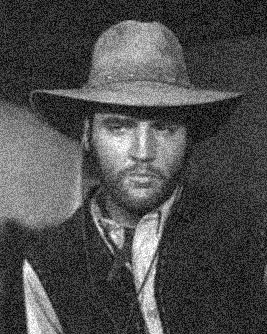
Elvis Presley in 1968. Although he has 29 top ten hits on BILLBOARD's country charts, he is not a member of the Country Music Hall of Fame (Original Photo Credit: Greg Howell/GRACELAND EXPRESS)

Elvis Presley in 1968. Although he has 29 top ten hits on BILLBOARD’s country charts, he is not a member of the Country Music Hall of Fame (Original Photo Credit: Greg Howell/GRACELAND EXPRESS)

However, the majority of Elvis’ 1967-1976 studio recordings could be considered country songs, or at least derived from the style. These recordings really did not quite fit the label of “country” in the 1970s, for once again Elvis had redefined music and was ahead of the times.

Although he was among its early pioneers, Elvis’ influence on modern rock music is not often easily detected. Rock has gone off on its own and often takes paths that Elvis probably would have avoided.

It is modern country music in which Elvis’ influence can still loudly be heard. His music from the last ten years of his life has grown into today’s country music. Indeed, many of its greatest stars often acknowledge Elvis as an influence, including Garth Brooks, Vince Gill, Travis Tritt, Trisha Yearwood, Ricky Van Shelton, Ronnie McDowell, Aaron Tippin, Patty Loveless, Dwight Yoakam, Tanya Tucker, Billy Ray Cyrus, Mark Chesnutt, Pam Tillis, Marty Stuart, Faith Hill, Doug Supernaw, Wynonna Judd, and the Mavericks. Although Elvis has been gone for almost 18 years, these stars and others continue to incorporate parts of Elvis’ style into their own.

Elvis has found a home in modern country music. He has been accepted by both its performers and its fans at a time when he is often shunned by others. It is time to make this home a permanent one.

In 1954, Elvis was rejected by the Grand Ole Opry. Will the Country Music Hall of Fame make the same mistake?


Join the campaign

Don’t let the Country Music Foundation continue to gloss over Elvis and his achievements. The Foundation will ultimately decide if Elvis will be inducted into the Country Music Hall of Fame. Write them a letter today expressing your opinion. The address is: [. . .].

Is the 70s stamp coming soon? [The Elvis Beat newsletter]

I was 19 when I wrote this article back in 1994 for The Elvis Beat #8, my official Elvis Presley Fan Club newsletter.


The 70s Elvis stamp may be released as soon as 1995 if a growing number of fans have their way with the US Postal Service. In April 1992, the stamp was defeated by a 3-to-1 margin in favor of the 50s Elvis stamp that was released in January 1993. The 70s stamp, also known as “Stamp B,” was painted by artist John Berkey and depicts Elvis as he appeared in 1973’s televised concert Aloha From Hawaii.

The stamp was severely criticized by the news media and others who unfairly called it the “Old, fat Elvis.” Berkey defended his stamp by stating, “I understand what happened, the negative feelings. But I painted the King. That other guy is the prince. The fanatical fans like the 70s one. And as a matter of fact he weighed 160 pounds and he was 38 years old (at the time of Aloha From Hawaii). That’s not fat, and that’s not old.” [. . . .]

A record 500,000 of the 50s Elvis stamps were printed and all were sold out in days, making them the most successful stamps in history. Since most of the stamps will be kept by fans or collectors and will never actually be used in the mail, the Postal Service has made an incredible profit from them.

Additionally, the Postal Service has profited from the marketing of the stamp image, which has appeared everywhere on hundreds of items for sale. Economically, the Postal Service could make millions more if another stamp were released so there probably is a fair chance it will happen as long as fans show support.

Over a quarter of a million people voted in favor of the 70s stamp, which artistically was a better representation of Elvis anyway. [. . . .]

Review – ELVIS AND THE COLONEL: THE UNTOLD STORY (1993) [The Elvis Beat newsletter]

I was 18 when I wrote this review back in 1993 for The Elvis Beat #4, my official Elvis Presley Fan Club newsletter.


Elvis And The Colonel: The Untold Story (NBC), starring Beau Bridges, directed by William A. Graham, aired January 10, 1993.

Elvis And The Colonel: The Untold Story is a story that should have remained untold. Not only is this the worst movie ever made about Elvis, but this is also probably the worst movie ever.

The initial concept behind this television movie was actually a good idea – an examination of the well-documented mismanagement of Elvis’ career by Colonel Tom Parker. But the end result is an absolute failure.

Elvis And The Colonel is one big mistake after another. A listing of some of the many factual errors contained in this movie appears on page 5 of this newsletter.

The biggest mistake of all occurred in the casting department when Robb Youngblood was chosen to play “Elvis.” Youngblood does not bear the slightest resemblance to Elvis, so one can only assume that he was selected for his acting ability. The problem with that theory is that [. . .] at no time during the entire two-hour movie is he convincing as “Elvis.” [. . . .]

It is also obvious that no effort was made to make Youngblood look like Elvis. Throughout the 22 years of “Elvis”‘ life that this movie portrays, Youngblood wears basically the same hairstyle–even while in the Army. It looks awful and resembles none of the many different styles Elvis wore his hair in over the years.

Youngblood’s clothes in the movie look so cheap that even the local [discount store] would be embarrassed to sell them. Once again, they resemble nothing the real Elvis ever wore. The styles may have changed since his time, but Elvis never looked cheap the way Youngblood does.

All of these cosmetic problems could have been overlooked had Elvis And The Colonel been a good story but, as mentioned before, it is filled with errors. And even beyond those errors, the script is poorly written and the entire movie is poorly made. [. . . .]

Beau Bridges, who was obviously chosen only to draw more viewers, stars as “Colonel Parker” and does a poor job also, but in a different way than Youngblood. Bridges makes the Colonel appear too likable and too nice, defeating the purpose of the movie.

Youngblood seems to have accidentally studied Gomer Pyle videos instead of Elvis ones for his part, for he plays Elvis as an extremely stupid fool – which could not be further from the truth.

Appropriately, even the house that is supposed to be Graceland looks nothing like the real thing.

The ELVIS television special, or the ’68 Comeback Special as it has come to be known, featured Elvis in top form. Of course, this movie slaughters this as well. One of the most ludicrous moments in the movie, and there are many, occurs when Youngblood is shown standing in front of a series of waist-high letters that spell “ELVIS” in red lights. The real version was over two stories tall and looked much better.

One of the many myths that Elvis And The Colonel perpetuates is everyone’s old favorite: “Elvis” appears overweight throughout the 1970s in this movie while the real Elvis did not begin to experience significant weight problems until about two years before his death. Youngblood is shown obese by 1971, while the real Elvis at the time was in shape and would remain so for a few more years. Of course, in such an inaccurate movie, such mistakes are not surprising.

Half of the “Elvis” songs used in the movie were apparently taken from Ronnie McDowell’s work for the 1979 television movie Elvis, starring Kurt Russell, and not surprisingly, Youngblood does a poor job lip-synching to them. The rest of the songs were performed by Youngblood himself and are awful. One particularly bad scene uses a combination of McDowell’s and Youngblood’s vocal tracks.

The most surprising thing about this movie is that Dick Clark was its executive producer. Clark also executive produced the Kurt Russell Elvis movie, directed by John Carpenter, which is one of the better movies based on Elvis’ life.

With this new movie, Clark has gone wrong. He has stated his respect for Elvis in the past and his disdain for the Colonel, but this movie serves only to slam Elvis instead of its intended target.

Incidentally, Elvis And The Colonel was directed by William A. Graham, who directed the real Elvis in Change Of Habit, which was one of Elvis’ better films.

It is apparent that no one connected with this movie bothered to do any significant research about its topic. It is also apparent that the movie’s production was rushed, probably to have it ready in time to cash in on the free publicity of the Elvis stamp release two days prior to this movie airing. They need not have bothered, for The Carol Burnett Show: A Reunion special beat it soundly in the ratings.

The worst part about Elvis And The Colonel: The Untold Story is that some people, who knew nothing about Elvis, probably watched this irresponsible movie and now think that this is what Elvis was really like.

Songs include:

  • “Lawdy, Miss Clawdy”
  • “Rip It Up”
  • “Tutti Frutti”
  • “Long Tall Sally”
  • “Heartbreak Hotel”
  • “Trouble”
  • “Blue Moon Of Kentucky”
  • “Are You Lonesome Tonight”
  • “The Wonder Of You”
  • “Dixie/The Battle Hymn Of The Republic”

Rating: 1 out of 10

Review – ELVIS: THE EARLY YEARS (1993) [The Elvis Beat newsletter]

I was 18 when I wrote this review back in 1993 for The Elvis Beat #4, my official Elvis Presley Fan Club newsletter.


Elvis: The Early Years (ABC/TNT), starring Michael St. Gerard, various directors. Original Elvis series airdates: February–May 1990 (ABC). Mini-series edit airdates: January 6 (Part I) and 7 (Part II), 1993 (TNT).

TNT obtained the rights to air the 13 half-hour episodes of the 1990 ABC television series Elvis, edited them together, and aired them earlier this year as the two-part mini-series Elvis: The Early Years. Three of these episodes were previously unaired in any form due to the untimely cancellation of the 1990 Elvis series.

Elvis: The Early Years – Part I encompasses the episodes:

  • “Money Honey”
  • “The Storm”
  • “The Locket”
  • “Bel-Air Breakdown”
  • “Moody’s Blues”
  • “Hole In The Pocket”

Elvis pays to record a record for his mother, which eventually leads to his discovery. He joins forces with guitarist Scotty Moore and bassist Bill Black, and together they record “That’s All Right,” Elvis’ first release. The single becomes popular regionally and they go on several concert tours, causing friction between Elvis and his fictional girlfriend, Matti Walker.

Elvis purchases the famous pink Cadillac for his mother with his first royalty check from “That’s All Right.”

Elvis: The Early Years – Part II encompasses the episodes:

  • “Roots”
  • “Grand Ole Opry”
  • “Sun Sessions”
  • “Four Mules”
  • “The Old Man”
  • “Bodyguards”
  • “Let It Burn”

Elvis appears on the Grand Ole Opry radio program and is told to “stick to driving a truck,” an incident which haunts him and almost causes him to give up his singing career.

Elvis recovers and they continue to tour. They are booked on the Louisiana Hayride, another Southern radio program, and later sign to appear weekly. With the increased exposure, Elvis’ popularity continues to rise and, as it does, his problems with Matti escalate as well.

When Matti decides to marry another man, an enraged Elvis drives the Cadillac until the wheel bearings go out and the car burns.

Elvis: The Early Years is the best fictional production ever about Elvis. Michael St. Gerard is near-perfect as Elvis. Ronnie McDowell’s “Elvis” singing vocals are as authentic as the actor who lip-synchs to them.

The rest of the cast is delightful as well. Billy Green Bush reprises his role of Vernon Presley from the Elvis And Me mini-series. Millie Perkins, who appeared with the real Elvis in the 1961 movie Wild In The Country, portrays Gladys Presley.

Besides St. Gerard, two other actors bear strong resemblance to their real-life counterparts: Jordan Williams plays Sam Phillips and Jesse Dabson plays Scotty Moore.

Blake Gibbons brings humor to the show as Bill Black. Finally, the talented and beautiful Kelli Williams plays Matti Walker.

The entire cast does a fine job, which is rare for a fictional production about Elvis, since most have featured some of the worst actors and actresses ever seen.

Unfortunately, Elvis: The Early Years has no conclusion since the 1990 Elvis series was never completed.

Songs include:

  • “All Shook Up”
  • “Harbor Lights”
  • “That’s All Right”
  • “That’s When Your Heartaches Begin”
  • “Good Rockin’ Tonight”
  • “Since I Met You Baby”
  • “Milkcow Blues Boogie”
  • “Tryin’ To Get To You”
  • “So Glad You’re Mine”
  • “Mystery Train”
  • “Lawdy, Miss Clawdy”
  • “Baby, Let’s Play House”
  • “I Got A Woman”
  • “I’m Walkin’ The Floor Over You”
  • “Blue Moon Of Kentucky”
  • “I’ll Never Let You Go”
  • “Blue Moon”
  • “You Belong To Me”
  • “Satisfied”
  • “Shake, Rattle, and Roll”
  • “Tweedlee Dee”
  • “The Mess Around”
  • “Pledging My Love”

Rating: 8 out of 10

Elvis and the Colonel: The Way It Was [The Elvis Beat newsletter]

I was 18 when I wrote this article back in 1993 for The Elvis Beat #4, my official Elvis Presley Fan Club newsletter.


One mistake after another occurred in the NBC television movie Elvis and the Colonel: The Untold Story, which aired in January. On the rare occasions when the movie’s makers did decide to check their sources, it appears the only reference they bothered to use was the 1979 TV movie Elvis starring Kurt Russell and directed by John Carpenter.

Below is a listing of some of the many factual errors which appeared in Elvis and the Colonel:

  • “Elvis” is shown giving his mother a pink cadillac after they were already living at Graceland. In reality, Elvis gave her the car in 1956, while they did not move into Graceland until May 1957.
  • “Elvis” is shown in Elvis and the Colonel filming the movie Change of Habit in the 1950s. In actuality, Change of Habit was filmed in 1969 and was his last acting role.
  • “Colonel Parker” mentions that “Elvis”‘ gold cadillac could be toured while he was in the Army. The real Elvis did not even purchase the gold car until after his service in the Army.
  • Preparations for the taping of the 1968 ELVIS television special (now known as ELVIS: ’68 Comeback Special) are shown occurring in November of 1968. In reality, the special was taped in June of 1968.
  • The ELVIS special is a live broadcast in the movie. In actuality, ELVIS, as mentioned above, was taped in June 1968 and did not air until December of that year. It was the 1973 television special Elvis: Aloha From Hawaii that was broadcast live to some locations around the world.
  • “Elvis” is shown singing “Are You Lonesome Tonight” in a white, double-breasted suit during the ELVIS television special. In reality, “If I Can Dream” was the only song Elvis performed in the special wearing that suit.
  • “Heartbreak Hotel” in the movie concludes the ELVIS special. In actuality, “If I Can Dream” was the final song sung by Elvis in the special.
  • “Also Sprach Zarathustra” (theme from 2001: A Space Odyssey) opens “Elvis”‘ opening night performance in July 1969 at the Las Vegas International Hotel in the movie. The fact is, the real Elvis did not begin using “Also Sprach Zarathustra” until 1971.
  • “Elvis” wears a white jumpsuit for the July 1969 opening performance in the movie. In reality, Elvis wore a simple black outfit for his first concert in years. The jumpsuit worn by the actor is a distorted version of one worn by Elvis in the film Elvis: That’s The Way It Is, which was from an August 1970 performance.
  • “Elvis” sings “The Wonder Of You” at the 1969 concert in the movie, while the song was not really performed by Elvis until 1970.
  • “Elvis” is shown extremely overweight by September of 1971 in the movie, which escalates until a 1973 performance in which he appears obese. In reality, Elvis was at or near his ideal weight during these years, as proven by video and photographs.
  • “Elvis” is shown in the movie complaining to “Colonel Parker” about turning down A Star Is Born in August 1973. In actuality, Elvis had not yet been offered a role in this 1976 movie.
  • “Elvis” and “Priscilla” never divorce in the film! Despite the fact that the real couple divorced in October 1973, the movie “Elvis” tells of a nightmare in July 1976 in which he dreamed that “Priscilla” had left him. In a 1981 courtroom scene, the judge refers to “Elvis” as “Priscilla”‘s late “husband,” instead of “ex-husband.”

Return to Sender [The Elvis Beat newsletter]

I was 18 when I wrote this piece back in 1993 for The Elvis Beat #4, my official Elvis Presley Fan Club newsletter.


After the release of the Elvis stamp in January, it appears that many Elvis fans spontaneously came up with the same idea. The US Postal Service noticed a significant increase in the number of letters which could not be delivered, and thus had to be marked “Return To Sender.” Elvis fans have been affixing the stamp to envelopes made out to phony addresses in order to receive a special, one-of-a-kind collectible when the letter was returned. “Return To Sender” was a number two hit for Elvis in 1962 and was written by Otis Blackwell and Winfield Scott.

Here is a sample, fake address fans may want to use:

Elvis Presley
Heartbreak Hotel
1835 Lonely Street
Nothingville, Kingrock 81677

Although not quite true to the lyrics of the song, my letter came back marked: “Returned to Sender. No such street. No such number. No such office.”

Elvis Who? [The Elvis Beat newsletter]

I was 18 when I wrote this article back in 1993 for The Elvis Beat #4, my official Elvis Presley Fan Club newsletter.


The Elvis stamp will be returning to post offices in June as part of the Rock ‘n’ Roll Music/Rhythm ‘n’ Blues stamp booklet. This Elvis stamp will be slightly different than the one issued in January. While the image of Elvis will remain the same, the new stamp will read “Elvis Presley” instead of just “Elvis” as it appeared on the original.

Also to be featured in the booklet are: Buddy Holly, Bill Haley, Ritchie Valens, Otis Redding, Dinah Washington, and Clyde McPhatter.