That’s The Way It Is reveals a different side of Elvis

My favorite album released during Elvis Presley’s lifetime is That’s The Way It Is. First hitting record stores in November 1970, it features studio material from his June recordings in Nashville as well as four live cuts from his August Las Vegas engagement. It serves as a soundtrack of sorts for the excellent documentary of the same name, also released that month.

Despite the status I give it, the album is not perfect. Rock ‘n’ roll fans sometimes dismiss it as an easy-listening bore. One of the causes of that issue, I believe, is the sequencing of songs. Many of them should have been presented in a different order. For instance, the album unfortunately begins with a live version of the sleepy B.J. Thomas hit “I Just Can’t Help Believin'” and establishes the wrong tone.

Adding to the trouble, two of the live performances, “Patch It Up” and “I’ve Lost You,” are not as powerful as their studio counterparts, which should have been used instead. The studio recordings had been released as singles prior to the album, so the live versions were likely considered bonuses for fans that already had the 45s. The artistry of the album should have taken priority, though.

Apparently to complete the “feel” of a live album, RCA overdubbed applause on the end of the studio version of “Bridge Over Troubled Water,” which closed out That’s The Way It Is. Elvis’ vocals on the first verse of the song are also very faint in the mix, either on purpose or due to a technical glitch. You can better hear Elvis’ beautiful performance of this song, with his voice louder on the first verse and without the annoying applause overdubs, on Heart & Soul and the Elvis: Walk A Mile In My Shoes-The Essential 70s Masters boxed set.
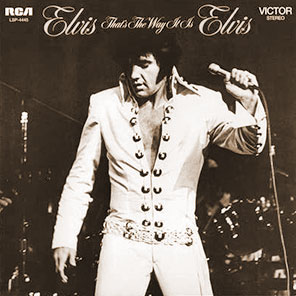
That's The Way It Is (1970)

Side 1

“I Just Can’t Help Believin'”
Live Master–8/11/1970 Dinner Show (DS): As noted above, the song does not serve well as an album opener. While it is misplaced on the album, the performance is strong. I love the little traces of humor in his voice. He sounds on the verge of laughing a couple of times. Also memorable is his interaction with the Sweet Inspirations throughout (“Sing the song, baby”). Elvis would never be quite as incredible again live as he was in this engagement.

“Twenty Days And Twenty Nights”
Master–Take 9: For me, this song represents the adult Elvis, the recording artist that is too often overlooked. “Twenty Days And Twenty Nights” is about a man who regrets leaving his wife, and Elvis evokes this character through music as well as any actor could on screen. The performance plays through the range of emotions, even striking a hopeful tone (“One day soon I’m going back…”) before falling back into despair as he laments “Oh, how I miss her,” over and over at the end.

“How The Web Was Woven”
Master–Take 3: The highlight of the album, “How The Web Was Woven” is a love song that ranks right up there with the better-known “Can’t Help Falling In Love.” From the acoustic guitar opening to the accompanying piano, the arrangement on this one works very well. “At last, I’m where you want me . . . Don’t you know that’s where, where I wanna be,” he sings with a passion that, for this listener anyway, exceeds even the incredible American Sound sessions in Memphis the year before.

“Patch It Up”
Live Master–8/12/1970 DS: Compared to the excellent studio take, this live version sounds almost like a throwaway. Watching this same energetic performance in the film, though, is an entire other experience.

“Mary In The Morning”
Master–Take 5: This is a pretty, if forgettable, love song. It goes on a bit too long and eventually becomes tiresome.

“You Don’t Have To Say You Love Me”
Master–Take 3: Though it is a fine performance, I would have chosen “How The Web Was Woven” or one of the others as a single over Elvis’ version of the Dusty Springfield hit.

Side 2

“You’ve Lost That Lovin’ Feelin'”
Live Master–8/12/1970 MS: This live performance is the definitive version of this song by anyone. This is Elvis at his best: “It makes me just feel like cryin,’ ’cause baby . . . something beau-ti-ful’s dy-in.'” The Righteous Brothers sound like they are singing a lullaby in the original recording compared to the Elvis version. Even Elvis was never able to equal his own performance again in other concerts.

“I’ve Lost You”
Live Master–8/11/1970 DS: While I love this live performance of “I’ve Lost You,” I prefer the studio version featuring more complicated lyrics and arrangement. That being said, this is still a highlight.

“Just Pretend”
Master–Take 3: Picking up where “Twenty Days And Twenty Nights” left off, this turns the despair of a man who left his lover and turns it back to hope for reconciliation. “Now I know, it was wrong to go, I belong there by your side,” he sings, bordering on the type of apology song that Elvis would perfect a couple of years later with “Always On My Mind.” The impressive “Just Pretend,” with a gospel-inspired arrangement, is another all-time favorite.

“Stranger In The Crowd”
Master–Take 9: This is yet another highlight. The band really cooks on this one. For some, Elvis Presley brings to mind “Hound Dog,” “Don’t Be Cruel,” “All Shook Up,” and similar tunes. While those are all fine, when I think of Elvis, I think of songs like “How The Web Was Woven,” “I’ve Lost You,” and “Stranger In The Crowd.”

“The Next Step Is Love”
Master–Take 11: Here’s one studio song where I actually prefer the live version. “The Next Step Is Love” is a little hokey either way, but the studio arrangement, complete with xylophone(!), does not help matters.

“Bridge Over Trouble Water”
Master–Studio Take 8 (with overdubbed applause): I stopped listening to the original album version of this song once RCA finally released a proper studio track. The one on this album simply does not do justice to his performance. The Heart & Soul version, though, I would contend as the best version of this song by anyone.

Upon its original release, That’s The Way It Is faced stiff competition from none other than Elvis himself. In their infinite wisdom, his record label released the following Elvis music in October and November of 1970:

  • Almost In Love album (an excellent “budget” release)
  • “You Don’t Have To Say You Love Me”/”Patch It Up” single
  • Elvis In Person album (re-release of record 1 of the previous year’s From Memphis To Vegas/From Vegas To Memphis double album)
  • Back In Memphis album (re-release of record 2 of From Memphis To Vegas/From Vegas To Memphis)
  • Elvis’ Christmas Album (“budget” repackaging)
  • That’s The Way It Is album
  • “I Really Don’t Want To Know”/”There Goes My Everything” single

Despite the oversaturation, That’s The Way It Is made it to number 21 on the charts and obtained gold record status. It probably would have done even better had fans not been so bombarded with Elvis product in the fall of 1970.
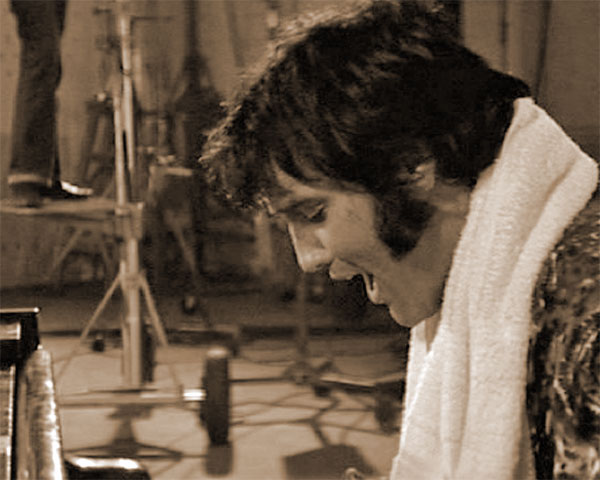
Elvis rehearsing How The Web Was Woven, 1970

Elvis rehearsing How The Web Was Woven, 1970

While a wonderful album, That’s The Way It Is also would have been greatly improved if a couple of different song versions had been used and the album had been sequenced as below in my imaginary version of That’s The Way It Is.

Side 1

  • “Stranger In The Crowd” (studio, as on original)
  • “I’ve Lost You” (substitute studio version)
  • “How The Web Was Woven” (studio, as on original)
  • “You Don’t Have To Say You Love Me” (studio, as on original)
  • “Bridge Over Troubled Water” (substitute Heart & Soul studio version without overdubbed applause)
  • “I Just Can’t Help Believin'” (live, as on original)

Side 2

  • “Patch It Up” (substitute studio version)
  • “Twenty Days And Twenty Nights” (studio, as on original)
  • “Just Pretend” (studio, as on original)
  • “The Next Step Is Love” (studio, as on original)
  • “Mary In The Morning” (studio, as on original)
  • “You’ve Lost That Lovin’ Feelin'” (live, as on original)

No matter the order you listen, though, That’s The Way It Is represents a true Elvis masterpiece.


Portions of the above review originally appeared on my now defunct pop culture blog on May 21, 2008.
Thomas walks away with Elvis Trivialities #9

Thomas (Elvis Today) has won Elvis Trivialities #9. And the answer is…

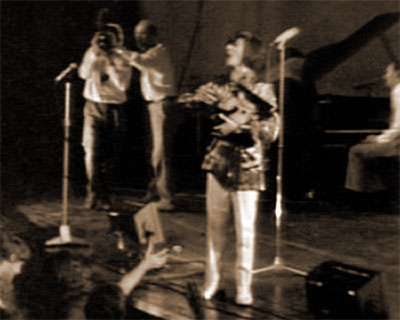
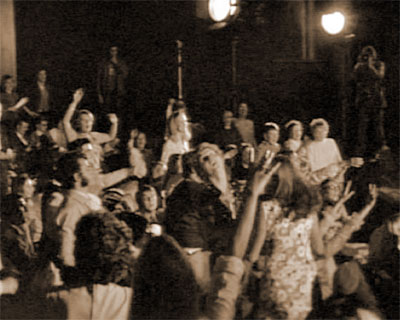
Copies of the Elvis album On Stage-February 1970 are being thrown into the audience during the Elvis Presley Appreciation Society convention footage featured in the movie That’s The Way It Is.

On Stage Giveaway At Elvis Convention, Luxembourg, 1970

On Stage Giveaway At Elvis Convention, Luxembourg, 1970

Congratulations to Thomas!

* * *

The next question could be thrown out at any time. Be ready to catch it by subscribing to The Mystery Train using the feature below this post. That way, you’ll be emailed whenever a new post appears.


The Mystery Train’s Night Riders

  • February 3, 2012: Thomas (Elvis Today) (2:18)
  • December 21, 2011: Wellsy (2:37)
  • October 31, 2011: Thomas (Elvis Today) (17:32)
  • October 1, 2011: Anton Jeldres Tiselj (Jimmy Cool) (1:01)
  • September 9, 2011: Steve Brogdon (0:17) <— Record time
  • August 6, 2011: Thomas (Elvis Today) (2:26)
  • July 9, 2011: Thomas (Elvis Today) (5:26)
  • June 23, 2011: Fred Wolfe (0:18)
  • June 22, 2011: Ty stumps the train (no winner)

Elvis Trivialities #9

Welcome to Elvis Trivialities. Your question is:

Copies of what album are being thrown into the audience during the Elvis Presley Appreciation Society convention footage featured in the movie That’s The Way It Is?

Elvis Presley Appreciation Society Convention,  Luxembourg, 1970

Elvis Presley Appreciation Society Convention, Luxembourg, 1970

Get this one right by being the first person to post the correct answer in the comments below, and I’ll throw you a shrink-wrapped set of bragging rights.

Good luck!

Advice for Eric Bana as he takes on the role of Elvis

[Revised October 28, 2011]

Variety reported earlier this week that Eric Bana will play Elvis Presley in a new movie, Elvis & Nixon.

To be honest, at this point, I have no interest in watching someone try to play Elvis. Instead, I would prefer to see a decent series of documentaries produced about his life.

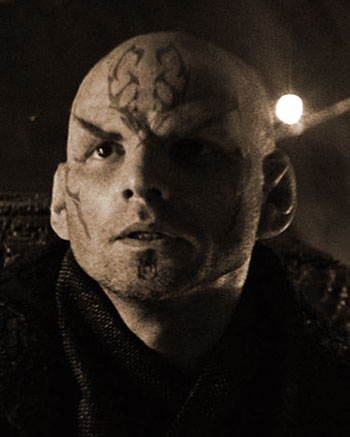
The only reason Elvis & Nixon even hits my radar at all is because Bana appeared in the 2009 movie Star Trek – a fantastic film. Bana played the Romulan villain, Nero. I can’t imagine Bana playing Elvis – but, then, suitability for the role has never been part of the criteria when it comes to productions about Elvis, has it?

Eric Bana as he appeared in Star Trek (2009)

Eric Bana as he appeared in Star Trek (2009)

Oddly enough, there’s already been a movie about the few minutes Elvis spent with President Richard Nixon on December 21, 1970. In 1997, Showtime produced a comedy movie called Elvis Meets Nixon covering the same event.

No word yet on whether the new Elvis & Nixon will be a comedy. One clue, though, may be that it will be the directorial debut of actor Cary Elwes – who has some comedy roles in his background, including Mel Brooks’ Robin Hood: Men In Tights.

So, though I really don’t personally care about this movie, I do care enough about how Elvis is portrayed to the general public to offer Bana some free advice:

1.) Forget everything you think you know about Elvis.
2.) Watch Elvis: That’s The Way It Is, which was filmed four months before the events of Elvis & Nixon.
3.) Repeat #2 until you’re done with your role.

REVIEW: Stage Rehearsal CD (FTD)

Stage Rehearsal (FTD CD)

August 10, 1970. The MGM camera crew has been following Elvis around for almost a month now. This afternoon, it’s time for one final rehearsal before the opening show later tonight. No camera crew allowed this time, but RCA is rolling tape in preparation for the concert recordings. Follow That Dream Records’ latest release, Stage Rehearsal, takes us behind the scenes of this event.

One of the things I’d been wondering about this release was how FTD would deal with the fact that most of the songs from this rehearsal were incomplete, due to having a “late start.” The first several seconds of these songs were not recorded. After all, RCA never intended this rehearsal for release.

The way I saw it, FTD had at least three options:

1.) Leave the recordings alone and let them start in progress — a bit jarring, but historically accurate
2.) Fade the songs up slightly as they start in progress — a little less jarring
3.) Repair the beginnings using recordings from other summer 1970 rehearsals — requires more work and is not historically accurate

I usually try to avoid reading the opinions of others when I’m planning to review something. That way, my expectations and reactions do not get swayed one way or the other in advance. Sometimes, this is impossible with FTD releases because I am in the United States, and we tend to receive them two or three weeks after most of the rest of the world.

In the case of Stage Rehearsal, I came across a comment revealing that FTD had repaired the beginnings of the songs by using live versions. My initial reaction was shock and dismay. Why would they make such a strange choice?

Once I had the actual CD in hand last week, though, and played it for the first time, it became obvious why FTD chose this path.

The sound quality of the August 10, 1970, stage rehearsal contained on this CD is comparable to the concert recordings that began later that night and continued for the next few days. To my knowledge, there are no other That’s The Way It Is rehearsals that have this level of sound quality. Using subpar sounding rehearsals as lead-ins would have probably been too obvious as splices. Instead, FTD elected to go with the live recordings to more closely match the sound of this rehearsal.

My personal preference would have been that FTD just release the rehearsal as-is, with truncated introductions. This is supposedly a collectors label, after all.

However, I can understand and appreciate their desire to make this a quality listening experience. After all, we were Elvis listeners prior to becoming Elvis historians! In this case, entertainment value won out over historic context. Considering how much I otherwise enjoy this CD, I can forgive them that.

One thing different about this rehearsal compared to some of the others I’ve heard over the years is that it does not feature Elvis really working on the songs. It feels more like a live show in that regard. This may be because this is literally hours before the opening show (captured on One Night In Vegas, a must-have FTD) and most of the kinks have already been worked out, or it could be because the recording was obviously turned off between songs. Two of the songs are repeated, so that’s evidence they were doing some work.

The stage microphones experience feedback a number of times, foreshadowing what would happen later that night during the actual concert. I wonder why this problem was not resolved prior to the show, since it was evident in the rehearsal?

There are many loose, fun moments but, in the end, the real appeal of the 1970 portion is the sound quality. None of the versions are revelations, though “version 1” of both “You Don’t Have To Say You Love Me” and “You’ve Lost That Lovin’ Feelin'” are stellar. Oddly enough, “version 2” of both of these songs splices the exact same live introductions as used on version 1. I suppose the tempo matched better than other alternatives, but this really shows why repairing the audio in this fashion was not the way to go.

A few years ago, Warner Brothers released “The Richard Donner Cut” of Superman II, showing what that director’s version of the 1980 movie may have been like had he not been replaced midway through production. To augment the available footage, screen tests of the main actors were used. This footage looks totally different compared to the rest of the film. Stage Rehearsal‘s “what if” splices between live and rehearsal material reminds me of this.

The 1972 and 1973 bonus songs that comprise the rest of this CD were recorded on a portable tape recorder. Therefore the sound quality is akin to “When The Snow Is On The Roses” and other recordings of that nature. These are definitely listenable, though they suffer a bit in following up the near-pristine-sounding 16-track recordings from 1970. I suggest playing the bonus songs first to avoid this effect.

Finally, here, we get some rehearsal work, which is pretty much lacking from the 1970 portions of this CD.

Any Day Now: By 1972, it seemed that Elvis had all but abandoned the songs he recorded at American Sound Studios only three years earlier, save the obligatory “Suspicious Minds.” Apparently not, though, for here’s Elvis sounding awesome on “Any Day Now,” leaving me to wonder why this apparently did not become part of the show.

True Love Travels On A Gravel Road: This is a good version, but seems less concert-ready than “Any Day Now.” It could’ve worked for occasional use as something different. Who knows, maybe he did use it that way.

Portrait Of My Love: Elvis does a brief, unidentified blues number before launching into “Portrait of My Love” on a whim. This is not so much a “rehearsal,” then, as it is an off-the-cuff song. It’s pretty and probably would’ve been a decent number if further developed. Wonderful to hear a “new” Elvis song, I might add.

I’m Leavin’ It All Up To You: Another “new” Elvis song. This one sounds pretty basic, but I believe that is because Elvis severely shortened it.

The funny thing is, I bought this CD because of the 1970 material, but it is the 1972 and 1973 material that stands out.

Ultimately, Stage Rehearsal is a well-intentioned release that I recommend with reservations. It offers 1970 rehearsals in terrific sound quality, but with unfortunate splicing decisions. It also offers some 1972 and 1973 rarities, but in subpar sound quality. Be aware of what you’re buying so that you won’t be disappointed. Then, just crank it up and enjoy. That’s what Elvis is supposed to be all about anyway.

That’s The Way It Is: Rehearsals – The Official Audio Releases

My favorite Elvis event is 1970’s That’s The Way It Is, with 1968’s ELVIS (comeback special) a close second. That’s why I’m looking forward to the new Stage Rehearsal CD, coming later this month from Follow That Dream Records.

The core of Stage Rehearsal will be songs recorded during Elvis’ August 10, 1970, final rehearsal before the opening show later that night (the concert captured on FTD’s One Night In Vegas). MGM did not film this particular rehearsal for the movie, but I still consider it part of That’s The Way It Is.

To this point, official releases of That’s The Way It Is rehearsals have been scattered on various titles. Below is a listing of what we have so far.

This is only the tip of the iceberg when it comes to the audio recordings made for That’s The Way It Is rehearsals. I hope Sony and FTD release the remaining That’s The Way It Is material over the next several years as we approach the film’s 50th anniversary in 2020.

Elvis Aron Presley (1980)
(August 10)
You’ve Lost That Lovin’ Feelin’
Sweet Caroline

Walk A Mile In My Shoes (1995)
Alla En El Rancho Grande (July 15)
Froggy Went A-Courtin’ (July 29)
Stranger In My Own Home Town (July 24)

A Life In Music (1997)
(July 29)
I Washed My Hands In Muddy Water
I Was The One
The Cattle Call
Baby, Let’s Play House
Don’t
Money Honey
What’d I Say

That’s The Way It Is: Special Edition (2000)
Peter Gunn Theme (July 15)
That’s All Right (July 15)
Cottonfields (July 15)
Yesterday (July 15)
I Can’t Stop Loving You (July 15)
Such A Night (July 29)
It’s Now Or Never (July 29)
A Fool Such As I (July 29)
Little Sister/Get Back (July 29)
I Washed My Hands In Muddy Water (July 24)
Johnny B. Goode (July 24)
Mary In The Morning (July 24)
The Wonder Of You (July 24)
Santa Claus Is Back In Town (August 4)
Farther Along (August 4)
Oh Happy Day (August 7)

One Night In Vegas (2000)
(August 4)
Words
The Cattle Call/A Yodel
Twenty Days And Twenty Nights
You Don’t Have To Say You Love Me
Bridge Over Troubled Water

The Way It Was (2001)
Words (July 14)
The Next Step Is Love (July 14)
Ghost Riders In The Sky (July 15)
Love Me (July 15)
That’s All Right (July 24)
I Got A Woman (July 24)
I’ve Lost You (July 24)
I Can’t Stop Loving You (July 24)
Just Pretend (July 24)
Words (July 29)
I Just Can’t Help Believin’ (July 29)
Something (August 4)
Polk Salad Annie (August 7)
Mary In The Morning (August 7)

One thing I didn’t realize until compiling this list is that it’s been a decade since Sony or FTD have released any new That’s The Way It Is rehearsal material. Time sure does fly.

* * *

Below is the track listing for Stage Rehearsal, which will add to the That’s The Way It Is legacy.

August 10, 1970
01 You Don’t Have To Say You Love Me
02 I Just Can’t Help Believin’
03 Something
04 Sweet Caroline
05 Polk Salad Annie
06 You’ve Lost That Lovin’ Feelin’
07 I’ve Lost You
08 Bridge Over Troubled Water
09 Patch It Up
10 Can’t Help Falling In Love
11 You Don’t Have To Say You Love Me
12 You’ve Lost That Lovin’ Feelin’
Bonus Tracks
13 Any Day Now (August 2, 1972)
14 True Love Travels On A Gravel Road (August 3, 1972)
15 The First Time Ever I Saw Your Face (August 3, 1972)
16 Fever (August 3, 1972)
17 Portrait Of My Love (August 3, 1972)
18 I’m Leavin’ It All Up To You (January 25, 1973)

* * *

Primary Research Sources

REVIEW: Boston Garden CD (FTD)

Elvis As Recorded At Boston Garden ‘71 CD (Follow That Dream Records, 2010)

Yesterday’s dream

You have been an Elvis fan for 15 years, through the ups and downs since 1956. When the Beatles came to Boston seven years ago, you stayed home. Now, finally, the one you were really waiting for is here.

You forget about the borrowed camera you are clutching as Elvis appears, as if out of magic.

Fans erupt in screams. You do not even realize that you are yelling, too, as Elvis grabs the microphone.

“Well, that’s all right little mama, that’s all right with you. That’s all right little mama, just any way you do,” he sings. Are you dreaming? Is this really happening?

By the middle of the show, you suddenly remember the camera. You only make it a little closer before the police and security guards push you back. You have never used this camera before, but you snap away, hoping it is close enough to preserve this moment, this feeling, forever.

Then, all too soon, it comes to an end.

Before you know it, Elvis is gone, and 39 years have passed by.

You would have never believed back then that photos you snapped in 1971 would appear in an official release of the Elvis concert you witnessed that day at Boston Garden. You even write the liner notes, filling them with your memories of this unforgettable event.

Like the idle daydream of an Elvis fan, it sounds too good to be true. Yet, this is exactly what happened for Cathi Avenell, who supplied photographs and liner notes for FTD’s latest release, Elvis As Recorded At Boston Garden ’71.

Bridging the gap

While the best concerts of the 1969-1977 Elvis era undoubtedly took place in the hot Vegas summers of 1969 and 1970, this November 1971 show stands out among the others. For this time period, it represents the earliest recording yet released of Elvis on the road in the 1970s—rather than in a Las Vegas showroom. It also serves to bridge the gap between his 1970 and 1972 live recordings.

Though this show only precedes his 1972 Vegas engagement by three months, the difference is sometimes striking. This late 1971 Elvis still has some of the 1969 and 1970 fire in him, as opposed to the subdued performances of the early 1972 engagement.

This late 1971 Elvis interacts with the crowd and still apparently enjoys himself, while the early 1972 Elvis seems to do little of either.

If anything, the Boston show often feels like a bizarre crossbreed of August 1970’s That’s The Way It Is concerts and June 1972’s Madison Square Garden shows.

Quick tour of the tracks

Track 01 “Also Sprach Zarathustra”/Track 02 “That’s All Right”: Elvis experimented with various show openers over the years, but the ultimate was “Also Sprach Zarathustra” (theme from 2001: A Space Odyssey) segueing into “That’s All Right,” his first record. Elvis really rocks “That’s All Right” here, the first sign that this will be a great show.

Track 03 “I Got A Woman/Amen”: What sometimes feels like a throwaway version of “I Got A Woman” early on eventually tightens up. “Amen” here is relatively short, not the endless repeats of later years.

Track 04 “Proud Mary”: Though it sometimes has more energy, this sounds like Elvis’ 1972 versions.

Track 05 “You Don’t Have To Say You Love Me”: I have still yet to hear a worthwhile version after 1970.

Track 06 “You’ve Lost That Lovin’ Feelin’”: Disappointing. Elvis sounds distracted throughout.

Track 07 “Polk Salad Annie”: Here is a perfect example of why As Recorded At Boston Garden ’71 is so cool, a hybrid between the 1970 and 1972 variations of “Polk Salad Annie.” While the overall vibe matches 1972, the talking portion is still present at the beginning. Elvis jokes his way through the “little story” though, perhaps an indicator of boredom that resulted in its eventual removal. After the jokes, this is a strong version of the song.

Track 08 Instrumental: You’ll recognize this one as “Comin’ Home Baby,” the instrumental often played while Elvis introduced his band and other stage performers. No introductions on this track, though, making it a rare stand-alone version of the song.

Track 09 “Love Me”: Already sounding like 1972 and beyond throwaway versions, this “Love Me” lacks the spark of the 1970 versions.

Track 10 “Heartbreak Hotel”: Speaking of throwaways, one of the worst versions of this song I have heard by Elvis. I like the bluesy take on it he first introduced in 1969, but Elvis fools around too much on this one for my taste. Maybe it was a ‘You had to be there’ moment.

Track 11 “Blue Suede Shoes”: Rushed, 1972-style. Better than “Heartbreak Hotel,” at least.

Track 12 “One Night”: Right after he sings, “Just call my name. . .,” someone with an irritating voice yells out “ELVIS!” and spoils an otherwise great version, reminiscent of 1970.

Track 13 “Hound Dog”: The typical bluesy slow start into a fast rocking ending, 1972-style. I never cared for this arrangement.

Track 14 “How Great Thou Art” (incomplete): We get about two-thirds of the song here before an artificial fade. Hard to judge without the big ending, but it probably would have been a contender for best song on the album had the performance been intact.

Track 15 Introductions (incomplete): “Comin’ Home Baby” plays again as Elvis introduces the band (joined in progress).

Track 16 “I’m Leavin’”: A true highlight, the best live version released so far. This was only six months after he recorded the song in RCA’s Nashville studio.

Track 17 “Bridge Over Troubled Water”: A stunning performance, especially considering that it sounds average at the beginning. Do not miss this one, best track on As Recorded At Boston Garden ’71.

Track 18 “I Can’t Stop Loving You”: A tad slower, but otherwise sounds like a 1972 version. Enjoyable.

Track 19 “Love Me Tender”: Annoying that this becomes a throwaway with ad-libbed lyrics, because Elvis sounds in such good voice.

Track 20 “Suspicious Minds”: By far, the biggest disappointment of the album. Perhaps the worst live version I have heard, due to jokes and distractions. Arrangement is 1972-style.

Track 21 Elvis Talks: For the third time, “Comin’ Home Baby” plays. Elvis does his traditional request to turn the house lights up so that he can better see the audience. It is fun hearing Elvis thanking the crowd in a mellow kind of way as the music goes on behind him. It almost sounds like he is about to leave on the spot but instead he launches into. . . .

Track 22 “Funny How Time Slips Away”: Like “Polk Salad Annie,” this version is interesting as a previously missing evolutionary step for the song. The softened lyric “In time, it’s all gonn’ be okay” has already replaced the original “In time, you’re gonna pay,” but the finale is still “Ain’t it surprising how time slips away.” Probably the best post-1970 version.

Track 23 “Can’t Help Falling In Love”/Track 24 Closing Vamp: “Let’s take it home,” Elvis announces, then launches into a decent 1972-style version of “Can’t Help Falling In Love,” and the show is soon over.

Final verdict

Taken as a whole, Elvis As Recorded At Boston Garden ’71 is a strong release. Concerts probably should not be picked apart song-by-song as I have done here, as it is the overall experience that counts. Elvis more than delivers a fantastic show. This is one of many concerts where I find myself wishing that I could have somehow been there.

Sound quality is impressive, considering that it is a soundboard recording. I love how FTD tied in the album art with the Elvis As Recorded At Madison Square Garden album. The liner notes and photos by Avenell give this release a personal feel and warmth.

A must-have for fellow fans of the era.