After EPiC: The Conclusion

If you walked out of Baz Luhrmann’s EPiC: Elvis Presley in Concert wanting to hear more Elvis, The Mystery Train has been providing next steps for you through a series of album-length playlists.

Today’s final playlist covers 1969, a pivotal year for Elvis. He began by recording in a Memphis studio for the first time in well over a decade, continued by making his last movie as an actor, and finished by, as the EPiC teaser put it, returning “to the stage to begin a legendary residency in Las Vegas.” In EPiC, you actually saw his third engagement at the International Hotel, August 1970. In this playlist, you hear highlights from the first engagement, August 1969, which was not filmed.

The playlist is embedded here. You can also find it directly on Spotify. Below the playlist, I have a few other suggestions.

Side A

01. Suspicious Minds
02. Power Of My Love
03. Any Day Now
04. Don’t Cry Daddy
05. Kentucky Rain
06. In The Ghetto
07. Rubberneckin’
08. Change Of Habit

Side B: Live-Las Vegas

09. Blue Suede Shoes
10. Johnny B. Goode
11. My Babe
12. Mystery Train/Tiger Man
13. Are You Laughing Tonight
14. Suspicious Minds
15. Can’t Help Falling In Love

Also available: The complete After EPiC playlist on Spotify, combining all four segments.

Spotify plays additional music without warning after a playlist ends. Anything that follows “Can’t Help Falling In Love” is Spotify guessing what you might want to hear next.

Other Suggestions

While you wait for EPiC to be released on home media, my main viewing suggestion for you is Elvis: That’s The Way It Is – Special Edition. It covers rehearsals and Las Vegas shows in 1970. Outtakes from the original version of this documentary were featured prominently in EPiC. While it lacks Luhrmann’s signature style and Jonathan Redmond’s brilliant editing, the movie includes the same Elvis talent and charisma you experienced in EPiC.

If you want to read more about Elvis, I recommend Elvis Presley: A Life In Music – The Complete Recording Sessions by Ernst Jorgensen (1998), Last Train To Memphis: The Rise Of Elvis Presley, covering 1935-1958, by Peter Guralnick (1994), and Careless Love: The Unmaking Of Elvis Presley, covering 1958-1977, by Guralnick (1999). While not without their flaws, they remain the best Elvis books to date.

Finally, if you want to dive even deeper into playlists beyond After EPiC, check out The Mystery Train’s Elvis Odyssey series. While After EPiC concludes in 1969, The Elvis Odyssey begins there.

If you have any questions, please comment below or contact me. Thank you for reading and listening.

After EPiC: Elvis in 1972

Elvis Presley performing at the Greensboro Coliseum on April 14, 1972 (MGM)

Elvis Presley performing at the Greensboro Coliseum on April 14, 1972 (MGM)

For those who came away from Baz Luhrmann’s EPiC: Elvis Presley in Concert wanting to hear more Elvis, this post continues The Mystery Train’s series of next steps.

1972 was another key year featured in EPiC. As Elvis attempted to manage personal challenges, including the breakup of his marriage, he found success in the studio and on the road. This 1972 playlist is designed as one album’s worth of listening. In the coming weeks, I’ll continue sharing album-length playlists exploring other eras of Elvis’s career.

The playlist is embedded below. You can also find it directly on Spotify.

Side A

01. Burning Love
02. Separate Ways (Take 25)
03. Proud Mary (Live-San Antonio)
04. Polk Salad Annie (Live-Richmond)
05. It’s Over (Live-Las Vegas)
06. Are You Lonesome Tonight (Live-Hampton Roads)
07. Lawdy, Miss Clawdy (Live-Hampton Roads)
08. For The Good Times (Take 3)

Side B

09. Johnny B. Goode (Takes 1-3)
10. Young And Beautiful (Rehearsal)
11. You Gave Me A Mountain (Live-Las Vegas)
12. It’s Impossible (Live-Las Vegas)
13. A Big Hunk O’ Love (Live-Las Vegas)
14. Bridge Over Troubled Water (Live-Greensboro)
15. I Can’t Stop Loving You (Live-New York City)
16. Always On My Mind (Take 3)

Spotify will begin playing additional music without warning after a playlist ends. So, anything after “Always On My Mind” is Spotify guessing what you might want to hear next.

You might also enjoy After EPiC: Elvis in 1954-1968.

So, You Liked EPiC. Now What?

If you walked into Baz Luhrmann’s EPiC: Elvis Presley in Concert curious and came away wanting to hear more Elvis, this post is for you.

Deciding what to try next in Elvis’ vast catalog can be confusing. Single disc releases tend to focus on well-worn greatest hits, while deeper exploration often requires navigating massive box sets.

As a next step, may I instead recommend this simple playlist of select studio outtakes, rehearsals, and live performances from 1970?

Featured in EPiC, 1970 was a remarkable year for Elvis both in the studio and on stage. This playlist is designed as one album’s worth of listening, enough to enjoy an evening with Elvis. In the coming weeks, I’ll be sharing a few more album-length playlists exploring other eras of Elvis’s career.

The playlist is embedded below. You can also find it directly on Spotify.

After EPiC: Elvis in 1970

Side A
01. Patch It Up (Take 1)
02. I’ve Lost You (Take 1)
03. How The Web Was Woven (Take 1)
04. Little Sister/Get Back (Rehearsal)
05. Baby, Let’s Play House (Rehearsal)
06. I Washed My Hands In Muddy Water (Rehearsal)

Side B
07. Polk Salad Annie (Rehearsal)
08. I Just Can’t Help Believin’ (Live)
09. Mystery Train/Tiger Man (Live)
10. One Night (Live)
11. Suspicious Minds (Live)
12. Just Pretend (Live)

Keep in mind that one of the quirks of Spotify is that it will begin playing additional music without warning after a playlist ends. So, anything after “Just Pretend” is Spotify guessing what you might want to hear next.

You might also enjoy After EPiC: Elvis in 1972.

Elvis’ Last Concert Steps Out Of The Bootleg Shadows

“Ladies and gentlemen, the picture you have just seen was the last live performance of Elvis on stage,” announced Vernon Presley, Elvis Presley’s father, at the end of Record 1 of 1977’s Elvis In Concert soundtrack album.

For years, this and a similar message from Vernon at the end of the CBS television special caused the general public and casual fans to believe the project was indeed Elvis’ last concert.

Elvis In Concert was a compilation of highlights from two shows during Elvis’ last tour – Omaha, Nebraska, on June 19, 1977, and Rapid City, South Dakota, on June 21.

Elvis actually performed a few more concerts after Rapid City, which were not captured on professional video or audio. His last was on June 26 in Indianapolis, Indiana.

After making the bootleg rounds for decades, an audience recording of Elvis’ last concert will soon be officially released for the first time by Follow That Dream (FTD) Records. FTD began in 1999 and is Sony’s collectors label for Elvis fans.

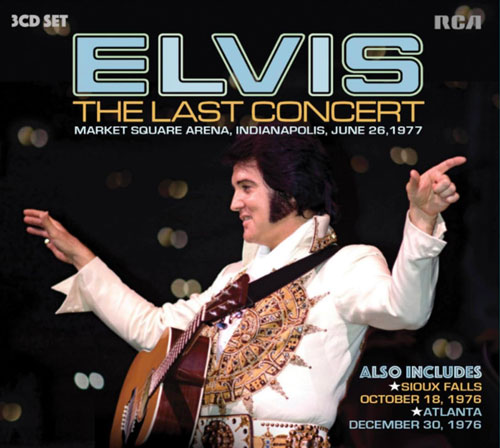
The performance headlines a 3-CD set called Elvis: The Last Concert – Market Square Arena, Indianapolis, June 26, 1977. New audio work on the recording was performed by Anthony Stuchbury, known for his Elvis “Mono II Stereo” CD series in Europe.

The other shows on the set will be October 18, 1976, Sioux Falls, South Dakota (CD 2), and December 30, 1976, Atlanta, Georgia (CD 3). These are two of the soundboard shows FTD previously bundled with a re-release of the Bruce Jackson On The Road With Elvis book.

Jackson, who died in 2011, worked as part of Elvis’ audio team for shows in the final years and taped many of them direct from the soundboard for various purposes. Though he is rumored to have taped the last concert, it has never surfaced in any form.

Cover of ELVIS: THE LAST CONCERT (2026, FTD)

Cover of ELVIS: THE LAST CONCERT (2026, FTD)

I’m selective when it comes to Elvis releases, including FTD, but this set is a must-have for me due to the historical significance of the Indianapolis show. I usually avoid 1976 shows, but my understanding is that the December 30 Atlanta concert is among the best for that year. I’m always in favor of FTD re-releasing CDs previously bundled with their exorbitantly-priced books, so including two of Jackson’s soundboard recordings is a good move here.

While The Mystery Train is not a news site – I leave that to Kees’ incredible Elvis Day By Day site – this is one of those times where a story is so important to me that I had to share it with you. Check out Elvis Day By Day for the full tracklisting, as provided by FTD.

Circling back to Vernon, who was obviously still overcome with grief during his message just six weeks after Elvis’ death, presumably the “last live performance” myth was written for him in order to better promote the special. He was almost surely unaware of which concerts were taped when.

Forty-nine years later, in my offline Apple Music playlist, Vernon’s message will now have its proper home on Elvis: The Last Concert.


Elvis’ Last Tour

June 17, 1977: Springfield, Missouri
June 18: Kansas City, Missouri
June 19: Omaha, Nebraska
June 20: Lincoln, Nebraska
June 21: Rapid City, South Dakota
June 22: Sioux Falls, South Dakota
June 23: Des Moines, Iowa
June 24: Madison, Wisconsin
June 25: Cincinnati, Ohio
June 26: Indianapolis, Indiana


“The LORD is close to the brokenhearted; he rescues those whose spirits are crushed.”
Psalm 34:18 NLT

Elvis Live at His Las Vegas Peak

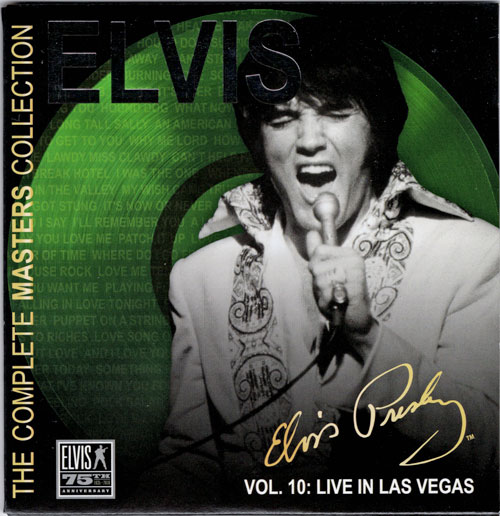
This is Part 8 of an occasional series reviewing Elvis: The Complete Masters Collection.

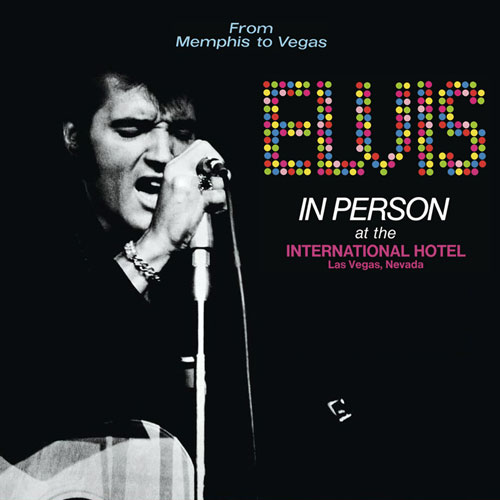
Well, as I was saying, volume 10 of Elvis: The Complete Masters Collection is called Live In Las Vegas and compiles Elvis In Person and On Stage, two of Elvis Presley’s best albums.

When Elvis made his debut at the International Hotel in Las Vegas on July 31, 1969, it had been 3,050 days since his last public concert. With that in mind, the 1,935 days that have elapsed since my last entry in this review of Elvis: The Complete Masters Collection don’t sound so bad, do they?

ELVIS: THE COMPLETE MASTERS COLLECTION – VOLUME 10 CD front sleeve - 2009, from TY's collection

ELVIS: THE COMPLETE MASTERS COLLECTION – VOLUME 10 CD front sleeve (2009, from TY’s collection)

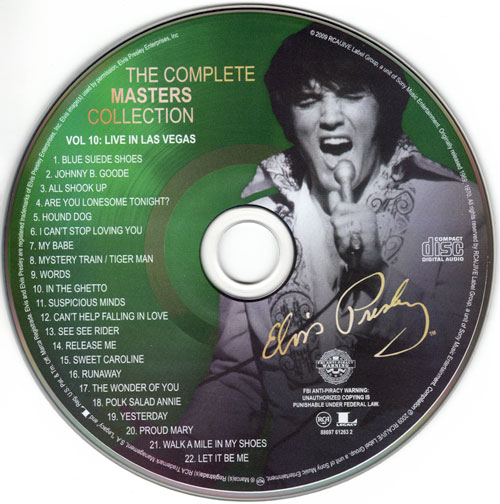
CD Vol. 10: Live In Las Vegas

As I’ll talk about later, the compilers had an opportunity to do something really creative with the sequencing of this CD, but they took the easy route instead.

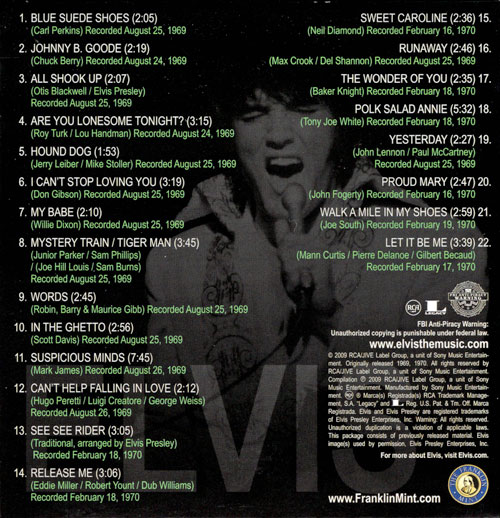
The first 12 tracks are the 1970 album Elvis In Person At The International Hotel, Las Vegas, Nevada, which was actually first released as record 1 of From Memphis To Vegas/From Vegas To Memphis in 1969. Do you think the RCA folks got paid by the character for their album titles back then?

The final 10 tracks are the album On Stage – February, 1970. One of my favorite little tidbits about that album, besides the unnecessary comma in the title, is that Elvis’ name does not appear anywhere on the front or back cover.

Elvis In Person pulls together recordings from Elvis’ August 1969 engagement at the International, whereas On Stage primarily assembles songs from his February 1970 return engagement but tosses in a couple more highlights from August 1969.

01. Blue Suede Shoes (August 25, 1969 Midnight Show [MS]): Trumpets blare, the rhythm group springs into action, and then Elvis takes the stage as Elvis In Person begins with a rocking rendition of Carl Perkins’ “Blue Suede Shoes.”

02. Johnny B. Goode (August 24, 1969 MS): From one rock ‘n’ roll anthem to the next, Elvis rips into Chuck Berry’s “Johnny B. Goode,” with his strongest version of the song from a vocals perspective released to date. James Burton on lead electric guitar is killing it in the right channel. The Sweet Inspirations sound great, too!

03. All Shook Up (August 25, 1969 MS): Elvis next launches into “All Shook Up,” certainly one of his finest performances of the 1957 classic. Ronnie Tutt on drums really drives this one. After the song, Elvis mentions that this is his first live appearance in nine years.

04. Are You Lonesome Tonight? (August 24, 1969 MS): Elvis sings a compelling version of his 1960 hit “Are You Lonesome Tonight,” with Sweet Inspiration Cissy Houston’s vocals soaring throughout. At the end of the track, in an excerpt from the August 24, 1969 Dinner Show (DS), Elvis introduces his “message song” for the night, which turns out to be . . .

05. Hound Dog (August 25, 1969 MS): Elvis attacks the opening of this song so forcefully that I’m just now getting up from the floor to try to type my thoughts as Burton completes his mid-song guitar solo. Best version from the 1968-1977 era.

06. I Can’t Stop Loving You (August 25, 1969 MS): This is a pretty enough version of Don Gibson’s “I Can’t Stop Loving You,” but Elvis would do it better from August 1970 through 1972 when he put a little more oomph into it. Bizarrely dubbed-in from another moment, an audience member screaming incoherently near the end doesn’t help this version, either. Elvis’ voice is gorgeous here, though, don’t get me wrong.

Listening closely to Elvis In Person as an album for the first time in awhile, it also becomes apparent that this is really a showcase for the incredible Sweet Inspirations as well.

If I play this performance of “I Can’t Stop Loving You,” I grab the one from disc 9 of 2019’s ELVIS LIVE 1969: International Hotel, Las Vegas, Nevada. Note that the tradition has carried on and that the Sony folks must get paid by the character for their titles, too. Anyway, the August 25, 1969 MS is one of Elvis’ greatest recorded concerts and the one that provided most of the masters for Elvis In Person.

07. My Babe (August 25, 1969 MS): Elvis rocks “My Babe,” his best version of Willie Dixon’s blues number. I love the extra guitar flourish by Burton at the end, too.

08. Mystery Train/Tiger Man (August 25, 1969 MS): The problem with a review of a fantastic album like Elvis In Person is that you run out of superlatives. Here is a no-holds-barred take on the “Mystery Train/Tiger Man” medley – possibly the best version of this combination ever recorded.

Elvis’ 1955 Sun master of “Mystery Train” is surely among his top five recordings ever. No live version has a chance of beating it, but the song still works perfectly here in tandem with “Tiger Man.” As always, this medley also spotlights Burton and Tutt. The best track on this CD.

09. Words (August 25, 1969 MS): Now, Elvis slows things way down with “Words,” a 1968 Bee Gees song. This is a great version, though I do prefer Elvis’ August 1970 take on the song.

This CD sounds fantastic, by the way. If I close my eyes I can pretend, just for a moment, that I’m in the showroom. At the end of the track, in a moment from the August 26, 1969 DS, Elvis introduces the next number as, “A record that just did very well for me recently, ladies and gentlemen.”

10. In The Ghetto (August 26, 1969 DS): That record, of course, is “In The Ghetto,” which made it to number 3 on the charts. This is a solid live version that remains true to the studio version, outside of being a tad faster. This, of course, was the true message song for the night.

11. Suspicious Minds (August 26, 1969 DS): It’s not that this is a bad version of “Suspicious Minds,” but there are a few others from the August 1969 engagement that I would have chosen ahead of this iteration. Really, any Midnight Show version probably would have been better than this Dinner Show version.

When Elvis’ producer Felton Jarvis witnessed the live version of “Suspicious Minds” earlier in this engagement, he went back and added similar horns and a fading down/up/down effect to the January 1969 studio master to attempt to replicate the feel. Backed with “You’ll Think Of Me” from the same sessions, the “Suspicious Minds” studio single hit the streets on August 26, literally the day of this Elvis In Person live recording, and made its way to number one.

12. Can’t Help Falling In Love (August 26, 1969 DS): After the two versions recorded in front of the small studio audiences of the 1968 ELVIS special, this is the next greatest live version of “Can’t Help Falling In Love.” Similar to “Are You Lonesome Tonight,” Houston’s vocals are near-operatic. This would be a fantastic end to a CD, except our CD doesn’t end here.

ELVIS: THE COMPLETE MASTERS COLLECTION – VOLUME 10 CD (2009, from TY’s collection)

13. See See Rider (February 18, 1970 MS): On Stage kicks off with “See See Rider,” which Elvis actually wouldn’t begin using as an opening song in his concerts for another couple of years. Did he get the idea from the sequencing of this album? This is one of my favorite Burton guitar solos. It is also Elvis’ best version of “See See Rider,” though the one on 2002’s Today, Tomorrow & Forever from this same engagement comes pretty close.

14. Release Me (February 18, 1970 MS): Elvis sings a committed version of “Release Me” and everyone does a great job backing him up. Despite all of that, this well-worn classic is just not a song I often enjoy very much.

15. Sweet Caroline (February 16, 1970 DS): Up next, Elvis takes on Neil Diamond’s 1969 hit “Sweet Caroline.” I actually like Elvis’ version of “Sweet Caroline” better than Diamond’s, and it’s pretty cool to watch him sing it in Elvis: That’s The Way It Is, too. Elvis sounds like he’s having fun, so that makes it enjoyable as well. This is Elvis’ best version of “Sweet Caroline.”

16. Runaway (August 25, 1969 DS): Elvis has a solid take on Del Shannon’s 1961 classic.

17. The Wonder Of You (February 18, 1970 MS): I love Elvis’ version of “The Wonder Of You,” a song first released by Ray Peterson in 1959. This live version was released as a single by Elvis and peaked at number nine. I love Elvis’ vocal interplay with Burton’s guitar solo on this.

18. Polk Salad Annie (February 18, 1970 MS): The only real competition for best track on this CD versus “Mystery Train/Tiger Man” is right here – “Polk Salad Annie.” Elvis begins the song with his “little story” that explains the lyrics. Tony Joe White’s 1969 classic is a perfect choice for Elvis’ live show. Jerry Scheff owns this song on electric bass. A similar rendition filmed a few months later for Elvis: That’s The Way It Is should not be missed, though this February version is superior.

19. Yesterday (August 25, 1969 DS): And now, Elvis sings The Beatles with a solid version of their 1965 hit “Yesterday.” This live version is actually one half of a medley that concluded with “Hey Jude,” but the original compiler of On Stage wisely left it off. Elvis’ “Yesterday” is stronger without it.

20. Proud Mary (February 16, 1970 DS): Next, Elvis sings Creedence Clearwater Revival by taking on their 1969 hit “Proud Mary.” While I prefer Elvis’ 1972 versions of “Proud Mary,” this is certainly a spirited and worthy take.

21. Walk A Mile In My Shoes (February 19, 1970 MS): Joe South first released the incredible “Walk A Mile In My Shoes” on his 1969 album Don’t It Make You Want To Go Home? and the single came out just a few weeks before Elvis’ live version was captured.

When Elvis sang “Walk A Mile In My Shoes” in this engagement, it was the first half of a medley with “In The Ghetto,” which was an inspired combination. For On Stage, the original compiler unfortunately excised the “In The Ghetto” portion. Nevertheless, “Walk A Mile In My Shoes” is another of my favorite songs on this CD.

Elvis notes at the end of this track that the next song had been released by a few different people.

22. Let It Be Me (February 17, 1970 MS): Elvis does a phenomenal job on this song, but so do the Sweet Inspirations – who were actually one of the groups that had released “Let It Be Me” prior to Elvis taking a turn at the song. Their 1967 version, which can be heard on their self-titled album, is not to be missed.

In terms of song selection and sequencing, this Franklin Mint set of Elvis’ complete masters does not strictly adhere to a session or album chronology. Those two approaches were later covered by re-releases of this material by Sony/RCA.

With that in mind, I think it would have been a much more interesting listening experience to put the first side of Elvis In Person, tracks 1-7, at the beginning, then both sides of On Stage, tracks 13-22, followed by the second side of Elvis In Person, tracks 8-12. This essentially would give you the feel of one incredible concert covering both seasons rather than two separate albums thrown together.

No matter how you sequence it, though, if you want to hear the Elvis Presley Show at its peak in Las Vegas, this CD just about covers it. The August 1970 engagement would begin at this same level, broadening the setlist to include new material from his June 1970 sessions.

I’ve been listening to the live recordings from this disc for 15 years now, and Vic Anesini’s mastering work continues to hold up as a stellar representation of the original releases of Elvis In Person and On Stage.

I hope to see you in 1,935 days or less for our next installment.

ELVIS: THE COMPLETE MASTERS COLLECTION – VOLUME 10 CD back sleeve (2009, from TY’s collection)


“We can make our plans, but the LORD determines our steps.”
Proverb 16:9 NLT

Keeping the Footage. Losing the Baggage.

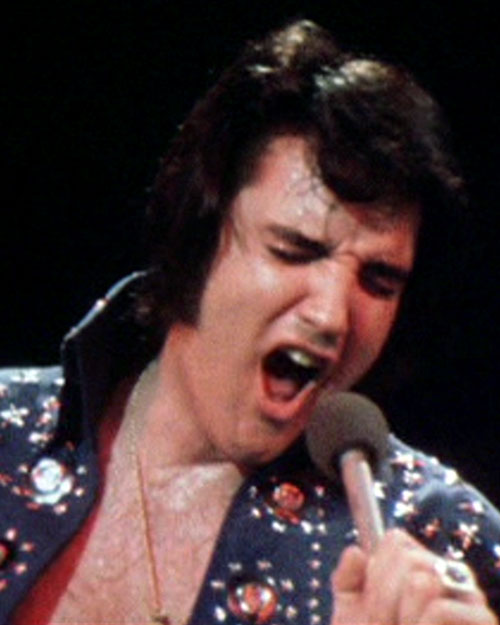
Elvis Presley in 1970, from the EPiC: Elvis Presley in Concert trailer - 2026, NEON

Elvis Presley in 1970, from the EPiC: Elvis Presley in Concert trailer (2026, NEON)

When I watched the full trailer that NEON dropped back on January 13 for Baz Luhrmann’s EPiC: Elvis Presley in Concert, I realized a couple of things.

One is that I’ve been writing about this darned lost footage for 35 years. This brief newsletter article about Elvis: That’s The Way It Is and Elvis On Tour outtakes was actually one of the first things I ever wrote about Elvis.

You see, I had read about the possibility of such footage existing in one of my brother’s old Elvis magazines from 1987. Naturally, I wrote to Graceland about it. Because that’s what you do.

And Graceland was nice enough in 1991 to provide the few available details, which I incorporated into my article the following year.

The second realization is that I’ve been carrying around almost as many years’ worth of baggage over this lost footage.

Oh, the mismanagement! Oh, the falsehoods! Oh, the missed opportunities!

As I watched the brilliant preview trailer for EPiC, I finally accepted that it’s time to let all of that go. I don’t want to weigh EPiC down with my lost footage baggage.

Writing is a catharsis for me, so I’m going to air out this baggage one last time, and then it’s gone forever. And if you see me mention it again, friends, I want you to call me out on it.

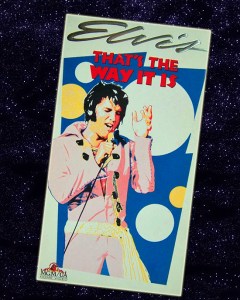
THAT'S THE WAY IT IS home video cover (1988)

ELVIS: THAT’S THE WAY IT IS home video cover (1988)

1992

Event: Elvis: The Lost Performances arrives on VHS and Laserdisc. This compilation of outtakes from Elvis: That’s The Way It Is and Elvis On Tour was just about perfect for its time. It primarily focused on the songs that mattered to Elvis, not necessarily his biggest hits. Songs were presented in full. With no narration in between, the music was allowed to speak for itself.

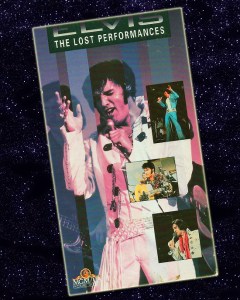
THE LOST PERFORMANCES home video cover (1992)

ELVIS: THE LOST PERFORMANCES home video cover (1992)

Associated Baggage: The release of Turner Home Entertainment’s Elvis: The Lost Performances was initially delayed by a year or more due to the 1990 home media release of Buena Vista’s Elvis: The Great Performances. Though they played nice in terms of release dates, I guess no one noticed that a mere four letters distinguish one title from the other. Among casual fans and, most assuredly, the general public, this was potential confusion. The Lost Performances cover art also used a reverse image of the same underlying Elvis: That’s The Way It Is pose as the 1988 VHS release of that film. More potential confusion. To top it off, one month before Elvis: The Lost Performances hits shelves, CBS airs, get this, a television version of Elvis: The Great Performances. I guess that whole playing nice in the marketplace thing didn’t work both ways.

1997

Event: Among other Elvis titles, Turner/MGM re-releases Elvis: That’s The Way It Is, Elvis On Tour, and Elvis: The Lost Performances on home video.

Associated Baggage: All of the “new” VHS videos are in pan & scan to fit square televisions of the day, though many consumers, including this particular Elvis fan, were educated enough by this time to know that widescreen/letterboxed was a superior format for such movies in order not to lose large portions of the image. While Elvis: That’s The Way It Is earns a DVD release at this time as well that contains a widescreen option in this new format, there are inexplicably no DVDs for Elvis On Tour or Elvis: The Lost Performances.

2001

Event: And here’s the big one. If you follow this kind of stuff, you knew it was coming. Warner Brothers releases Elvis: That’s The Way It Is – Special Edition on home video. The 2000 film uses some of the once-lost footage from Elvis: The Lost Performances, other lost footage, and some of the original footage as part of an entirely new cut of the classic documentary.

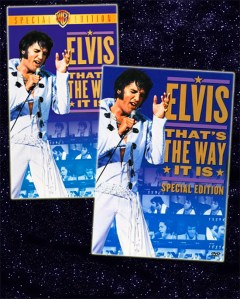
2001 VHS and DVD editions of THAT'S THE WAY IT IS: SPECIAL EDITION

2001 VHS and DVD editions of ELVIS: THAT’S THE WAY IT IS – SPECIAL EDITION

Associated Baggage
Where to start? First, the name. The fact that this is almost an entirely new movie is not at all obvious by adding “Special Edition” to the title of the original documentary that many Elvis fans already owned by this point.

Next, the day before the VHS version goes on sale, Turner Classic Movies airs Elvis: That’s The Way It Is – Special Edition on cable television. As long as you had the channel, you could record it with your VCR for free. You even get a few bonus songs after the movie not included on the retail VHS.

Ah, but the DVD! It will have all of those bonus songs and even more as special features, right? Well, it was supposed to, but someone apparently didn’t obtain all of the proper clearances. So there was a delay as the DVDs were re-made to exclude all of the bonus songs. Oh, and then just as they are about to hit store shelves (and possibly a few do), someone realizes that the DVD case still has references to those bonus songs that aren’t actually on the DVD. So, another delay while the cases are re-made. Finally, months after the VHS, the DVD comes out. Not with a bang, but with a whimper.

Oh, and Elvis: That’s The Way It Is – Special Edition uses that same underlying Elvis image as the 1997 & 1992 releases of Elvis: The Lost Performances and the 1988 release of Elvis: That’s The Way It Is.

Apparently, Warner is disappointed by the sales of the Special Edition (gee, I wonder why sales would suffer), so it cancels a similar project around Elvis On Tour.

But wait, there’s even more baggage here. The release of Elvis: That’s The Way It Is – Special Edition and its use of some of the same songs seems to have buried Elvis: The Lost Performances, which Warner never releases again.

2007

Event: A 2-DVD re-release of That’s The Way It Is: Special Edition that includes the original film and some of the excised bonus features from 2001 on the second disc.

Associated Baggage: The long-awaited bonus features were in embarrassing video quality for a mainstream release, as apparently a backup videotape copy was used when the master tapes from 2001 could not be found. While definitely watchable, the 1970 theatrical cut was also in lesser condition relative to the 2001 edit. And I’m not even going to mention what underlying cover image they decided to go with. Because even if you don’t know, you already know.

2010

Event: Elvis On Tour finally gets a DVD release! And. . . can this be. . . a Blu-ray release! It almost sounds too good to be true.

Associated Baggage: Well, it turns out that it almost is. At the last moment, Warner reveals that the opening song that plays over the credits, a rehearsal of “Johnny B. Goode,” ran into issues with obtaining clearance. From most accounts, it seemed out of their hands this time. Fair enough. What do they do? They replace it with a lacklustre live version of “Don’t Be Cruel.” Oh. . . and just to really give me nightmares, they also edit in a poor loop of the song since it wasn’t long enough to cover the opening credits sequences. So you get to hear Elvis’ “Please let’s forget the past, before I kick your–” joke not once, but twice, ladies and gentlemen. And, more relevant to this post, no bonus features. Nothing.

2014

Event: Elvis: That’s The Way It Is gets a Blu-ray release! 2001 bonus songs master tapes located and to be included!

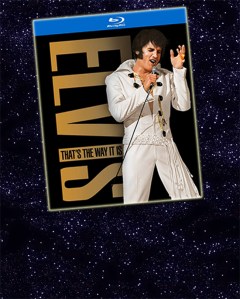
Associated Baggage: Well, here’s what actually happened back in 2014 if you bought the Elvis: That’s The Way It Is Blu-ray. You did indeed get a Blu-ray of Elvis: That’s The Way It Is – Special Edition. The promised improved quality bonus songs? I wish I could say otherwise, but not so much. I really don’t know what they were thinking. As for the original Elvis: That’s The Way It Is movie? It is included as a second DVD, using the same master as way back in 1997. But hey, at least the art department was on top of things. When they envisioned what the cover art for this first-ever That’s The Way It Is Blu-ray should be, a certain underlying image immediately came to mind. . . .

2014 Blu-ray edition of THAT'S THE WAY IT IS: SPECIAL EDITION

2014 Blu-ray edition of ELVIS: THAT’S THE WAY IT IS – SPECIAL EDITION

2026: Letting it go

We could all probably think of more blunders around the handling of the lost and not-so-lost footage originally captured for Elvis: That’s The Way It Is and Elvis On Tour, but it is indeed time to let it all go.

So, here’s what I propose. That abandoned salt mine in Kansas that people keep finding this lost footage in? Let’s lock our baggage in there. Gone. Forever.


Did I mention the full EPiC trailer is brilliant? Surely, you have watched by now? If not, you better check it out over on YouTube.

Wow.

Just wow. That’s all I’ve got.

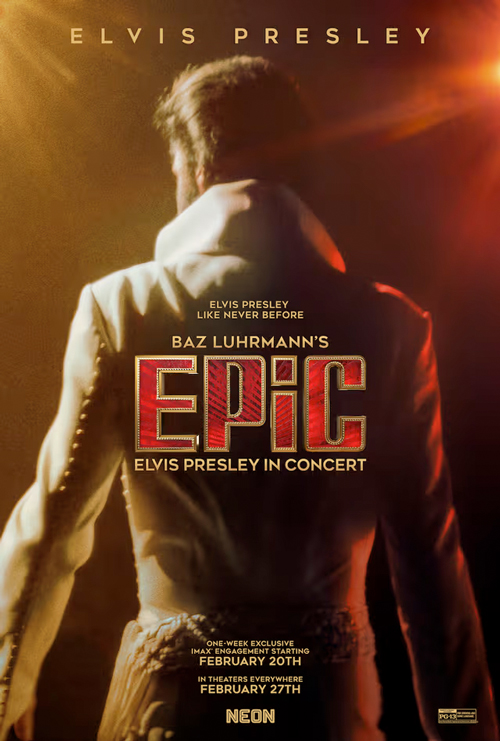
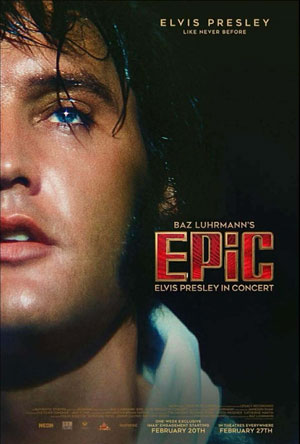
Around the same time as the trailer, NEON also released a new poster. I mean, even if EPiC somehow turns out to be a dud, that is one awesome Elvis poster that I had to have!

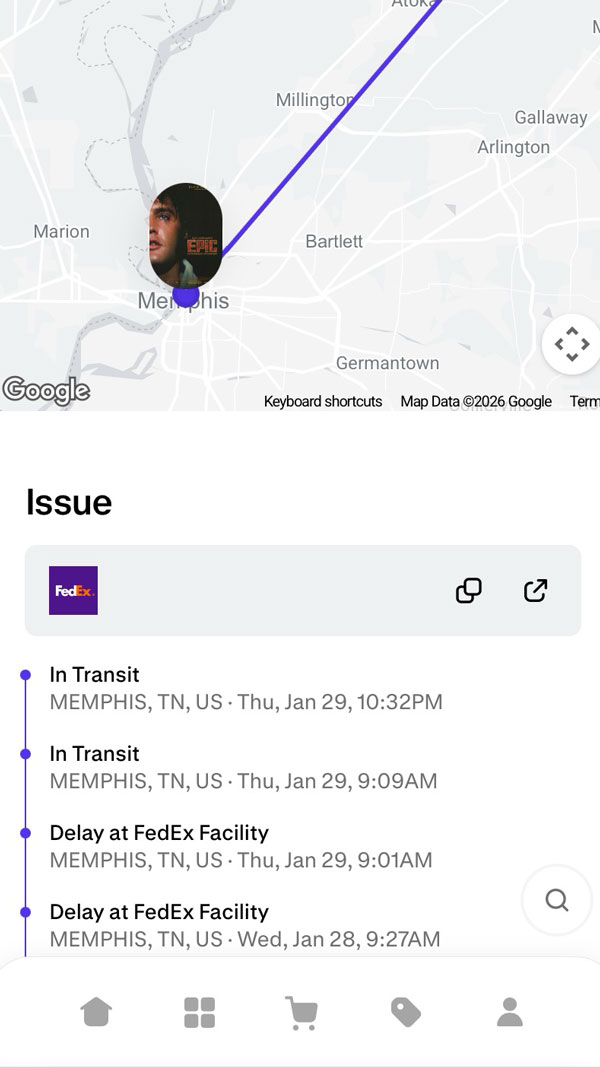
Being the understanding woman that she is, my bride ordered one for me. When the package ran into shipping issues due to the recent weather events, I heard her laughing as she looked at the tracking image.

Wondering what gave her that reaction, I took a look. The tracking uses a close-up of the poster, so it looks like Elvis’ face on the map.

Sure, that’s mildly humorous, but I didn’t see why she thought it was so funny.

Then I looked again at the map.

That’s right, Elvis is stuck in Memphis!

EPiC hits IMAX theaters worldwide on February 20, with early access showings beginning on February 18, and then expands to wide release on February 27 globally.

Endless Twilight

You’re wandering in an amazing land of imagination . . . the edge of reality.
Only Memories - Artwork created for The Mystery Train with assistance from ChatGPT

“Only Memories” (Artwork created for The Mystery Train with assistance from ChatGPT)

You awaken back in the Mystery Train Diner. As I welcome you over to the Conductor’s table again, you realize it wasn’t a dream. It was all real.

“When our story ended last time, Elvis was back on top,” I say. “His compelling work from June 1968 to August 1970 is rivaled only by his stunning output from 1955 to 1957. And after a stretch like that, well, even Elvis can’t run the whole race wide open. Maybe losing speed was bound to happen.”

Disappointed, you point out that Elvis still had seven years to go.

“Oh, don’t get me wrong, we have plenty more ’70s songs in the jukebox. Some of them will hold their own against even his peak work. However, after August 1970, something was different,” I contend.

I snap my fingers and the jukebox begins to play again.


The Elvis Odyssey

Part II: Endless Twilight

After completing his third stint at the International Hotel and a brief concert tour, his first since 1957, Elvis Presley’s grueling schedule sends him back to Nashville to finish a country album and record another single. The session is quick, and his mood is darker. . . .

Listen along on Spotify.

#49 Whole Lotta Shakin’ Goin’ On (Alternate-1970)
Walk A Mile In My Shoes
Nashville, TN [master, alternate mix]

Elvis’ studio take on “Whole Lotta Shakin’ Goin’ On” is impressive and provides a unique interpretation of the song first recorded by Big Maybelle in 1955 but best known for Jerry Lee Lewis’ 1957 version for Sun Records. Elvis’ live versions of this one tend to be throwaways, but this studio version is a solid rocker despite being used for the Elvis Country album.8

After all, it’s not just country, it’s Elvis country. There’s a difference.

Elvis: “Country music was always a part of the influence on my type of music, anyway. It’s a combination of country music and gospel and rhythm & blues all combined is what it really was. As a child, I was influenced by all that. . . .

“I liked all different types of music when I was a child. Of course, the Grand Ole Opry was the first thing I ever heard, probably, but I liked the blues, and I liked the gospel music, gospel quartets, and all that.”H

In January 1971, the United States Junior Chamber of Commerce (the Jaycees) award Elvis as one of the ten “Outstanding Young Men of the Nation” for 1970. Other recipients for 1970 include Dr. Mario Capecchi, biophysicist, and Thomas I. Atkins, politician and civil rights activist. Elvis is so honored by the civic award that he accepts it in person and gives a heartfelt speech.

Elvis: “When I was a child, ladies and gentlemen, I was a dreamer. I read comic books, and I was the hero of the comic book. I saw movies, and I was the hero in the movie. So every dream that I ever dreamed has come true a hundred times.

“These gentlemen over here, it is these type people who care, who are dedicated. You realize that it is . . . possible that they might be building the Kingdom of Heaven. It’s not too far-fetched from reality.

“I’d like to say that I learned very early in life that ‘Without a song, the day would never end. Without a song, a man ain’t got a friend. Without a song, the road would never bend. Without a song.’ So, I keep singing a song.”I

#50 Early Morning Rain (1971)
Elvis Now
Nashville, TN

After a fourth engagement at the International Hotel, Elvis is back at RCA’s Nashville studio in March 1971. This time, the goal of what is planned to be another marathon session is to create a number of singles and three albums, including his third Gospel LP and his second Christmas LP.9 Elvis initially leans toward making a folk album, but the concept never fully materializes.

Elvis’ version of “Early Morning Rain” is one of those tracks where the sound of his voice is simply soothing. I remember a local DJ “discovering” this song back in the 1990s when he picked up a copy of Elvis Now at a used record shop and played the song back-to-back on his weekly radio show the first night and then featured it for multiple weeks in a row.

Though suffering a severe cold, Elvis records four masters during the first night of the session, but is hospitalized the following day for a recurring glaucoma issue. The rest of the March session is eventually cancelled. He returns to Nashville in May and records over 30 more masters.

While many of the performances are strong, the underlying material is lacking at times compared to 1969 and 1970.

#51 I Shall Be Released (Informal-1971)
Walk A Mile In My Shoes
Nashville, TN

#52 Don’t Think Twice, It’s All Right (Informal-1971)
Our Memories Of Elvis: Volume 2 – More Of The Pure Elvis Sound
Nashville, TN Take 1 [extended master, alternate mix]

#53 Amazing Grace (Alternate-1971)
Walk A Mile In My Shoes
Nashville, TN Take 2

In this alternate take of “Amazing Grace,” Elvis and the musicians add a bluesy feel. Unfortunately, his producer suggests they back it off so the official master, though beautiful in its own right, sounds much more conventional.

#54 I’ve Got Confidence (1971)
He Touched Me
Nashville, TN

#55 Lead Me, Guide Me (1971)
He Touched Me
Nashville, TN

#56 I’m Leavin’ (1971)
I’m Leavin’ (Single)
Nashville, TN

#57 It’s Only Love (Alternate-1971)
Elvis Aron Presley
Nashville, TN Take 10 [master, alternate mix]

#58 It’s Still Here (Alternate-1971)
Elvis Aron Presley
Nashville, TN Take 5 [master, alternate edit]

I first heard “It’s Still Here” on the 1988 compilation album Elvis In Nashville. Not only did I appreciate the heartache of the lyrics, but I also loved that it featured Elvis on piano.

In June, Elvis returns to the Nashville studio. In the course of three nights, he records a half dozen more gospel masters and even takes a stab at Frank Sinatra’s signature hit “My Way” before leaving the studio in frustration. He never records in Nashville again.

Nevertheless, the gospel album, He Touched Me, goes on to earn Elvis his second Grammy Award.

Elvis: “Once you get involved in this racket, this business, your life is public, really.”J

#59 Burning Love (1972)
Burning Love (Single)
Hollywood, CA

Now formally separated from his wife, Elvis arrives at RCA’s Hollywood studio in March 1972 for a short but productive recording session. His focus and energy are on songs of love lost, so friends and bandmates must goad him into recording the upbeat “Burning Love.”

Peaking at number two, the song becomes his most successful since “Suspicious Minds.” “Burning Love” proves to be his 38th top ten hit in 16 years. Rather than release the cut as part of a regular Elvis album, RCA reserves it for a budget compilation consisting primarily of old movie tunes.

I can only imagine how confused potential new fans were who bought the album on the strength of “Burning Love,” and the move, in my opinion, undoubtedly impacted future record sales.

#60 Separate Ways (1972)
Separate Ways (Single)
Hollywood, CA

Written by Elvis’ friend and bodyguard Red West, “Separate Ways” is one of the love-lost songs that commands the singer’s attention during the Hollywood session.

Though released together as a single, “Separate Ways” and “Always On My Mind” from the session are also relegated to yet another budget album of otherwise old songs.

From “Separate Ways”: “Someday when she’s older, maybe she will understand why her mom and dad are not together. The tears that she will cry when I have to say goodbye will tear at my heart forever.”

Pass me that napkin, will ya? My cheeseburger must have some really strong onions.

#61 For The Good Times (1972)
Walk A Mile In My Shoes
Hollywood, CA

Elvis: “I’m in a publishing firm, but I’ll take songs from anywhere or from anybody if they’re good. It doesn’t have to be in my company, it could be just completely an unknown person, and just anybody that writes a song, if they can get it to me and if it’s good, I’ll do it.”K

After the session ends, Elvis and company stick around for a couple more days to rehearse for their April tour as well as run through a staged recording session for the benefit of MGM’s cameras that have arrived to film a new documentary, Elvis On Tour.

#62 Young And Beautiful (Rehearsal-1972)
Elvis On Tour
March 31, Hollywood, CA [alternate mix]

This surprise run through of “Young And Beautiful” from 1957’s Jailhouse Rock was a highlight of FTD’s 2004 album Elvis On Tour: The Rehearsals. I expected it to be a one-liner or tossed off, but Elvis actually does a serious, full version of the song.

#63 Always On My Mind (Remake-1972)
Elvis On Tour
March 30, Hollywood, CA Take 3 Master [alternate mix]

As part of the staged session for MGM, Elvis remakes “Always On My Mind,” the master version of which he had just recorded the night before.

This version of “Always On My Mind” is even better than the master, as it sounds a little less country. This same take is later used as the basis for a slight remix on the This Is Elvis soundtrack (1981), the version that first drew my attention to this incredible performance.

#64 Johnny B. Goode (Alternate-1972)
Elvis On Tour
March 30, Hollywood, CA Take 3 Master [alternate mix]

Elvis: “Man, I was tame compared to what they do now. Are you kidding? I didn’t do anything but just jiggle. . . . I really can’t criticize anybody in the entertainment field. I think there’s room for everybody, and I hate to criticize another performer.”L

Including his Vegas stints and multiple tours, Elvis performs 165 concerts in 1972. RCA records shows during his winter engagement at the Las Vegas Hilton (formerly the International), his April tour, and his June shows at Madison Garden. RCA captures so much live material that most of it remains unreleased for decades to come.

#65 Never Been To Spain (Live-1972)10
Elvis On Tour
April 10, Richmond, VA

#66 You Gave Me A Mountain (Live-1972)
Elvis On Tour
April 10, Richmond, VA

#67 It’s Over (Live-1972)
Walk A Mile In My Shoes
February 17 Dinner Show, Las Vegas, NV

#68 I Can’t Stop Loving You (Live-1972)
Elvis On Tour
April 10, Richmond, VA

#69 How Great Thou Art (Live-1972)
Elvis On Tour
April 9 Evening Show, Hampton Roads, VA

While MGM/Turner released this incredible live version of “How Great Thou Art” on the Elvis: The Lost Performances videotape back in 1992, RCA/BMG/Sony only first made it available in an audio release in 2022.

#70 It’s Impossible (Live-1972)
Elvis (Fool)
February 16 Midnight Show, Las Vegas, NV

I first heard “It’s Impossible” when a DJ spun it at a local restaurant that has long since closed (an inspiration for the Mystery Train Diner). I remember it felt amazing at that time to hear a “new” Elvis live song, as I (quite wrongly, I might add) thought I had heard them all by then. All these years later, I still haven’t heard ’em all.

In January 1973, Elvis arrives in Hawaii shortly after his 38th birthday. He’s there not to vacation but to deliver a live benefit concert that will be broadcast live via satellite to select countries.11

His last television special, 1968’s ELVIS, had closed with “If I Can Dream,” a “message” song written especially for Elvis and the show. Performed with passion by Elvis, it had been a bold musical statement on the tragic national events of that year while still maintaining hope for a better future. For the Elvis: Aloha From Hawaii special, however, there would be no such risks. In fact, no original songs were commissioned for the special at all.

Elvis: “It’s a great privilege to do this satellite program, and I’m going to do my best, and all the people that work with me, to do a good show, which is pure entertainment–no messages and no this and that–just to try to make people happy for that one hour that it comes across. If we do that, then, I think we’ve done our jobs.”M

#71 What Now My Love (Live-1973)
Aloha From Hawaii via Satellite
January 14, Honolulu, HI

From “What Now My Love”: “No one would care, no one would cry, if I should live or die.”

#72 I’ll Remember You (Live-1973)
Aloha From Hawaii via Satellite (2022 FTD Edition)
January 14, Honolulu, HI [master, alternate mix]

#73 A Big Hunk O’ Love (Live-1973)
Aloha From Hawaii via Satellite
January 14, Honolulu, HI

After the satellite show, Elvis returns to Las Vegas for his normal routine at the Hilton. In June and December, he records at Stax Studio in Memphis.

#74 Promised Land (Alternate-1973)
Promised Land (2011 FTD Edition)
Memphis, TN Take 6 [undubbed master]

I can still remember the first time I heard the Promised Land album. I was in 7th grade and borrowed it from my brother’s record collection. Due to the title, I thought it was a gospel album. I sure was in for a surprise when I dropped the needle and Elvis rocked into “Promised Land.” It remains one of my all-time favorite Elvis albums.

#75 It’s Midnight (Alternate-1973)
Memphis
Memphis, TN Take 19 [undubbed master]

#76 For Ol’ Times Sake (1973)
Raised On Rock (Single)
Memphis, TN

#77 You Asked Me To (1973)
Promised Land
Memphis, TN

#78 I’ve Got A Thing About You, Baby (Alternate-1973)
Memphis
Memphis, TN Take 15 [undubbed master]

#79 Lovin’ Arms (1973)
Good Times
Memphis, TN

#80 Good Time Charlie’s Got The Blues (Alternate-1973)
Memphis
Memphis, TN Take 9 [undubbed/unedited master]

In October, Elvis’ divorce from Priscilla is finalized.

From “Good Time Charlie’s Got The Blues”: “You know my heart keeps telling me, ‘You’re not a kid at 33. Play around you’ll lose your wife. You play too long, you’ll lose your life.'”

#81 Thinking About You (1973)
My Boy (Single)
Memphis, TN

#82 Your Love’s Been A Long Time Coming (Alternate-1973)
Rhythm And Country
Memphis, TN Take 4

Though Elvis does not record in the studio in 1974, RCA does capture a live album on March 20, Elvis Recorded Live On Stage In Memphis. A powerful rendition of “How Great Thou Art” on that album secures Elvis his third and final Grammy.

#83 Shake A Hand (1975)
Today
Hollywood, CA

In March 1975, Elvis returns to RCA’s Hollywood studio and efficiently records an entire album, Today.

#84 Bringing It Back (1975)
Bringing It Back (Single)
Hollywood, CA

#85 America The Beautiful (Live-1975)12
Holiday Season In Vegas
December 13 Midnight Show, Las Vegas, NV [undubbed master]

In anticipation of the 1976 U.S. bicentennial, Elvis begins trying out “America the Beautiful” in his live shows during 1975.

#86 For The Heart (Alternate-1976)
Memphis
Graceland, Memphis, TN [master, alternate mix]

With Elvis ever more reluctant to enter the studio, RCA takes the unusual step in 1976 of bringing equipment to Graceland to establish a temporary recording studio in Elvis’ den. Elvis records there in February and October.

Wasted as a B-Side to “Hurt,” “For The Heart” is one of those overlooked Elvis numbers that should be a real classic. I love both the master and this stripped-down mix released on last year’s Memphis boxed set. It was a real struggle to choose one over the other. I went with this one for now. Next week, I might swap the master back into the jukebox, though.

Elvis: “I suppose the most important thing in a person’s life is happiness. I mean, not worldly things because, gee whiz, you can have cars, you can have money, you can have a fabulous home, you can have everything. If you’re not happy, what have you got?”M1

#87 Solitaire (Alternate-1976)
Memphis
Graceland, Memphis, TN Take 11 [undubbed master]

From Elvis Presley Boulevard, Memphis, Tennessee is a dark, depressing album, but I have loved it since first hearing it as a teen. I consider it one of Elvis’ greatest achievements in terms of albums. “Solitaire” really stands out and this undubbed version from the 2024 Memphis set somehow makes it even better.

Elvis: “The image is one thing, and the human being is another. It’s very hard to live up to an image.”N

#88 She Thinks I Still Care (Alternate-1976)
Way Down In The Jungle Room
Graceland, Memphis, TN Take 2B

This slightly faster take on “She Thinks I Still Care” first surfaced as the underlying source of a remix on the 1980 Guitar Man album. Its first release in pure form on the 1995 Walk A Mile In My Shoes boxed set proved that it should have been chosen as the master for the Moody Blue album.

#89 Moody Blue (Alternate-1976)
Memphis
Graceland, Memphis, TN Take 10 [undubbed/unedited master]

#90 Blue Eyes Crying In The Rain13 (Alternate-1976)
Memphis
Graceland, Memphis, TN Take 5 [undubbed/unedited master]

#91 Unchained Melody (Live-1977)
Moody Blue
April 24, Ann Arbor, MI

#92 Pledging My Love (1976)
Way Down (Single)
Graceland, Memphis, TN

#93 Way Down (1976)
Way Down (Single)
Graceland, Memphis, TN

Elvis’ final single, his 100th, is Way Down/Pledging My Love.

Elvis: “What do I look at myself as? . . . As a human being, really, who has been very, extremely fortunate in so many ways. . . .

“I’ve experienced a lot of the different phases in life. I’ve experienced happiness and loneliness, the wealthy side of life, the average side of life–not having anything, but not knowing what it’s like to have anything–and tragedy . . . like losing my mother while I was in the Army. . . .

“I look at myself strictly as a human being who’s, like I said, been very lucky, but whose life–I have blood running through my veins–can be snuffed out in just a matter of seconds, not as anything supernatural or better than any other human being.”O

#94 My Way (Live-1977)
My Way (Single)
June 21, 1977, Rapid City, SD

Elvis: “Until we meet you again, may God bless you. Adiós.”P

Elvis performs his last concert on June 26, 1977, in Indianapolis, Indiana. The 42-year-old has the next six weeks off and then is scheduled to leave for another concert tour on August 16. He spends the downtime at Graceland, much of it with his 9-year-old daughter, Lisa Marie.

The next tour is never to be. Sometime on the morning of Tuesday, August 16, Elvis Presley dies alone at Graceland.

In the twilight glow, the music never ends.

Neither does our story.

Elvis Presley will return in The Elvis Odyssey Part III: Storming The Mountain.


Assorted Rambles

8An extended edit of “Whole Lotta Shakin’ Goin’ On” is available on some albums. Elvis sounds nearly manic after where the song traditionally fades, and I don’t like the longer version nearly as much. Sometimes less is more.↩︎

9I love Christmas music, especially by Elvis, so don’t take their exclusion thus far to mean anything other than I’m saving seasonal favorites to spotlight in the jukebox in a future post.↩︎

10This next stretch of songs in The Elvis Odyssey represents some of my personal favorites of live recordings from this year. However, you could reasonably swap in whatever 1972 versions of these songs you prefer, as just about all of them are strong. No need to use these exact versions.↩︎

11An entire mythology has built up around Aloha From Hawaii that I will not spend much time debunking. The special, though a ratings success, was not watched live by billions of people even when including the many countries that showed it on tape delay. In the US, NBC did not even air Aloha From Hawaii until April 4, which was over 11 weeks after Elvis performed the concert and 2 months after the accompanying live album hit record stores. During the Aloha concert, Elvis appears rather subdued and nervous at first, but eventually loosens up in the second half of the program, from which all of The Elvis Odyssey selections are drawn.↩︎

12This performance of “America The Beautiful,” captured directly from the soundboard rather than as a formal recording, was released as the flipside to “My Way,” the first Elvis single after his death. While I remember hearing his records before his death, these are the first two Elvis songs I can specifically remember, so I include “America The Beautiful” here for that reason alone.↩︎

13The whole reason I first got to hear From Elvis Presley Boulevard was because Mom bought the album for “Blue Eyes Crying In The Rain.” She had recently heard that this, along with “Unchained Melody,” was one of the last songs he ever sang on the morning of his death. Of course, the actual moment was not recorded. It was just Elvis rehearsing at the piano. No one knew it would be the last time.↩︎


Sources for Elvis Quotes

HFebruary 27, 1970, Press Conference, Houston, TX↩︎

IJanuary 16, 1971, Acceptance Speech, Memphis, TN↩︎

Jca. September 1962, Interview, Hollywood, CA↩︎

KJune 9, 1972, Press Conference, New York, NY↩︎

LJune 9, 1972, Press Conference, New York, NY↩︎

MNovember 20, 1972, Press Conference, Honolulu, HI↩︎

M1ca. Late 1956 Phone Interview with “Buddy”↩︎

NJune 9, 1972, Press Conference, New York, NY↩︎

Oca. September 1962, Interview, Hollywood, CA↩︎

PJune 19, 1977, Concert, Omaha, NE↩︎


“My health may fail, and my spirit may grow weak, but God remains the strength of my heart; He is mine forever.”
Psalm 73:26