A Quick Look at ELVIS PRESLEY: THE SEARCHER Soundtrack [Pastimescapes blog]

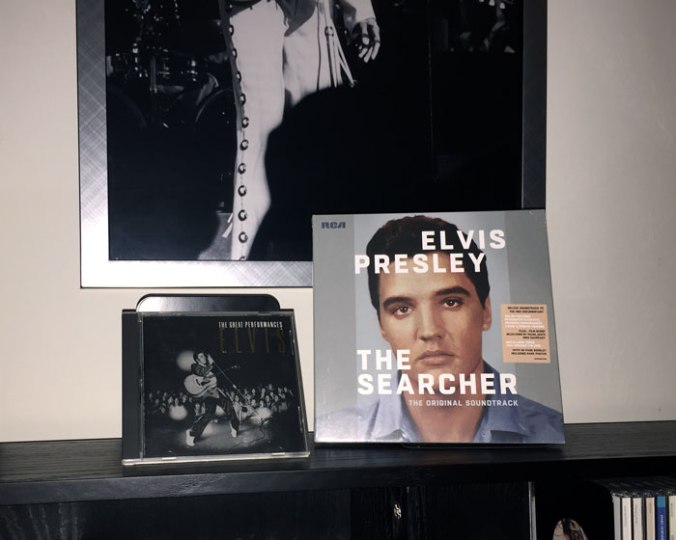
ELVIS: THE GREAT PERFORMANCES (1990) and ELVIS PRESLEY: THE SEARCHER (2018) soundtracks (Front)

ELVIS: THE GREAT PERFORMANCES (1990) and ELVIS PRESLEY: THE SEARCHER (2018) soundtracks (Front)

Just a couple of shots of the beautifully packaged soundtrack to the upcoming HBO documentary Elvis Presley: The Searcher. This is the 3-CD version. 1-CD and vinyl versions are also available. The soundtrack hit stores yesterday.

I threw a standard-sized CD case in there for size comparison (The Great Performances).

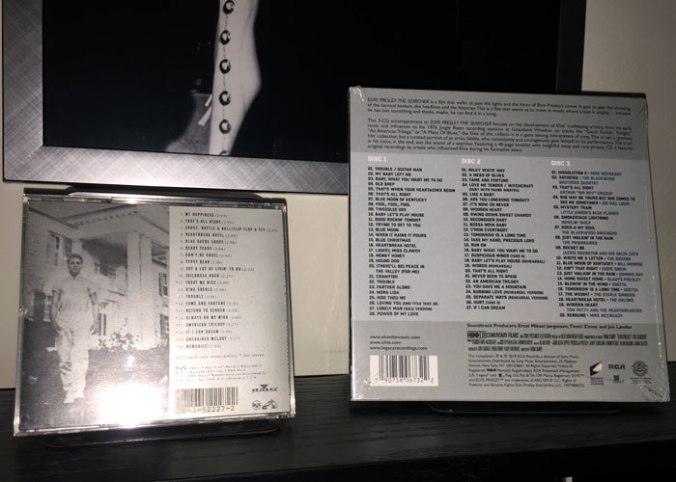
ELVIS: THE GREAT PERFORMANCES (1990) and ELVIS PRESLEY: THE SEARCHER (2018) soundtracks (Back)

ELVIS: THE GREAT PERFORMANCES (1990) and ELVIS PRESLEY: THE SEARCHER (2018) soundtracks (Back)

I’m not opening this until after I watch the documentary, so this is all I can really say about the soundtrack for now. Both parts of Elvis Presley: The Searcher premiere Saturday, April 14.


See below for the documentary’s trailer:

Royal Philharmonic Orchestra Makes Me Wonder If I Really Need a New Elvis CHRISTMAS Album [Pastimescapes blog]

If there is one constant at Christmastime, it is that there will be a “new” Elvis Christmas album available for purchase. These are normally just reshuffled sequences of selections from the two dozen or so seasonal songs Elvis Presley first released in 1957, 1966, 1968, and 1971. Only occasionally has there been any creativity in these posthumous releases–such as 1982’s Memories of Christmas or 2008’s Elvis Presley Christmas Duets albums.

While Christmas Duets was mostly a “miss,” at least it was an attempt to try something new. Now, in 2017, RCA/Sony/Legacy attempts again to freshen up the classics with Christmas. The album features the Royal Philharmonic Orchestra (RPO) providing new backing music for Elvis’ vocals. How does this latest attempt fare?

As I enjoyed both of the previous Elvis/RPO offerings (2015’s If I Can Dream and 2016’s The Wonder of You), I mostly knew what to expect going in. One aspect I found surprising this time, though, is that I immediately loved this album. With the two former albums, I had to play them through a couple of times to really “get” them. You could say I learned to love the If I Can Dream and The Wonder of You Elvis/RPO albums, while it was love at first listen with Christmas.

The Deluxe Edition of Christmas includes the Elvis vocals from all 12 (8 Christmas and 4 gospel) songs on 1957’s Elvis’ Christmas Album. It also contains Elvis performances of five Christmas selections originally part of 1971’s Elvis Sings the Wonderful World of Christmas. I recommend the Deluxe Edition (red cover) because it contains four more tracks than the standard version (tan cover), yet is at a similar price point.

I must admit, I was skeptical of the track listing before actually playing the album. Surely, the RPO would not mix well with bluesy classics like “Santa Claus Is Back In Town” and “Merry Christmas Baby.” While the originals are stone-cold classics, these new interpretations also manage to work in their own right.

What really makes this album stand out, though, are the Elvis vocals. They are so crystal clear. It is frustrating that they do not sound this way more often on standard releases, without newly recorded backgrounds, but I can only assume there is some technological reason that prevents this.

Though strong albums, If I Can Dream and The Wonder of You both had a few tracks where the RPO concept just did not work very well. Not so here. Every track on Christmas works. This is the best of the Elvis/RPO trilogy.

While I consider this a near-perfect album, given the concept, there is, unfortunately, a missed opportunity. “I’ll Be Home On Christmas Day,” which ranks second only to “Santa Claus Is Back In Town” as the best Elvis Christmas song of all, is missing in action here. Unless they plan an EP for some future Christmas, there are really not enough Elvis Christmas songs remaining to warrant a second full-length album, so they are probably not holding it back for that reason. I am not sure what happened, but perhaps an orchestral arrangement for the song simply did not work.

Unlike Christmas Duets, which had a pedestrian approach to many tracks, the arrangements here, by Robin Smith and Sally Herbert, offer much interest. I love the fuller sound. Also unlike Christmas Duets, I suspect this album will become a permanent fixture in my Christmas music rotation in the years ahead – alongside the originals, of course.

Do I really need a new Elvis Christmas album? It turns out the answer is, yes. This year, more than ever.

Christmas is a beautiful album.

Overall Rating: 10 out of 10.

CHRISTMAS (2017) [Deluxe Edition]

CHRISTMAS (2017) [Deluxe Edition]

Tracks

Christmas
Elvis Presley with the Royal Philharmonic Orchestra

  1. Santa Claus Is Back In Town [Elvis portions recorded 1957, Hollywood]
  2. White Christmas [Elvis portions recorded 1957, Hollywood]
  3. Here Comes Santa Claus [Elvis portions recorded 1957, Hollywood]
  4. Merry Christmas Baby [Elvis portions recorded 1971, Nashville]
  5. Blue Christmas [Elvis portions recorded 1957, Hollywood]
  6. I’ll Be Home For Christmas [Elvis portions recorded 1957, Hollywood]
  7. Winter Wonderland [Elvis portions recorded 1971, Nashville]
  8. Santa Bring My Baby Back [Elvis portions recorded 1957, Hollywood]
  9. Silver Bells [Elvis portions recorded 1971, Nashville]
  10. O Little Town Of Bethlehem [Elvis portions recorded 1957, Hollywood]
  11. O Come All Ye Faithful [Elvis portions recorded 1971, Nashville]
  12. The First Noel [Elvis portions recorded 1971, Nashville]
  13. Silent Night [Elvis portions recorded 1957, Hollywood]
  14. Peace In The Valley (Deluxe Edition only) [Elvis portions recorded 1957, Hollywood]
  15. I Believe (Deluxe Edition only) [Elvis portions recorded 1957, Hollywood]
  16. Take My Hand, Precious Lord (Deluxe Edition only) [Elvis portions recorded 1957, Hollywood]
  17. It Is No Secret (Deluxe Edition only) [Elvis portions recorded 1957, Hollywood]

The Royal Philharmonic Orchestra recorded 2017 at Abbey Road Studio 2, London.

July 19 Represents a Beginning and an End for Elvis Presley [Pastimescapes blog]

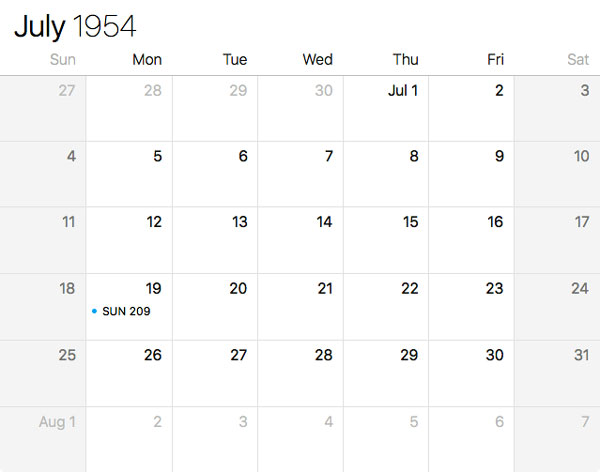
July 19, 1954

The date is July 19, 1954, and SUN releases the debut record of 19-year-old Elvis Presley. Produced by Sam Phillips, the single consists of “That’s All Right” backed with “Blue Moon of Kentucky.” Elvis, who in childhood dreamed of being “the hero of the comic book,” begins his adventure.

The years come and go. Elvis achieves many of his dreams, including becoming a musical hero throughout the world. Like everyone, he also loses other dreams along the way.

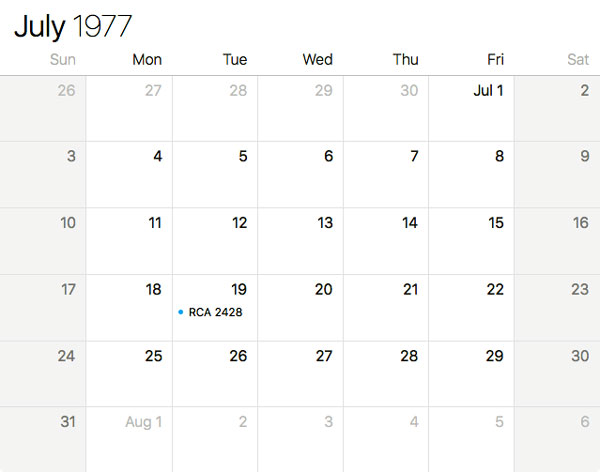
The date is July 19, 1977, and RCA releases Moody Blue, an album that proves to be the final Elvis record before his death exactly four weeks later at the age of 42. An unprecedented level of fame helped Elvis place himself on a path that brought his journey to a tragic end.

Only 23 years, a mere blink of history’s eye, separate the release of the last Elvis record from the first.

More time passes. Other heroes come and go, yet Elvis somehow remains. As some fans fade away, others take their place.

The date is now July 19, 2017, but those 23 years continue to resonate.

Journey with Pastimescapes today to the beginning and the end with two editions of Vinyl Elvis:

July 19, 1977

Take a Ride on the Mystery Train with Updated A BOY FROM TUPELO [Pastimescapes blog]

One of the best Elvis Presley stories in recent memory was an audio collector’s July 2012 discovery of a live recording of “I Forgot To Remember To Forget.” Not realizing the rarity of what he had found, the collector posted the 1955 Louisiana Hayride radio show segment on YouTube as a curiosity piece.

Once Elvis experts began to take notice, it was soon revealed that this performance had never been heard by the public since the original October 1955 broadcast. It was also in better audio quality than most other Elvis live recordings from the same era. Ernst Jorgensen, Sony’s Elvis chief, acquired the recording, and the video came down.

Meanwhile, A Boy From Tupelo: The Complete 1953-1955 Recordings, a limited-edition collection covering the same time period, was on the verge of release. Unfortunately, it was too late to add the newly found recording, so the massive book and 3-CD set was slightly less comprehensive than it otherwise would have been when Sony’s Follow That Dream (FTD) collectors label released it in August 2012.

Though I never did finish writing my review at the time, A Boy From Tupelo was a masterpiece even if only for the three CDs. Due to its limited availability, however, many fans were unable to obtain a copy. Five years later, it unfortunately sells for six or seven times its original price.

Sony announced today that an updated version of A Boy From Tupelo will be available as a mainstream release on July 28.

The live recording of “I Forgot To Remember To Forget” is finally taking its rightful place on this set and making its debut on an official release. Thank you to “amberola1b” (the audio collector who discovered the recording) and Jorgensen for making this possible.

I consider A Boy From Tupelo to be one of the most important releases since Elvis died in 1977, and I am glad that it will now be readily available at a reasonable price to any music fan that wants it.

While I had been hoping for a boxed set of Elvis On Tour (1972) concerts and rehearsals this year, A Boy From Tupelo is even better than that would have been. Sony’s mainstream Elvis releases have been very 1970s-heavy for the last several years, so Elvis On Tour can wait a few more years, as far as I am concerned.

While the original came with a 512-page book, this 2017 edition will be condensed to 120 pages. The music will also be available in a digital download edition. A 1-LP vinyl edition will be available, containing only the SUN masters (i.e., no alternate or live recordings).

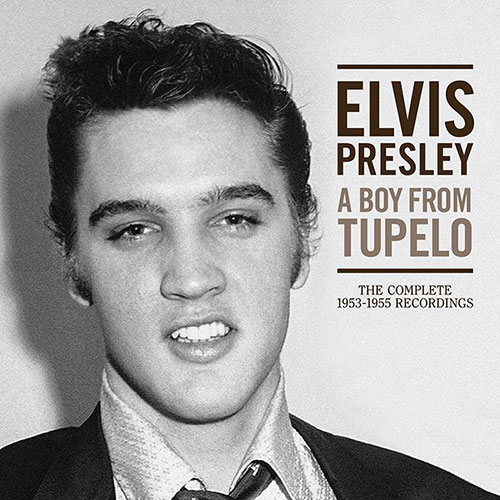
A BOY FROM TUPELO (2017 Sony Edition)

A BOY FROM TUPELO (2017 Sony Edition)

Which “Jungle Room” Elvis CD Should You Buy? [Pastimescapes blog]

[Side Note: Introducing the new look of Pastimescapes, which now leverages the Expound theme. Look for more tweaks in the coming days.]

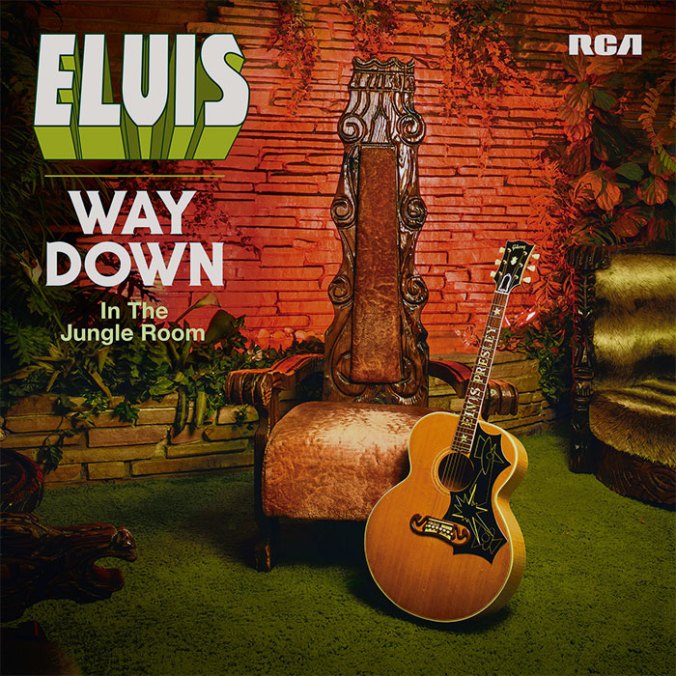
Cover of WAY DOWN IN THE JUNGLE ROOM (2016, Sony)

Cover of WAY DOWN IN THE JUNGLE ROOM (2016, Sony)

Memphis. When it comes to Elvis Presley, there is something magical about the music he created in his adopted hometown.

That magic is tangible, no matter if we are talking about his early SUN sides of 1954-1955, the American Sound sessions of 1969, the Stax recordings of 1973, the Mid-South Coliseum concerts of 1974, or the Graceland sessions of 1976 – where his home’s den was converted into a makeshift recording studio.

Those Graceland sessions, which proved to be the last “studio” recordings of Elvis’ career, initially resulted in two albums: From Elvis Presley Boulevard, Memphis, Tennessee, and the bulk of Moody Blue.

Since then, of course, alternates and outtakes from the Graceland sessions have appeared on numerous releases. The Jungle Room Sessions, for instance, is reportedly one of the best-selling CDs ever released by the Follow That Dream (FTD) collectors label for Elvis fans. The disc is so-named for the nickname given after Elvis’ death to Graceland’s uniquely decorated den.

Earlier this month, Sony released the latest compilation of these songs, Way Down In The Jungle Room. The release contains all of the Graceland master recordings on Disc 1 and selected alternates/outtakes on Disc 2.

Due to already having all of the material from both discs, I had actually planned to skip Way Down In The Jungle Room. I then found out more information about Disc 2 by reading Bob Mehr’s Memphis Commercial Appeal article on the project.

Thanks to the article, I did not skip it, and I can now highly recommend Way Down In The Jungle Room due to the incredible sound of Disc 2’s alternate/outtake versions – newly mixed by Matt Ross-Spang at Sam Phillips Recording Service.

However, my purpose today is not so much to review Way Down In The Jungle Room, but to expand upon an answer to a question I recently received from Wellsy – a Pastimescapes reader and longtime Elvis fan. A frequent commenter, he even wrote a guest post on The Mystery Train a few years back for me.

Wellsy emailed me on vacation from Memphis about some CDs he was considering purchasing. Somewhere in the course of our ongoing exchange, he asked, “What is the difference between FTD’s The Jungle Room Sessions and Sony’s Way Down In The Jungle Room?”

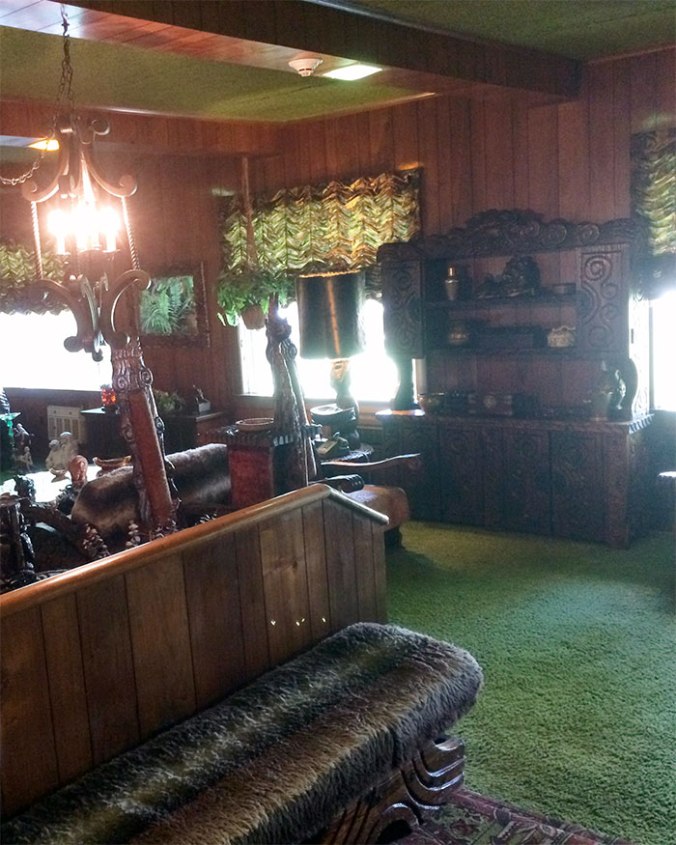
Frozen In Time: Graceland's den in 2016 essentially looks the same as it did in 1977. According to legend, Elvis bought the Witco furnishings after his father commented that it was ugliest furniture he had ever seen. (Photo by Wellsy.)

Frozen In Time: Graceland’s den in 2016 essentially looks the same as it did in 1977. According to legend, Elvis bought the Witco furnishings after his father commented that it was ugliest furniture he had ever seen. (Photo by Wellsy.)

If you are interested in the Graceland sessions, the underlying question is which of the Elvis releases covering this material should you buy? In addition to Way Down In The Jungle Room, there have been quite a few, including:

  • From Elvis Presley Boulevard (RCA): Masters from the February 1976 Graceland sessions (#19 on my recent “50 Greatest Elvis Albums” list)
  • Moody Blue (RCA): Remaining masters from the February and October 1976 Graceland sessions, supplemented with live recordings from 1974 and 1977 (#7 on my list)
  • The Jungle Room Sessions (FTD): Alternates/outtakes from the 1976 Graceland sessions
  • From Elvis Presley Boulevard (FTD Classic Album Edition): Masters and alternates/outtakes from the original RCA album, including relevant portions of The Jungle Room Sessions in improved sound quality and some previously unreleased tracks
  • Moody Blue (FTD Classic Album Edition): Masters and alternates/outtakes from the original RCA album, including relevant portions of The Jungle Room Sessions in improved sound quality and some previously unreleased tracks

People who know me offline, and I am sure some online have picked up on this as well, understand that I am a very analytical person. Sometimes to the point of annoyance, but, hey, it pays the bills. Anyway, I thought it might be interesting to compare some of the releases covering the Graceland sessions in a more visual fashion.

The below chart captures the master and other complete takes for each of the songs recorded at the Graceland sessions that have been officially released to date. In an attempt to keep this to a manageable size, I left out things like rehearsals, false starts, and FTD-generated splices.

Graceland Sessions Comparison Chart

As noted in the graphic, my key information sources for the above were:

Any mistakes you might find, though, were entirely of my own making.

So, which one should you buy?

For typical, casual, new, or would-be Elvis fans, I recommend you buy Way Down In The Jungle Room. It gives you all of the master takes as well as a manageable number of alternates in great sound quality. This 2-CD set is a real value at less than US $15. Incidentally, there is also an LP vinyl version, but it does not include the masters.

For “totally insane” Elvis fans (like me), who enjoy listening to multiple alternates of the same song, I recommend you buy the FTD “Classic Album” editions of From Elvis Presley Boulevard and Moody Blue. Each of these 2-CD sets will run you around US $30, but they are more than worth it to experience the making of these albums. However, you will probably want to pick up the seemingly redundant Way Down In The Jungle Room as well at some point – simply for the sound experience on Disc 2.

No matter which you choose, settle back and enjoy some Memphis magic, courtesy of Elvis.


Thanks to Wellsy for inspiring this topic as well as giving permission to use his photo of Graceland’s den.

Check out A Boy From Tupelo track listing

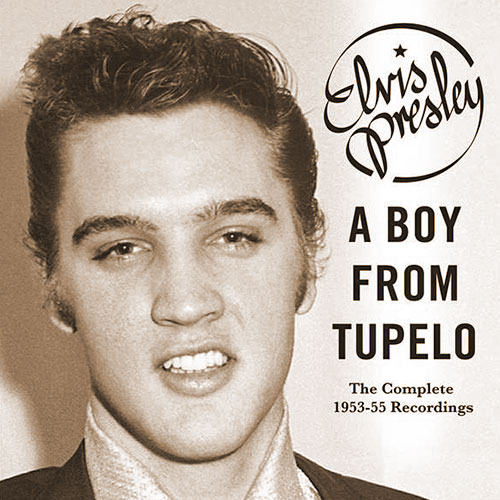
A Boy From Tupelo (concept cover art)

This has been another fantastic week of Elvis release news. Today, Follow That Dream Records revealed the track listing for the long-awaited A Boy From Tupelo: The Complete 1953-55 Recordings, FTD’s SUN boxed set that includes a 512-page book and three CDs. FTD, Sony’s collectors label for Elvis fans, will release the set next month.

It appears that Elvis Matters was the first site to break the track listing news, though I first read about it over on a For Elvis CD Collectors Forum thread started by Greg1995. On that thread, FECC member Good Time Charlie took the time to reformat the track listing to make it more palatable. I’ve used his version for the below, with a few very minor tweaks of my own. A big thank you to Charlie for allowing me to use his work.

Elvis Presley: A Boy From Tupelo – The Complete 1953-55 Recordings

Disc 1: MRS Acetates, The SUN Masters & The RCA Masters

01) My Happiness 2:33
02) That’s When Your Heartaches Begin 2:52
03) I’ll Never Stand In Your Way 2:04
04) It Wouldn’t Be The Same (Without You) 2:09
05) Harbor Lights 2:38
06) I Love You Because 2:43
07) That’s All Right [45 RPM SUN Master] 2:00
08) Blue Moon Of Kentucky [45 RPM SUN Master] 2:07
09) Blue Moon 2:44
10) Tomorrow Night 3:01
11) I’ll Never Let You Go (Little Darlin’) 2:27
12) I Don’t Care If The Sun Don’t Shine 2:32
13) Just Because 2:34
14) Good Rockin’ Tonight 2:15
15) Milkcow Blues Boogie [78 RPM SUN Master] 2:39
16) You’re A Heartbreaker [78 RPM SUN Master] 2:13
17) I’m Left, You’re Right, She’s Gone [Slow version] 2:43
18) Baby Let’s Play House 2:19
19) I’m Left, You’re Right, She’s Gone 2:38
20) I Forgot To Remember To Forget 2:31
21) Mystery Train 2:30
22) Tryin’ To Get To You 2:36
23) When It Rains It Pours 2:06
24) That’s All Right 1:59 [RCA single version]
25) Blue Moon Of Kentucky 2:05 [78 RPM SUN Master]
26) I Love You Because 2:45 [RCA LP version – spliced from takes 3 & 5]
27) Tomorrow Night 2:56 [RCA LP version – overdubbed and slowed down]

Tracks 1-2: Self-financed demo recorded July, 1953 at SUN Studio, Memphis.
Source for tracks 1-2: Digital transfer of acetate.

Tracks 3-4: Self-financed demo recorded January 4, 1954 at SUN Studio, Memphis.
Source for tracks 3-4: Digital transfer of acetate in very poor condition.

Track 5 possibly recorded July 5, 1954.
Tracks 6-7 recorded July 5, 1954 at SUN Studio, Memphis.
Sources for tracks 5-6: Original SUN tapes.
Source for track 7: 45 rpm SUN single (plastic).

Track 8: Recorded July 7, 1954 at SUN Studio, Memphis.
Source for track 8: 45 rpm SUN single (plastic).

Track 9: Likely recorded between August 15 and 19, 1954 at SUN Studio, Memphis.
Source for track 9: Original SUN tape.

Tracks 10-14 likely recorded between September 12-16, 1954 at SUN Studio, Memphis.
Sources for tracks 10, 11, 13 and 14: RCA reference tapes (30 ips).
Source for track 12: Digital transfer of SUN tape, with repairs from a digital transfer of a tape copy.

Tracks 15-16 recorded either mid-November or mid-December 1954 at SUN Studio, Memphis.
Sources for tracks 15-16: 78 rpm SUN single (shellac).

Track 17 Recorded between mid-November 1954 and mid-April 1955 at SUN Studio, Memphis.
The reel has March 5 written on it, but Elvis was at the Louisiana Hayride that day.
Source for track 17: Original SUN tape.

Track 18 likely recorded between January 30 and February 4, 1955 at SUN Studio, Memphis.
“I Got a Woman” and “Tryin’ to Get to You” were also recorded, but have been lost.
Source for track 18: RCA reference tape (30 ips).

Track 19 likely recorded mid-April 1955 at SUN Studio, Memphis.
Source for track 19: RCA reference tape (30 ips), with first part of ending from RCA tape copy (15 ips) and last part of ending from digital transfer of the RCA EPA-965 production master tape.

Tracks 20-22 recorded mid-July, 1955 at SUN Studio, Memphis.
Source for track 20: SUN tape copy.
Source for track 21: SUN tape copy, with ending from digital transfer of 78 rpm RCA single.
Source for track 22: RCA reference tape (30 ips).

Track 23 recorded November 1-4, 1955 at SUN Studio, Memphis.
Source for track 23: Original SUN (vocal channel) slapback tape.
Elvis’ 1957 re-recording of the song was released under the title “When It Rains, It Really Pours.”

Source for track 24: RCA reference tape (30 ips).

Source for track 25: Elvis at SUN master, derived from digital transfer of 78 RPM SUN single (shellac).

Track 26: Steve Sholes’ original notes have these takes as 2 & 4.
Source for track 26: RCA master tape.

Source for track 27: 1965 RCA work part tape for the Elvis for Everyone LPM-3450 production master tape.

Disc 2: The SUN Studio Sessions

01) Harbor Lights (takes 1-2, level adjustments) 0:33
02) Harbor Lights (take 3/M) 2:53
03) Harbor Lights (take 4) 2:38
04) Harbor Lights (takes 5-6) 1:23
05) Harbor Lights (take 7) 2:25
06) Harbor Lights (take 8) 0:26
07) I Love You Because (take 1) 0:23
08) I Love You Because (take 2) 3:28
09) I Love You Because (take 3) 3:36
10) I Love You Because (take 4) 0:40
11) I Love You Because (take 5) 3:28
12) That’s All Right (takes 1-2) 0:20
13) That’s All Right (take 3) 1:58
14) Dialogue 0:20
15) Blue Moon Of Kentucky [slow tempo outtake] 1:08
16) Blue Moon (takes 1-3) 0:38
17) Blue Moon (take 4) 2:59
18) Blue Moon (take 5) 3:25
19) Blue Moon (takes 6-7) 0:53
20) Blue Moon (take 8) 3:01
21) Blue Moon (take 9/M) 2:44
22) Dialogue fragment [before “Tomorrow Night”] 0:11
23) I’ll Never Let You Go (Little Darlin’) [incomplete take] 0:49
24) Good Rockin’ Tonight [fragment from vocal slapback tape] 0:10
25) I Don’t Care If The Sun Don’t Shine (takes 1-2) 1:13
26) I Don’t Care If The Sun Don’t Shine (take 3/M) 2:35
27) I’m Left, You’re Right, She’s Gone (slow version, take 1) 3:00
28) I’m Left, You’re Right, She’s Gone (slow version, take 2) 2:51
29) I’m Left, You’re Right, She’s Gone (slow version, take 3) 2:51
30) I’m Left, You’re Right, She’s Gone (slow version, take 4) 0:10
31) I’m Left, You’re Right, She’s Gone (slow version, take 5/M) 2:40
32) I’m Left, You’re Right, She’s Gone (slow version, take 6) 2:40
33) I’m Left, You’re Right, She’s Gone (slow version, take 7) 1:35
34) How Do You Think I Feel (guitar slapback tape, rehearsal + take 1) 3:17
35) How Do You Think I Feel (guitar slapback tape, rehearsals) 1:14
36) When It Rains It Pours (vocal slapback tape, take 1) 1:37
37) When It Rains It Pours (vocal slapback tape, take 2 – rehearsal) 2:12
38) When It Rains It Pours (vocal slapback tape, takes 3-4) 2:14
39) When It Rains It Pours (vocal slapback tape, take 5/M) 2:02
40) When It Rains It Pours (vocal slapback tape, take 6-7) 1:40
41) When It Rains It Pours (vocal slapback tape, take 8) 1:40

Tracks 1-6 possibly recorded July 5, 1954 at SUN Studio, Memphis.
Source for tracks 1-6: Original SUN tape.

Tracks 7-13 recorded July 5, 1954 at SUN Studio, Memphis.
Source for tracks 7-13: Original SUN tape.

Tracks 14-15 likely recorded July 7, 1954 at SUN Studio, Memphis.
Source for tracks 14-15: Digital transfer of SUN tape.

Tracks 16-21 likely recorded between August 15 and 19, 1954 at SUN Studio, Memphis.
Source for tracks 16-21: Original SUN tape.

Tracks 22-26 likely recorded between September 12 and 16, 1954 at SUN Studio, Memphis.
Source for track 22: RCA reference tape (30 ips) for “Tomorrow Night”.
Sources for tracks 23-26: Digital transfers of SUN tapes (also see source note for Disc 1, track 12).

Tracks 27-33 recorded between mid-November 1954 and mid-April 1955 at SUN Studio, Memphis.
The reel has March 5 written on it, but Elvis was at the Louisiana Hayride that day.
Source for tracks 27-33: Original SUN tape.

Tracks 34-35 recorded between mid-November 1954 and mid-April 1955 at SUN Studio, Memphis.
Source for tracks 34-35: Digital transfer of SUN (guitar channel) slapback tape.

Tracks 36-41 recorded between November 1-4, 1955 at SUN Studio, Memphis.
Source for tracks 36-41: Original SUN (vocal channel) slapback tape.

Disc 3: Live & Radio Performances

01) That’s All Right 2:52
02) Blue Moon Of Kentucky 2:23
03) Shake, Rattle And Roll 2:24
04) Fool, Fool, Fool 1:59
05) Hearts Of Stone 2:02
06) That’s All Right 1:52
07) Tweedlee Dee 2:51
08) Shake, Rattle And Roll 2:23
09) KSIJ Radio commercial with DJ Tom Perryman 0:16
10) Money Honey 2:43
11) Blue Moon Of Kentucky 2:04
12) I Don’t Care If The Sun Don’t Shine 2:33
13) That’s All Right 1:54
14) Tweedlee Dee 2:15
15) Money Honey 2:17
16) Hearts Of Stone 1:37
17) Shake, Rattle And Roll 1:39
18) Little Mama 2:03
19) You’re A Heartbreaker 2:06
20) Good Rockin’ Tonight 2:36
21) Baby Let’s Play House 2:22
22) Blue Moon Of Kentucky 1:47
23) I Got A Woman 3:03
24) That’s All Right 2:17
25) Tweedlee Dee 2:47
26) Interview with Mae Boren Axton 3:19
27) That’s All Right 2:37
28) I’m Left, You’re Right, She’s Gone 3:16
29) Baby Let’s Play House 3:19
30) Maybellene 3:09
31) That’s All Right 2:49
32) Interview with Bob Neal 5:31

Tracks 1-2 recorded at Louisiana Hayride debut, Shreveport, Louisiana, October 16, 1954.
Source for tracks 1-2: RCA reference tape copy.

Tracks 3-4 recorded at KDAV Radio, Lubbock, Texas, January 6, 1955.
Source for tracks 3-4: Digital transfer of acetate.

Tracks 5-7 likely recorded at the Louisiana Hayride, Shreveport, Louisiana, January 15, 1955.
Source for tracks 5-7: Digital transfer of acetate in very poor condition.
Some parts duplicated and edited to create near-complete performances.

Track 8 recorded at WJOI Radio, Florence, Alabama January 19, 1955.
Source for track 8: Digital transfer of acetate in poor condition.

Track 9 recorded at KSIJ Radio, Gladewater, Texas, 1955.
Source for track 9: Digital transfer.

Tracks 10-13 likely recorded at the Louisiana Hayride, Shreveport, Louisiana, January 22, 1955.
Source for tracks 10-13: Digital transfer of acetate in very poor condition. Some parts duplicated and edited to create near-complete performances.

Tracks 14-19 likely recorded at the Louisiana Hayride, Shreveport, Louisiana, March 5, 1955.
Source for tracks 14-19: Digital transfer of fragments of acetate in very poor condition (which was destroyed in the process). Some parts duplicated and edited to create near-complete performances.

Tracks 20-24 likely recorded at the Eagles’ Hall, Houston, Texas, March 19, 1955. Track 21 could be from a different performance the same week.
Source for tracks 20-24: RCA reference tape copy.

Track 25 recorded at Gladewater High School, Gladewater, Texas, April 30, 1955.
Source for tracks 25: RCA reference tape copy.

Track 26 recorded at motel in Jacksonville, Florida on either May 12 or July 28, 1955.
Source for track 26: Digital transfer of 1981 BBC broadcast tape copy.

Track 27 recorded at the Jimmie Rodgers Memorial Festival, Meridian, Mississippi, May 26, 1955.
Source for track 27: Broadcast tape.

Track 28 recorded at the Louisiana Hayride, Shreveport, Louisiana, July 2, 1955.
Source for track 28: Digital transfer of acetate in very poor condition. Some parts duplicated and edited to create near-complete performance.

Tracks 29-31 recorded at the Louisiana Hayride, Shreveport, Louisiana, August 20, 1955.
Source for tracks 29-31: RCA reference tape copies.

Track 32 recorded at WMPS Radio, Memphis Tennessee, between August 29-31, 1955.
Source for track 32: Digital transfer.

* * *

A Boy From Tupelo looks like it will indeed be the definitive SUN set. I’m most looking forward to hearing the original SUN 45 RPM version of “That’s All Right.” I’ve only heard the RCA version, which has added echo.

In Other News…

One of the many reasons I finally pounced on Elvis: The Complete Masters Collection was to obtain the Vic Anesini mastering of Elvis As Recorded At Madison Square Garden, which has been in dire need of an audio upgrade since its original CD release in the early 1990s. As soon as I placed the order, I thought, “Now everyone will have to thank me for finally buying it, as this will guarantee a Sony Legacy Edition release of Madison Square Garden in the near future.” This kind of thing happens to me all the time, you see.

Sure enough, Sony recently announced a Legacy Edition release of As Recorded At Madison Square Garden. So, you’re welcome!

The Legacy Edition, due in October for the US, will contain a remastered version (presumably, Anesini’s) of the original album using the vintage mix of the June 10, 1972, Evening Show. Sony will couple it with the June 10, 1972, Afternoon Show, previously released as An Afternoon In The Garden, to make a nice two-disc set. Since I already have the upgraded As Recorded At Madison Square Garden on The Complete Masters Collection, I’ll be skipping this Legacy Edition.

However, Sony is releasing another Madison Square Garden set at the same time. Prince From Another Planet: As Recorded At Madison Square Garden is a three-disc set consisting of two CDs and one DVD. The CDs will contain new mixes of both of the June 10 shows by Michael Brauer (i.e., this is not the vintage As Recorded At Madison Square Garden mix that will be on the Legacy Edition).

Since the historic mix has been properly preserved, this is a chance to do something different. I’m excited to hear what Brauer has come up with for these shows.

The 40-minute DVD will contain portions of Elvis’ Madison Square Garden press conference (a favorite of mine) and live performance material from the show. To date, no video footage of the Madison Square Garden shows has been officially released, so that alone makes Prince From Another Planet a must-have for fellow fans of this Elvis era.

So, something funny happened when I was Googling for more information on Prince From Another Planet. I found out that I named it!

Well, not really. However, I came across my own comment from July 3, 2011, on this very blog in the search results:

“[C]an you imagine… a 5 CD set, the 1972 equivalent of ‘Young Man With The Big Beat,’ containing the 3 CDs I mentioned above [the remaining April 1972 ‘Elvis On Tour’ shows], plus the two Garden shows to round out the other 2 CDs? Call it ‘A Prince From Another Planet.’ Then, the Garden shows could be a Legacy Edition as a separate release as well (much like the ‘Elvis Presley’ Legacy Edition is to the 1956 boxed set).”

I had forgotten all about this and was literally shocked to read my own words. I’m sure it’s a total coincidence, of course.

(In case it’s not a coincidence, though, and Sony is really reading this little blog – just give me a call, because I have plenty more Elvis ideas. I’ll be waiting by the phone.)
From sea to shining sea

“We hold these truths to be self-evident, that all men are created equal, that they are endowed by their Creator with certain unalienable rights, that among these are life, liberty and the pursuit of happiness. That to secure these rights, governments are instituted among men, deriving their just powers from the consent of the governed.” –From The Declaration of Independence, Thomas Jefferson, July 4, 1776
America The Beautiful: A History of Elvis Presley Releases

  • December 6, 1975, Live, Las Vegas, Midnight Show: Live In Las Vegas
  • December 13, 1975, Live, Las Vegas, Dinner Show: Dinner At Eight
  • December 13, 1975, Live, Las Vegas, Midnight Show: Single, b/w “My Way”
  • December 14, 1975, Live, Las Vegas, Midnight Show: Fashion For A King
  • February 8, 1976, Memphis: The Jungle Room Sessions (incomplete)
  • April 22, 1976, Live, Omaha: America
  • July 3, 1976, Live, Fort Worth: Rocking Across Texas
  • July 30, 1976, Live, New Haven: New Haven 76
  • October 18, 1976, Live, Sioux Falls: A Minnesota Moment

[Information source: Elvis In Norway Session Notes]

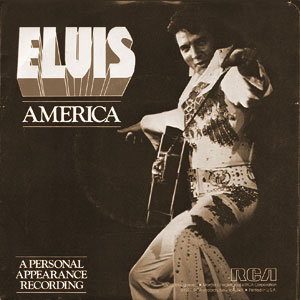
Cover of America The Beautiful, 1977 single

Oh beautiful,
For spacious skies,
For amber waves of grain,
For purple mountains, majesty,
Above the fruited plains,
America, America,
God shed His grace on thee,
And He crowns thy good,
With brotherhood,
From sea to shining sea

–From “America The Beautiful,” Elvis Presley song, 1975 (written by Katharine Lee Bates & Samuel Ward)

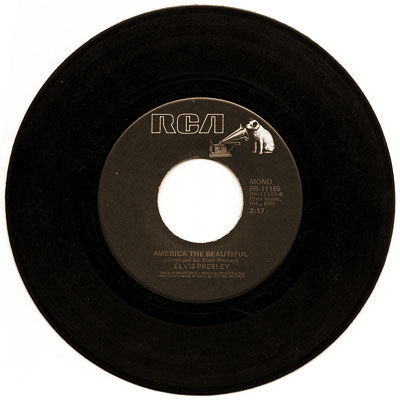
America The Beautiful, 1977 single


UPDATE: Check out today’s entry of The Sheila Variations blog for another look at Elvis Presley’s “America The Beautiful.”