REVIEW – Live In Vegas: August 26, 1969 Dinner Show CD (FTD)

Live In Vegas: August 26, 1969 Dinner Show CD (Follow That Dream Records, 2011)

If you believe some fans, surely we’ve already heard enough 1969 Las Vegas concerts. Now that Live In Vegas: August 26, 1969 Dinner Show is available from FTD, let’s take a closer look at their claims.

Claim: If you’ve heard one 1969 show, you’ve heard them all.
Verdict: FALSE

For those who believe there are no more revelations to discover in these shows, I can easily pull one example of many from this release alone. For over 40 years now, Elvis fans have listened to the 1969 compilation Elvis In Person. How many ever realized that Elvis dedicated the specific performance of “Suspicious Minds” contained on that album to Barbara McNair, one of his Change Of Habit co-stars?

Elvis evidently thought a lot of McNair, who played Sister Irene, for he plugged her upcoming TV series, The Barbara McNair Show, when presenting her to the audience. As mentioned, Elvis’ introduction of the familiar version of “Suspicious Minds” is now slightly different: “A new record that just came out, ladies and gentlemen, I hope you like it, I’d like to do this especially for Barbie, it’s called ‘Suspicious Minds.'”

Though it is the sixth full-length show released from this engagement, Live In Vegas actually marks the first release of a concert that contributed songs to the Elvis In Person compilation (“Suspicious Minds” and “Can’t Help Falling In Love”). One of the joys of being able to hear complete 1969 shows like this one is re-discovering a song within its original context.

Claim: Every 1969 show had the same set list.
Verdict: FALSE

Live In Vegas is actually the first full show released thus far to include “My Babe” (previously compiled on Elvis Aron Presley) or “Inherit The Wind” (previously compiled on Collectors Gold). This is also the first full show so far where Elvis omits “Are You Lonesome Tonight” and only the second where he omits “What’d I Say.”

Incidentally, the inane argument that the set lists were always the same wasn’t even true of the first five shows released. Don’t get me wrong – of course, the core set lists are similar. These shows were all recorded within less than a week’s time, after all. The amusing part is that some fans apparently expect that Elvis should have completely revamped his show night after night. The 1969 concerts were about as perfect as any Elvis did in his career, but that’s not good enough for some.

Claim: If you’ve already heard the Midnight Show from this same date on All Shook Up, Live In Vegas will just be more of the same.
Verdict: FALSE

Though indeed recorded just a few hours apart from one another, the shows captured on All Shook Up and Live In Vegas are quite different from one another and do not play like repeats of the same show. The biggest difference is tone. While Elvis seems unable to control his infectious laughter through much of All Shook Up – including the fantastic “Are You Laughing Tonight” – he is much more focused on Live In Vegas. In fact, other than a few snickers here and there, there is little foreshadowing in the Dinner Show as to what will occur in the Midnight Show.

As far as the songs performed for these specific shows, the Dinner Show (Live In Vegas) features “Memories,” “My Babe,” and “Inherit The Wind,” which are not present on the later show. The Midnight Show (All Shook Up), on the other hand, features “I Can’t Stop Loving You,” “Are You Lonesome Tonight,” “Rubberneckin’” and “This Is The Story,” which are not present on the earlier show.

I find being able to listen to two shows from the same day during this incredible time of Elvis’ career to be one of the most positive aspects of this release, certainly not a drawback. It is fascinating to imagine being there for that single day, somehow fortunate enough to have tickets to both shows.

Show & Sound Quality

I’m just glad Ernst Jorgensen and the rest of Sony’s Follow That Dream team do not subscribe to the sort of claims refuted above. If they did, we might have missed out on Live In Vegas.

With that out of the way, we can now move on to more important things, like show and sound quality. The first few times I played this disc, my opinion was that no 1969 show had ever sounded this vibrant.

I have played all six full shows this week and part of me believes that Live In Vegas is the best of the complete 1969 shows released so far, in terms of Elvis’ performance. I am not quite ready to say that yet, though. I want to give more time for the newness to wear off and allow myself to compare the various shows more objectively. Like all of the other 1969 shows thus far released, though, this is without a doubt one of Elvis’ greatest concerts.

Elvis treats his classics with more respect in 1969 than he would in later years. “Blue Suede Shoes,” “All Shook Up,” “Love Me Tender,” “Jailhouse Rock,” and “Don’t Be Cruel” are all contenders as his best 1969 versions.

“You see, they fixed these lights up for Nancy Sinatra. They wouldn’t do it for me. That shows where the pull is. . . . I’ll show ’em, I won’t come back,” Elvis states shortly after welcoming the audience early on. Nancy’s engagement on the same stage would begin on August 29, just a day after Elvis’ would end. Elvis stuck around and caught her show and, despite his joke, returned to the International for another engagement just six months after this first one.

“Hound Dog” is also great, once you get past his cringe-inducing introduction of the song that also plagues every other version released so far from this engagement.

There are two tracks I always pay close attention to on the 1969 shows. One is “Suspicious Minds” – already a known factor on this album – and the other is the “Mystery Train/Tiger Man” medley. Elvis does a kickin’ rendition of this medley on Live In Vegas.

While Ronnie Tutt’s jungle drums are the focus in the first bits of “Tiger Man” before the second guitar break, the mix turns over to James Burton’s rockin’ guitar riffs for the other half of the song. It makes for a great compromise and one of the best versions of the song yet released.

I have yet to hear a bad version of “Runaway” from these shows, and this one is no exception. What a terrific performance from Elvis, driven again by James Burton. Too bad it was dropped from the show after 1969.

“Yesterday” is the typical “I’m not half the stud…” version and, as usual, the tacked on “Hey Jude” ending is no help.

After introducing the band, Elvis has Barbara McNair stand and introduces her as “a young lady that I just got through making a picture with called Change Of Habit, and I found her to be one of the nicest, warmest, lovingest people I’ve ever met.” When audience members complain they could not see her, he has the lights turned back on so she can stand up again.

It’s really cool hearing Elvis promote one of his movies on stage. Since he took a break from concerts through most of the 1960s, when he made the bulk of his movies, this was not an opportunity he had very often.

“In The Ghetto” is beautiful, similar to the Elvis In Person version.

On both of his August 26 shows, Elvis omits his breakneck speed version of “What’d I Say” and, in my opinion, the shows are all the better for it. “Suspicious Minds” is the ideal penultimate song, segueing perfectly into “Can’t Help Falling In Love.”

Speaking of “Can’t Help Falling In Love,” the Elvis In Person version has always been my favorite from 1969, and it sounds even better here.

* * *

Live In Vegas showcases Elvis Presley at his best on stage in a sound presentation that is richly mastered and crystal clear.

Sony reportedly has another six full shows from this engagement in its vault, including three more that contributed songs to the Elvis In Person album: the August 25 Dinner Show and the August 24 & 25 Midnight Shows.

There will always be complainers–even when Elvis was alive, he couldn’t please everyone, not even in 1969–but here’s hoping the rest of those 1969 shows, particularly the Elvis In Person ones, are eventually released. I’m looking forward to hearing each and every one of them.
Elvis 1967: Indescribably Blue/Fools Fall In Love single

Elvis’ first record release of 1967 was the 45 RPM single “Indescribably Blue” backed with “Fools Fall In Love.” Recorded in Nashville the previous year, the single shipped on January 10. “Indescribably Blue” eventually made it to #33 on the Billboard Hot 100 chart (February 25, 1967).

While it may not have been reflected in the chart position, “Indescribably Blue” was one of Elvis’ greatest records – showcasing a more powerful voice, yet harkening back to some of his earliest recordings. Elvis’ friend Lamar Fike, who passed away yesterday, apparently suggested that he record the song, which was written by Darrell Glenn.

The flip side was a cover of “Fools Fall In Love,” a Jerry Leiber and Mike Stoller song first recorded by the Drifters in 1957. While Elvis’ version is good and manages to overcome a weak, almost movie-tune-style arrangement, I definitely have to give the Drifters the edge on this one.

* * *
Research Sources

  • Elvis Presley: A Life In Music – The Complete Recording Sessions by Ernst Jorgensen, St. Martin’s Press, New York, 1998.
  • The Elvis Encyclopedia by Adam Victor, Overlook Duckworth, New York, 2008.
  • ELVIS: His Life From A To Z by Fred Worth and Steve Tamerius, Wings Books, New York, 1992.
  • Billboard, Vol. 79, No. 8, Nielsen Business Media, Inc., February 25, 1967.

Throughout 2011, The Mystery Train Elvis Blog is commemorating the 44th anniversary of 1967. Why? Riders of this train love exploring Elvis’ entire career, not just the 1950s. Find out more here.

Some thoughts on “It’s Still Here” and Elvis In Nashville

Thomas over at the Elvis Today blog has written a great review of the latest FTD classic album release, 1973’s Elvis (Fool). “Of the three ‘Elvis at the piano’ songs, my favorite has always been ‘It’s Still Here,'” he says.

“It’s Still Here” is definitely my favorite as well, by a long shot over “I’ll Take You Home Again, Kathleen” and “I Will Be True.” I first heard “It’s Still Here” on a 1988 compilation album called Elvis In Nashville. I remember listening to that record over and over, and particularly loving that song because it featured Elvis on piano. It’s one of those sad “Always On My Mind” style songs that I gravitate towards, anyway. Wonderful performance.

I just pulled out Elvis In Nashville from my record collection and decided to give it a spin. I haven’t played it in years. Wow, what a track listing! While it may just have been a compilation of previously released songs, it was my first exposure to many of them.

Side A
I Got A Woman
A Big Hunk O’ Love
Working On The Building
Judy
Anything That’s Part Of You
Night Rider
Where No One Stands Alone

Side B
Just Call Me Lonesome
Guitar Man
Little Cabin Home On The Hill
It’s Your Baby, You Rock It
Early Mornin’ Rain
It’s Still Here
I, John

This album made for a fascinating listening experience, showing how Elvis music from various time periods really blended much better together than some people would have you believe.

I also remember that “Night Rider” always skipped at a certain point of the song, even the first time I played the record. It wasn’t until I obtained ELVIS: From Nashville To Memphis-The Essential 60s Masters I several years later on CD that I was finally able to hear the song without the skip. As much as I love my old records, I can still pull out From Nashville To Memphis on CD and the sound quality is as perfect as the day I bought it. I do miss the pops and crackles of the record sound sometimes, though. Elvis In Nashville has a lot of that. I must’ve really played the heck out of this one back then.

Anyway, be sure to check out Thomas’ review of Elvis (Fool), which also features “It’s Still Here,” over on Elvis Today.

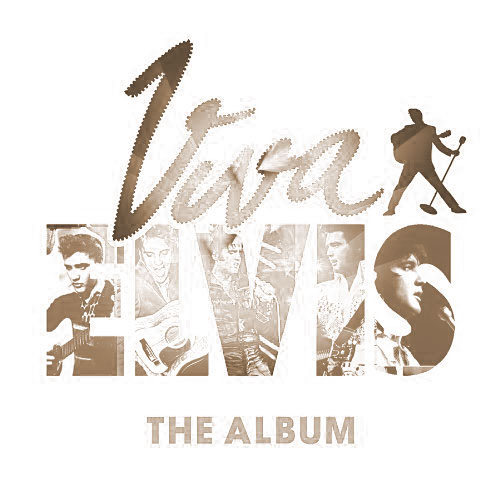
Listen to Elvis again for the first time in Viva Elvis-The Album

Viva Elvis: The Album is the Elvis surprise of the year for me. Since I have no interest in the Cirque du Soleil show that inspired it, I was pretty much ignoring this release until a preview trailer appeared before the theatrical showing of Elvis On Tour. That preview perfectly sets up this album – in fact, it is essentially the opening track. Next, I heard the modernized version of “Suspicious Minds” and I was hooked. (The accompanying music video released yesterday on elvis.com, however, is atrocious.)

From the sound clips on Amazon and other sites, I was pretty sure this album would be about one-third great, one-third okay, and one-third awful. I missed the mark on that assessment, by a mile. The entire album is a creative show of force that left me in absolute shock. The out-of-context song clips do not even begin to do this artistic album justice. Not even the “Suspicious Minds” single is an adequate representation, for this album is an experience.

Unlike other remix-type albums, I recommend listening to Viva Elvis in one sitting from beginning to end – rather than in the segmented form that iPod convenience so often brings us. Though the Elvis vocals are mostly from studio masters, this often feels like a live show – that is, if Elvis was alive in 2010 and gave a multimedia extravaganza concert reflecting on his career.

The backing on these tracks may have changed from the familiar versions, but the heart of this music remains the same. The originals will always maintain their rightful prominence over fancy remixes, but Viva Elvis: The Album offers a chance to listen to Elvis for the first time – all over again. It is so great that I wish I could shout about it from mountaintops – but I’m really not much of a climber. Instead, I’ll just have to use my little blog.

Viva Elvis The Album, 2010

Viva Elvis The Album, 2010

REVIEW: Boston Garden CD (FTD)

Elvis As Recorded At Boston Garden ‘71 CD (Follow That Dream Records, 2010)

Yesterday’s dream

You have been an Elvis fan for 15 years, through the ups and downs since 1956. When the Beatles came to Boston seven years ago, you stayed home. Now, finally, the one you were really waiting for is here.

You forget about the borrowed camera you are clutching as Elvis appears, as if out of magic.

Fans erupt in screams. You do not even realize that you are yelling, too, as Elvis grabs the microphone.

“Well, that’s all right little mama, that’s all right with you. That’s all right little mama, just any way you do,” he sings. Are you dreaming? Is this really happening?

By the middle of the show, you suddenly remember the camera. You only make it a little closer before the police and security guards push you back. You have never used this camera before, but you snap away, hoping it is close enough to preserve this moment, this feeling, forever.

Then, all too soon, it comes to an end.

Before you know it, Elvis is gone, and 39 years have passed by.

You would have never believed back then that photos you snapped in 1971 would appear in an official release of the Elvis concert you witnessed that day at Boston Garden. You even write the liner notes, filling them with your memories of this unforgettable event.

Like the idle daydream of an Elvis fan, it sounds too good to be true. Yet, this is exactly what happened for Cathi Avenell, who supplied photographs and liner notes for FTD’s latest release, Elvis As Recorded At Boston Garden ’71.

Bridging the gap

While the best concerts of the 1969-1977 Elvis era undoubtedly took place in the hot Vegas summers of 1969 and 1970, this November 1971 show stands out among the others. For this time period, it represents the earliest recording yet released of Elvis on the road in the 1970s—rather than in a Las Vegas showroom. It also serves to bridge the gap between his 1970 and 1972 live recordings.

Though this show only precedes his 1972 Vegas engagement by three months, the difference is sometimes striking. This late 1971 Elvis still has some of the 1969 and 1970 fire in him, as opposed to the subdued performances of the early 1972 engagement.

This late 1971 Elvis interacts with the crowd and still apparently enjoys himself, while the early 1972 Elvis seems to do little of either.

If anything, the Boston show often feels like a bizarre crossbreed of August 1970’s That’s The Way It Is concerts and June 1972’s Madison Square Garden shows.

Quick tour of the tracks

Track 01 “Also Sprach Zarathustra”/Track 02 “That’s All Right”: Elvis experimented with various show openers over the years, but the ultimate was “Also Sprach Zarathustra” (theme from 2001: A Space Odyssey) segueing into “That’s All Right,” his first record. Elvis really rocks “That’s All Right” here, the first sign that this will be a great show.

Track 03 “I Got A Woman/Amen”: What sometimes feels like a throwaway version of “I Got A Woman” early on eventually tightens up. “Amen” here is relatively short, not the endless repeats of later years.

Track 04 “Proud Mary”: Though it sometimes has more energy, this sounds like Elvis’ 1972 versions.

Track 05 “You Don’t Have To Say You Love Me”: I have still yet to hear a worthwhile version after 1970.

Track 06 “You’ve Lost That Lovin’ Feelin’”: Disappointing. Elvis sounds distracted throughout.

Track 07 “Polk Salad Annie”: Here is a perfect example of why As Recorded At Boston Garden ’71 is so cool, a hybrid between the 1970 and 1972 variations of “Polk Salad Annie.” While the overall vibe matches 1972, the talking portion is still present at the beginning. Elvis jokes his way through the “little story” though, perhaps an indicator of boredom that resulted in its eventual removal. After the jokes, this is a strong version of the song.

Track 08 Instrumental: You’ll recognize this one as “Comin’ Home Baby,” the instrumental often played while Elvis introduced his band and other stage performers. No introductions on this track, though, making it a rare stand-alone version of the song.

Track 09 “Love Me”: Already sounding like 1972 and beyond throwaway versions, this “Love Me” lacks the spark of the 1970 versions.

Track 10 “Heartbreak Hotel”: Speaking of throwaways, one of the worst versions of this song I have heard by Elvis. I like the bluesy take on it he first introduced in 1969, but Elvis fools around too much on this one for my taste. Maybe it was a ‘You had to be there’ moment.

Track 11 “Blue Suede Shoes”: Rushed, 1972-style. Better than “Heartbreak Hotel,” at least.

Track 12 “One Night”: Right after he sings, “Just call my name. . .,” someone with an irritating voice yells out “ELVIS!” and spoils an otherwise great version, reminiscent of 1970.

Track 13 “Hound Dog”: The typical bluesy slow start into a fast rocking ending, 1972-style. I never cared for this arrangement.

Track 14 “How Great Thou Art” (incomplete): We get about two-thirds of the song here before an artificial fade. Hard to judge without the big ending, but it probably would have been a contender for best song on the album had the performance been intact.

Track 15 Introductions (incomplete): “Comin’ Home Baby” plays again as Elvis introduces the band (joined in progress).

Track 16 “I’m Leavin’”: A true highlight, the best live version released so far. This was only six months after he recorded the song in RCA’s Nashville studio.

Track 17 “Bridge Over Troubled Water”: A stunning performance, especially considering that it sounds average at the beginning. Do not miss this one, best track on As Recorded At Boston Garden ’71.

Track 18 “I Can’t Stop Loving You”: A tad slower, but otherwise sounds like a 1972 version. Enjoyable.

Track 19 “Love Me Tender”: Annoying that this becomes a throwaway with ad-libbed lyrics, because Elvis sounds in such good voice.

Track 20 “Suspicious Minds”: By far, the biggest disappointment of the album. Perhaps the worst live version I have heard, due to jokes and distractions. Arrangement is 1972-style.

Track 21 Elvis Talks: For the third time, “Comin’ Home Baby” plays. Elvis does his traditional request to turn the house lights up so that he can better see the audience. It is fun hearing Elvis thanking the crowd in a mellow kind of way as the music goes on behind him. It almost sounds like he is about to leave on the spot but instead he launches into. . . .

Track 22 “Funny How Time Slips Away”: Like “Polk Salad Annie,” this version is interesting as a previously missing evolutionary step for the song. The softened lyric “In time, it’s all gonn’ be okay” has already replaced the original “In time, you’re gonna pay,” but the finale is still “Ain’t it surprising how time slips away.” Probably the best post-1970 version.

Track 23 “Can’t Help Falling In Love”/Track 24 Closing Vamp: “Let’s take it home,” Elvis announces, then launches into a decent 1972-style version of “Can’t Help Falling In Love,” and the show is soon over.

Final verdict

Taken as a whole, Elvis As Recorded At Boston Garden ’71 is a strong release. Concerts probably should not be picked apart song-by-song as I have done here, as it is the overall experience that counts. Elvis more than delivers a fantastic show. This is one of many concerts where I find myself wishing that I could have somehow been there.

Sound quality is impressive, considering that it is a soundboard recording. I love how FTD tied in the album art with the Elvis As Recorded At Madison Square Garden album. The liner notes and photos by Avenell give this release a personal feel and warmth.

A must-have for fellow fans of the era.

Elvis’ latest single . . . wow!

Thanks to a YouTube link posted on the sidebar of the Elvis Today blog, I just heard the Viva Elvis remix version of “Suspicious Minds” for the first time.

To say the least, it was incredible. Viva Elvis-The Album has now gone from being a release I was mildly interested in to a must-have due to this fantastic, modern-sounding version of “Suspicious Minds.”

Do not take “remix” the wrong way. This is not a sound-effects-filled dance remix like the JXL version of “A Little Less Conversation” (which, incidentally, I loved), but instead is a fresh take on the background to the original vocals – sounding closer to what one might imagine an Elvis song would be like if he recorded in 2010.

The album hits stores in November, though the “Suspicious Minds” single is apparently out in some locations now.

This may be yet another game-changer for the Elvis legacy.

Elvis lives his dreams in Memphis

Elvis Presley's Memphis (2010)

Elvis Presley’s Memphis (2010)

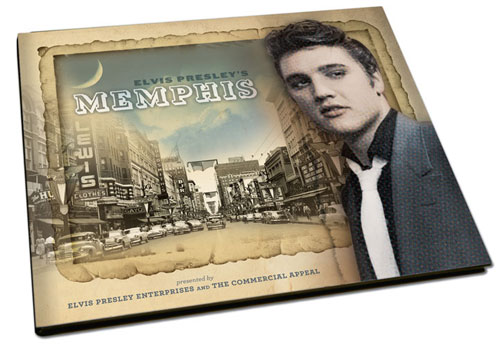
Elvis Presley’s Memphis (book)
Presented By Elvis Presley Enterprises and The Commercial Appeal
176 pp. Pediment. $39.95

As I journeyed yet again through the life of Elvis Presley, this literary trip built upon the context of Memphis, I was happy to find some new insights into the man. This is not the average Elvis coffee table book – you know, the ones that shuffle around the same photos and text from last year’s variation.

That Elvis Presley’s Memphis is different is evident right from the start. The cover is hardly typical of those of other Elvis books, which tend to be rush jobs consisting of a common photo of Elvis with a title slapped above it. “It doesn’t matter what it looks like, fans will buy it because its Elvis,” seems to be the mentality.

Instead, this book features a creatively designed, beautiful cover with a lesser-known photo of Elvis superimposed against a vintage 1951 backdrop of Main Street in Memphis. Look carefully at this work of art and you’ll see the Loew’s State Theater is playing Father’s Little Dividend, starring Spencer Tracy, Joan Bennett, and Elizabeth Taylor. Within the book, you’ll find a photo of Elvis at the same theater in 1950, when he worked there as an usher until fired by manager Arthur Groom for getting into a fight with a co-worker.

Elvis apparently held no hard feelings for his former boss, for another photo shows him with Groom several years later for the 1957 Jailhouse Rock premiere – at Loew’s State Theater. His first movie, Love Me Tender, also premiered there in 1956. Business must have been good at Loew’s with that kind of publicity.

Imagine how it must have felt for Elvis to watch himself on screen at the same movie theater he worked at only years before. “When I was a child . . . I was a dreamer. . . . I saw movies, and I was the hero in the movie,” Elvis once said.

“Every dream I ever dreamed has come true a hundred times,” he continued. At its heart, Elvis Presley’s Memphis is about those dreams. The dreams of a 13-year-old as his family moves to Memphis from Tupelo, Mississippi, for a fresh start. The dreams of an 18-year-old as he pays to record a couple of songs at the Memphis Recording Service. The dreams of a 33-year-old as he holds his daughter for the first time.

The bind between Elvis and Memphis is indeed strong, but perhaps no stronger than at Graceland, the home he purchased there on Highway 51 South in 1957 as his rising fame literally chased him out of his previous neighborhood on Audubon Drive. Could the 22-year-old ever have dreamed that Memphis would one day rename the street in front of that mansion in his honor?

Only twenty years later, Elvis would spend his last days at Graceland on Elvis Presley Boulevard. “When the news of Elvis’ death was heard over the police radio, the entire force felt they had lost one of their own,” writes Robert Dye in a section called “Memphis Beat.” You see, Elvis’ renowned collection of police badges was more than just a hobby.

Though they may have indeed been honorary, those badges meant something real not only to him, but also to those who bestowed them – none more so than the Memphis police. While stories of Elvis’ generosity are legendary, there are some here involving the police that are worthy of the spotlight placed on them by this book. Elvis had his flaws, as do we all, but I remain proud to call myself a fan.

From a boy who had little in the way of material possessions to a man who could afford to buy seemingly anything – go-karts, motorcycles, cars, and even airplanes – the life of Elvis in Memphis is detailed in a series of occasionally repetitive articles. Much of this book is about Elvis having fun, for while he sometimes worked in Memphis, it more often served as his playground, a place to unwind and relax.

Some of the stories are new, while others are reprinted from The Commercial Appeal or The Memphis Press Scimitar newspapers. Most are well-written and informative, though a few appear to be excerpts or sidebars from longer pieces and include chopped bits of information that go no deeper than the typical travel brochure for Graceland.

While Elvis is the focus, the book also paints a portrait of Memphis as a whole, including in a running timeline not only significant events in Elvis history, but significant events in Memphis history as well. The two are often intertwined. 1968’s entries include: “April 4: Martin Luther King is assassinated at the Lorraine Hotel in Memphis. Elvis is in California. June 23: Elvis records ‘If I Can Dream.'”

Filled with truly rare documents and photos, including one of Elvis visiting his mother’s grave, Elvis Presley’s Memphis is a standout among the many printed works about this often misunderstood man.

* * *

Cover image courtesy of Pediment Books. Used with permission.