Keeping the Footage. Losing the Baggage.

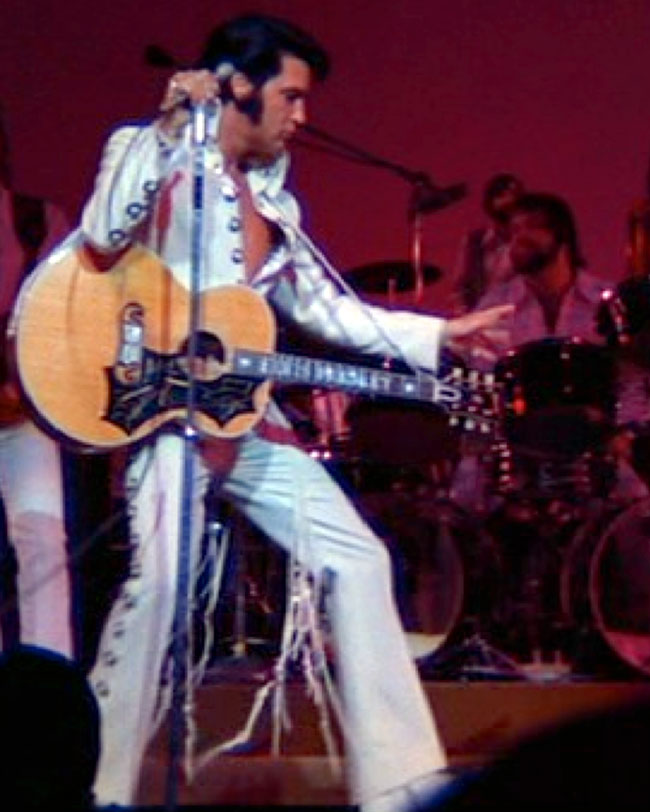
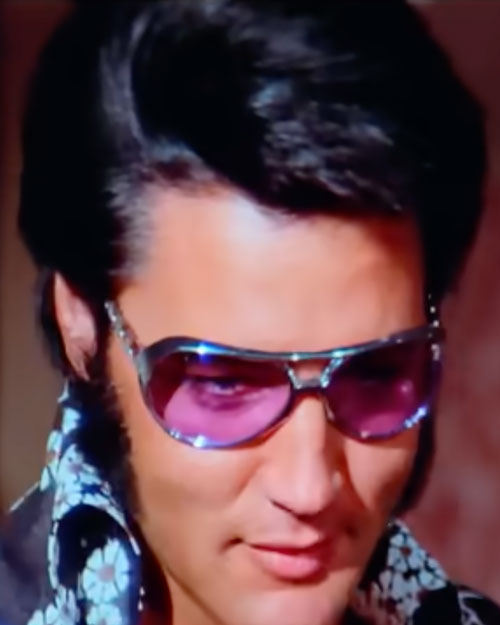
Elvis Presley in 1970, from the EPiC: Elvis Presley in Concert trailer - 2026, NEON

Elvis Presley in 1970, from the EPiC: Elvis Presley in Concert trailer (2026, NEON)

When I watched the full trailer that NEON dropped back on January 13 for Baz Luhrmann’s EPiC: Elvis Presley in Concert, I realized a couple of things.

One is that I’ve been writing about this darned lost footage for 35 years. This brief newsletter article about Elvis: That’s The Way It Is and Elvis On Tour outtakes was actually one of the first things I ever wrote about Elvis.

You see, I had read about the possibility of such footage existing in one of my brother’s old Elvis magazines from 1987. Naturally, I wrote to Graceland about it. Because that’s what you do.

And Graceland was nice enough in 1991 to provide the few available details, which I incorporated into my article the following year.

The second realization is that I’ve been carrying around almost as many years’ worth of baggage over this lost footage.

Oh, the mismanagement! Oh, the falsehoods! Oh, the missed opportunities!

As I watched the brilliant preview trailer for EPiC, I finally accepted that it’s time to let all of that go. I don’t want to weigh EPiC down with my lost footage baggage.

Writing is a catharsis for me, so I’m going to air out this baggage one last time, and then it’s gone forever. And if you see me mention it again, friends, I want you to call me out on it.

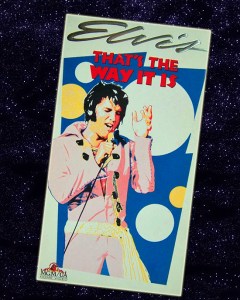
THAT'S THE WAY IT IS home video cover (1988)

ELVIS: THAT’S THE WAY IT IS home video cover (1988)

1992

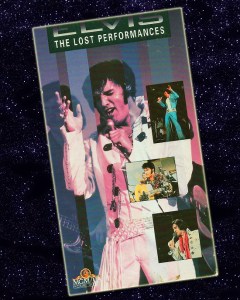
Event: Elvis: The Lost Performances arrives on VHS and Laserdisc. This compilation of outtakes from Elvis: That’s The Way It Is and Elvis On Tour was just about perfect for its time. It primarily focused on the songs that mattered to Elvis, not necessarily his biggest hits. Songs were presented in full. With no narration in between, the music was allowed to speak for itself.

THE LOST PERFORMANCES home video cover (1992)

ELVIS: THE LOST PERFORMANCES home video cover (1992)

Associated Baggage: The release of Turner Home Entertainment’s Elvis: The Lost Performances was initially delayed by a year or more due to the 1990 home media release of Buena Vista’s Elvis: The Great Performances. Though they played nice in terms of release dates, I guess no one noticed that a mere four letters distinguish one title from the other. Among casual fans and, most assuredly, the general public, this was potential confusion. The Lost Performances cover art also used a reverse image of the same underlying Elvis: That’s The Way It Is pose as the 1988 VHS release of that film. More potential confusion. To top it off, one month before Elvis: The Lost Performances hits shelves, CBS airs, get this, a television version of Elvis: The Great Performances. I guess that whole playing nice in the marketplace thing didn’t work both ways.

1997

Event: Among other Elvis titles, Turner/MGM re-releases Elvis: That’s The Way It Is, Elvis On Tour, and Elvis: The Lost Performances on home video.

Associated Baggage: All of the “new” VHS videos are in pan & scan to fit square televisions of the day, though many consumers, including this particular Elvis fan, were educated enough by this time to know that widescreen/letterboxed was a superior format for such movies in order not to lose large portions of the image. While Elvis: That’s The Way It Is earns a DVD release at this time as well that contains a widescreen option in this new format, there are inexplicably no DVDs for Elvis On Tour or Elvis: The Lost Performances.

2001

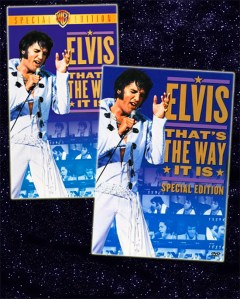
Event: And here’s the big one. If you follow this kind of stuff, you knew it was coming. Warner Brothers releases Elvis: That’s The Way It Is – Special Edition on home video. The 2000 film uses some of the once-lost footage from Elvis: The Lost Performances, other lost footage, and some of the original footage as part of an entirely new cut of the classic documentary.

2001 VHS and DVD editions of THAT'S THE WAY IT IS: SPECIAL EDITION

2001 VHS and DVD editions of ELVIS: THAT’S THE WAY IT IS – SPECIAL EDITION

Associated Baggage
Where to start? First, the name. The fact that this is almost an entirely new movie is not at all obvious by adding “Special Edition” to the title of the original documentary that many Elvis fans already owned by this point.

Next, the day before the VHS version goes on sale, Turner Classic Movies airs Elvis: That’s The Way It Is – Special Edition on cable television. As long as you had the channel, you could record it with your VCR for free. You even get a few bonus songs after the movie not included on the retail VHS.

Ah, but the DVD! It will have all of those bonus songs and even more as special features, right? Well, it was supposed to, but someone apparently didn’t obtain all of the proper clearances. So there was a delay as the DVDs were re-made to exclude all of the bonus songs. Oh, and then just as they are about to hit store shelves (and possibly a few do), someone realizes that the DVD case still has references to those bonus songs that aren’t actually on the DVD. So, another delay while the cases are re-made. Finally, months after the VHS, the DVD comes out. Not with a bang, but with a whimper.

Oh, and Elvis: That’s The Way It Is – Special Edition uses that same underlying Elvis image as the 1997 & 1992 releases of Elvis: The Lost Performances and the 1988 release of Elvis: That’s The Way It Is.

Apparently, Warner is disappointed by the sales of the Special Edition (gee, I wonder why sales would suffer), so it cancels a similar project around Elvis On Tour.

But wait, there’s even more baggage here. The release of Elvis: That’s The Way It Is – Special Edition and its use of some of the same songs seems to have buried Elvis: The Lost Performances, which Warner never releases again.

2007

Event: A 2-DVD re-release of That’s The Way It Is: Special Edition that includes the original film and some of the excised bonus features from 2001 on the second disc.

Associated Baggage: The long-awaited bonus features were in embarrassing video quality for a mainstream release, as apparently a backup videotape copy was used when the master tapes from 2001 could not be found. While definitely watchable, the 1970 theatrical cut was also in lesser condition relative to the 2001 edit. And I’m not even going to mention what underlying cover image they decided to go with. Because even if you don’t know, you already know.

2010

Event: Elvis On Tour finally gets a DVD release! And. . . can this be. . . a Blu-ray release! It almost sounds too good to be true.

Associated Baggage: Well, it turns out that it almost is. At the last moment, Warner reveals that the opening song that plays over the credits, a rehearsal of “Johnny B. Goode,” ran into issues with obtaining clearance. From most accounts, it seemed out of their hands this time. Fair enough. What do they do? They replace it with a lacklustre live version of “Don’t Be Cruel.” Oh. . . and just to really give me nightmares, they also edit in a poor loop of the song since it wasn’t long enough to cover the opening credits sequences. So you get to hear Elvis’ “Please let’s forget the past, before I kick your–” joke not once, but twice, ladies and gentlemen. And, more relevant to this post, no bonus features. Nothing.

2014

Event: Elvis: That’s The Way It Is gets a Blu-ray release! 2001 bonus songs master tapes located and to be included!

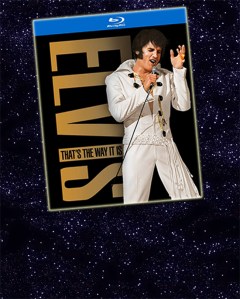
Associated Baggage: Well, here’s what actually happened back in 2014 if you bought the Elvis: That’s The Way It Is Blu-ray. You did indeed get a Blu-ray of Elvis: That’s The Way It Is – Special Edition. The promised improved quality bonus songs? I wish I could say otherwise, but not so much. I really don’t know what they were thinking. As for the original Elvis: That’s The Way It Is movie? It is included as a second DVD, using the same master as way back in 1997. But hey, at least the art department was on top of things. When they envisioned what the cover art for this first-ever That’s The Way It Is Blu-ray should be, a certain underlying image immediately came to mind. . . .

2014 Blu-ray edition of THAT'S THE WAY IT IS: SPECIAL EDITION

2014 Blu-ray edition of ELVIS: THAT’S THE WAY IT IS – SPECIAL EDITION

2026: Letting it go

We could all probably think of more blunders around the handling of the lost and not-so-lost footage originally captured for Elvis: That’s The Way It Is and Elvis On Tour, but it is indeed time to let it all go.

So, here’s what I propose. That abandoned salt mine in Kansas that people keep finding this lost footage in? Let’s lock our baggage in there. Gone. Forever.


Did I mention the full EPiC trailer is brilliant? Surely, you have watched by now? If not, you better check it out over on YouTube.

Wow.

Just wow. That’s all I’ve got.

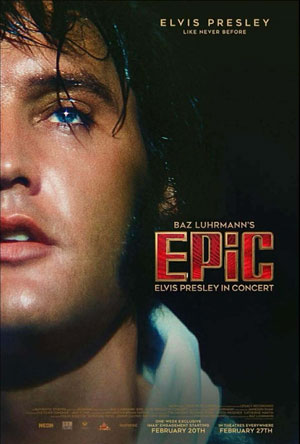
Around the same time as the trailer, NEON also released a new poster. I mean, even if EPiC somehow turns out to be a dud, that is one awesome Elvis poster that I had to have!

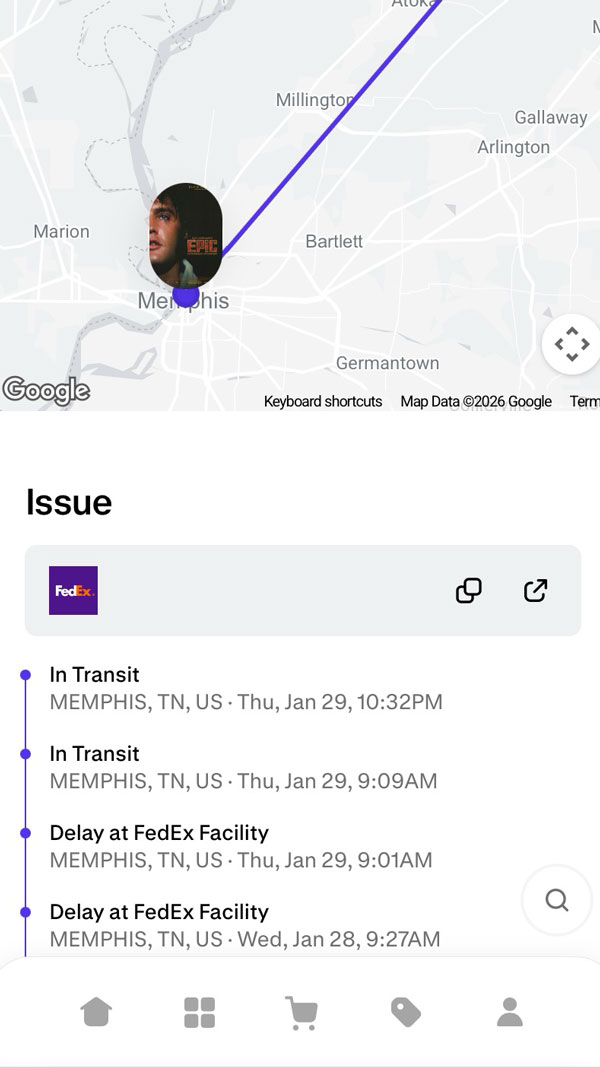
Being the understanding woman that she is, my bride ordered one for me. When the package ran into shipping issues due to the recent weather events, I heard her laughing as she looked at the tracking image.

Wondering what gave her that reaction, I took a look. The tracking uses a close-up of the poster, so it looks like Elvis’ face on the map.

Sure, that’s mildly humorous, but I didn’t see why she thought it was so funny.

Then I looked again at the map.

That’s right, Elvis is stuck in Memphis!

EPiC hits IMAX theaters worldwide on February 20, with early access showings beginning on February 18, and then expands to wide release on February 27 globally.

The Look

Last month, NEON released the official teaser trailer for Baz Luhrmann’s latest project, EPiC: Elvis Presley in Concert. Check it out over on YouTube.

As Elvis Presley fans we could say a lot of things about that trailer, couldn’t we? We could quibble over dates, for instance, or debate the definition of “lost.”

None of that matters.

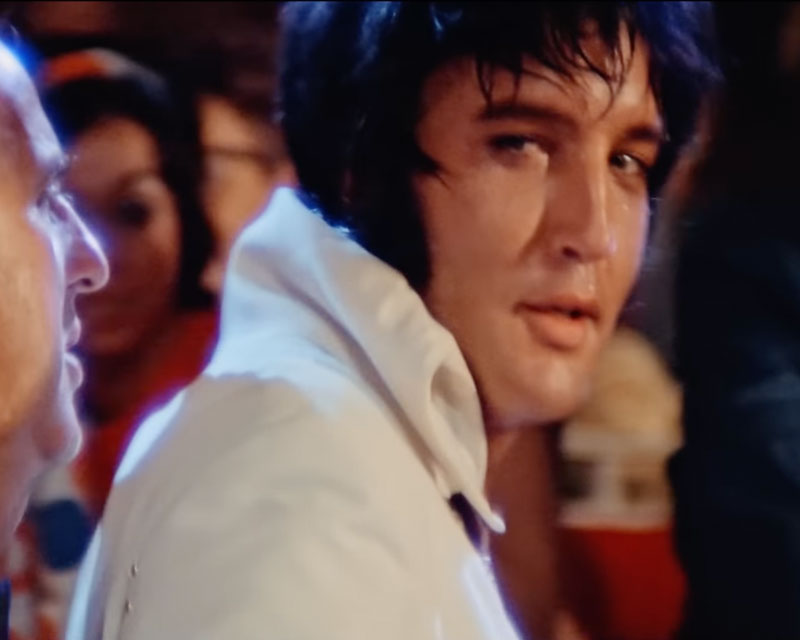
There’s a blink-and-you-miss-it moment in the trailer that clinches EPiC for me. Watching Elvis over the years, you become familiar with a certain look in his eyes. It’s a quick glance. Sometimes directly to fans. Sometimes to cameras. He seems to say, “You’re in on this with me, aren’t you?”

In the EPiC teaser, it occurs at 0:58. Here it is:

Elvis Presley in 1970, from the EPiC: Elvis Presley in Concert teaser, 2025, NEON

Elvis Presley in 1970, from the EPiC: Elvis Presley in Concert teaser (2025, NEON)

The film hits IMAX theaters worldwide on February 20, with early access showings beginning on February 18, and then expands to wide release on February 27 globally.

While there have been limited-run screenings over the years, EPiC represents the first wide release of an Elvis documentary in cinemas since 1981’s This Is Elvis.

We’ve lost many first generation Elvis fans since that time. For many second (and beyond) generation fans, like myself, events like EPiC are the closest we’ll ever come to experiencing Elvis in person.

EPiC allows Elvis to tell his own story, using audio from multiple sources. It also features fully restored video of previously released and unreleased content. Most of the footage used was originally filmed for the documentaries Elvis: That’s The Way It Is (1970) and Elvis On Tour (1972).

The film left stellar reviews in its wake after the world premiere at the Toronto International Film Festival in September last year, the European premiere at the Zurich Film Festival in September and October, and the United States premiere in Memphis at the TCB Showroom on January 8, the 91st anniversary of Elvis’ birth.

Footage from other eras is also featured to help round out the narrative. Most notably, color footage of Elvis performing in Hawaii in 1957 is included–30 seconds of which was first released by Graceland with little fanfare on the Aloha From Hawaii: 40th Anniversary Edition DVD (2013).

Sony on January 8 announced plans for the EPiC soundtrack, which will be available February 20 on digital and CD and April 24 on vinyl.

You can preview one of the songs on YouTube here: “Wearin’ That Night Life Look.”

This mashup combines elements from “Wearin’ That Loved-On Look,” “Night Life,” “Let Yourself Go,” and “I, John.” On paper it sounds like a mess, but it manages to work. I love it. As Elvis says, “Just play the hell out of it!”

Luhrmann produced and directed EPiC. He also co-produced, co-wrote, and directed ELVIS (2022), a fictionalized account of the singer’s life that starred Austin Butler (Elvis Presley), Tom Hanks (“Colonel” Tom Parker), and Olivia DeJonge (Priscilla Presley). That film earned nearly $300 million worldwide in its box office run. Butler won a Golden Globe for his portrayal and the movie earned eight Academy Award nominations, including Best Picture and Best Actor (Butler).

That the editor of the teaser trailer included “the look” gives me confidence that EPiC will do Elvis justice. We need to experience and support this one at our local theaters. Don’t make the mistake of waiting to watch it at home. Find it at a theater near you.

And, yes, we’re still in on it with you, Elvis.

Elvis Movies: JAILHOUSE ROCK

Hey folks, I didn’t expect it to be this long between posts but here I am. It’s been over a year since the last entry in my random rewatch of Elvis Presley movies. It sure doesn’t feel that long ago. As a great philosopher once asked, “Ain’t it funny how time slips away?”

Elvis’ 3rd movie was called Jailhouse Rock. It is the 2nd of 3 Elvis movies shot in black & white, which certainly adds to the gritty tone.


“Elvis in Action as Never Before!”
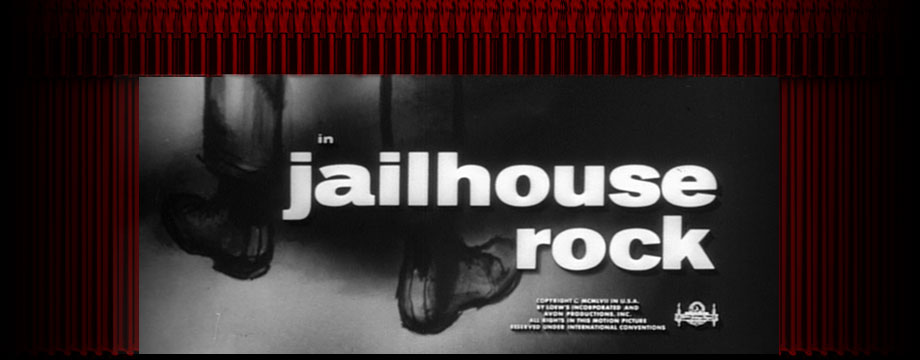
Jailhouse Rock, now playing at a train near you

Jailhouse Rock (MGM)
Wide Release: November 8, 1957 (United States)
Starring: Elvis Presley, Judy Tyler, Mickey Shaughnessy
Screen Play By: Guy Trosper
Story By: Ned Young
Music Supervised By: Jeff Alexander
Produced By: Pandro S. Berman
Directed By: Richard Thorpe
Running Time: 96 Minutes
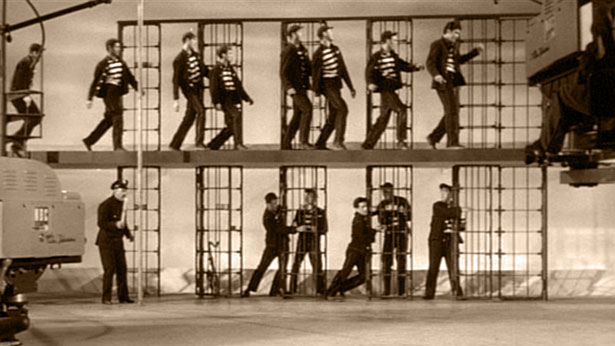

Elvis Presley stars in 1957's JAILHOUSE ROCK (MGM)

Elvis Presley stars in 1957’s JAILHOUSE ROCK (MGM)

Elvis stars in Jailhouse Rock as Vince Everett, a tractor driver who has just received his weekly paycheck. As is his custom, he cashes the check at the neighborhood bar and then arm wrestles the proprietor. After losing, Vince good-naturedly buys a round of drinks for everyone at the bar. The film soon takes a dark turn when another patron roughs up a woman for talking to Vince. Vince tells him to leave her alone.

“Look, buster, you want some teeth knocked out? Just keep it up,” warns the man.

“You scare me,” says Vince. “Woman-beaters always scare me.”

This being an Elvis movie, a fistfight of course ensues.

Much like in Loving You, released earlier in 1957, the fight concludes with the Elvis character punching his opponent into a jukebox. In Loving You, the Presley Maneuver causes the jukebox to turn on. In Jailhouse Rock, it turns the jukebox off.

Unlike most Elvis movies, though, this fight turns out to have lethal consequences. When the woman-beater dies, Vince is convicted of manslaughter and sentenced to 1 to 10 years in the state penitentiary. If only he had cashed his check at a bank instead of a bar.

Before we go much further, I want to jump back for a moment to the credits. I love the opening theme of Jailhouse Rock, an overture of sorts that includes instrumental renditions of portions of “Baby, I Don’t Care,” “Jailhouse Rock,” and “Young And Beautiful.”

This jazzy version of “Jailhouse Rock” is quite a treat. I played trumpet in our middle school jazz band, and when I first saw the movie on TV as a teenager back then, the “Jailhouse Rock” instrumental reminded me of the arrangement we were using for the same song.
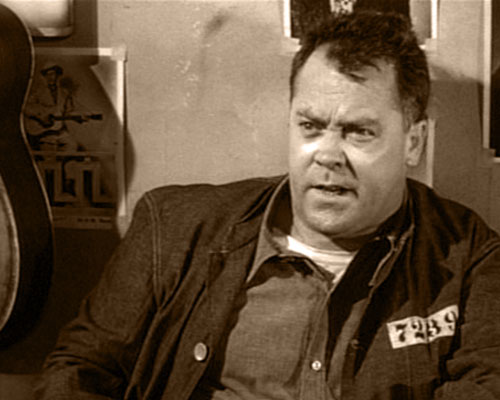
Mickey Shaughnessy is Hunk Houghton in 1957's JAILHOUSE ROCK (MGM)

Mickey Shaughnessy is Hunk Houghton in 1957’s JAILHOUSE ROCK (MGM)

Anyway, Vince shares a cell with Hunk Houghton (Mickey Shaughnessy), a washed-up country singer. Hunk is near the end of an 18-year term for robbing a bank. Despite some of the variances, Jailhouse Rock is still an Elvis movie, so Hunk of course has a guitar hanging on the prison cell wall that draws Vince’s attention. Though Hunk is annoyed at first, he softens and teaches Vince some chords. When Hunk tells him about his 10-year career, Vince says, “I never heard of anybody paying money to hear a guitar player” and Elvis seems barely able to hold a straight face delivering the line. He is, after all, the highest paid “guitar player” in the world by this point.

Elvis performs Vince’s early songs in Jailhouse Rock as intentionally flat and tentative, reflecting the character’s inexperience with singing. However, Hunk hears something in the young man and offers him a spot in Breath of a Nation, a nationwide television special he is producing for the warden. You see, a state inspection committee is coming to review prison conditions, and the warden wants the prisoners to put on a show as a smokescreen. Conditions at this prison must be pretty rough to require a national television special to cover things up.

Vince sings “I Want To Be Free” in his segment, and, unlike Hunk or anyone else, he receives a large bag full of fan mail from all over the country. Hunk sees to it that Vince does not learn of the mail, saving face with the mailroom workers by saying he made a mistake by giving Vince the best spot in the show. He soon offers Vince a partnership contract for the pair to perform together and split everything 50/50. Great shades of Colonel Parker!

“Alone, son, you’d be like a lamb in a pack of wolves,” Hunk tells him. Vince signs the contract, thinking that the deal is in his favor since Hunk is the established “star.”
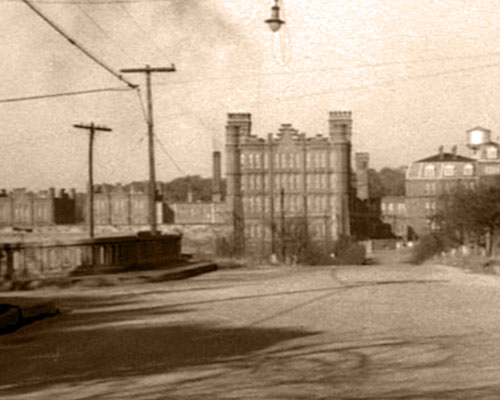
The State Pen in 1957's JAILHOUSE ROCK (MGM)

The State Pen in 1957’s JAILHOUSE ROCK (MGM)

Soon thereafter, a food fight turned riot breaks out in the prison over the poor conditions. Hunk tries to get Vince back to their cell, but a guard roughly handles Vince. Having apparently not yet learned his lesson from the barroom brawl, Vince swings his fists. He is caught and whipped. Outtakes of this scene surfaced on the 1993 VHS Elvis In Hollywood: The 50s. The original Jailhouse Rock film trailer also shows a clip that did not make it to the final film where Vince lunges at the warden when the guards untie his hands after the whipping.

Back in their cell, Hunk states that he tried to pay off the guards to prevent Vince’s whipping but he didn’t have enough money. He emphasizes the importance of having money to Vince and also teaches him his twisted version of the Golden Rule: “Do unto others as they would do unto you, only do it first.”

Hunk still has 10 months to go, but Vince is released from prison after serving 14 months – including 2 extra months for the riot incident. The warden gives Vince his remaining pay from the state. He also gives him the large bag of fan mail from the television special 8 months earlier. Vince realizes that Hunk helped keep the letters secret.

Vince buys a guitar from a pawnshop and goes to a bar where Hunk has arranged a job for him with an old contact. There, he meets Peggy Van Alden (Judy Tyler), who looks at some indicators inside of a jukebox and makes notes. He is curious what she is up to, but she is not impressed at all that Vince is a singer. However, she does say she’ll tell him more about her job if he buys her a fresh drink.

“Buy your own drink,” Vince says, wryly – no doubt remembering that the last time he bought a woman a drink in a bar he ended up in prison.
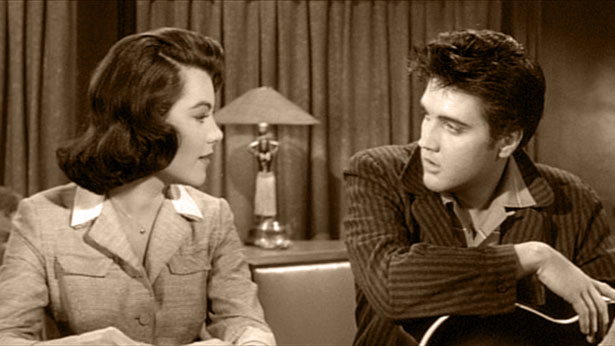
Judy Tyler is Peggy Van Alden and Elvis Presley is Vince Everett in 1957's JAILHOUSE ROCK (MGM)

Judy Tyler is Peggy Van Alden and Elvis Presley is Vince Everett in 1957’s JAILHOUSE ROCK (MGM)

“Is yours the approved manner with ladies in the backwoods?” Peggy fires back at him, but then goes on to explain that she is an “exploitation man” in the record business. “I work for Mickey Alba, you’ve heard of him?”

“Word sometimes gets to the backwoods,” says Vince. Alba (Don Burnett with vocals by Bill Lee) is a popular singer along the lines of Pat Boone.

Vince meets the bar’s owner, thinking he is going to be hired on as a singer. However, it turns out the job Hunk secured for him is as a barboy, essentially a bartender’s helper (“make setups, bring ice”). Vince is disappointed and forces his way on stage. Hey, it’s Scotty Moore, Bill Black, and DJ Fontana! Elvis’ real band! And Mike Stoller (composer of “Jailhouse Rock” and many other Elvis classics) on piano. Vince sings, “Young And Beautiful.” The owner actually seems to like the song, but a guy keeps laughing and carrying on in the audience, distracting both him and Vince.

Finally, Vince jumps from the stage and smashes his guitar into the obnoxious patron’s table. However, he refrains from killing him. That’s called character development.

Vince storms out, with Peggy trailing. “Hey, you forgot something,” she calls.

“What?”

“Me!”

So, before this re-watch, it had been over a decade since I last saw Jailhouse Rock. While I’ve always liked it, in fact it’s one of my favorite Elvis movies, I never really saw much chemistry between Vince and Peggy. Watching it through this time, though, I disagree with my past self. Now I see it.

Anyway, Peggy suggests Vince make a recording of himself to discover what’s wrong with his singing. This is not as simple a task as it is these days. Vince rents out a recording studio for $20 to make a demonstration recording. Peggy supplies a borrowed guitar and the background musicians. It’s Scotty, Bill, DJ, and Mike again! I guess Peggy knew them from the bar.

Vince records a faltering version of “Don’t Leave Me Now.” However, Peggy loosens him up a bit, and he also decides to ditch the guitar. He tries again, and they decide the resulting demo is good enough to shop around to the record labels. Jack Lease (Peter Adams), Peggy’s contact at Geneva Records, which is Mickey Alba’s label, seems unimpressed, but he decides to borrow the tape to play over the phone to someone else in New York later.

After it turns out to be a rejection anyway, Vince shows up disgruntled and late for a dinner meeting with Peggy. Even when she tells him the good news that she has gotten them a deal with another label, Deltona Records, he is still rude to her. He just wants to brood. “When the money starts rolling in, then I’ll say I’m happy,” he says.

After a celebratory steak dinner, they head out to meet Peggy’s parents, who are having a party. They seem to know all about Vince, including that he sold his first record that day. However, Peggy has not told them about his stay in the state penitentiary. He expects this information to shock them, but it does not phase them. Instead, they start the record player and a technical discussion begins about jazz.

Another guest tries to involve Vince. “I say atonality is just a passing phase in jazz music. What do you think, Mr. Everett?”

Vince’s response is classic and one that I’ve had to bite my tongue not to use in various situations over the years: “Lady, I don’t know what the hell you talking about.”
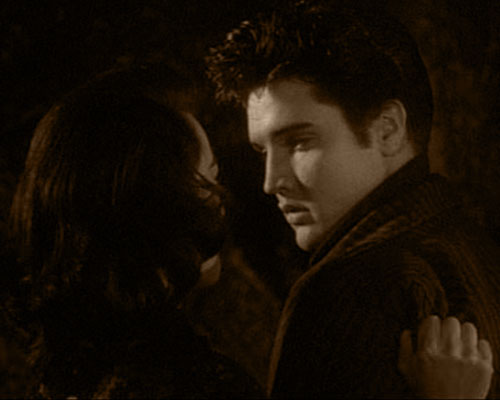
Judy Tyler is Peggy Van Alden and Elvis Presley is Vince Everett in 1957's JAILHOUSE ROCK (MGM)

Judy Tyler is Peggy Van Alden and Elvis Presley is Vince Everett in 1957’s JAILHOUSE ROCK (MGM)

He storms out, and Peggy chases after him again. She is angry and embarrassed by his behavior – noting they were only trying to draw him into the conversation.

“They can shove their conversation,” he retorts. “I’m not even sure they were talking English!”

When Vince decides to walk home after their bickering, Peggy says, “I think I’m gonna just hate you.”

“You ain’t gonna hate me. I ain’t gonna let you hate me.” He grabs and kisses her.

“How dare you think such cheap tactics would work with me,” she exclaims. He kisses her again.

“That ain’t tactics, honey. That’s just the beast in me.”

On paper, the scene sounds creepy, but it is extremely well-executed by both performers – one of the best acted scenes in any Elvis movie.

Vince half-heartedly apologizes to Peggy on the way into the record store on the release day of “Don’t Leave Me Now.”

The girl at the cash register states that the record is flying off the shelves. Vince asks for a half dozen copies. Peggy looks alarmed when she sees the stack of records, and Vince looks over one curiously, reading aloud, “‘Don’t Leave Me Now’ by Mickey Alba? Geneva Record Company.” It turns out that Lease, the Geneva executive, only borrowed the tape so Alba could copy Vince’s arrangement and style. Vince’s record is gone – somehow squashed by Geneva.

Vince makes an unscheduled visit to Lease. “You’re a thievin’ rat” Vince exclaims and goes to punch him. However, seeing as how no jukebox is available to land the body on, he just slaps him a couple of times instead. “Go back under your rock, you snake!”

Later, he speaks of his time in prison to Peggy: “On the inside, they’re cub scouts compared to Jack Lease. If you make something, they might steal it from you, but they’d be too honorable to say they made it themselves.”

Vince suggests they start their own record company, and they form Laurel Records – splitting things 60/40. “I’m the artist, don’t forget,” Vince explains when Peggy at first objects to holding only 40%. After Peggy agrees to the deal, they have the following conversation – illustrating how they are both on different pages.

“This really calls for a celebration, Vince.”

“Do you know a lawyer? We need a good one. . .”

“Do you know how to dance?” asks Peggy.

“. . .A guy with an eye for a buck. Do you know a lawyer?”

Peggy is disappointed. “Yeah, I know a lawyer. Mr. Shores. . .”

After Vince makes it clear he is only interested in money, they form the record company. Vince records “Treat Me Nice,” which becomes a big hit. Vince makes reservations at a fancy restaurant to celebrate with Peggy but is disappointed when she points out that he failed to make reservations with her. She has a date, and states, “Vince, I will not be subject to your beck and call.” Go, Peggy! That’s a bold stance in 1957, especially in the male-dominated world of Jailhouse Rock.

Despite emotional setbacks, Vince’s career continues to skyrocket, including appearances in Las Vegas. After Vince agrees to do an NBC television special, Peggy shows up to ask him to record more records. Vince is rude to her, but reaches out right as she is leaving, almost like he wants to apologize or say something else – but his heart is still too hardened to get the words out. As Peggy exits, Hunk returns – fresh out of prison and looking for his spot in the TV special.
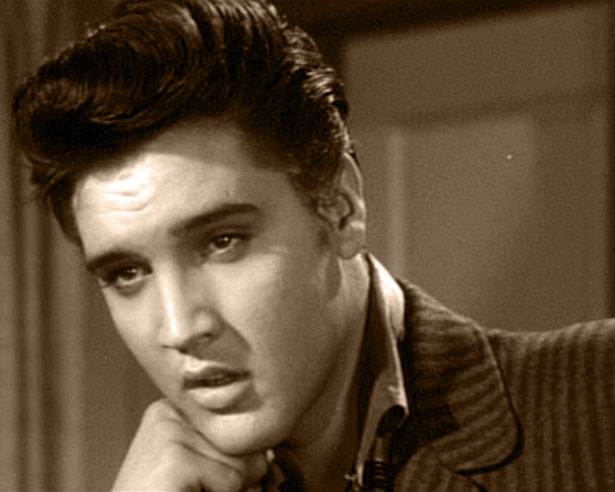
Elvis Presley is Vince Everett in 1957's JAILHOUSE ROCK (MGM)

Elvis Presley is Vince Everett in 1957’s JAILHOUSE ROCK (MGM)

The character of Vince is an unusual one in the Elvis cinematic universe. For most of the film, as many have pointed out over the years, Vince is a conceited jerk seemingly obsessed with money. Most of Elvis’ characters are likable guys cut from the same cloth. Vince is different, primarily due to his stay in prison, and offers a refreshing change of pace from the run-of-the-mill Elvis character. Vince should not be dismissed as a complete jerk, however. In several scenes, Elvis convincingly displays the emotional turmoil going on inside the man. He outwardly says he is all about the money, but you can also see that he loves Peggy and even Hunk.

In the music department, Jailhouse Rock is more than solid. The title song is a bonafide Elvis masterpiece. While the single version, one of Elvis’ greatest recordings, is used as the underlying track here in the film, the guitar riff opening of the song is unnecessarily hacked off. The screen version of the song is also hampered by awful overdubs of instruments and backing male vocals. Only the strength of Elvis’ underlying performance and the stellar production number save the tune. What were they thinking?

“Baby, I Don’t Care” and “Treat Me Nice” are also fantastic renditions. While “Young And Beautiful” is not quite up to the same par established by those three songs, it is still a lovely performance. “I Want To Be Free” and “Don’t Leave Me Now” serve their purposes well in the context of the film as does Mickey Shaughnessy’s “One More Day” — which is reminiscent of the classic folk song “Sixteen Tons.”
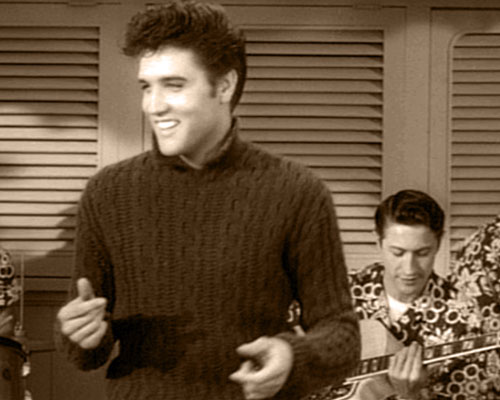
Vince Everett (Elvis Presley) sings "Baby, I Don't Care" at a pool party as a guitarist (Scotty Moore) plays along in the background in 1957's JAILHOUSE ROCK (MGM)

Vince Everett (Elvis Presley) sings “Baby, I Don’t Care” at a pool party as a guitarist (Scotty Moore) plays along in the background in 1957’s JAILHOUSE ROCK (MGM)

There is an oft-noted continuity error in Jailhouse Rock. During the “Baby, I Don’t Care” scene, guitarist Scotty Moore is shown wearing sunglasses in the wide shots but no eyewear in the closeups.
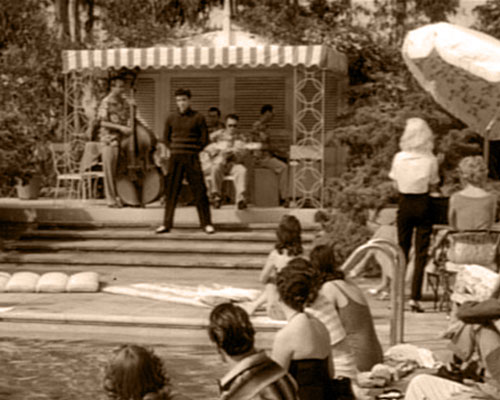
Vince Everett (Elvis Presley) sings "Baby, I Don't Care" at a pool party as a band (Bill Black, DJ Fontana, Scotty Moore, Mike Stoller) plays along in the background in 1957's JAILHOUSE ROCK (MGM)

Vince Everett (Elvis Presley) sings “Baby, I Don’t Care” at a pool party as a band (Bill Black, DJ Fontana, Scotty Moore, Mike Stoller) plays along in the background in 1957’s JAILHOUSE ROCK (MGM)

Another error is one I just noticed for the first time – a 1957 calendar is shown on the wall during a strikethrough sequence when Vince is in prison. When the calendar page is ripped down to show the next year, it is a 1957 calendar again. Talk about a life sentence! For the purposes of the Action File at the end of this post for Vince Everett, my conjecture is that the initial calendar was supposed to represent 1956 and that he was released in 1957.

One supposed error that is sometimes referenced with this film is that the prison ID number stamped on Vince’s shirt changes. Vince’s number is consistent during the penitentiary portions of the movie, however. Later, during the “Jailhouse Rock” production number, well after he has been released from actual prison, Vince wears a costume with a different number stamped on it. One was the character’s actual prison garb, the other was simply a costume. So calling it an error is . . . an error.

When Vince makes it to Hollywood, he takes his leading lady (played by Jennifer Holden) to Knott’s Berry Farm – a real amusement park in California that is still open to the public, including the “Old West” town represented in Jailhouse Rock.
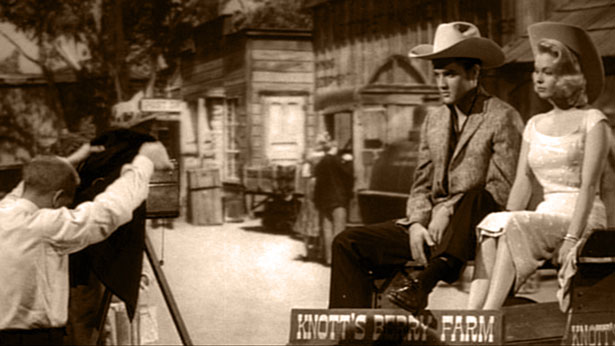
A photographer prepares to take a souvenir picture of Vince Everett (Elvis Presley) and Sherry Wilson (Jennifer Holden) at Knott's Berry Farm in 1957's JAILHOUSE ROCK (MGM)

A photographer prepares to take a souvenir picture of Vince Everett (Elvis Presley) and Sherry Wilson (Jennifer Holden) at Knott’s Berry Farm in 1957’s JAILHOUSE ROCK (MGM)

Elvis released 33 movies during his lifetime, but Jailhouse Rock is one of only a small handful that is a serious contender as his very best. It was inducted into the US Library of Congress’ National Film Registry in 2004, the only Elvis movie to achieve this honor.

Just a few days after filming wrapped on Jailhouse Rock, actress Judy Tyler (Peggy) was killed at the age of 24 in a horrific car accident on July 3, 1957. Tyler’s husband and a passenger in another vehicle were also killed in the crash.

Elvis was devastated and according to many sources never watched the completed movie. Peter Guralnick & Ernst Jorgensen’s Elvis: Day By Day – The Definitive Record Of His Life And Music, however, notes that Elvis watched a special screening of the film with his parents on October 2, 1957. The book provides no further details, nor does Guralnick’s Last Train To Memphis: The Rise Of Elvis Presley, but perhaps Elvis was unable to finish the screening — thus validating both versions of the story.
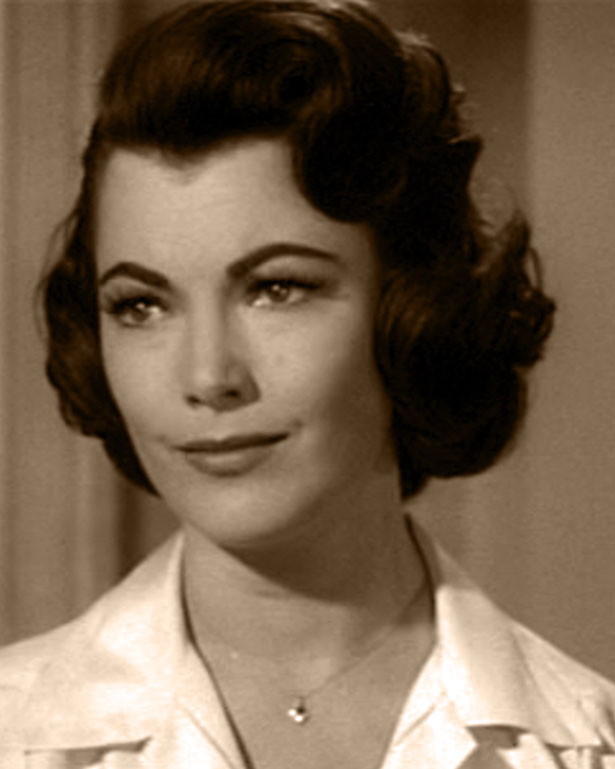
Judy Tyler is Peggy Van Alden in 1957's JAILHOUSE ROCK (MGM)

Judy Tyler is Peggy Van Alden in 1957’s JAILHOUSE ROCK (MGM)

Jaihouse Rock was Tyler’s second and final movie. Her first, Bop Girl Goes Calypso, hit theaters only a couple of weeks after her death. While Jailhouse Rock, released in November 1957, carries no dedication to Tyler – I am not even sure that kind of thing was done back then – there is a moment in the closing scene during “Young And Beautiful” where the edit seems to linger on her more than it perhaps otherwise would have. In the magic of the movies, she will indeed remain forever young and beautiful.


Boldly Go

Multiple uncredited cast members from Jailhouse Rock went on to play roles in Star Trek.

K.L. Smith appears in the opening bar scene in Jailhouse Rock and appears as a Klingon in the Star Trek episode “Elaan Of Troyius” in 1968. Eagle-eyed readers will note that I also referenced Smith in a previous “Boldly Go” installment for his appearance in 1964’s Roustabout. Speaking of eagle eyes, thank you once again to Elvis movie superfan Gary Wells for pointing out where Smith shows up in Jailhouse Rock for me.
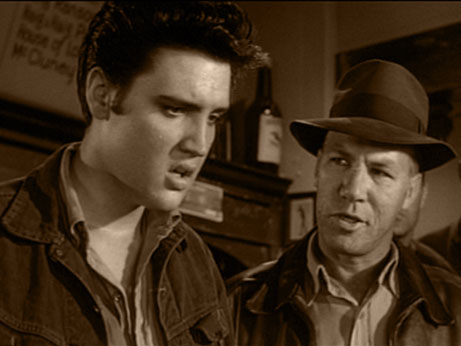
Elvis Presley and K.L. Smith in 1957's JAILHOUSE ROCK (MGM)

Elvis Presley and K.L. Smith in 1957’s JAILHOUSE ROCK (MGM)
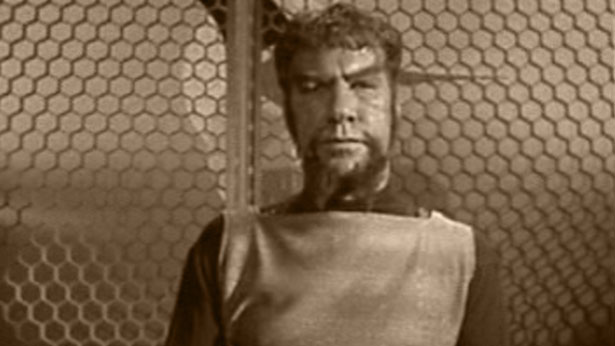
K.L. Smith is a Klingon captain in the 1968 STAR TREK episode "Elaan Of Troyius" (Paramount)

K.L. Smith is a Klingon captain in the 1968 STAR TREK episode “Elaan Of Troyius” (Paramount)

Other cross-overs include:

  • Buzz Barbee [Jailhouse Rock: Apartment party guest | Star Trek: Ambassador Fox’s aide in “A Taste Of Armageddon” (1967) and maiden voyage official in Star Trek Generations (1994)]
  • Albert Cavens [Jailhouse Rock: Nightclub patron | Star Trek: Klingon crewmember in “Day Of The Dove” (1968) and fop 2 in “All Our Yesterdays” (1969)]
  • Noble “Kid” Chissell [Jailhouse Rock: Convict | Star Trek: Server in “The City On The Edge Of Forever” (1967)]
  • Richard Dial [Jailhouse Rock: Minor role | Star Trek: Sam in “The Devil In The Dark” (1967), Kaplan in “The Apple” (1967), security guard in “And The Children Shall Lead” (1968) and Fabrini guard in “For The World Is Hollow And I Have Touched The Sky” (1968)]
  • Shep Houghton [Jailhouse Rock: Nightclub patron | Star Trek: Cameraman in “Bread And Circuses” (1968)]
  • Arthur Tovey [Jailhouse Rock: Record shop owner in montage | Star Trek: Vulcan citizen in Star Trek: The Motion Picture (1979)]
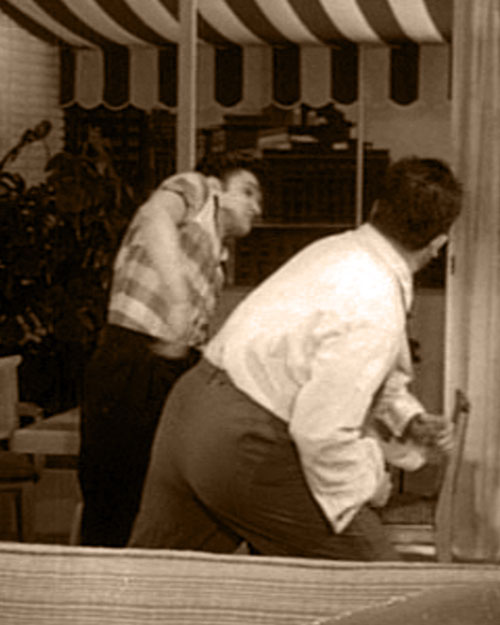
Elvis Presley is Vince Everett and Mickey Shaughnessy is Hunk Houghton in 1957's JAILHOUSE ROCK (MGM)

Elvis Presley is Vince Everett and Mickey Shaughnessy is Hunk Houghton in 1957’s JAILHOUSE ROCK (MGM)

Jailhouse Rock Tote Board

  • Punches: 23
  • Songs: 15
  • Kisses: 12
  • Storm-Outs: 4
  • Slaps: 2

Songs In Jailhouse Rock

  1. Mickey Shaughnessy: “One More Day” (1957) [performed twice], written by Sid Tepper & Roy C. Bennett
  2. Elvis Presley: “Young And Beautiful” (1957) [performed 3 times], written by Abner Silver & Aaron Schroeder
  3. Elvis Presley: “I Want To Be Free” (1957), written by Jerry Leiber & Mike Stoller
  4. “Don’t Leave Me Now” (1957) [performed three times by Elvis Presley and once by Bill Lee], written by Aaron Schroeder & Ben Weisman
  5. Elvis Presley: “Treat Me Nice” (1957) [performed three times], written by Jerry Leiber & Mike Stoller
  6. Elvis Presley: “Jailhouse Rock” (1957), written by Jerry Leiber & Mike Stoller
  7. Elvis Presley: “Baby, I Don’t Care” (1957), written by Jerry Leiber & Mike Stoller

The Mystery Train’s Jailhouse Rock Scorecard

  • Story: 8 (out of 10)
  • Acting: 10
  • Entertainment Value: 8
  • Songs: 9
  • Overall: 9 (Must See)

Jailhouse Rock Around The Web
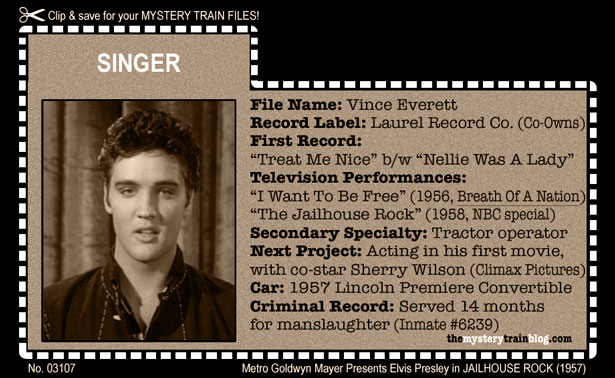

Click image for larger, color version


“But to you who are willing to listen, I say, love your enemies! Do good to those who hate you. Bless those who curse you. Pray for those who hurt you. If someone slaps you on one cheek, offer the other cheek also. If someone demands your coat, offer your shirt also. Give to anyone who asks; and when things are taken away from you, don’t try to get them back. Do to others as you would like them to do to you.”
Luke 6:27-31 NLT
Elvis Movies: KID GALAHAD

Before we get started with the main feature, I want to take a brief moment to remind you that Baz Luhrmann’s ELVIS movie begins playing next week in many locations around the world. Based on the trailers, the attention to detail looks amazing. I love that this trailer throws in a couple of brief shots of the real Elvis as well.

I have also watched and read a few interviews with Austin Butler, who plays Elvis Presley, and he seems completely invested in the role. Many actors have tried and mostly failed to fill Elvis’ shoes before him, but this 30-year-old really seems to have discovered his spirit. We’ll find out soon.

As I’ve said before, after seeing so many horrible attempts to tell the Elvis Presley story in the past, I never even thought I’d watch this movie at all, much less go to the theater opening weekend as I’m now planning to do. The trailer above concludes with “Suspicious Minds (Caught In A Trap),” my mom’s favorite song. She would have been excited to see this movie with me and, though she passed away over three years ago now, I know she’ll be there next to me.

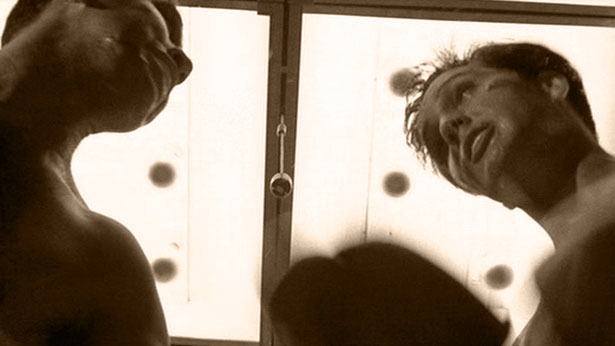
Continuing my rewatch of movies featuring the real Elvis Presley, next up is Kid Galahad – his 10th movie. I have only seen this one a couple of times before.


“Presley Packs the Screen’s Biggest Wallop…with the Gals…with the Gloves…with the Guitar!”

Kid Galahad (United Artists)
Wide Release: August 29, 1962 (United States)
Starring: Elvis Presley, Gig Young, Lola Albright, Joan Blackman
Screenplay By: William Fay
Story By: Francis Wallace
Music Score By: Jeff Alexander
Produced By: Davis Weisbart
Directed By: Phil Karlson
Running Time: 96 Minutes


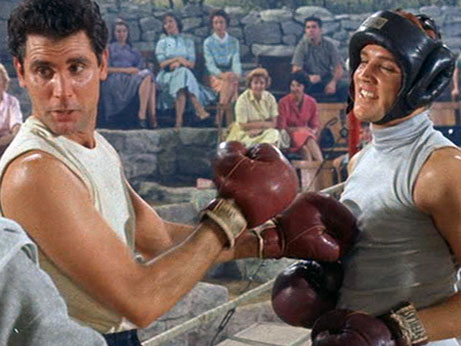
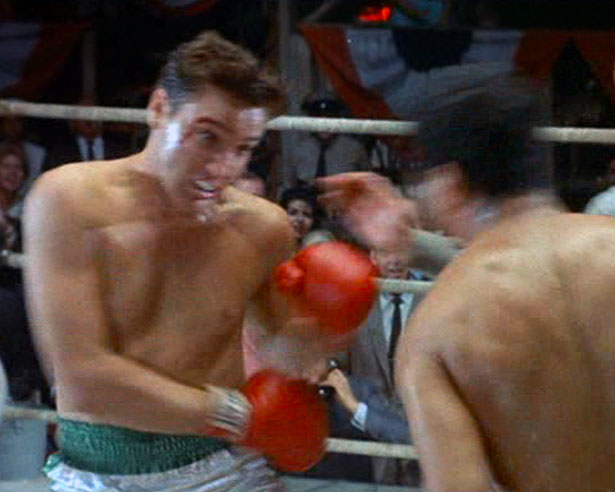
Sugarboy Romero (Orlando de la Fuente) faces off against Kid Galahad (Elvis Presley) in the climax of 1962's KID GALAHAD (United Artists)

Sugarboy Romero (Orlando de la Fuente) faces off against Kid Galahad (Elvis Presley) in the climax of 1962’s KID GALAHAD (United Artists)

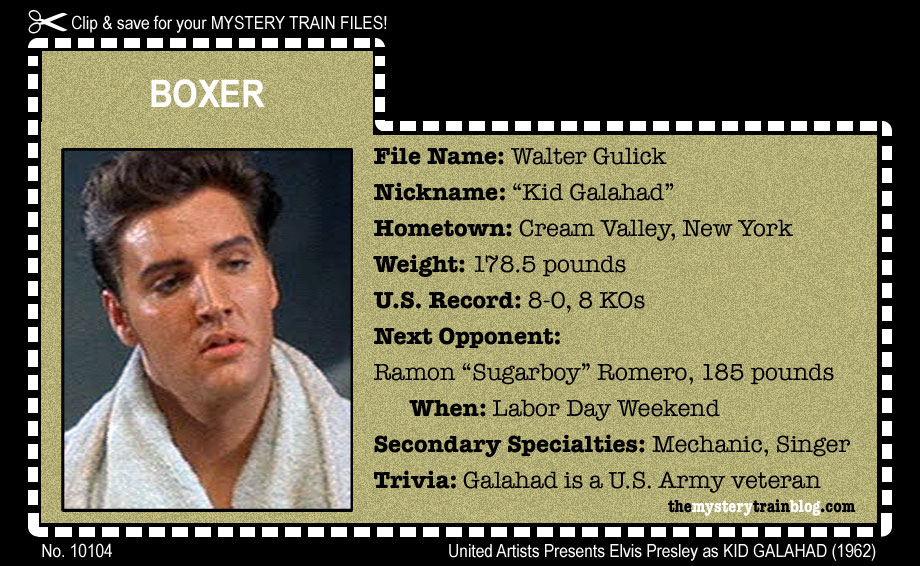
Elvis Presley stars as Walter Gulick in Kid Galahad. After a stint in the Army, Walter returns to his hometown of Cream Valley, New York, for the first time since becoming an orphan at 14-months-old. The 22-year-old is looking for a job fixing cars, but since he arrives too early in the morning for the auto shop to be open, he naturally checks out a nearby boxing camp instead to see if they need a mechanic.

The fictitious Cream Valley, New York, coincidentally enough, looks remarkably like Idyllwild, California. I suppose that’s better than trying to pass off California as Europe, at least. “Cream Valley” – the name sounds like a magical place where they make salad dressing or something like that.

Shockingly enough, the boxing camp doesn’t need a mechanic. However, Walter does find a job there as a sparring partner. It turns out his Army background has provided him with both auto repair and boxing experience.

As a sparring parter, Walter is a bit of a failure. He stands there and takes a beating from the fighter – over 70 punches. Walter doesn’t try to defend himself or even at first throw any punches in return. He finally throws one punch, proceeding to knock out the now worn-out fighter. While this doesn’t make for a great sparring partner, the boxing camp’s owner, Willy (Gig Young), sees dollar signs and soon puts Walter on the professional boxing circuit.

Several movies before this one, the screenplay adaptation of A Stone For Danny Fisher was changed once Elvis was attached to the project such that the boxer lead character became a singer instead. That 1958 movie, one of Elvis’ best performances as an actor, was also eventually renamed King Creole, after one of the songs in the film.

A few years later, in Kid Galahad, Elvis finally got his chance to play a boxer. According to longtime friend Sonny West, if Elvis had his way, he would have reunited with King Creole director Michael Curtiz (Casablanca) on this film, which was produced in late 1961. Curtiz had also directed the original 1937 version of Kid Galahad, starring Edward G. Robinson, Bette Davis, and Humphrey Bogart. Despite Elvis’ campaign, Phil Karlson received the directing nod instead. Curtiz passed away in April 1962 at the age of 74.

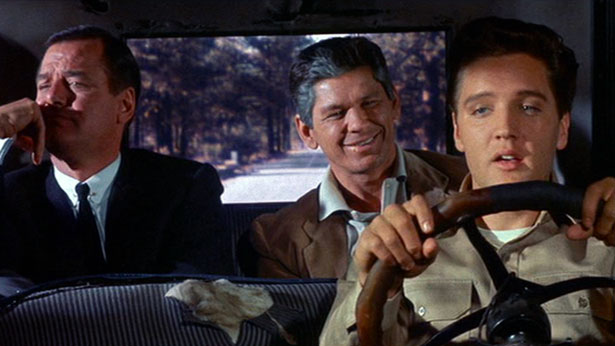
Willy (Gig Young) and Lew (Charles Bronson) listen as Walter (Elvis Presley) sings "Riding The Rainbow" while driving a Model T Ford in 1962's KID GALAHAD (United Artists)

Willy (Gig Young) and Lew (Charles Bronson) listen as Walter (Elvis Presley) sings “Riding The Rainbow” in a Model T Ford in 1962’s KID GALAHAD (United Artists)

Charles Bronson appears in Kid Galahad as Lew, who acts as Walter’s trainer. Lew seems genuinely enamored of “the kid” and tries to look out for him. Bronson does a terrific job in this role and is a highlight of the film. This is apparently one of the few movies where Bronson smiles – and he smiles early and often in Kid Galahad.

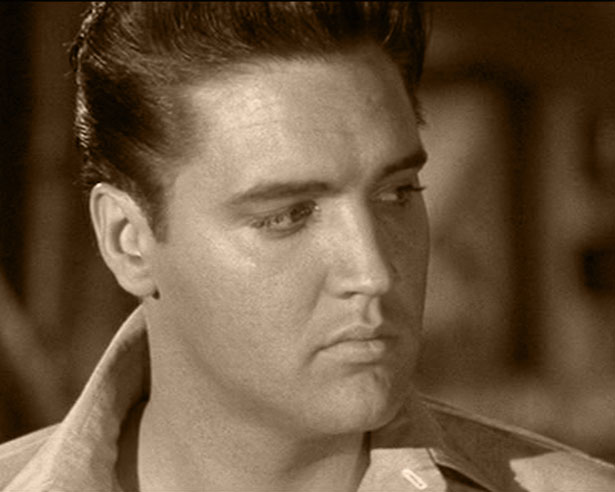
Elvis Presley is Walter Gulick in 1962's KID GALAHAD (United Artists)

Elvis Presley is Walter Gulick in 1962’s KID GALAHAD (United Artists)

Willy, it turns out, has gambling and other problems that are putting his boxing camp in jeopardy. A mobster leaves two thugs to stay at the camp for insurance.

When Ralphie (Jeff Morris), one of the goons, makes an unwanted advance at Willy’s long-time fiancée, Dolly (Lola Albright), Walter knocks him flat out without even needing to take a beating first this time. “It wouldn’t have happened, but he don’t know how to behave himself with a lady,” explains Walter.

Dolly says, “Thanks, Galahad” to Walter, and the name sticks.

“Dolly, please take the Eagle Scout out of here before Ralphie wakes up and kills him,” quips Lew before they find a loaded gun on Ralphie. Incidentally, I must note that it is hard to take a mafia henchman seriously with a name like “Ralphie.”

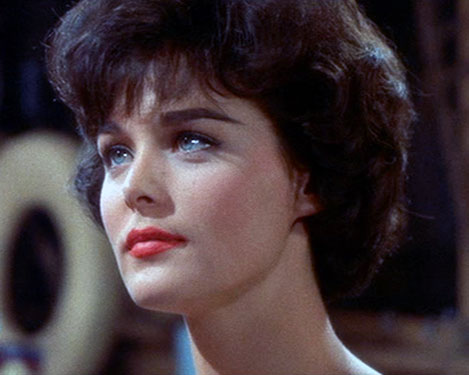
Joan Blackman is Rose in 1962's KID GALAHAD (United Artists)

Joan Blackman is Rose in 1962’s KID GALAHAD (United Artists)

Willy’s kid sister, Rose (Joan Blackman), travels in from the Bronx to reorganize the camp when he keeps phoning her for money. She owns half of the business, apparently an inheritance from their father. Galahad is immediately all googly eyes for her. Blackman had appeared with Elvis before in Blue Hawaii, and the pair here manage to show more chemistry together than they did in that 1961 movie – which is admittedly a pretty low bar.

Willy is not too happy when the couple gets engaged. “You can’t yell loud enough to make me shut up,” Galahad tells him during a heated argument. “I’m not marrying Rose because she’s your sister, Willy, but in spite of it.”

Hearing the ruckus, Dolly intervenes and asks Willy what’s wrong as he is about to punch Galahad. “What’s the matter with me? This cream-headed clown wants to marry my sister, that’s what’s the matter with me,” he answers.

The long-suffering Dolly delivers this stinger, causing Willy to storm off: “Well, at least he’s not asking her to hang around for three or four years, Willy.”

Soon enough, Dolly leaves Willy (what is with the names in this movie?). This exchange is one of my favorites in the film – great acting from Lola Albright. Dolly at first seems happily surprised when Willy appears to give in, thinking he is finally going to marry her – but then realization dawns and she becomes sad again.

Dolly: “It’s just that you and marriage have never learned to mix.”
Willy: “All right.”
Dolly: “‘All right’ what?”
Willy: “I’ll lay you 3-to-1, angel, I never bet on another horse. … What’s the matter? What did I do now?”
Dolly: “You’ll probably never know. Excuse me.”

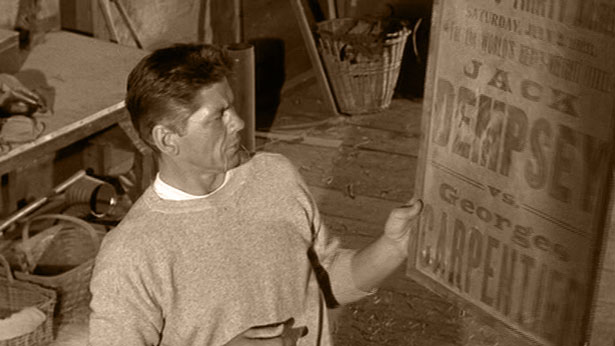
Lew (Charles Bronson) holds up an old poster found advertising 1921's Dempsey vs. Carpentier fight in 1962's KID GALAHAD (United Artists)

Lew (Charles Bronson) holds up an old poster found advertising 1921’s Dempsey vs. Carpentier fight in 1962’s KID GALAHAD (United Artists)

In a fun, blink-and-you-miss-it moment, Galahad tosses Lew an old boxing poster he found. The poster advertises a real match that took place on July 2, 1921: Jack Dempsey vs. Georges Carpentier – “the fight of the century.” The event was over 40 years old at the time of Kid Galahad and is, of course, over 100 years old now.

Galahad proves an unexpected success in boxing. He uses the same strategy each time – stand and take a beating for awhile and then throw one punch to knock out the other fighter. He identifies himself as being from Cream Valley, and the little town loves him for it. One of the locals notes, “All these other muscleheads up here, not one of them said he was from Cream Valley.”

I kept expecting a relative or at least an old family friend to show up from Galahad’s past – especially when a priest looks incredulously at his 1939 Cream Valley baptism certificate. Alas, Lew is apparently not Galahad’s long-lost older brother.

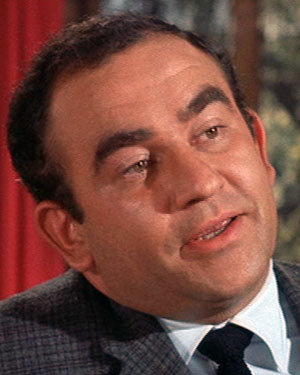
Ed Asner is Frank Gerson in 1962’s KID GALAHAD (United Artists)

The legendary Ed Asner makes his first appearance in a feature film in Kid Galahad, playing a district attorney who is trying to get Willy to testify against the mobsters.

Galahad (Elvis Presley) trains with Lew (Charles Bronson) for the big fight in 1962's KID GALAHAD (United Artists)

Galahad (Elvis Presley) trains with Lew (Charles Bronson) for the big fight in 1962’s KID GALAHAD (United Artists)

Willy signs Galahad up for a fight against an especially tough opponent, Ramon “Sugarboy” Romero (Orlando de la Fuente), so Lew works hard with him to prepare for the climactic battle. All that’s missing is the Rocky theme.

Speaking of music, most of the songs in Kid Galahad are unfortunately mediocre or worse. Though not mentioned if he learned this skill in the Army as well, Galahad, of course, is a singer.

“I Got Lucky” is a bit of a highlight, including Galahad doing “the Twist” with Rose.

The film’s best song, the clever “King Of The Whole Wide World,” is ruined by jazzy overdubs during the movie’s opening titles. The best version of this song can still be found on 1986’s Return Of The Rocker album – the first release of the extended master including Boots Randolph’s complete saxophone solo.

One thing I will note is, I doubt there are any other boxing movies out there where the fighter who was knocked out in the previous scene invites the guy who just walloped him to sing a song with him. Ah, Elvis Movies, you’ve gotta love them.

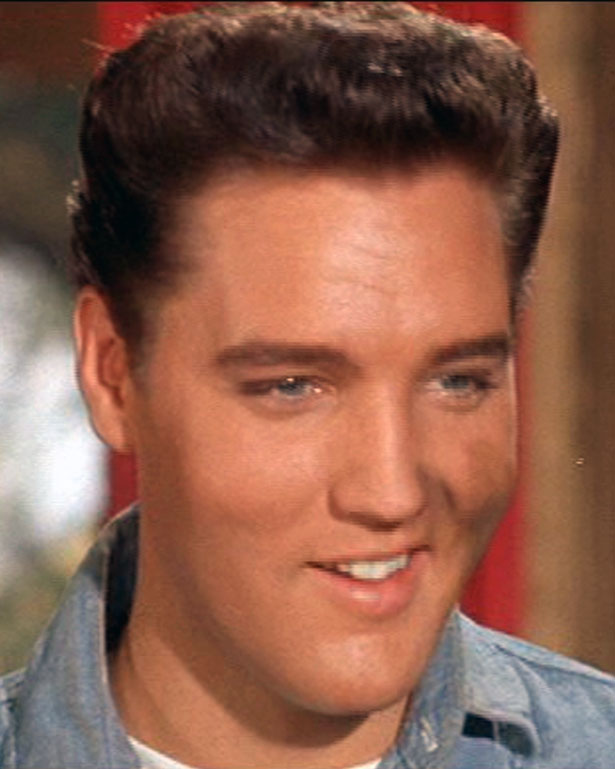
Kid Galahad is notable for another reason – Elvis’ hair. This is one of only two color movies for which Elvis did not dye his hair black. Instead, he opted for his natural brown hair.

Elvis Presley is Walter "Kid Galahad" Gulick in 1962's KID GALAHAD (United Artists)

Elvis Presley is Walter “Kid Galahad” Gulick in 1962’s KID GALAHAD (United Artists)

Kid Galahad is often enjoyable and certainly stands apart from many of Elvis’ other movies, particularly in terms of effort – most notably with the boxing details. Though it never quite delivers a knockout punch, Kid Galahad is still a winner.


Boldly Go

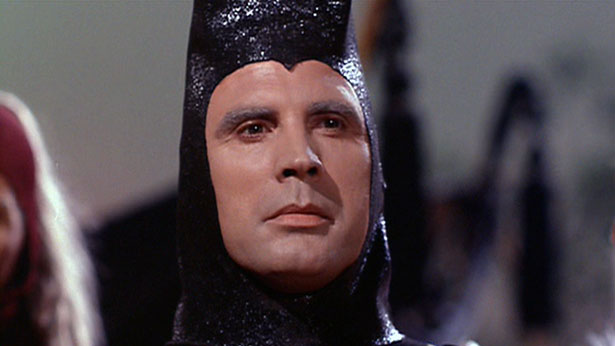
Michael Dante plays Joie in Kid Galahad and appears as Maab in the 1967 Star Trek episode “Friday’s Child.”

Joie (Michael Dante) spars with Galahad (Elvis Presley) in 1962's KID GALAHAD (United Artists)

Joie (Michael Dante) spars with Galahad (Elvis Presley) in 1962’s KID GALAHAD (United Artists)

Michael Dante is Maab in the 1967 STAR TREK episode "Friday's Child" (Paramount)

Michael Dante is Maab in the 1967 STAR TREK episode “Friday’s Child” (Paramount)

In addition, multiple uncredited cast members from Kid Galahad went on to appear in Star Trek, including:

  • Dave Cadiente [Kid Galahad: Boxer | Star Trek: Enterprise Crewmember in “The Tholian Web” (1968) and the Klingon Sergeant in Star Trek III: The Search For Spock (1984)]
  • Al Cavens [Kid Galahad: Fight Spectator | Star Trek: Klingon Crewman in “Day Of The Dove” (1968) and Second Fop in “All Our Yesterdays” (1969)]
  • Louie Elias [Kid Galahad: Boxer | Star Trek: Various roles in “Dagger Of The Mind” (1966), “And The Children Shall Lead” (1968), “Is There In Truth No Beauty?” (1968), “The Tholian Web” (1968), and “The Cloud Minders” (1969)]
  • Seamon Glass [Kid Galahad: Boxer | Star Trek: Benton in “Mudd’s Women” (1966)]
  • Gil Perkins [Kid Galahad: Freddie | Star Trek: Slave #3 in “Bread And Circuses” (1968)]
  • Paul Sorensen [Kid Galahad: Joe | Star Trek: Merchantman Captain in Star Trek III: The Search For Spock (1984)]
  • Bill Zuckert [Kid Galahad: O’Grady | Star Trek: Johnny Behan in “Spectre Of The Gun” (1968)]

Honorable mentions:

  • Nick Dimitri [Kid Galahad: Boxer | Various roles in Star Trek: The Next Generation and Star Trek: Deep Space Nine in the 1990s]
  • Bert Remsen [Kid Galahad: Max | Kubus in Star Trek: Deep Space Nine – “The Collaborator” (1994)]

While researching the various Star Trek connections, I also noticed there are tons of cast and crew crossovers between Kid Galahad and the Rocky movies. I just don’t have the energy to capture them here, so I leave it to a more industrious Elvis or Rocky fan in the future to document them elsewhere.


Elvis Presley is Kid Galahad and Orlando de la Fuente is Sugarboy Romero in 1962’s KID GALAHAD (United Artists)

Kid Galahad Tote Board

  • Punches: 334 (including 11 knockouts)
  • Kisses: 10
  • Songs: 7

Songs In Kid Galahad

  1. “King Of The Whole Wide World” (1961), written by Ruth Batchelor & Bob Roberts
  2. “This Is Living” (1961), written by Fred Wise & Ben Weisman
  3. “Riding The Rainbow” (1961), written by Fred Wise & Ben Weisman
  4. “Home Is Where The Heart Is” (1961), written by Sherman Edwards & Hal David
  5. “I Got Lucky” (1961) [performed twice], written by Dolores Fuller, Fred Wise, & Ben Weisman
  6. “A Whistling Tune” (1961), written by Sherman Edwards & Hal David

The Mystery Train’s Kid Galahad Scorecard

  • Story: 6 (out of 10)
  • Acting: 8
  • Fun: 4
  • Songs: 4
  • Overall: 6 (Worth Watching)

Kid Galahad Around The Web


Click image for larger, full-color version


“I run with purpose in every step. I am not just shadowboxing. I discipline my body like an athlete, training it to do what it should. Otherwise, I fear that after preaching to others I myself might be disqualified.”
1 Corinthians 9:26-27

Elvis Movies: SPINOUT

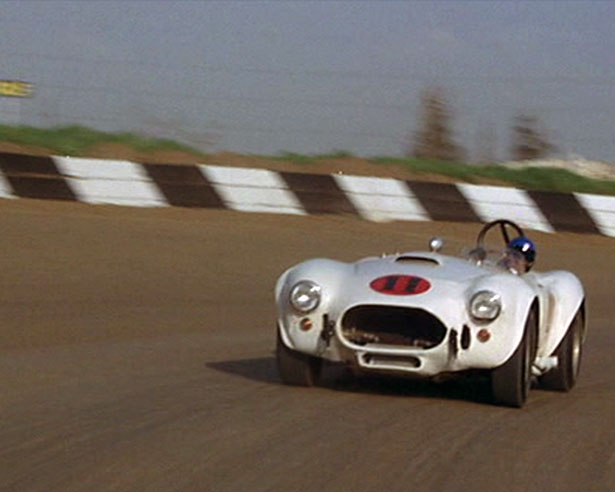
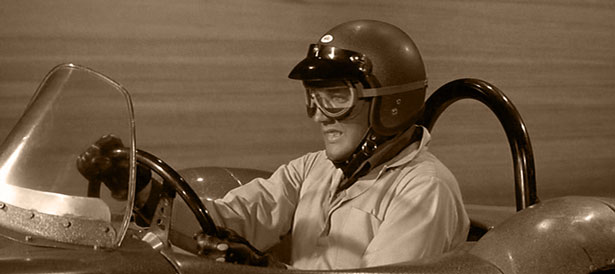
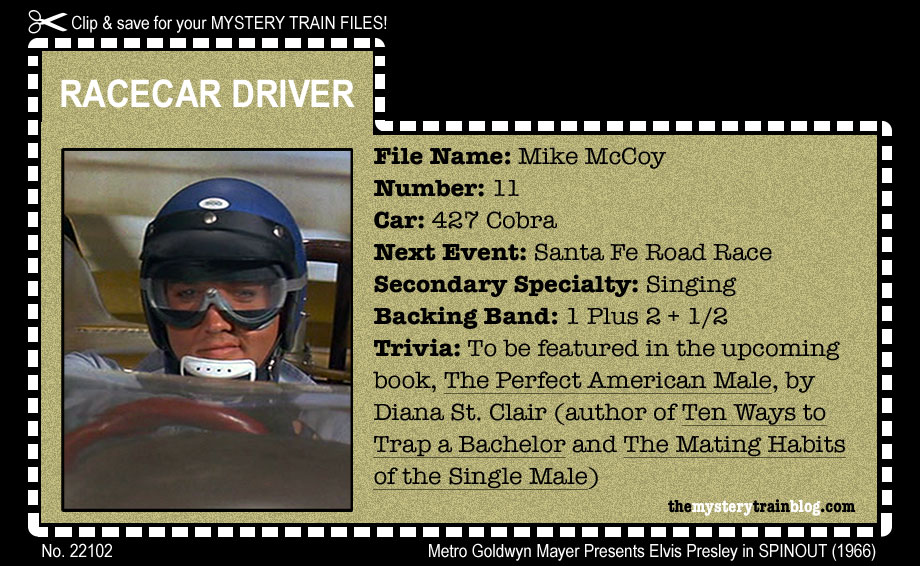
Mike McCoy tests his #11 427 Cobra in 1966's SPINOUT (MGM)

Mike McCoy tests his #11 427 Cobra in 1966’s SPINOUT (MGM)

Today, we will look at Elvis Presley’s 22nd movie, Spinout. Before we do that, however, I want to take a sidetrack to mention Baz Luhrmann’s ELVIS film. I usually dislike movies that attempt to portray Elvis, so I was fully intending to skip this one. That is, until I saw the preview trailer that Warner Brothers released last week.

Credit: Warner Bros. Pictures channel (YouTube)

The ELVIS trailer shocked me. Austin Butler seems to have captured the essence of Elvis. He has the body language and moves down without looking like an impersonator. I figured he would look like a clown once they showed him in a jumpsuit, but he pulls that difficult look off, too. I loved the unexpected use of “Unchained Melody” from 1977, which gave me chills. The production design is obviously top-notch, with a keen attention to detail.

The story of Elvis is a challenge to portray in an effective way. It is a tale of both triumph and tragedy. His life is both inspiring and depressing. He achieves the American dream many times over, but slowly allows it all to erode.

“The image is one thing, the human being is another,” Elvis said in 1972. “It’s very hard to live up to an image.” Once Elvis died in 1977, the image won and the human that he once was all but disappeared. Can Luhrmann’s film humanize Elvis again? If the script is as solid as the trailer, this could really turn out to be something special. ELVIS opens in the United States on June 24.

No need to wait until June to enjoy Elvis, though. Let’s take a drive with the real Elvis in Spinout.

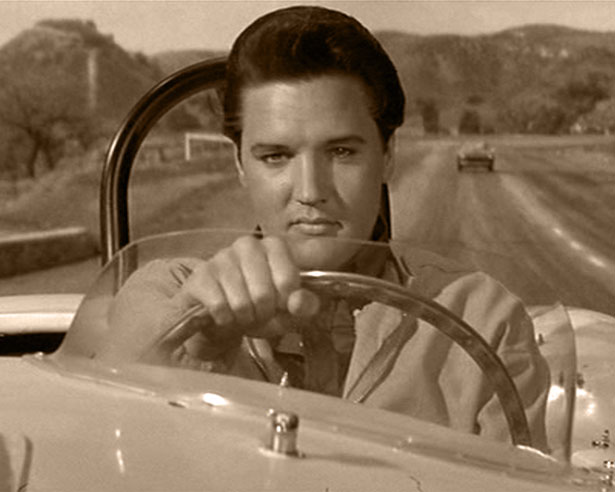
Elvis Presley is Mike McCoy in 1966's SPINOUT (MGM)

Elvis Presley is Mike McCoy in 1966’s SPINOUT (MGM)


“It’s Elvis with his foot on the gas and no brakes on the fun!!!”

Spinout

Spinout (MGM)
Wide Release: November 23, 1966 (United States)
Starring: Elvis Presley, Shelley Fabares, Diane McBain
Written By: Theodore J. Flicker & George Kirgo
Music Score By: George Stoll
Produced By: Joe Pasternak
Directed By: Norman Taurog
Running Time: 93 Minutes


In Spinout, Elvis Presley stars as Mike McCoy. Is Mike a racecar driver who also sings or a singer who also races cars? Folks, we don’t ask such questions when watching an Elvis Movie. We just sit back and enjoy the ride.

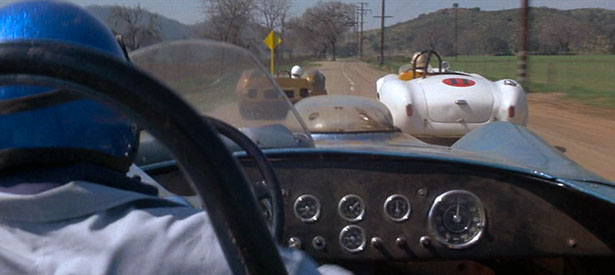
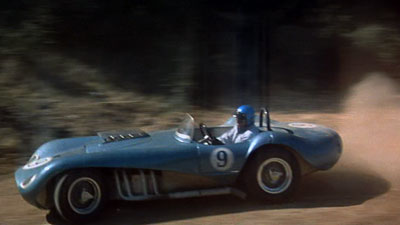
View from the #9 car, driven by Mike McCoy, during the Santa Fe Road Race in 1966's SPINOUT (MGM)

View from the #9 car, driven by Mike McCoy, during the Santa Fe Road Race in 1966’s SPINOUT (MGM)

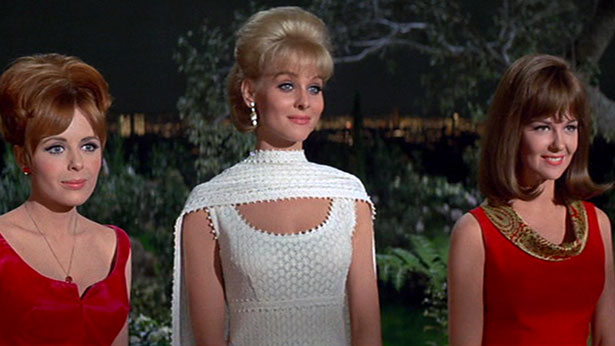
Outside of the cars, there is not a lot of action in Spinout. The film focuses more on the romance side of the Elvis Movie formula. Three, count them, three women are vying for Mike’s affections. There’s heiress Cynthia (Shelley Fabares), who runs him off the road in the opening scene. There’s also author Diana (Diane McBain), who declares him the “perfect American male,” with the prize being herself, naturally. Even the drummer in his band, Les (Deborah Walley), has been secretly holding feelings for him.

Deborah Walley is Les, Diane McBain is Diana, and Shelley Fabares is Cynthia in 1966’s SPINOUT (MGM)

Deborah Walley is Les, Diane McBain is Diana, and Shelley Fabares is Cynthia in 1966’s SPINOUT (MGM)

Mike is initially unable to decide what to do about his admirers. “I’ve gotta think about it,” he says. “I’ll let you know after the race. I think better when I’m driving.”

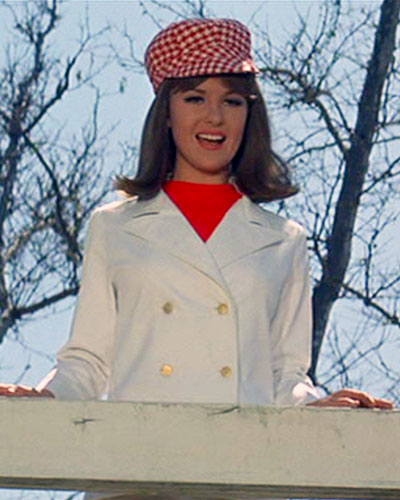
Shelley Fabares is Cynthia Foxhugh in 1966's SPINOUT (MGM)

Shelley Fabares is Cynthia Foxhugh in 1966’s SPINOUT (MGM)

Spinout is the second of three Elvis Movies in which Shelley Fabares appears. She is one of my favorite Elvis co-stars, so I really don’t understand how Mike found deciding among the three women to be so difficult. Anyway, the movie also includes a couple of fun in-jokes in regards to Elvis’ real-life past – the Ed Sullivan Show warrants a mention and Mike refers to a wandering canine as a “hound dog.”

Though production on Spinout began only a few months after the premiere of the Get Smart television series, be sure to listen out for Mike doing what sounds to my ears like a quick Don Adams impression with Agent 86’s “Would you believe?” catch-phrase.

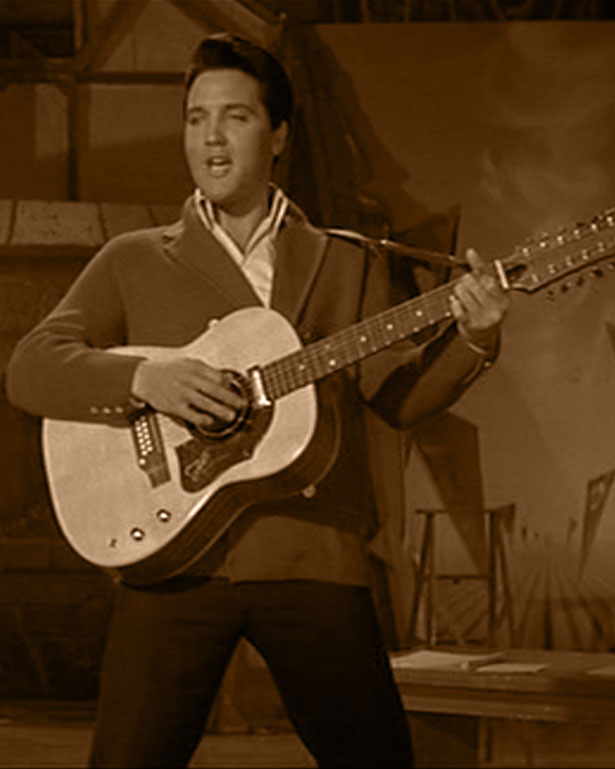
Mike McCoy (Elvis Presley) rehearses "Never Say Yes" in 1966's SPINOUT (MGM). Note the 12-string guitar.

Mike McCoy (Elvis Presley) rehearses “Never Say Yes” in 1966’s SPINOUT (MGM). Note the 12-string acoustic electric guitar.

Mike does sing quite a bit in the movie. “All That I Am,” “Am I Ready,” “Never Say Yes,” and “Spinout” are all strong songs. “Never Say Yes” is rare in the Elvis catalog in that it includes the “Bo Diddley Beat,” which is fun to hear. On the other side of the coin, “Smorgasbord” is awful.

Mike McCoy drives the #9 car during the Santa Fe Road Race in 1966’s SPINOUT (MGM)

Mike McCoy drives the #9 car during the Santa Fe Road Race in 1966’s SPINOUT (MGM)

For a movie named Spinout, there is less racing than you might expect. The Santa Fe Road Race featured in the finale is well-filmed. A humorous subplot involving Mike’s #11 car being stolen by another man vying for Cynthia becomes tiresome, though. Mike ends up substituting for Shorty Bloomquist (James McHale) in car #9 to chase after his own car. Look quick and you’ll see Elvis’ friends Red West and Joe Esposito in Shorty’s pit crew. Cynthia also winds up driving onto the road course, so she and Mike tangle again, creating a bookend of sorts to the opening.

Spinout sometimes qualifies as fun, but all too often feels like it is running on empty.

Mike McCoy (Elvis Presley) races in 1966’s SPINOUT (MGM)

Mike McCoy (Elvis Presley) races in 1966’s SPINOUT (MGM)


Spinout Tote Board

  • Kisses: 28
  • Songs: 10
  • Cars Driven By Mike: 4
  • Women Chasing Mike: 3
  • Cars Crashed Into Water: 2
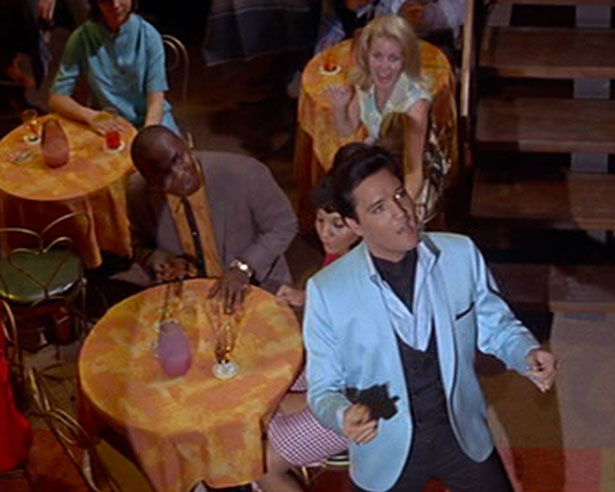
Audience members look on as Mike McCoy (Elvis Presley) sings "Adam And Evil" in 1966's SPINOUT (MGM)

Audience members look on as Mike McCoy (Elvis Presley) sings “Adam And Evil” in 1966’s SPINOUT (MGM)

Songs In Spinout

  1. “Spinout” (1966) [performed twice], written by Sid Wayne, Ben Weisman, & Dolores Fuller
  2. “Stop, Look, and Listen” (1966), written by Joy Byers
  3. “Adam And Evil” (1966), written by Fred Wise & Randy Starr
  4. “All That I Am” (1966), written by Sid Tepper & Roy C. Bennett
  5. “Never Say Yes” (1966), written by Doc Pomus & Mort Shuman
  6. “Am I Ready” (1966), written by Sid Tepper & Roy C. Bennett
  7. “Beach Shack” (1966), written by Bill Giant, Bernie Baum, & Florence Kaye
  8. “Smorgasbord” (1966), written by Sid Tepper & Roy C. Bennett
  9. “I’ll Be Back” (1966), written by Sid Wayne & Ben Weisman
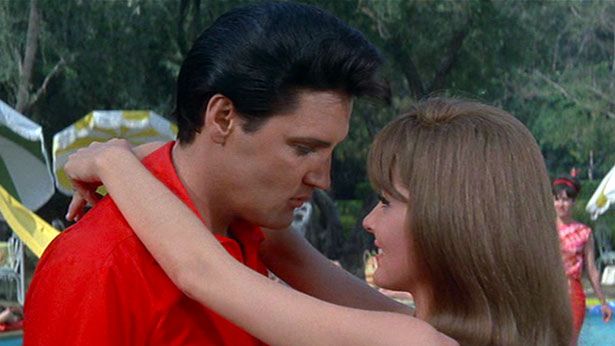
Elvis Presley is Mike McCoy and Shelley Fabares is Cynthia Foxhugh in 1966's SPINOUT (MGM)

Elvis Presley is Mike McCoy and Shelley Fabares is Cynthia Foxhugh in 1966’s SPINOUT (MGM)

The Mystery Train’s Spinout Scorecard

  • Story: 2 (out of 10)
  • Acting: 5
  • Fun: 4
  • Songs: 6
  • Overall: 4 (For Elvis Fans Only)

Further Spinout Reading


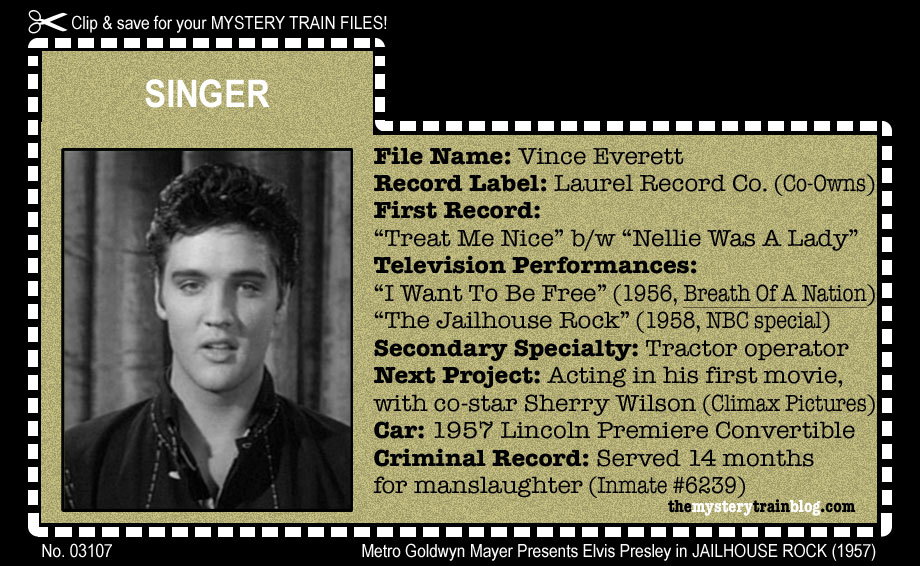
TMT Files: Mike McCoy

Click image for larger, full-color version


“I do everything to spread the Good News and share in its blessings. Don’t you realize that in a race everyone runs, but only one person gets the prize? So run to win! All athletes are disciplined in their training. They do it to win a prize that will fade away, but we do it for an eternal prize.”
1 Corinthians 9:23-25

A Quick Look at ELVIS PRESLEY: THE SEARCHER Soundtrack [Pastimescapes blog]

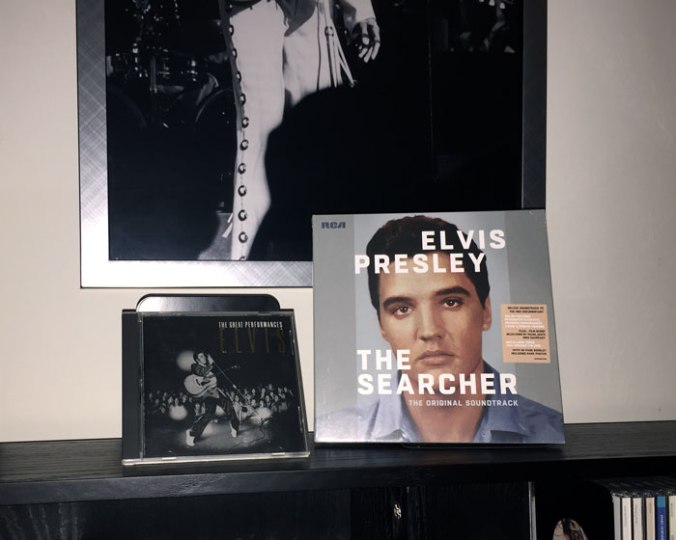
ELVIS: THE GREAT PERFORMANCES (1990) and ELVIS PRESLEY: THE SEARCHER (2018) soundtracks (Front)

ELVIS: THE GREAT PERFORMANCES (1990) and ELVIS PRESLEY: THE SEARCHER (2018) soundtracks (Front)

Just a couple of shots of the beautifully packaged soundtrack to the upcoming HBO documentary Elvis Presley: The Searcher. This is the 3-CD version. 1-CD and vinyl versions are also available. The soundtrack hit stores yesterday.

I threw a standard-sized CD case in there for size comparison (The Great Performances).

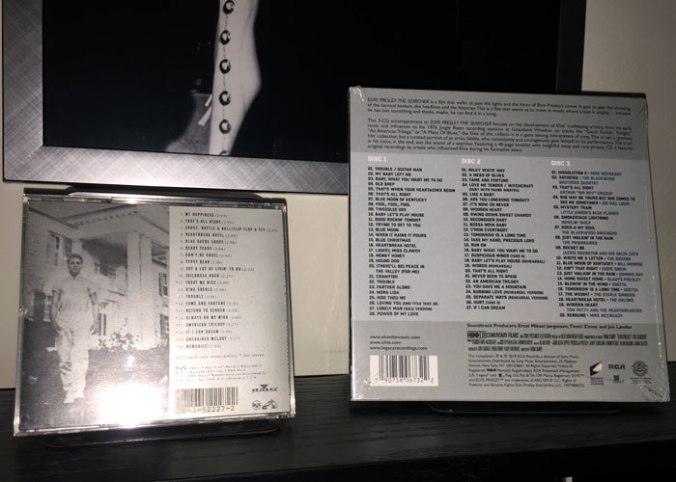
ELVIS: THE GREAT PERFORMANCES (1990) and ELVIS PRESLEY: THE SEARCHER (2018) soundtracks (Back)

ELVIS: THE GREAT PERFORMANCES (1990) and ELVIS PRESLEY: THE SEARCHER (2018) soundtracks (Back)

I’m not opening this until after I watch the documentary, so this is all I can really say about the soundtrack for now. Both parts of Elvis Presley: The Searcher premiere Saturday, April 14.


See below for the documentary’s trailer:

Reserve your seat now for ELVIS: THAT’S THE WAY IT IS – SPECIAL EDITION, coming to US theaters in August

Elvis in THAT'S THE WAY IT IS: SPECIAL EDITION

Elvis in THAT’S THE WAY IT IS: SPECIAL EDITION

As hoped, Warner Brothers is bringing a newly restored version of Elvis: That’s The Way It Is – Special Edition to theaters across the United States in August. Playing in 40 states, the limited engagement promotes the August 12 release of the documentary on Blu-ray.

Elvis: That’s The Way It Is was a 1970 MGM documentary that captured Elvis on stage and off during his third concert series at the International Hotel in Las Vegas. In 2000, the “Special Edition,” a completely new edit of the film, made its debut in Memphis. It hit stores the following year on VHS and DVD. The Special Edition used elements of the original movie as well as previously unseen footage. In some ways, it was an improvement upon the theatrical version, while in other ways, it was inferior.

For the purposes of this 2014 theatrical screening, Elvis: That’s The Way It Is – Special Edition is admittedly the best choice for sharing with the “general public” and even casual Elvis fans. After the previously announced August 16 premiere at the Orpheum Theater in Memphis, other US theaters will begin showing the film the week of August 17.

This will mark the third time I have seen Elvis in theaters, dating back to an edit of the ELVIS “Comeback Special” in 2004 and Elvis On Tour in 2010. Each of those previous times, I remember thinking, “This is great, but I really wish I could see That’s The Way It Is like this.”

For me, That’s The Way It Is represents Elvis Presley at his very best. I was only two when Elvis passed away, so he was gone before I ever had a chance to see him in concert. This is a dream-come-true, next best thing for me. I can’t wait! Accept no imitations. This is the real deal.

Be sure to check out the brand-new trailer below or over on USAToday.com.