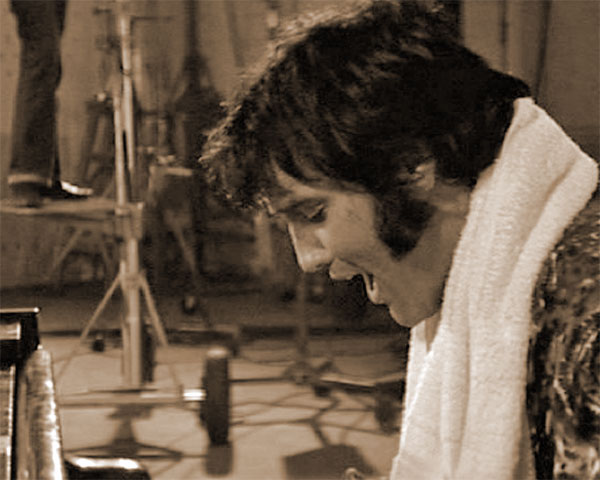
Prince From Another Planet highlights an unreachable star

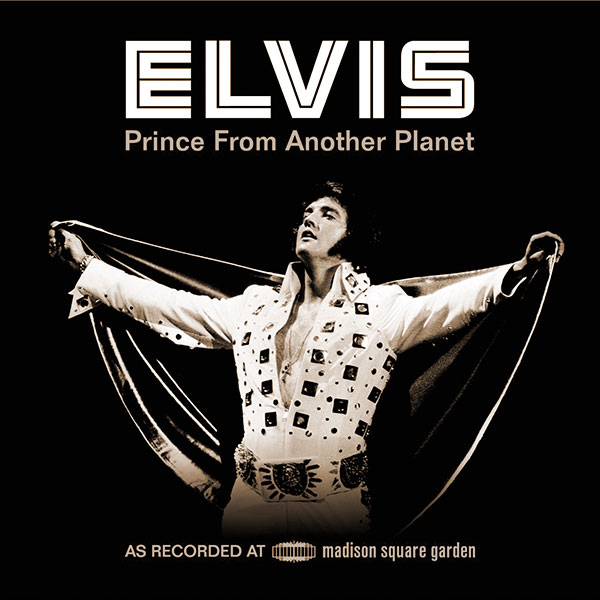
Sony released three new Elvis titles to US stores on Tuesday, all of them related to his 1972 appearances at Madison Square Garden. While I commend Sony for bringing these releases to market, they have also brought along with them much confusion over the similar contents.

I’m no miracle worker, but I’ll try to clear this up for you as best I can.

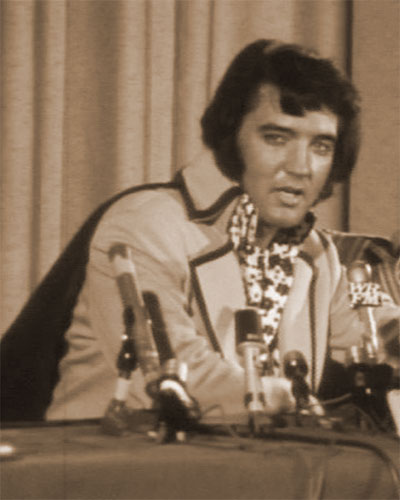
Prince From Another Planet: As Recorded At Madison Square Garden is a 2-CD/1-DVD boxed set. CD 1 is a 2012 mix by Michael H. Brauer of Elvis’ June 10, 1972, afternoon show at the Garden, mastered by Vic Anesini. CD 2 is a 2012 mix by Brauer of Elvis’ June 10 evening show at the Garden, mastered by Anesini. The DVD contains a new documentary (Like A Prince From Another Planet), footage from Elvis’ June 9 press conference in New York, and fan-shot 8-millimeter footage of the June 10 afternoon show. Also included is a 50-page book, featuring liner notes by Lenny Kaye.

Elvis Presley's 1972 New York press conference

Elvis at his June 9, 1972, press conference

Elvis As Recorded At Madison Square Garden: Legacy Edition is a 2-CD set. CD 1 is a vintage 1972 mix of Elvis’ June 10 evening show at the Garden, mastered by Anesini in 2007. This represents the 1972 album Elvis As Recorded At Madison Square Garden, which hit store shelves only a week after the actual show. Due to Anesini’s mastering, which was first released on 2009’s Elvis: The Complete Masters Collection and 2010’s The Complete Elvis Presley Masters, the sound quality is improved over the 1992 CD release. CD 2 is a vintage 1997 mix of Elvis’ June 10 afternoon show at the Garden, mastered by Anesini for this 2012 edition. This represents the 1997 album An Afternoon In The Garden.

Sony has also released a new vinyl version of Elvis As Recorded At Madison Square Garden. This 2-LP release of the June 10 evening show is a newly mastered version of the vintage 1972 mix. Despite the fact that it is now two records, this does not contain the afternoon show. The original 1972 vinyl issue of this album was only one record, but the two record format is for better sound quality.

As you can see, fans of Elvis in 1972 have a nice selection from which to choose. As for me, I went with the deluxe Prince From Another Planet set because I wanted to hear the 2012 mixes. The Legacy Edition was not appealing to me because I already have the vintage As Recorded At Madison Square Garden mix as mastered by Anesini on The Complete Masters Collection, and I was not interested in a new mastering of the 1997 mix of An Afternoon In The Garden. I may eventually pick up the vinyl, though I tend to gravitate more towards records produced while Elvis was alive.

Prince From Another Planet (2012)

I’m not going to do a formal review, but I can’t close out without saying that Prince From Another Planet is incredible. Brauer has done a fantastic job mixing these shows. Crank up your sound system and maybe, just maybe, you can be transported back to June 10, 1972, and experience Elvis at the Garden.

As you might expect, the difference is most striking on the evening show. To say that the 1972 mix was rushed would be an understatement. This new 2012 mix finally illuminates this show in the fashion it deserves.

The Like A Prince From Another Planet documentary is worthwhile. I would like to see more documentaries of this nature, highlighting specific points in Elvis’ career. It does “spoil” a lot of the fan-shot footage, though, so you may want to watch that first.

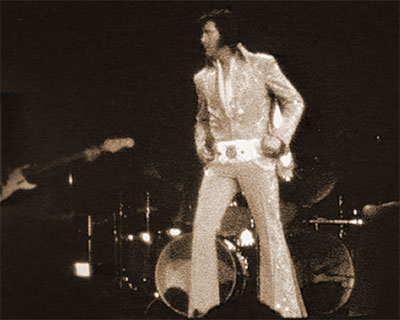
The amateur video of the June 10 afternoon show looks about as good as 8 millimeter footage can possibly appear. Do not go in expecting professional Elvis On Tour or Aloha From Hawaii quality, though. This understandably looks grainy on large television sets. Though the original footage was silent, Sony has meticulously synched the 2012 mix of the show’s audio with the footage. To put it mildly, the footage is stunning and makes for a terrific experience . . . almost.

Elvis on stage at the Garden

Elvis on stage at the Garden

Only about twenty minutes of footage from this sixty minute show actually exists. During parts of the show for which there is no footage, the screen goes black while the audio continues. There are several long stretches of songs with no footage at all. To be honest, I cannot imagine a member of the “general public” (i.e., someone who is not an obsessed Elvis fan) sitting through this. Even I became restless at times, afraid to take my eyes off the big blank screen for fear I would miss the video. Sony should have provided an option to “View All Footage” and skip over the blank portions. This is but a minor quibble, though. Keep in mind while watching this that Warner Home Video is sitting on hours of professionally-filmed 1972 tour footage of Elvis. Unfortunately, Sony has no control of that footage, so kudos to them for at least bringing us this grainy alternative.

My larger complaint with the set has to do with the packaging. It is beautiful, but fails miserably at its primary job – protecting the CDs and DVD. Good luck getting them out without scratching the discs and/or creasing the packaging. As it is, my DVD has a fault during the press conference, and I have no doubt that the packaging and my admittedly anxious hands are to blame.

Elvis and the music more than make up for these shortcomings, though. If you are a fan of Elvis in 1972, Prince From Another Planet is a must-have. If you are not a fan of Elvis in 1972, I do not think this release will change your opinion. That’s okay, though. Everyone is entitled to be wrong!

* * *

Coming so soon on the heels of the recent storm, this New York themed release also reminded me to think of those in New York and neighboring areas that are affected. I think it would be a great gesture, and certainly within the spirit of Elvis’ generosity, if Sony were to release a single from this set with proceeds to benefit disaster relief efforts. In any event, we fans can also help on our own by donating funds to the American Red Cross.

No particular place to go

All right, this will be one of those off-the-top-of-my-head posts – so who knows what you’re gonna get out of reading this.

I’m just sitting here on a rainy Saturday afternoon listening to Elvis.

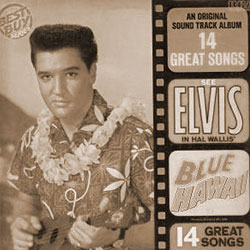
Blue HawaiiI’m getting back into vinyl after pretty much being all CDs all the time for the last twenty years. I pulled out my old collection, and the first one I played was Blue Hawaii.
I couldn’t believe how incredible it sounded on record. I sense a new obsession coming on.

The good thing is, I already have about 25 LPs and 25 45s from the old days before I had a CD player, so those should tide me over for awhile.

* * *

So, there were a bunch of great posts around the web for Elvis Week 2012. My favorite was probably Indisposable Johnny’s “When Elvis Moved On” over on The Round Place In The Middle blog. If you haven’t already, be sure to read it.

One post that I didn’t want to read because I knew what was coming was “Treat Me Nice”, a farewell of sorts by Thomas Melin over on his Elvis Today Blog. After five years and 500 posts, he’s taking an indefinite break from blogging about Elvis in order to spend more time with his family. It’s hard to fault him for that. I’m sure gonna miss his posts, though. Best wishes to Thomas.

While Thomas’ absence leaves a huge void, all is not lost. For instance, Sheila O’Malley continues her excellent series of Elvis Essays on The Sheila Variations blog. Meanwhile, artist Joe Petruccio just began a brand new blog called My Elvis Journal. Petruccio’s unique posts are definitely worth checking out.

Have a great weekend, everyone!

* * *

August 28 Update: I’ve just found that there is yet another new Elvis blog, and it’s one I definitely want to mention. Elvis audio expert and frequent For Elvis CD Collectors Forum poster elvissessions recently began elvissessions.net, which will cover “Elvis Presley in the studio — and beyond.”

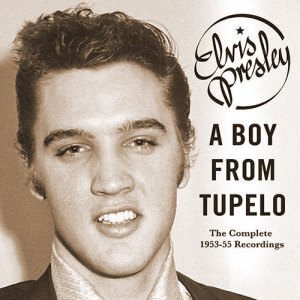
I love his informative FECC posts, so I’m looking forward to following elvissessions’ blog. Here’s a recent entry about obtaining Ernst Jorgensen’s autograph on his copy of A Boy From Tupelo during Elvis Week 2012.

Speaking of FTD’s mammoth SUN project, my copy will supposedly be in the mail this week. No autographs, though. I guess that’s one of the many perks of being in Memphis during Elvis Week. Either way, I can hardly wait for this release.

From sea to shining sea

“We hold these truths to be self-evident, that all men are created equal, that they are endowed by their Creator with certain unalienable rights, that among these are life, liberty and the pursuit of happiness. That to secure these rights, governments are instituted among men, deriving their just powers from the consent of the governed.” –From The Declaration of Independence, Thomas Jefferson, July 4, 1776
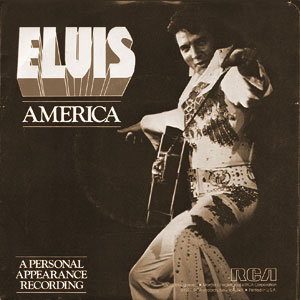
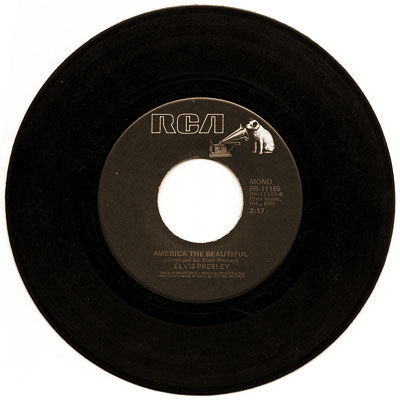
America The Beautiful: A History of Elvis Presley Releases

  • December 6, 1975, Live, Las Vegas, Midnight Show: Live In Las Vegas
  • December 13, 1975, Live, Las Vegas, Dinner Show: Dinner At Eight
  • December 13, 1975, Live, Las Vegas, Midnight Show: Single, b/w “My Way”
  • December 14, 1975, Live, Las Vegas, Midnight Show: Fashion For A King
  • February 8, 1976, Memphis: The Jungle Room Sessions (incomplete)
  • April 22, 1976, Live, Omaha: America
  • July 3, 1976, Live, Fort Worth: Rocking Across Texas
  • July 30, 1976, Live, New Haven: New Haven 76
  • October 18, 1976, Live, Sioux Falls: A Minnesota Moment

[Information source: Elvis In Norway Session Notes]

Cover of America The Beautiful, 1977 single

Oh beautiful,
For spacious skies,
For amber waves of grain,
For purple mountains, majesty,
Above the fruited plains,
America, America,
God shed His grace on thee,
And He crowns thy good,
With brotherhood,
From sea to shining sea

–From “America The Beautiful,” Elvis Presley song, 1975 (written by Katharine Lee Bates & Samuel Ward)

America The Beautiful, 1977 single


UPDATE: Check out today’s entry of The Sheila Variations blog for another look at Elvis Presley’s “America The Beautiful.”

From here to there, Elvis is everywhere

A Boy From Tupelo (concept cover art)

A Boy From Tupelo (concept cover art)

Follow That Dream, Sony’s collectors label for Elvis fans, recently announced a slate of new releases for this summer:

  • A Boy From Tupelo: The Complete 1953-55 Recordings [the long awaited SUN project, with a 512-page book and 3 CDs] – August
  • G.I. Blues: Volume 1 [2 CD set] – June
  • From Hawaii To Las Vegas: Recorded Live In Rehearsal, January 25, 1973 [1 CD] – June
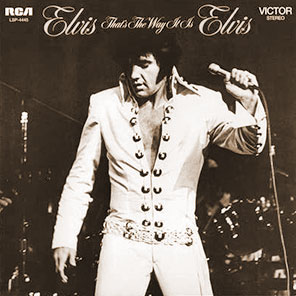
  • That’s The Way It Is: Special Edition [2-LP vinyl set (weren’t we just talking about the original album?)] – June
  • From Memphis To Hollywood [book detailing the making of 1960’s G.I. Blues] – June

There’s certainly much to be excited about in these releases, particularly the SUN project. In fact, to save for this expensive book and CD set, I’ve been holding off on Elvis purchases so far in 2012 in hopes that this might finally be the year.

We’ll have plenty of time in coming weeks to examine some of these releases in detail, but today, I want to have fun with titles and location, location, location. Dating back to 1961’s Blue Hawaii, dozens of Elvis albums have mentioned a place in the title.

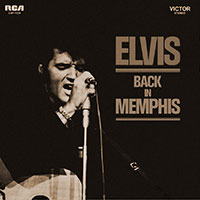
The “From Here To There” style, though, began with 1969’s 2-LP set From Memphis To Vegas/From Vegas To Memphis (later released separately as Elvis In Person and Back In Memphis). Since then, several subsequent releases on both the main label and FTD have followed this trend.

Put them all together and you get a virtual Elvis travelogue:

  • From Memphis To Vegas/From Vegas To Memphis (recorded/released 1969)
  • From Nashville To Memphis (recorded 1960-1969/released 1993)
  • From Sunset To Vegas (recorded 1974/released 2009)
  • From Hawaii To Las Vegas (recorded 1973/released 2012)
  • From Memphis To Hollywood (covers 1960/released 2012)

So, I wonder if it is possible to put the titles in an order where you can go from location to location without getting stranded?

1.) From Nashville To Memphis
2.) From Memphis To Hollywood
3.) From Sunset To Vegas
4.) From Vegas To Memphis
5.) From Memphis To Vegas
STRANDED in Vegas! Need a ticket to Hawaii.

Trying again…

1.) From Hawaii To Las Vegas
2.) From Vegas To Memphis
3.) From Memphis To Hollywood
4.) From Sunset To Vegas
STRANDED in Vegas again! Need a ticket to Nashville.

It appears there is no solution to this Rubik’s cube of Elvis titles. I might be stranded, but at least there’s good music on the radio.

FTD releases are available from various online stores. They originate in Denmark and then ship to retailers, so there is sometimes a two or three week delay after the release date before the items arrive for those of us in the US.

That’s The Way It Is reveals a different side of Elvis

My favorite album released during Elvis Presley’s lifetime is That’s The Way It Is. First hitting record stores in November 1970, it features studio material from his June recordings in Nashville as well as four live cuts from his August Las Vegas engagement. It serves as a soundtrack of sorts for the excellent documentary of the same name, also released that month.

Despite the status I give it, the album is not perfect. Rock ‘n’ roll fans sometimes dismiss it as an easy-listening bore. One of the causes of that issue, I believe, is the sequencing of songs. Many of them should have been presented in a different order. For instance, the album unfortunately begins with a live version of the sleepy B.J. Thomas hit “I Just Can’t Help Believin'” and establishes the wrong tone.

Adding to the trouble, two of the live performances, “Patch It Up” and “I’ve Lost You,” are not as powerful as their studio counterparts, which should have been used instead. The studio recordings had been released as singles prior to the album, so the live versions were likely considered bonuses for fans that already had the 45s. The artistry of the album should have taken priority, though.

Apparently to complete the “feel” of a live album, RCA overdubbed applause on the end of the studio version of “Bridge Over Troubled Water,” which closed out That’s The Way It Is. Elvis’ vocals on the first verse of the song are also very faint in the mix, either on purpose or due to a technical glitch. You can better hear Elvis’ beautiful performance of this song, with his voice louder on the first verse and without the annoying applause overdubs, on Heart & Soul and the Elvis: Walk A Mile In My Shoes-The Essential 70s Masters boxed set.

That's The Way It Is (1970)

Side 1

“I Just Can’t Help Believin'”
Live Master–8/11/1970 Dinner Show (DS): As noted above, the song does not serve well as an album opener. While it is misplaced on the album, the performance is strong. I love the little traces of humor in his voice. He sounds on the verge of laughing a couple of times. Also memorable is his interaction with the Sweet Inspirations throughout (“Sing the song, baby”). Elvis would never be quite as incredible again live as he was in this engagement.

“Twenty Days And Twenty Nights”
Master–Take 9: For me, this song represents the adult Elvis, the recording artist that is too often overlooked. “Twenty Days And Twenty Nights” is about a man who regrets leaving his wife, and Elvis evokes this character through music as well as any actor could on screen. The performance plays through the range of emotions, even striking a hopeful tone (“One day soon I’m going back…”) before falling back into despair as he laments “Oh, how I miss her,” over and over at the end.

“How The Web Was Woven”
Master–Take 3: The highlight of the album, “How The Web Was Woven” is a love song that ranks right up there with the better-known “Can’t Help Falling In Love.” From the acoustic guitar opening to the accompanying piano, the arrangement on this one works very well. “At last, I’m where you want me . . . Don’t you know that’s where, where I wanna be,” he sings with a passion that, for this listener anyway, exceeds even the incredible American Sound sessions in Memphis the year before.

“Patch It Up”
Live Master–8/12/1970 DS: Compared to the excellent studio take, this live version sounds almost like a throwaway. Watching this same energetic performance in the film, though, is an entire other experience.

“Mary In The Morning”
Master–Take 5: This is a pretty, if forgettable, love song. It goes on a bit too long and eventually becomes tiresome.

“You Don’t Have To Say You Love Me”
Master–Take 3: Though it is a fine performance, I would have chosen “How The Web Was Woven” or one of the others as a single over Elvis’ version of the Dusty Springfield hit.

Side 2

“You’ve Lost That Lovin’ Feelin'”
Live Master–8/12/1970 MS: This live performance is the definitive version of this song by anyone. This is Elvis at his best: “It makes me just feel like cryin,’ ’cause baby . . . something beau-ti-ful’s dy-in.'” The Righteous Brothers sound like they are singing a lullaby in the original recording compared to the Elvis version. Even Elvis was never able to equal his own performance again in other concerts.

“I’ve Lost You”
Live Master–8/11/1970 DS: While I love this live performance of “I’ve Lost You,” I prefer the studio version featuring more complicated lyrics and arrangement. That being said, this is still a highlight.

“Just Pretend”
Master–Take 3: Picking up where “Twenty Days And Twenty Nights” left off, this turns the despair of a man who left his lover and turns it back to hope for reconciliation. “Now I know, it was wrong to go, I belong there by your side,” he sings, bordering on the type of apology song that Elvis would perfect a couple of years later with “Always On My Mind.” The impressive “Just Pretend,” with a gospel-inspired arrangement, is another all-time favorite.

“Stranger In The Crowd”
Master–Take 9: This is yet another highlight. The band really cooks on this one. For some, Elvis Presley brings to mind “Hound Dog,” “Don’t Be Cruel,” “All Shook Up,” and similar tunes. While those are all fine, when I think of Elvis, I think of songs like “How The Web Was Woven,” “I’ve Lost You,” and “Stranger In The Crowd.”

“The Next Step Is Love”
Master–Take 11: Here’s one studio song where I actually prefer the live version. “The Next Step Is Love” is a little hokey either way, but the studio arrangement, complete with xylophone(!), does not help matters.

“Bridge Over Trouble Water”
Master–Studio Take 8 (with overdubbed applause): I stopped listening to the original album version of this song once RCA finally released a proper studio track. The one on this album simply does not do justice to his performance. The Heart & Soul version, though, I would contend as the best version of this song by anyone.

Upon its original release, That’s The Way It Is faced stiff competition from none other than Elvis himself. In their infinite wisdom, his record label released the following Elvis music in October and November of 1970:

  • Almost In Love album (an excellent “budget” release)
  • “You Don’t Have To Say You Love Me”/”Patch It Up” single
  • Elvis In Person album (re-release of record 1 of the previous year’s From Memphis To Vegas/From Vegas To Memphis double album)
  • Back In Memphis album (re-release of record 2 of From Memphis To Vegas/From Vegas To Memphis)
  • Elvis’ Christmas Album (“budget” repackaging)
  • That’s The Way It Is album
  • “I Really Don’t Want To Know”/”There Goes My Everything” single

Despite the oversaturation, That’s The Way It Is made it to number 21 on the charts and obtained gold record status. It probably would have done even better had fans not been so bombarded with Elvis product in the fall of 1970.

Elvis rehearsing How The Web Was Woven, 1970

Elvis rehearsing How The Web Was Woven, 1970

While a wonderful album, That’s The Way It Is also would have been greatly improved if a couple of different song versions had been used and the album had been sequenced as below in my imaginary version of That’s The Way It Is.

Side 1

  • “Stranger In The Crowd” (studio, as on original)
  • “I’ve Lost You” (substitute studio version)
  • “How The Web Was Woven” (studio, as on original)
  • “You Don’t Have To Say You Love Me” (studio, as on original)
  • “Bridge Over Troubled Water” (substitute Heart & Soul studio version without overdubbed applause)
  • “I Just Can’t Help Believin'” (live, as on original)

Side 2

  • “Patch It Up” (substitute studio version)
  • “Twenty Days And Twenty Nights” (studio, as on original)
  • “Just Pretend” (studio, as on original)
  • “The Next Step Is Love” (studio, as on original)
  • “Mary In The Morning” (studio, as on original)
  • “You’ve Lost That Lovin’ Feelin'” (live, as on original)

No matter the order you listen, though, That’s The Way It Is represents a true Elvis masterpiece.


Portions of the above review originally appeared on my now defunct pop culture blog on May 21, 2008.

“Slow versions” support Theory of Relativelvisity

The Theory Of RelativelvisityHow we perceive something is often relative to our starting point. For instance, people who became fans when Elvis first rose to fame in the mid-1950s often view him differently than those who became fans after his comeback of 1968 or his death in 1977.

Many of those earliest fans seem to favor the 1950s recordings. That is, after all, how they first discovered Elvis. Being the rebel that she is, my mom is actually an exception to that generalization. She became an Elvis fan in 1956, but she definitely favors his 1968-1977 recordings – often to the exclusion of anything else.

I’ve mentioned before that the first Elvis record I can remember listening to is “My Way” backed with “America, The Beautiful,” recorded live in 1977 and 1975 respectively. I had definitely heard Elvis music before that record came out, but those are the earliest specific songs I can remember.

After that, the next major Elvis recording in my life was a cassette tape of 1972’s As Recorded At Madison Square Garden. My mom played that tape just about every time we went for a car ride in the early-to-mid-1980s. It may still hold the record as the concert I’ve heard most often.

She would always crank it up when certain songs came on, especially “Suspicious Minds.” She still does that, in fact. If you are ever in my town and a car drives past you blaring Elvis, it is far more likely to be my mom than me behind the wheel.

Eventually, the Madison Square Garden tape began to wear thin. She next switched to a tape copy of the 1977 album Elvis In Concert. Though it lost a few points for not including “Suspicious Minds,” she played that one almost as much as she did Madison Square Garden.

For the longest time, other than the occasional radio song or record album that my family played around the house, those two live concerts tapes were Elvis to me.

Eventually, I started to collect my own albums. One of the first ones I acquired was Elvis’ Golden Records, which compiles some of his hits from 1956 and 1957.

Keeping in mind that my perception of most of them was based almost entirely on As Recorded At Madison Square Garden and Elvis In Concert, I was sure in for a shock when I played the original studio versions of some of the songs from those live albums:

  • Hound Dog
  • All Shook Up
  • Heartbreak Hotel
  • Jailhouse Rock
  • Love Me
  • Don’t Be Cruel
  • Teddy Bear
  • Love Me Tender

Though I loved the overall sound of the record, many of the songs initially seemed “off” to me. I began to think of them as the “slow versions.” It took years for my perception of those songs to change.

While I came to love and appreciate the 1950s material, I am glad that my Elvis journey started like it did. I believe it allowed me to be much more sympathetic towards his later years than I otherwise might have been.

Besides, I wouldn’t trade those memories for anything. Thanks, Mom. Keep cranking it up!

Guest Post: Elvis 1967 – That Wild Presley Beat

What if the follow-up to the critically-acclaimed and Grammy-nominated Young Man With The Big Beat box set turned out to be something called That Wild Presley Beat, focusing on 1967? You’ve just crossed over into . . . the edge of reality.

 “THAT WILD PRESLEY BEAT” 5-CD Deluxe Set

1967 saw the beginning of Elvis Presley’s return to the charts with songs that were once again artistically significant. But it didn’t happen overnight. The once “young man with the big beat” from Memphis was still tied to the formula of making movies and recording soundtrack albums. By the end of that fateful year, though, he’d shown the world that he was still a force to be reckoned with.

That Wild Presley Beat

That Wild Presley Beat puts the focus on Elvis during 12 months, from February 1967 to January 1968. The package includes his RCA studio master recordings in Nashville; his soundtrack master recordings in Nashville and Hollywood; alternate masters, outtakes; home recordings, and much more. Taking its name from the poster for his movie Clambake, the super deluxe 5-CD, 12 inch square box set (with an amazing 80-page book with timeline) will be available on April 31.

The five CD’s comprise the following, all material originating from February 1967-January 1968:

CD One, Soundtrack Master Recordings
19 tracks recorded in Nashville and Hollywood, starting with nine songs from Clambake, (February 21-23, 1967) followed by 10 songs from Speedway, including the previously unreleased movie version of “Your Time Hasn’t Come Yet Baby” (June 20-21, 1967).

CD Two, Studio and Soundtrack Master Recordings
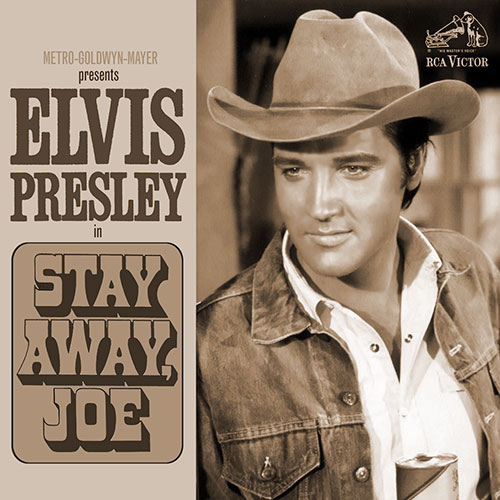
17 tracks recorded in Nashville, starting with 10 songs from the “Guitar Man sessions,” including the unedited masters of “Guitar Man” (with a fade-out jam on “What’d I Say”) and “High Heel Sneakers” (September 10-11, 1967), followed by three songs from Stay Away, Joe (October 1, 1967) and four more songs from the combined studio sessions/soundtrack recordings for Stay Away, Joe (January 15-16, 1968).

CD Three, The Outtakes I
Four outtakes from the Clambake soundtrack recordings (“The Girl I Never Loved,” “How Can You Lose What You Never Had,” “You Don’t Know Me,” “A House That Has Everything”), segueing into the complete session of October 1, 1967 (19 takes of “Stay Away, Joe,” three takes of “All I Needed Was The Rain” and five takes of “Dominick”).

CD Four, The Outtakes II
Nine outtakes from the “Guitar Man sessions” plus another 15 outtakes from the combined studio sessions/soundtrack recordings for Stay Away, Joe, including all 12 takes of “Too Much Monkey Business.”

CD Five, Home Recordings and Interview
Eight home recorded tracks done in early 1967, including “Suppose” that Elvis submitted to his producer Felton Jarvis for overdubbing (done on March 20, 1967) by musicians and backup vocalists. The other seven tracks are previously unreleased, among them “It’s Now Or Never” (with Charlie Hodge) and “Elvis Practicing Organ.” The CD ends with a newly discovered interview with Elvis on the set of Stay Away, Joe. The interview was done and taped by reporter Joseph Lewis, doing a story for the Cosmopolitan.

That Wild Presley Beat will feature an extraordinary book, where the focal point, spread across its 80 pages, will be a unique, meticulously-researched, day-by-day chronology of Elvis during 1967, including every recording date, film schedule, personal events in his life, and much more. A dazzling photo array of memorabilia will illustrate each day and entry. Movie posters, RCA memoranda, letters from fans, postcards from Elvis to his family, personal photos, magazine covers and articles, trade charts, fan club relics, RCA publicity photos, candid photos, and more will be a feast for the eyes and the imagination as 1967 unfolds.

That Wild Presley Beat will also include five rare 8×10 photographs, three original-size movie poster replicas, and a replica of the “specially autographed” wedding photo originally included as a special bonus inside the Clambake album.

Pre-order customers will also receive an exclusive “Stay Away, Joe” vinyl 7″. Sharing the same striking cover art as the movie poster, the EP features “Stay Away, Joe,” “Goin’ Home,” “All I Needed Was The Rain,” “Stay Away” and “Dominick.”

This imaginary box set is available only in . . . the edge of reality.

/Thomas, Elvis Today


Throughout 2011, The Mystery Train has commemorated the 44th anniversary of 1967. Find out why here. This concludes our coverage.