We can solve the mystery if we try

Frequent commenter Ray Faithfull recently emailed me the following mystery:

I watched a clip posted on facebook for the song “We Can Make The Morning”….then it dawned on me that it was longer than the Now album release and the FTD release by almost 30 seconds..I figured you would be the person to go to for some insight as to how many takes of this song were actually done and what and where have they been released??

Was take 1 the master take that went for over 4:30 and was simply faded at 3:48 for the final cut ??

I have included the link to the video i am referring to with the version i had not heard or at least not completely?? http://www.youtube.com/watch?v=GGIMKq-qwOM

Though I did not know the answer right off the top of my head, Ray had obviously placed a lot of faith in me (no pun intended . . . I think), so I felt compelled to research this for him.

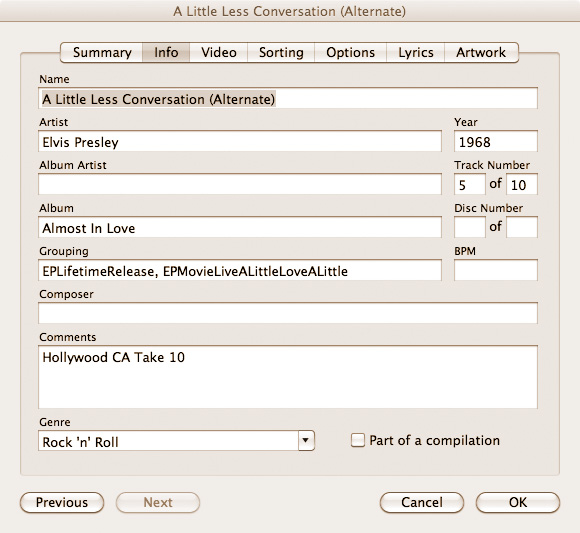
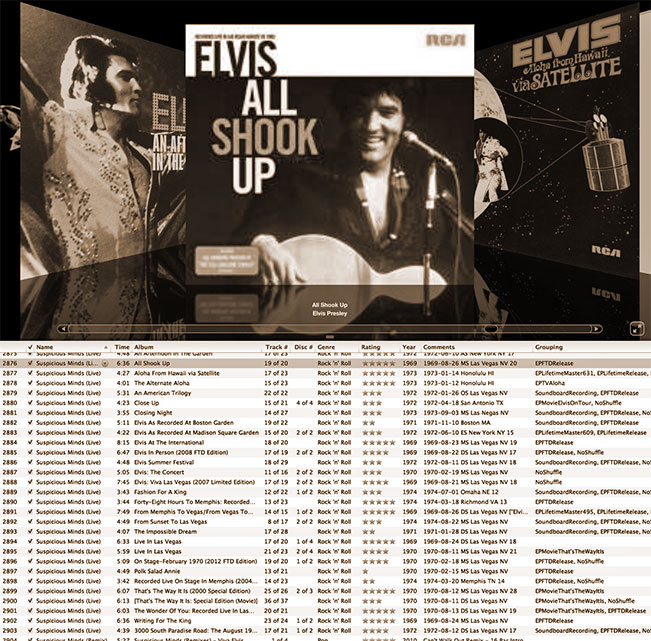
First, I checked iTunes, where I have meticulously cataloged every unique Elvis track I own. To my surprise, the only version of “We Can Make The Morning” I have is the master recording, as released on Elvis Now.  My iTunes version of the 1971 track, sourced from the circa-2007 Vic Anesini remastering effort as released on Elvis: The Complete Masters Collection, clocks in at 3:59. However, the last five seconds of that are silence.

"We Can Make The Morning" on iTunes

“We Can Make The Morning” on iTunes

I pulled out my vintage 1972 vinyl edition of the Elvis Now album, and it indicated a run time of 3:54 for “We Can Make The Morning.” So, I had approximately six seconds more song than Ray’s 3:48 source, but nowhere near the 4:44 of the YouTube video. Though I am fairly obsessive about obtaining alternate takes of songs that Elvis formally recorded between 1969 and 1976, I certainly do not own every Elvis release. Perhaps this extended version was on an album I did not have.

Checks of the Elvis Now FTD edition liner notes and Ernst Jorgensen’s essential Elvis Presley: A Life In Music – The Complete Recording Sessions book provided no useful information in this case. Next, I went to my favorite source for alternate take information, the incredible Elvis Recording Data/Session Notes section of the Elvis In Norway site. There, I also found only one entry for “We Can Make The Morning,” the master recording (B-side single), with time listed as 3:54.

I only collect official releases, so my next thought was that the 4:44 version might be from a bootleg. Elvis In Norway’s Session Notes section fortunately does not muddy the water by including those, so I went to another reliable source that does incorporate bootleg information, the Recording Sessions section of Keith Flynn’s Elvis Presley Pages site.

There I found three matches for “We Can Make The Morning”:

A note on the May 20 / 21 page indicates, “Tape reel #2 from this session is missing, and this is the reel that would have included […] the outtakes of We Can Make The Morning,” so that effectively ruled out an alternate take of the song.

The undubbed master has apparently never been released, nor has the May 25 string overdubs version. Only the completed June 21 version, with overdubbed brass and strings, has been released (i.e., the one from Elvis Now).

However, the site lists the track as 4:11. That’s 17 seconds closer to 4:44, but still not enough. The 4:11 version of the song was released on the bootleg Unedited Masters: Nashville 1971 by the Venus label. There, “We Can Make The Morning” is listed as the “unedited, overdubbed master.” I do not have the album to verify whether the track fades at the end but, assuming the Venus information is correct, that leaves at least 33 unaccounted seconds that are in the video.

After all of this, I finally decided to take a listen to the YouTube video, which had been created by a fan. The visual imagery, interspersing photos of Elvis in life with photos of fans at candlelight vigils in the years after his death, was not to my liking, so I stopped paying attention to the video and just listened to the audio. Not only did it go to 4:44, but the song had not even fully faded at that point.

What was going on here? Though I did not detect anything the first time through, my guess was that a portion of the song had been re-looped somewhere (i.e., a part of the recording had been replayed to artificially make the song longer). On my second listen to the 4:44 video, I played the Elvis Now version at the same time. Whatever potential monkey business had occurred within the song was definitely happening near the end.

My third and fourth listens revealed that 3:28 in the video is a repeat of 2:48. For example, listen how Elvis draws out “night” at 3:33, which is an exact duplicate of how he sings it at 2:53 in the video.

Essentially, someone has artificially added at least 40 seconds to the audio track on the “We Can Make The Morning” YouTube video by repeating a portion of the song – most likely to suit the purposes of the photo montage. Other than the abrupt ending, the audio editing is actually quite seamless. However, I will stick with the original version.

Thanks for the great question, Ray, and for inspiring today’s post.

Case closed.
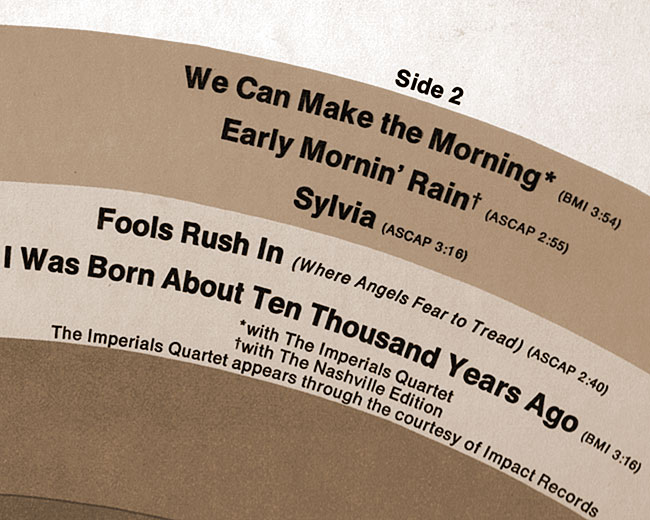
Close-up of ELVIS NOW back cover (1972)
Close-up of ELVIS NOW back cover (1972)
REVIEW: Stay Away, Joe CD (FTD)

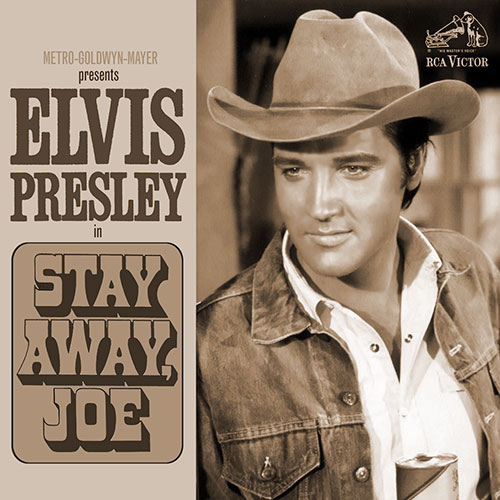
SAJ_cover

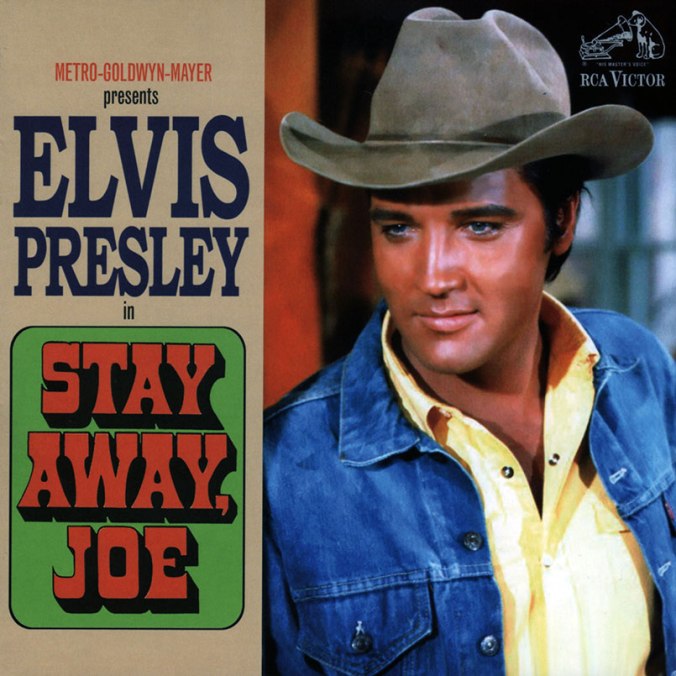
Stay Away, Joe CD (Follow That Dream Records, 2013)

I never quite know what to make of Stay Away, Joe. The first time I tried to watch the movie as a teenager in the early 1990s, I couldn’t get past the non-stop party scene near the beginning. The whole thing just seemed so unbearable.

Yet, over the years, I have come to love most of the five songs Elvis recorded for this film. While Elvis performed many country songs in his career, he rarely delved into “outdoor” country songs that celebrate nature like “Stay Away” (“Greensleeves”) and “Goin’ Home” do. Elvis infuses a passion into these numbers that makes them stronger than the lyrics might otherwise suggest.

“All I Needed Was The Rain” is much the same, but this time with Elvis making the most of an otherwise lesser blues number.

The rollicking “Stay Away, Joe” is a song that had to grow on me. Somewhere, I’ve seen it accurately described as a “campfire song.” Taken in that spirit, “Stay Away, Joe” is just as much fun as it needs to be.

The outlier is the awful “Dominic,” which Elvis recorded against his better judgment after securing a promise from producer Felton Jarvis that it would never be released on record. Though it appeared in the movie, RCA did not release the song until the Double Features series in 1994 – long after the deaths of both Elvis and Jarvis.

I’m torn about whether “Dominic” should have ever been released. On one hand, Elvis lost the right to decide what should and should not be released once he passed away. Surely, had he lived, he would have been against quite a few of the releases that have kept us Elvis fans going over the years. Of course, had he lived, many of those releases would not have been necessary. On the other hand, “Dominic” is such a wretched song, even among the already low standards of Elvis movies, that maybe his music label’s current Elvis team should have respected his wishes in this one instance. Releasing it served no purpose other than to please completists.

FTD’s Classic Albums series edition of the Stay Away, Joe soundtrack supplements the movie tunes with two far more commercial recordings made during the same period, “Too Much Monkey Business” and “U.S. Male.” My first exposure to “Too Much Monkey Business” was watching the 1981 documentary This Is Elvis on TV in the early 1990s. Though “Too Much Monkey Business” is not heard in any of Elvis’ real movies, I’ll always associate it with them due to its perfect use in the montage sequence of his Hollywood years. Elvis’ take on the Chuck Berry hit certainly fits within the spirit of many of his better movie songs, anyway.

Penned and first recorded by Jerry Reed, “U.S. Male acts as a natural follow-up to Elvis’ 1967 recordings of Reed’s “Guitar Man” and Jimmy Reed’s “Big Boss Man” – the evolution of which are chronicled in the essential FTD release Elvis Sings Guitar Man. With tongue planted firmly in cheek, Elvis plays up Southern “country boy” stereotypes in “U.S. Male,” including his wonderful ad-libbed clarification at the song’s conclusion: ‘. . . the American U.S. male.’ As with “Guitar Man,” Jerry Reed provides guitar support on Elvis’ cover of his song, making it far more authentic than it otherwise would have been.

Unlike Elvis Sings Guitar Man, which felt like a true album, albeit imaginary, the master recordings portion of the FTD Stay Away, Joe feels disjointed. Seven songs do not an album make, and the listener is never treated to the illusion that this is an album that “might have been.”

While it would have padded the “album” out to a more plausible length, adding in the Live A Little, Love A Little soundtrack session would have only made for an even more disjointed experience, given the entirely different themes of those recordings. FTD has done the right thing by sticking to the October 1967 and January 1968 sessions that make up this release.

I should clarify that the label does not even try to pass this off as an imaginary album anyway, forgoing the usual “Side One” and “Side Two” divisions in the track listing. Given this, I believe the ideal sequencing of these particular sessions would simply have been to present all of the songs and takes in the order recorded, rather than front-loading the masters. There is a definite “party” atmosphere to these sessions, particularly in the studio chatter, which is lost by FTD holding firm to its routine, scattershot approach. Though normally intended to create a better listening experience, it fails in this case.

The FTD release, of course, adds a multitude of alternate takes and false starts. However, beyond the false starts, there are not many completely new takes here. Whether this is due to unavailability of additional tapes or a budget-saving maneuver to avoid a second disc and requisite work on previously unreleased tracks remains to be seen.

Take 13 of “Stay Away, Joe” is a spirited version, with lots of hootin’ and hollerin’. As with the master, the acoustic guitar and Charlie McCoy’s harmonica drive the song.

An “alternate mastering” of “All I Needed Was The Rain” features some studio chatter and a false start. The song also fades later and includes Elvis joking at the end. Other than that, any other differences compared to the standard master are beyond my technical abilities to detect.

Take 3 of “Too Much Monkey Business” is a long false start, but notable due to the prominence of slightly different sounding guitar work reminiscent of what would later be heard on the master of “Burning Love” in 1972. As fans probably expect from a song with this many words, Elvis confuses some of the lyrics along the way, including an “…Army chow, Army clothes, Army jeep, Army car!” line that made me laugh.

The various false starts of “Goin’ Home” reveal that there was audio trickery involved in the studio chatter that appeared on the Collectors Gold release. The snippets heard on that 1991 boxed set are actually edited together from a few different moments. I’ve heard it that way for so long that it’s hard to get used to these snippets within their proper contexts.

Be sure to listen out for Elvis singing the line “You belong to my heart…” before the Take 11 false start of “Stay Away.” Elvis sang a tiny bit more of this while jamming with Carl Perkins and Jerry Lee Lewis at SUN Studios in December 1956, as first heard on The Million Dollar Quartet.

The most interesting parts of the accompanying booklet are reproductions of advertisements and other vintage memorabilia. The modern text is perfunctory and exhibits the same awkwardness all too often associated with FTD. Even if a professional proofreader were outside of the budget, it would still be a good idea to have someone else read these items before printing and selling them.

FTD’s Stay Away, Joe is a decent release buffeted in no small part by Jerry Reed’s guitar work on the 1968 tracks. While most of the tracks have appeared before on various releases, this CD offers the opportunity to obtain them all in one package. While not essential, Stay Away, Joe is certainly recommended to fans of these songs who might not have already collected key alternate takes.

About a year ago, I finally revisited Stay Away, Joe as a film. The majestic, opening title visuals, accompanied by “Stay Away,” are unlike anything else I’ve ever seen in an Elvis movie. That dreaded party scene follows shortly thereafter, but the rest of the movie proves watchable and, at times, entertaining. Elvis looks terrific and, as evidenced by this soundtrack release, most of the songs are more than worthwhile. Too bad “Goin’ Home” fails to make the cut (as with “Stay Away,” it was actually recorded after filming completed), while “Dominic” is there to remind us that “Old MacDonald” wasn’t such a bad song after all.

SAJ_booklet07

REVIEW: Elvis – The Complete Masters Collection (Part 6)

This is Part 6 of an occasional series reviewing Elvis: The Complete Masters Collection. Read Part 5.


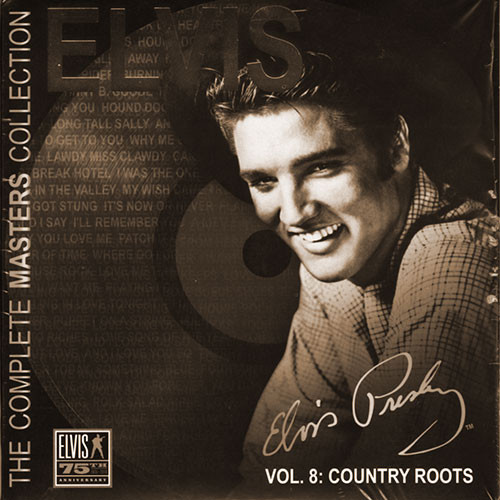
CD Vol. 8: Country Roots

This volume of The Franklin Mint‘s 36-disc Elvis: The Complete Masters Collection (mastered by Vic Anesini) presents songs that the booklet describes as follows:

“Elvis’ renditions of some of the biggest country songs ever. His tribute to country music and the legends who created it: Hank Williams, Red Foley, and many others.”

This sounds like a potential winner to me, but let’s see how it plays out.

Elvis: The Complete Masters Collection - Volume 8

Elvis: The Complete Masters Collection – Volume 8

01. I Love You Because: Of the 21 songs that make up this CD, the compiler could not have made a choice worse than “I Love You Because” to use as the lead-off track. When Elvis Presley made this recording at SUN Records in 1954, owner and producer Sam Phillips wisely rejected it. Shortly thereafter, Elvis, bassist Bill Black, and guitarist Scotty Moore “stumbled upon” the rock ‘n’ roll sound when horsing around with “That’s All Right.” Unfortunately, RCA Records – beginning a trend that would last for the rest of Elvis’ life – dug “I Love You Because” out of the rejects pile and issued a spliced version in 1956 not only on the Elvis Presley LP but as the A-Side of a single! The single failed to chart, and this recording is of interest only as a historical curiosity. (Recorded: 1954)

02. Blue Moon Of Kentucky: “Blue Moon Of Kentucky,” on the other hand, is a perfect representation of “Elvis Country.” A rhytym & blues-infused take on a country/bluegrass song, “Blue Moon Of Kentucky” served well as the B-Side of “That’s All Right” (a country-infused take on a rhythm & blues number). In some markets, “Blue Moon Of Kentucky” was more popular than the A-Side – likely because the song was a little more conventional for those audiences than the comparatively wild “That’s All Right.” (Recorded: 1954)

03. I’ll Never Let You Go: “I’ll Never Let You Go” is another 1954 SUN reject that RCA issued in 1956 on the Elvis Presley LP and as an A-Side single. While not stellar, this one is far more listenable than “I Love You Because.” This one features a slow start before eventually speeding up – a precursor of what Elvis would do not only on “Milkcow Blues Boogie” later that year, but also on live versions of “Hound Dog” years later in 1972. (Recorded: 1954)

04. How’s The World Treating You: “How’s The World Treating You” is a decent recording by Elvis. This one is slow and sleepy, as with the beginning of “I’ll Never Let You Go.” Unlike that track, however, this one stays slow and sleepy. (Recorded: 1956)

05. Old Shep: Elvis had been singing Red Foley’s “Old Shep” since childhood before he formally recorded it in September 1956. As a dog-lover, I find this melodramatic yet effective song hard to listen to at certain points in my life – depending on how my dog is doing at the time. I take these things to heart. A great, classic Elvis recording. (Recorded: 1956)

06. Your Cheatin’ Heart: I love Elvis’ take on Hank Williams’ “Your Cheatin’ Heart,” though I slightly prefer a more enthusiastic alternate take over this master. It would be years before Elvis made such an overtly country recording again. (Recorded: 1958)

07. A Fool Such As I: There is very little country left in Elvis’ iconic version of “A Fool Such As I,” a song that had been previously recorded by Hank Snow. (Recorded: 1958)

08. It’s A Sin: “It’s A Sin” was first recorded by Eddy Arnold in 1947. Elvis’ version is pretty, but a little lethargic for my tastes. (Recorded: 1961)

09. Just Call Me Lonesome: In addition to the How Great Thou Art sessions, another early sign of the comeback was Elvis returning to country music. “Just Call Me Lonesome” is a great representative of that return. What I love about “Elvis Country” is that instead of whining sounds sometimes associated with the genre, Elvis usually provides velvet vocals. (Recorded: 1967)

10. You Don’t Know Me: Elvis’ moving rendition of Eddy Arnold’s “You Don’t Know Me” was unfortunately buried on the Clambake soundtrack album. The first version I ever heard of “You Don’t Know Me” was actually by Ray Charles. The first time I heard it, in the original theatrical cut of Groundhog Day, I remember wishing that Elvis had recorded it. I was pleasantly surprised a few years later when the unknown-to-me Elvis recording surfaced on From Nashville To Memphis: The Complete 60s Masters I. Incidentally, Elvis also recorded a different version of “You Don’t Know Me” for the Clambake movie, but it is far inferior to this re-recording and was not released until after his death (other than in the actual movie). (Recorded: 1967)

11. I’m Movin’ On: Next up are some songs recorded at American Sound Studios in Memphis in early 1969, not long after the successful airing of the ELVIS television special. At first, “I’m Movin’ On” sounds a little too country, but then Elvis rocks into it to produce a spectacular version. (Recorded: 1969)

12. I’ll Hold You In My Heart (Till I Can Hold You In My Arms): “I’ll Hold You In My Heart” is an appealing little song that Elvis sings into the ground, ultimately going nowhere. (Recorded: 1969)

13. After Loving You: One of the huge highlights of the American sessions, “After Loving You” features the “new” Elvis at his best. Elvis had been playing around with this song at home for years, even taking a stab at piano on an earlier take at this session before giving up the keys. One of the best recordings of his career. (Recorded: 1969)

14. It Keeps Right On A-Hurtin’: “It Keeps Right On A-Hurtin'” is another pretty song that really does little to stand out among Elvis’ stellar 1969 recordings. (Recorded: 1969)

15. Little Cabin On The Hill: Versions of the next five songs were featured on the 1971 album I’m 10,000 Years Old: Elvis Country, often considered one of his finest. However, these mixes and edits are actually from the 1995 Walk A Mile In My Shoes boxed set. They do not match the original masters from Elvis Country. Here, Elvis launches into a Bill Monroe impersonation he had been fooling around with since at least 1956, as evidenced by the Million Dollar Quartet jam session. Good stuff. (Recorded: 1970)

16. I Really Don’t Want To Know: Elvis owns “I Really Don’t Want To Know,” one of the best on Elvis Country or any of his other albums. I love the piano work on this one by David Briggs. (Recorded: 1970)

17. Faded Love: I much prefer the shorter edit of “Faded Love” as released during Elvis’ lifetime than this overly long 1995 version. Anyway, Elvis does a fine, if forgettable, job on the Bob Wills classic. (Recorded: 1970)

18. Tomorrow Never Comes: Elvis delivers one of his most powerful performances on “Tomorrow Never Comes.” The song starts softly and slowly builds into a breathtaking, accusatory crescendo that Elvis actually had to re-record as an insert. Again, one of the very best songs of his career. (Recorded: 1970)

19. Make The World Go Away: I love hearing Elvis’ version of well-known songs, and “Make The World Go Away” is no exception. That voice. You gotta listen to James Burton on guitar on this one, too. Burton helped define the sound of Elvis’ final decade, and it is no wonder Elvis was reluctant to take the stage without him. (Recorded: 1970)

20. Green, Green Grass Of Home: I first heard Elvis’ version of “Green, Green Grass Of Home” on an RCA cassette tape I had in the 1980s called Elvis Country, one of two tapes by that name I owned – both of which had completely different lineups from each other as well as his 1971 album of the same name. Though recorded five years later for the Today sessions, this song would have fit in well on the real Elvis Country album as well. As with the much-maligned “My Boy,” this is the kind of dramatic song that often spoke to Elvis and that I, for one, enjoy hearing him sing. (Recorded: 1975)

21. Are You Sincere: Coming right after “Green, Green Grass Of Home,” Elvis’ voice sounds comparatively weaker on “Are You Sincere.” This goes against conventional Elvis wisdom, as this one was recorded two years earlier. They were recorded in different studios with different equipment, so any number of factors could be involved. Still, “Are You Sincere” is a worthy performance, first released on his 1973 album Raised On Rock. (Recorded: 1973)

While it contains a number of terrific country songs, the individual parts of this CD do not add up to a high-quality whole. Whether due to kicking off with the lackluster “I Love You Because” or the uneveness of the remaining selections, Country Roots never takes off as a compilation. Instead, it feels more random than anything else.

[Read Part 7.]


New and upcoming Elvis releases focus on slices of a diverse career

Get those sound systems (and wallets) ready, folks, new Elvis releases are on the way.

Stay Away, Joe

Stay Away, Joe (concept cover art)

May 2013

Follow That Dream Records, Sony’s collectors label for Elvis fans, is releasing this month:

  • From Elvis In Memphis (2-CD): One of Elvis’ best albums finally receives the FTD Classic Album treatment. This should make an excellent companion to the recent Back In Memphis release. Surely an “imaginary album” will be in the works at some point to feature the rest of the recordings from the 1969 American Sound Studio sessions.
  • Stay Away, Joe (CD): Speaking of imaginary albums, here is one that compiles October 1967 and January 1968 sessions. In addition to the Stay Away, Joe soundtrack, it includes “Too Much Monkey Business” and “US Male.” The January session features Jerry Reed on guitar, which is why I consider this a follow-up of sorts to the fantastic Elvis Sings Guitar Man.
  • On Stage-February 1970 (2-LP): This vinyl release includes the original On Stage-February 1970 album, recorded live in 1969 and 1970, as well as additional material Elvis recorded during his early 1970 Las Vegas engagement.
  • Summer of ’61 (Book & CD): In conjunction with Flaming Star publications, this book primarily focuses on the making of the movie Follow That Dream. A brief CD containing previously released Elvis tracks and two demos for “What A Wonderful Life” is also included.

June 2013

FTD has scheduled the following for release in June:

  • Sold Out! (2-CD): The ambiguous title of this one could refer to almost any Elvis concert from 1956 and beyond. [May 19, 2013, Update: The concerts on this release will be March 1, 1974, Tulsa, Oklahoma and June 21, 1974, Cleveland, Ohio.] This one is from the creative team behind Forty-Eight Hours To Memphis: Recorded Live On Stage In Richmond, Virginia – March 18, 1974 and 3000 South Paradise Road, so a quality presentation is expected.
  • Hot August Night (CD): This one features the August 25, 1969, Midnight Show in Las Vegas. The 1969 shows are all must-haves. Portions of this one contributed to the From Memphis To Vegas/From Vegas To Memphis (Elvis In Person) release in 1969. Many tracks are previously unreleased, however.
  • Elvis Recorded Live On Stage In Memphis (2-LP): This vinyl release features the complete March 20, 1974, Memphis concert, from which selections made up the original 1974 version of this album. I have to admit, I enjoy the truncated version of this show more than the full version. Other than “Steamroller Blues,” the songs edited out of the 1974 1-LP release featured some disappointing performances by Elvis.
  • Best of British: The HMV Years (Book): This is a reprint of the popular book exploring Elvis’ 1956-1958 releases on the HMV label in Great Britain, which sold out upon release in February. Though not noted in the press release, presumably the two CDs of previously released Elvis material from the original printing are also included.

The only physical store in the US authorized to sell FTD releases is Good Rockin’ Tonight, a Graceland gift shop in Memphis. However, FTD products may be obtained online from a variety of other Elvis stores, including Graceland’s ShopElvis.com.

August 2013

Sony has scheduled Elvis At Stax: Deluxe Edition, a 3-CD boxed set, as a main label, wide release in August. The set will include all of the masters Elvis recorded in Memphis at Stax Recording Studio in July and December of 1973. It will also include alternate takes of many of the songs. Here is the track listing:

DISC 1: The R&B and Country Sessions – The Outtakes

1. I Got A Feelin’ In My Body – take 1
2. Find Out What’s Happening – take 8/7
3. Promised Land – take 4
4. For Ol’ Times Sake – take 4
5. I’ve Got A Thing About You, Baby – take 14
6. It’s Midnight – take 7
7. If You Talk In Your Sleep – take 5
8. Loving Arms – take 2
9. You Asked Me To – take 3A
10. Good Time Charlie’s Got The Blues – take 8
11. Talk About The Good Times – take 3
12. There’s A Honky Tonk Angel – take 1
13. She Wears My Ring – take 8
14. Three Corn Patches – take 14
15. I Got A Feelin’ In My Body – take 4
16. If You Don’t Come Back – take 3
17. Promised Land – take 5

DISC 2

Part 1 – The Pop Sessions – The Outtakes

1. Mr. Songman – take 2
2. Your Love’s Been A Long Time Coming – take 4
3. Spanish Eyes – take 2
4. Take Good Care Of Her – takes 1,2,3
5. It’s Diff’rent Now (unfinished recording)
6. Thinking About You – take 4
7. My Boy – take 1
8. Girl Of Mine – take 9
9. Love Song Of The Year – take 1
10. If That Isn’t Love – take 1

Part 2 – The July 1973 Masters

11. Raised On Rock
12. For Ol’ Time Sake
13. I’ve Got A Thing About You, Baby
14. Take Good Care Of Her
15. If You Don’t Come Back
16. Three Corn Patches
17. Girl Of Mine
18. Just A Little Bit
19. Find Out What’s Happening
20. Sweet Angeline

DISC 3: The December 1973 Masters

1. Promised Land
2. It’s Midnight
3. If You Talk In Your Sleep
4. Help Me
5. My Boy
6. Thinking About You
7. Mr. Songman
8. I Got A Feelin’ In My Body
9. Loving Arms
10. Good Time Charlie’s Got The Blues
11. You Asked Me To
12. There’s A Honky Tonk Angel
13. Talk About The Good Times
14. She Wears My Ring
15. Your Love’s Been A Long Time Coming
16. Love Song Of The Year
17. Spanish Eyes
18. If That Isn’t Love

I have mixed feelings on this release. I think it is wonderful for the main label to focus on an overlooked period in the recording career of Elvis Presley. For those fans who do not already have the corresponding FTD Classic Album 2-CD sets (Raised On Rock, Good Times, and Promised Land), this is an excellent, budget-conscious alternative to hear highlights of this material.

However, the first thing I noticed is that Sony really blew the sequencing of these tracks. Why, oh, why would the compiler of this collection choose to kick things off with the dreadful “I Got A Feelin’ In My Body”? Especially when “Promised Land” is sitting there, practically begging to begin this set in the right manner?

Short of starting from scratch, one simple alternative that I can suggest would be the following:

  • Swap Disc 1 with Disc 3
  • Swap Disc 2 – Part 1 with Disc 2 – Part 2

Just making the simple changes above would result in a much better listening experience from start to finish. Again, it is great to see a release focusing on 1973, but it should not just be grudgingly thrown together. While Sony’s Elvis team may disagree, some of us love this material. Treat it right.

Sony is also releasing in August a 1-CD version and a 2-LP version collecting some of the above Stax material.

One for Mom, the rock ‘n’ roll rebel

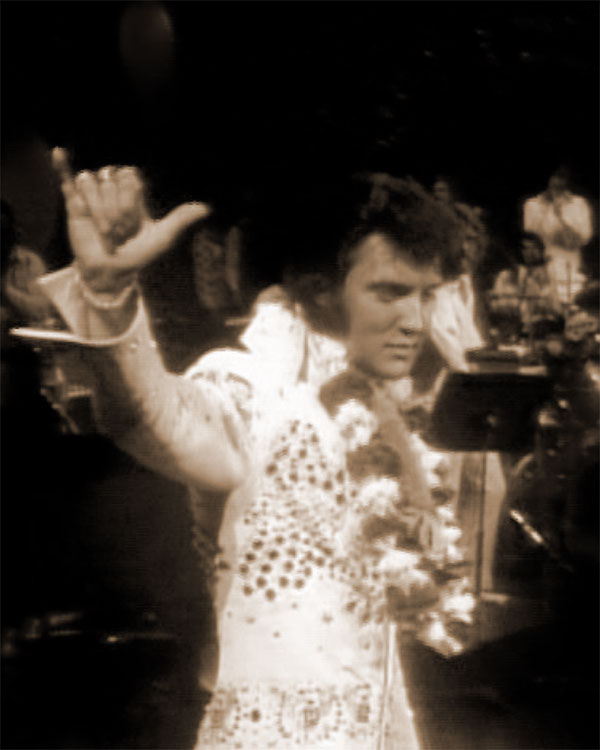
Elvis Aloha Finale

Elvis, 1973

I am a second-generation Elvis fan. My mom first heard Elvis in 1956, during the initial wave of his national success. By the end of that year, after multiple television appearances and a movie role in Love Me Tender, Elvis had earned millions of new fans. Mom was one of them.

Through marriage and kids, good times and bad times, she stuck with Elvis over the years. By the time I came along in the mid-1970s, both my mom and my brother were fans. You could say I was born an Elvis fan.

Many of the first records I ever heard were Mom’s old 45s from the 1950s and 1960s. Though I remember listening to them when I was about two-years-old, I cannot recall specific songs. The earliest ones that I can remember are “My Way” and “America The Beautiful,” two sides of a single that came out in the months after Elvis’ death in 1977.

I have told stories here before about Mom blasting cassette tapes of As Recorded At Madison Square Garden and Elvis In Concert in the car when I was young. Though she has upgraded to CDs and expanded her selection of albums, she still does this.

Though Mom is a first-wave Elvis fan, she does not turn her nose up at his post-Army work like some of her contemporaries. She actually prefers his 1970s music above all.

That being said, she also prefers songs with a beat. This makes my work difficult when trying to buy her a CD, as Elvis had evolved beyond rock ‘n’ roll in her favorite time period.

I will share a couple of recent examples. I was playing a bit of A Boy From Tupelo for her. This is the ultimate boxed set collecting his 1953 to 1955 recordings. I wanted her to hear the “dry” 45-RPM SUN version of “That’s All Right.”

Ty: Listen to this. Isn’t this cool? This is how it sounded back in 1954, before RCA changed it.
Mom: I never did like that song.
Ty: You don’t like “That’s All Right”? That was his first record. The one that started it all!
Mom: I just never liked it.
Ty: You like the 1970s versions, though, right? Like on Madison Square Garden?
Mom: No, not even that one.
Ty: I can’t believe you don’t like it. I never knew that, after all of these years.
Mom: I’m sorry.
Ty: All I can say is… that’s all right, Mom.

I also gave her the FTD compilation Our Memories of Elvis, which contains alternate mixes of various 1970s songs. I had enjoyed the release the first time I heard it, so I thought the unique mixes would be a sure-fire winner.

Ty: What did you think of Our Memories of Elvis?
Mom: Oh, I liked it. I think I played it once.
Ty: Wait. You played it once? Are you sure you liked it?
Mom: It was okay. It just wasn’t fast enough. Too many slow songs.
Ty: I know, it didn’t have “Suspicious Minds” on it. [Any album that has a 1970 or later version of “Suspicious Minds” on it is an instant hit for Mom.]
Mom: I like a beat!
Ty: I know, Mom. I know!

I am actually picking on her a little here, which is not a nice thing to do on Mother’s Day. For one thing, even I did not not enjoy Our Memories of Elvis as much the second time through. I must have been in a fantastic mood the first time I played it. I actually thought it was one of the best releases ever. I am sure glad I did not review it, because then my initial overreaction would be preserved on the Internet for all to see.

For every example like the above, I should point out, there are dozens of examples of Elvis recordings and albums that Mom does love. Her favorite album is Aloha From Hawaii via Satellite. Her favorite song, as you might have guessed, is “Suspicious Minds,” especially the version on The Alternate Aloha, which has the drums more prominent in the mix.

Though she may not enjoy 1950s recordings as much anymore, Mom still has a rebellious streak in her. She likes to do things her way, no matter what anyone says. I have inherited that trait, I must admit.

Another funny thing is, while most moms are after their sons to get haircuts, my mom thinks I get my hair cut too short.

We joke around often. I love talking about Elvis and other topics with her. Elvis music is but one of many gifts she has given me. I am very proud to have such a gentle and loving woman as my mom.

With much love, here is a playlist in her honor.

Elvis: Sweet Rock ‘n’ Roll

  • Burning Love [Burning Love And Hits From His Movies, Volume 2]
  • Johnny B. Goode (Rehearsal) [Elvis On Tour: The Rehearsals]
  • Proud Mary (Live) [Close Up]
  • Suspicious Minds (Live) [Prince From Another Planet (Disc 1)]
  • Polk Salad Annie (Live) [3000 South Paradise Road]
  • One Night (Live) [Memories]
  • Blue Suede Shoes (Live) [Burbank 68]
  • Jailhouse Rock (Live) [Burbank 68]
  • Don’t Be Cruel (Live) [Burbank 68]
  • Stranger In The Crowd (Master, Rough Mix) [That’s The Way It Is (2008 FTD Edition)]
  • Baby, Let’s Play House (Rehearsal) [A Life In Music]
  • A Fool Such As I (Rehearsal) [That’s The Way It Is (2000 Special Edition)]
  • Whole Lotta Shakin’ Goin’ On [Walk A Mile In My Shoes]
  • Wearin’ That Loved-On Look (Alternate) [Memphis Sessions]
  • Rubberneckin’ [Almost In Love]
  • Hey Jude [Elvis Now]
  • Power Of My Love (Alternate) [A Life In Music]
  • After Loving You [From Elvis In Memphis]
  • Any Day Now (Alternate) [Memphis Sessions]
  • Runaway (Live) [Elvis: Viva Las Vegas (2007 Limited Edition)]
  • My Babe (Live) [Today, Tomorrow & Forever]
  • Baby, What You Want Me To Do (Live) [Elvis At The International]
  • All Shook Up (Live) [Live In Vegas: August 26, 1969 Dinner Show]
  • Hound Dog (Live) [Live In Vegas: August 26, 1969 Dinner Show]
  • Mystery Train/Tiger Man (Live) [Live In Vegas: August 26, 1969 Dinner Show]
  • A Big Hunk O’ Love (Live) [Aloha From Hawaii via Satellite]
  • Promised Land [Promised Land]
  • Steamroller Blues (Live) [A Life In Music]

Thank you, Mom.

A mess of blues on a cloudy day

In his lifetime, Elvis Presley released 19 different songs with some form of the word “blue” in the title. Here’s how I rank them:

Elvis rehearsing in 1970

Elvis rehearsing in 1970

#1 Blue Moon
#2 A Mess Of Blues
#3 Good Time Charlie’s Got The Blues
#4 Indescribably Blue
#5 Moody Blue
#6 Mean Woman Blues
#7 When My Blue Moon Turns To Gold Again
#8 Blue Suede Shoes
#9 Blue Eyes Crying In The Rain
#10 G.I. Blues
#11 Something Blue
#12 Blue Moon Of Kentucky
#13 Steamroller Blues
#14 Blueberry Hill
#15 Blue Christmas
#16 Blue Hawaii
#17 Milkcow Blues Boogie
#18 Beach Boy Blues
#19 Blue River

Your weather may vary, but today has been dreary here. Here’s hoping for some blue skies soon.

3,510: An Elvis Obsession

In 2008, I obtained my first iPod. I didn’t think much would come of it because I mostly listened to CDs. Once I had that iPod in my hands, though, an obsession slowly took hold. I found that listening to Elvis in shuffled mode gave me a much broader view of his career than simply relying on whatever CD I happened to spin. Over time, it also allowed me to rediscover songs from CDs that I otherwise did not play very often.

I have been collecting Elvis music since 1987 and have purchased hundreds of his CDs. The iPod has allowed me to truly experience the power of that collection, rather than just having it sit on a shelf.

In iTunes, I created a series of smart playlists to make various shuffle themes for my iPod. I think of these as my own private radio stations. They are not completely random, as I build out the smart playlists with certain rules.

For example, one of the rules in my Elvis Mix avoids 1-star songs. I only want to hear those in the context of their original albums.

In my Best Mix, I have Elvis set to play about 10% of the time. Otherwise, he would dominate that list due to how many Elvis songs I have. I also control the percentages of songs in certain genres that play. I tweaked this through the years until I made a Best Mix shuffle that suits my quirky taste.

Over time, I slowly began backing up more of my Elvis collection to iTunes. By May 2010, I had over 1,200 Elvis songs in iTunes for my iPod. This included the 711 masters released during his lifetime. At that point, rather than continuing to pick and choose from my CDs, I decided to go back and back up every unique track from every Elvis CD I owned.

I began on June 1, 2010, and figured I would be finished by the end of that year.

I finished yesterday, March 15, 2013.

This extended time period was not due to lack of diligence on my part. In fact, if anything, I have been too diligent. With only a few breaks, this has consumed more of my spare time over the last few years than I care to admit. Other things that I could have been doing, such as writing, have suffered.

So, why did it take me so long? For one thing, it turns out that I have many more Elvis songs than I realized.

I also did not simply throw in each CD, allow iTunes to look up the track names, and be done with it. If only it had been that easy. The first feature I turned off was the auto-look-up of track names, because I found this often had errors or formatting inconsistencies. Instead, I hand-typed all of that stuff in. If there were going to be errors, at least they would be my errors.

iTunes "Get Info" window

iTunes “Get Info” window

For each song, I researched its first album appearance and other tidbits, such as recording location and take number. For this, I primarily used the comprehensive Elvis Recording Data/Session Notes section of the Elvis In Norway site.

For live songs and other tracks without clean breaks in between, I added fade-ups and fade-downs. I also removed any uninteresting “false starts” and chatter from studio outtake/alternate tracks. When a false start proved to be of interest, I split it out to its own separate track.

Along the way, I also replaced those 711 core masters with new versions in better sound quality.

After all of that, I have 3,510 unique Elvis tracks, representing nearly 160 hours of music.

In an amazing coincidence that I really cannot believe, it turns out that I also have exactly 3,511 non-Elvis tracks backed up to iTunes, representing 208 more hours of music. I have often said Elvis represents about half of the tracks on my iPod, but I had no idea that was so precise. Over time, the non-Elvis tracks will likely grow at a faster rate now than the Elvis ones, though. [However, I am not going to start a similar project for my non-Elvis CDs. Never again.]

To keep my smart playlists working the way I like, I also rated each track. The analytical side of me has all kinds of number-crunching ideas around this, but here is a fun breakdown for starters:

  • 5 Stars: 938 tracks (27%) [example: “Always On My Mind” (1972)]
  • 4 Stars: 909 tracks (26%) [example: “It’s Now Or Never” (1960)]
  • 3 Stars: 853 tracks (24%) [example: “Love Me Tender” (1956)]
  • 2 Stars: 556 tracks (16%) [example: “Wear My Ring Around Your Neck” (1958)]
  • 1 Star: 254 tracks (7%) [example: “A Dog’s Life” (1966)]

It astonishes me that, thanks to my iPod, I can now fit the entirety of my Elvis music collection in the palm of my hand. I can literally take it with me anywhere and listen to any song at any time.

Elvis in iTunes

Elvis in iTunes

With those 3,510 tracks, I could listen to Elvis for six days straight, without sleeping, and never hear a repeated track.

I would never do that, though. I am not that obsessive of a person.

The fact that my next post will be coming out in about six days is a complete coincidence.

Honest.