A Squirrel Loose at the Big, Freaky International Hotel (Part 2)

This is Part 2 of a look at Sony’s Elvis Live 1969 boxed set (2019), which contains all 11 concerts RCA recorded in Elvis Presley’s August 1969 engagement at the International Hotel in Las Vegas.

[Read Part 1.]

“It’s getting loose at the International, boy!”
–Elvis Presley, 1969

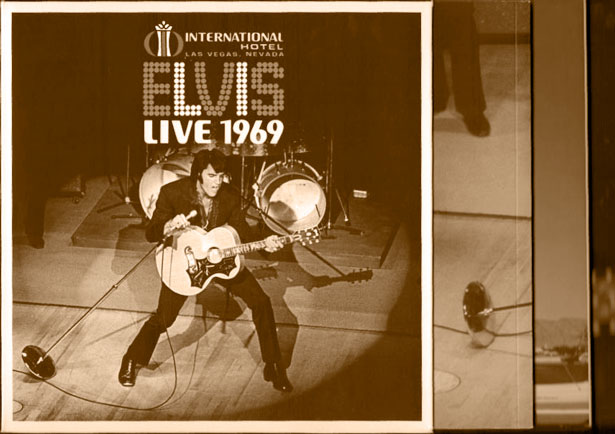
The 11-disc Elvis Live 1969 is unfortunately housed in an 8-inch format box, such as used for 2012’s 3-disc Prince From Another Planet, rather than the 12-inch style, such as used for 2014’s 10-disc That’s The Way It Is: Deluxe Edition or 2018’s 6-disc ELVIS: ’68 Comeback Special – 50th Anniversary Edition. The 12-inch style harkens back to the days of LP record albums, while the 8-inch style is out of place on both CD and record shelves. Use of the 8-inch box was evidently a cost-saving move, but the set would have benefited so much from the larger format. Even at 8-inches, the set at a glance appears beautiful, but looks can be deceiving.

Elvis Live 1969 includes a 50-page booklet documenting the 1969 Vegas engagement. The opening Foreword, as with some of the marketing material associated with this set, quotes Elvis from his 1972 press conference for his Madison Square Garden appearances three years later about why he returned to performing live. As he tells the same story no less than 11 times on this very set, I would have preferred the use of 1969 quotes.

Reading like one of the over-the-top press releases that Sony lately uses to promote Elvis CDs, the unsigned Foreword also notes:

“After Elvis’ disastrous two-week 1956 Vegas engagement at the New Frontier Hotel, thirteen years later, his victorious live return in the same city made the meteoric success of his sold-out run (July 31-August 28, 1969/29 shows in total) that much sweeter.”

I call this out not to sicken you with the syrupy language, but to highlight an error. Elvis performed 57 shows during the date ranges of this engagement, not 29. The singer performed two shows a night throughout the month-long engagement (July 31 consisted only of the Opening Show). Even the very boxed set that the Foreword introduces features 11 shows recorded in the course of 6 days (beginning with the August 21 Midnight Show and concluding with the August 26 Midnight Show).

A bigger guffaw occurs in the tracklisting at the end of the booklet. Both CD 5 and CD 9 are listed as the “August 25, 1969, Midnight Show.” CD 5 actually contains the August 23 Midnight Show. Thankfully, the disc contents and label are correct.

Regarding such mistakes, you might ask, “Who cares?” Apparently not those responsible for Elvis releases. Allowing myself to veer off track just for a moment, Sony’s Follow That Dream (FTD) collectors label for Elvis fans routinely releases such errors. Two of the most embarrassing examples when it comes to text are misspelling “Presley” on the spine of 2008’s Wild In The Country and misspelling “Burning Love” on the back cover of this year’s St. Louis/Spokane. On the same St. Louis/Spokane release, the back cover numbers tracks 15-20 as: 15, 16, 16, 16, 21, 20. Though collectors pay premium prices for these releases compared to mainstream CDs, FTD is a small, boutique label with minimal resources and a limited target market. Sure, most 5-year-olds could have caught the counting errors, but let’s not talk about that.

Getting back to Elvis Live 1969, I note the two sloppy examples in the booklet (and there are others, but that is not the focus of this review) as unfortunate indicators that the carelessness condoned at the small FTD label has bled over into a full-fledged release like this one on the main Sony Legacy label.

Sony Legacy’s ELVIS LIVE 1969 boxed set – booklet in foreground of CD holders (2019, from TY’s collection)

The rest of the booklet consists primarily of excerpts from Ken Sharp‘s excellent Elvis: Vegas ’69 book from 2009. Those who were there, including Elvis himself, tell the story of the concert engagement through first-hand accounts. If you are a fan of the era, as I am, the full book is definitely worth seeking. However, the booklet as presented in Elvis Live 1969 provides a nice, abridged version to go with the CDs.

The 11 CDs are packaged in two cardboard holders. “Packaged” is a polite term. They are mercilessly wedged into two cardboard holders. Use caution extracting a CD to prevent damaging the disc, the holder, or both. Why Sony continues to use ridiculous forms of packaging, which so often fail to serve the singular purpose of protecting the discs, is beyond me. While I backed mine up to iTunes, if you plan routinely to play the original discs I would suggest you place them in more accessible cases as to avoid almost certain damage over time.

Use of imagery from vintage International Hotel menus and advertising in the holder for CDs 1-5 is fun, and I wish that concept had been extended to both holders. Some of the interior Elvis photo choices for the holders are baffling, including two, count them, two photos of Elvis apparently raising his armpit to the audience in the holder for CDs 6-11. These are, of course, shots capturing a split moment in time while Elvis is in motion, but why spotlight such awkward photos when better ones are available elsewhere in this very same set?

I must remind you that I did not set out to write a review when I began this post a week ago. I, therefore, have gone about this in a different manner than if I planned it out in a logical fashion. So, I have covered thus far mixing and packaging, but what I have mostly left out to this point is the star of the show, Elvis Presley.

When it comes to the Elvis aspects of Elvis Live 1969, I must admit to a small degree of disappointment. I have enthusiastically reviewed a number of previous releases of individual concerts from this engagement in the past, so I was surprised at this reaction.

Compared to That’s The Way It Is: Deluxe Edition, which similarly compiles 6 of his shows from his 3rd engagement at the same Vegas hotel the following summer, Elvis Live 1969 feels like a slight let-down.

While Summer 1969 wins out in head-to-head comparisons of the same songs in just about every case (“Words” and “I Can’t Stop Loving You” being the only two exceptions that come immediately to mind), the overall Summer 1970 shows are superior, if that makes any sense, at least during the filming of That’s The Way It Is, with better/more varied setlists and a more polished performer. In both seasons, Elvis is at the very top of his game, to be clear, but Summer 1970 is more entertaining than Summer 1969. How blessed we are, as fans, to have his two best concert series so well documented.

Next week, we’ll dive into more of the Elvis details as we continue and possibly conclude our look at Elvis Live 1969.

Blessings,
TY

[Read Part 3]


“He holds in his hands the depths of the earth and the mightiest mountains. The sea belongs to him, for he made it. His hands formed the dry land, too.”
Psalm 95:4-5

A Squirrel Loose at the Big, Freaky International Hotel (Part 1)

“Welcome to the big, freaky International Hotel, with these little, weirdo dolls on the walls and these little funky angels on the ceiling. You ain’t seen nothing until you’ve seen a funky angel, boy. I tell you for sure.”
–Elvis Presley, 1969, on the ornate design of the hotel’s concert showroom

Sony Legacy last year released Elvis Live 1969, a boxed set containing all 11 concerts RCA recorded during Elvis Presley’s August 1969 engagement at the International Hotel in Las Vegas, Nevada.

The concert series, which spanned 57 shows from July 31 to August 28, represented the singer’s first appearance on a public stage in nearly 9 years – though he had performed 4 shows in front of small audiences at NBC’s studio in Burbank, California, as part of taping his ELVIS television special the previous summer.

RCA cherry-picked 12 of the strongest performances from 3 of the 1969 shows to form the Elvis In Person portion of the From Memphis To Vegas/From Vegas To Memphis double album, released in November 1969. A year later, RCA re-released Elvis In Person as a stand-alone album with the same content.

As for the rest of the performances, they amazingly remained in the vault until after Elvis’ death. While RCA released several individual songs over the years, including a compilation disc on 1991’s Collectors Gold boxed set, a complete 1969 show did not officially surface until 2001’s Live In Las Vegas boxed set.

By the time of Elvis Live 1969 last year, however, 7 of the 11 shows had already been released in their entireties on CD, with a good portion of songs from 3 of the 4 remaining shows having been released as well – many of them on Sony’s Follow That Dream (FTD) collectors label for Elvis fans.

Elvis Live 1969 stands out among the previous releases because it gathers all of the recordings in one place for the first time, with homogeneous sound quality. The recordings capture the August 21-26 portion of the engagement.

Sony Legacy’s ELVIS LIVE 1969 boxed set (2019, from TY’s collection)

Mixed by Matt Ross-Spang in what was apparently a marathon session, Elvis Live 1969 features a “slapback” echo effect mimicking the sound of Elvis’ first recordings in 1954 & 1955 at Sun Studio in Memphis. Ross-Spang had applied the same effect to alternate takes on 2016’s Way Down in the Jungle Room, an overview of Elvis’ last formal recordings in 1976 at Graceland.

As it was not representative of the original intent in 1976 or 1969, some fans have been quite critical of Ross-Spang’s slapback effect. As for me, I don’t mind it at all. It breathed some life into the 1976 studio recordings and brought Elvis’ music full-circle, in a sense, with an homage to the Sun sound. Though less effective on the 1969 live recordings, it’s not too distracting. On a few songs, such as “Mystery Train,” which of course originated in the Sun era anyway, the effect can actually be phenomenal.

Where I differ from Ross-Spang on Elvis Live 1969 is on some of his mixing choices, especially as far as which instruments are prominent. For instance, horns overwhelm a portion of James Burton’s lead guitar solo in the middle of the “Blue Suede Shoes” opener on all 11 shows. The horns weren’t even audible at all during Burton’s solo on the original Elvis In Person album and most of the subsequent revisits of this material.

The horns distracting from the lead guitar vaguely reminds me of Elvis’ February 11, 1956, appearance on Stage Show (CBS), the Jackie Gleason-produced television series hosted by Tommy and Jimmy Dorsey. In his third of six appearances on the program, Elvis debuts “Heartbreak Hotel” for the national TV audience. At the point where Scotty Moore would normally rip into his now classic electric guitar solo, a trumpeter improvises a jazz-inspired solo instead. While I enjoy jazz, it did not work in the context of this rock ‘n’ roll song. Fortunately, Moore is able to let loose in performances of “Heartbreak Hotel” on two subsequent shows. The 1969 “Blue Suede Shoes” is thankfully not affected to nearly this extent, though, for Burton is at least playing his solo!

Another example is that Larry Muhoberac’s piano is mixed far too loudly on certain shows, especially the August 26 Midnight Show, the last 1969 concert captured. Was Ross-Spang running out of time or is this truly how he felt the show should sound? “Mystery Train/Tiger Man,” which should be a showcase for the guitar and drums, suffers greatly from the distracting and overbearing piano in this particular show.

The August 25 Dinner Show and August 26 Dinner Show versions of “Mystery Train/Tiger Man” are similarly impacted by too much piano in the mix. Five of the remaining shows that include this medley fortunately keep the piano at low or moderate volumes, while the August 25 Midnight Show version, which was the performance used as the master on Elvis In Person, actually strikes a great balance – having the piano quite present but at an appropriate level.

Of course, it is all a matter of taste. For an Elvis live show, I want the lead guitar (Burton), Elvis guitar (when applicable), drums (Ronnie Tutt), and bass (Jerry Scheff) prominent in the mix among the instruments, generally in that order of priority, but certainly varying to some extent per song.

The rock ‘n’ roll numbers, at least, should heavily feature guitar, drums, and bass. That is the core of rock ‘n’ roll, Elvis style. The piano, other guitars, and orchestra should be present as needed, but not so much as to overwhelm that core. The piano is far less annoying on a slow song like “Love Me Tender,” for instance, where it better suits being prominent in the mix.

To be clear, the mixing on the majority of these shows is great. For example, “Mystery Train/Tiger Man” is mixed to perfection on the August 22 Midnight Show and is of course buoyed by a committed and powerful vocal performance by Elvis, as with many of the songs in this boxed set. This version of “Mystery Train” I can’t help but crank up every single time it comes on, much as I do with the 1955 Sun studio master.

Ross-Spang also tends to favor the Sweet Inspirations over the Imperials, as far as the background vocalists – an approach I heartily support. Millie Kirkham notwithstanding, Elvis sounds better with female voices behind him instead of males, and I love the Gospel-infused quality of the Sweet Inspirations. I should note that I intend no disrespect to any of the musicians and singers involved, all of whom are very talented. I am just talking about how I best feel the music when it comes to Elvis.

Before I get too far off track here, I think that covers it for the technical aspects of the set. I actually wasn’t even intending for this to become a review per se, but I just go where the writing leads me.

Next week, we’ll continue our look at Elvis Live 1969 and, possibly, get to the actual reason I started this post.

Blessings,
TY

[Read Part 2]


“Speak up for those who cannot speak for themselves; ensure justice for those being crushed. Yes, speak up for the poor and helpless, and see that they get justice.”
Proverb 31:8-9

Laughing with Elvis [Pastimescapes blog]

Elvis Presley fans tend to take a moment to remember him on January 8, for today would have been his 82nd birthday.

I was 9 years old when I first became aware of Elvis’ birthday. Either the weekend before or after January 8, 1985, local radio station AM 1140 WRVA hosted guest DJ Steve Christopher to play an entire show of Elvis songs, in celebration of what would have been the singer’s 50th birthday.

I recorded about 60 minutes of the show on cassette tape, diligently pausing it between songs to get rid of the annoying talking and commercials. I still have it around here somewhere. In retrospect I wish I had recorded the commercials and talking, too, because that would be a lot of fun to hear 32 years later.

The big set-up of Christopher’s Elvis show was that at various intervals, a designated caller could request an Elvis song live on the air in the hopes that Christopher did not have it. If he failed to play the song, then the caller would win a new car.

At the time, I could not conceive of someone having every Elvis song. Christopher probably had every song officially released to that point, though, so there was little to no chance of someone actually winning.

Essentially, the only chance of winning, probably, was if Christopher forgot to bring one of his records along to the studio and you happened to ask for a song from that exact record which was not present on any other record Christopher had brought with him.

Not to mention that the people who managed to participate in the contest always asked for famous songs, rather than obscure ones. The final contest caller, for instance, was convinced Christopher did not have “My Way” because he had never honored the request during the non-contest portions of the show.

WRVA itself probably had “My Way” in its own archives at that time, without even having to resort to Christopher’s collection even if the DJ had somehow forgotten to bring any copies of the tune along to the station that day.

It was definitely a neat idea for a contest. The only trouble I could see would be if a caller asked for a song that had, in fact, never been released by Elvis, such as “Not Fade Away.” An advantage we have in 2017 over 1985 is that it would be fairly easy to fact check something like that, though.

Like most AM stations, 1140 WRVA unfortunately no longer plays music. Instead, it long ago converted to the “talk radio” format, which I can no longer stomach to hear.

Though his website appears not to have been updated in 17 years, Steve Christopher might still be around. I tried emailing him a few years ago for a story on The Mystery Train, but never heard back. If you ever get the chance to stump him, though, please don’t request “My Way.”

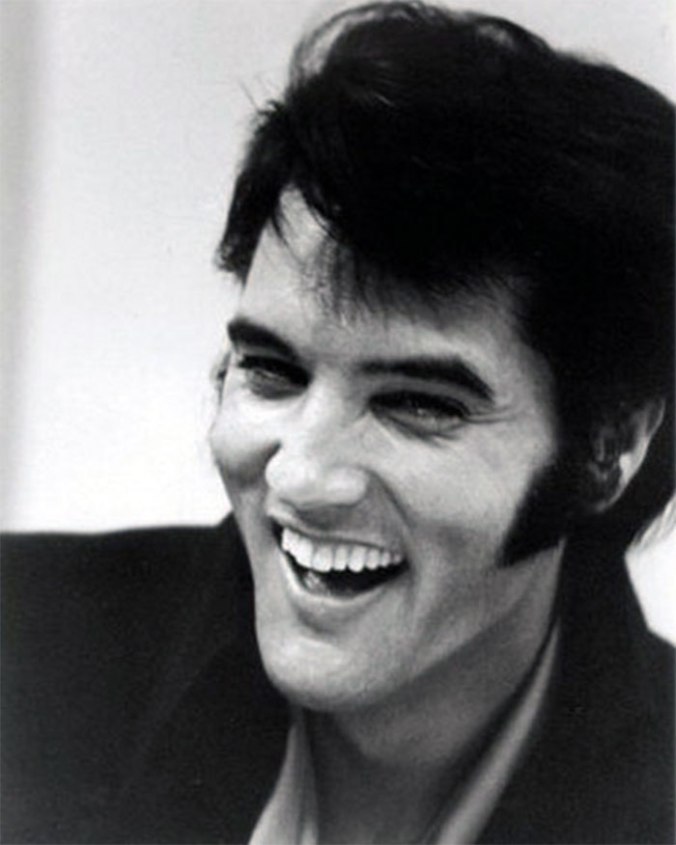
Elvis Presley in 1969

Elvis Presley in 1969

In any event, the reason Christopher’s Elvis show is so memorable to me is not the car contest. Instead, it marked the first time I heard the “laughing” version of “Are You Lonesome Tonight.”

I have to say, my life was just a little bit better after that. Anytime I have needed a lift since then, that song is there.

After nearly wearing the cassette tape out, it took me years to find a legitimate copy of the performance – which I finally achieved when I bought Collectors Gold in 1991 – my first of (too) many Elvis boxed sets.

My family was actually visiting friends in Pittsburgh when I found the CD set at a shopping mall there that summer. The only CD player I had was at home, 350 miles away. Though I had my Walkman with me, it only played cassettes. Needless to say, I was ready for the trip to be over at that point.

Fortunately, the family friend had a CD player and recorded parts of the set for me on cassette to tide me over. I can remember playing the song over and over that night, listening on headphones.

The song is a live version, recorded at a 1969 Midnight Show in Las Vegas. It can also be found on the Elvis Aron Presley boxed set, A Legendary Performer: Volume 4, and the All Shook Up: Recorded Live In Las Vegas, August 26, 1969 FTD CD. All four releases are unfortunately out of print, though.

I hope the laughing version of “Are You Lonesome Tonight” shows up again in some future Legacy release, because these days, we all could use the laugh.


Before I sign off and get back to the winter wonderland that arrived here this weekend, I first want to direct you to a few other sites with Elvis posts.

Up first is The Sheila Variations, a site that covers a wide spectrum of topics.

Sheila is one of my favorite writers, and I consider myself fortunate that one of her recurring topics happens to be Elvis Presley. Today, she has reposted a few of her past entries. All of her Elvis Essays are worth a read, though.

Wellsy, a frequent commenter here, has written a 7-part series on Elvis over at his Soulride blog. Be sure to check it out.

Finally, my friend Thomas over at the Elvis Today Blog recently wrote his first post in nearly two years, covering The World of FTD – a new book set from Elvis expert Keith Flynn. It’s always great to read a new post from Thomas.

That’s it. Thanks for the laughs, Elvis!

Elvis embarks on THE RETURN TO VEGAS

Forty-five years ago tonight, only eleven days after astronaut Neil Armstrong took his famous “one small step” on the moon, Elvis Presley took his own giant leap.

On that July 31st night in 1969, the singer stepped onto the stage of the International Hotel in Las Vegas and firmly reestablished himself as one of the world’s most dynamic performers.

His comeback after years of making movies had already revved into high gear back in December, with NBC’s broadcast of the highly-rated and critically-acclaimed ELVIS TV special.

He rode the tide of that success into his first Memphis recording sessions in nearly 15 years, resulting in smash hits “Suspicious Minds,” “In The Ghetto,” and “Don’t Cry, Daddy.”

Elvis was on fire again, and his Vegas engagement was another crown jewel in his comeback. With two shows a night, seven days a week, for four weeks, the concerts represented his first live appearances in nearly nine years – outside of four studio audience shows for his TV special.

RCA started recording the Vegas shows on August 21, capturing eleven complete concerts in all that summer. At that time, some of the best tracks were selected for an album, From Memphis To Vegas/From Vegas To Memphis (Elvis In Person). More recently, several of the shows have been released in full:

  • August 21 Midnight Show (MS) on Elvis: Viva Las Vegas (2007 Limited Edition)
  • August 22 Dinner Show (DS) on Elvis In Person (2008 FTD Edition)
  • August 23 MS on Elvis At The International
  • August 24 DS on Live In Las Vegas
  • August 25 MS on Hot August Night
  • August 26 DS on Live In Vegas
  • August 26 MS on All Shook Up

To commemorate the forty-fifth anniversary of this engagement, Sony’s collectors label for Elvis fans recently released on CD The Return To Vegas, the earliest known recording from this concert series.

The shows listed above are all multitrack recordings, meaning they were professionally captured for potential commercial release and can be properly mixed after the fact for optimum sound quality.

By contrast, Follow That Dream’s The Return To Vegas is a soundboard recording – an informal reference tape made in-line from the showroom’s soundboard console – never intended for release.

While the sound quality can be improved in certain ways, soundboard mixes are pretty much stuck as to how they were originally recorded. Some bootlegs are copies of copies, though, so sometimes there can be improved sound quality versus previous releases if an earlier generation source is used.

The Return To Vegas is actually one of the better-sounding soundboard CDs I have purchased.

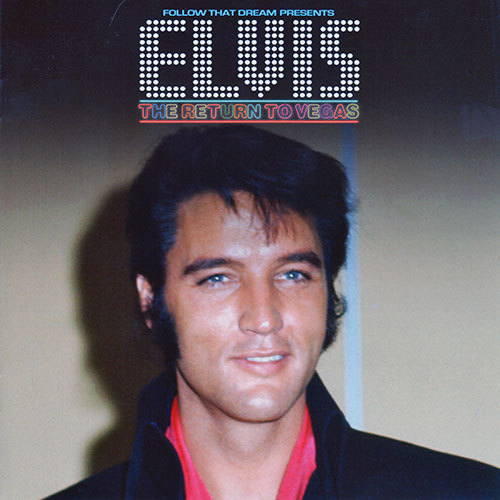
THE RETURN TO VEGAS booklet cover

THE RETURN TO VEGAS booklet cover

I must admit, however, that I am surprised. I was expecting to be blown away by The Return To Vegas. After all, this recording from an unconfirmed date in August is probably the closest we will ever come to hearing the legendary July 31 show that opened the engagement.

To be clear, like all 1969 Elvis shows released thus far, The Return To Vegas represents one of his best concerts. Yet, I found it slightly disappointing.

With that being said, The Return To Vegas does have many strong points. “Mystery Train/Tiger Man” is inspired, for instance, with the guitar portion of the lead-off song sounding closer to the 1955 SUN version than it ever would again on later recordings. I wish James Burton had kept playing it this way. An overbearing train whistle effect ruins some of that for me, though, and the performances on Hot August Night and Live In Vegas will remain my go-to versions.

The versions of “Love Me Tender” and “Can’t Help Falling In Love” are strong enough to contend for best of the season, at least out of what has been released thus far. “Don’t Be Cruel” is also strong.

During this engagement, Elvis took several minutes out of each show to talk about his career. This is, by far, my favorite of these “monologues.” It is actually the only previously released track on this CD, though, having been released in an edited form way back in 1974 for the infamous Having Fun With Elvis On Stage “talking” album. While the concept behind that particular album may have been poor, this monologue was actually pretty funny and gave some credibility to the Having Fun title.

“Are You Lonesome Tonight” features a slightly different arrangement than later versions, with strings instead of Sweet Inspiration Cissy Houston’s soaring vocals. It makes for a nice alternative, but I much prefer the versions with Houston. In addition, Elvis sounds uncomfortable during the spoken portions.

On “Blue Suedes Shoes,” Elvis also seems unsure of himself, plodding through it with slow and deliberate vocals. “All Shook Up” starts in fine form but degrades near the end due to Elvis going into a, dare I say, imitator-style quality on his vocals.

While I normally enjoy the bluesy arrangement of “Heartbreak Hotel” that made its debut at this engagement, the version here is lacking. It sounds off from the start and never really gains momentum. He sounds nearly manic on “Hound Dog,” and this version becomes tiresome on repeat listens. “Suspicious Minds” is decent, but not particularly memorable.

All-in-all, The Return To Vegas is a mixed bag. Audio quality aside, it certainly cannot compete as the strongest overall 1969 show released thus far.

So, when exactly did the show (or shows) presented on this CD take place? The accompanying booklet is sparse on information, focusing instead on photos of Elvis from the time.

Though FTD’s press release indicated this was originally prepared for release as a double album by RCA in the late 1970s before being cancelled, no associated paperwork is included in the booklet.

A brief essay by Ken Sharp (author of Elvis: Vegas ’69) fails to even mention this particular performance, speaking only in generalities about the overall engagement.

We do know that it is not the July 31 Opening Show as previously thought both by RCA and a subsequent bootlegger. They apparently keyed in on the line, “This is my first live appearance in nine years,” which Elvis actually stated at every full show thus far released at this engagement, while skipping his “It’s hard to get going on these dinner shows” comment that makes it clear some fatigue is already setting in for Elvis in Vegas.

Certainly he would not have said this at his first-ever Dinner Show on August 1, nor was he likely even to say it at the August 2 Dinner Show. Assuming this is not a splice of two shows, the August 3 Dinner Show seems to be the prevailing hypothesis among many fans. That still seems too early to me.

Since I refrain from bootlegs, I am no expert on the unofficial recordings available from this era. Certainly the arrangement of “Are You Lonesome Tonight” is a clue here, since it differs from the later versions. That may indicate an upper end to the range of possible dates, but I do not know exactly when that arrangement changed.

There is another clue. When introducing “Suspicious Minds,” Elvis states that it “should be out in a week or 10 days or so.” RCA released “Suspicious Minds” on August 26. Though Elvis was probably not speaking literally, a week to 10 days before the release would put us in the range of August 16 to 19. If it turned out that this concert took place closer to those dates and farther from August 3, it would not surprise me at all.

No matter the date, this is an enjoyable release, and it is definitely of historic value to Elvis fans. If you already have the multitrack shows, then you should purchase this CD. If not, I recommend you buy the professional multitrack shows from this engagement first. Each of these concerts has provided me hours of enjoyment, and I have no doubt that The Return To Vegas will ultimately do the same.

While the 1969 concerts are incredible, my favorite Vegas engagement took place a year later. With a more varied set list, Elvis seemed more relaxed in August 1970. For me, the shows captured for That’s The Way It Is are somehow even better than 1969. The Dinner Show presented on The Return To Vegas is actually but an appetizer for what is to come next week. I am ready for the main course!

Tracks

01. Blue Suede Shoes
02. I Got A Woman
03. All Shook Up
04. Love Me Tender
05. Jailhouse Rock/Don’t Be Cruel
06. Heartbreak Hotel
07. Hound Dog
08. Memories
09. Mystery Train/Tiger Man
10. Monologue *
11. Baby, What You Want Me To Do
12. Are You Lonesome Tonight
13. Yesterday/Hey Jude
14. Introductions
15. In The Ghetto
16. Suspicious Minds
17. What’d I Say
18. Can’t Help Falling In Love

* Previously released

Elvis conquers Vegas in 1969 with FTD

Cover concept art for THE RETURN TO VEGAS CD

Cover concept art for THE RETURN TO VEGAS CD. One hopes this amateurish effort will be replaced by time of release.

Follow That Dream will soon release the earliest known recording from the 1969 Las Vegas engagement that helped reignite Elvis Presley’s career. Add this news to Sony’s 10-disc That’s The Way It Is: Deluxe Edition set (track listing for that coming in my next post) and Warner Home Video’s That’s The Way It Is: Special Edition Blu-ray set coming in August, and 2014 is truly the return of the “Elvis Summer Festival.”

The Return To Vegas features an undated soundboard recording from early August 1969. RCA’s formal recordings of the concert series did not begin until later that month. FTD, Sony’s collectors label for Elvis fans, plans to release the show in late June – meaning it probably will not reach most consumers until sometime in July.

Though it has made the rounds on bootleg, this marks the first official release of the show – other than an entertaining monologue track previously included on the notorious 1974 album Having Fun With Elvis On Stage.

This early August soundboard recording is probably the closest we will ever come to hearing the legendary July 31, 1969, show that opened the engagement, so this has been one of my most anticipated concert releases. What a summer this will be.

Below is the press release from FTD, as well as the track listing.

[The Return To Vegas] is the official release of the soundboard recording that Joan Deary planned as a double album release back in the late seventies. It’s the earliest known professional recording from Elvis’ 1969 engagement in Las Vegas. The original tape box has “opening night” written on the back, but that’s not the real date. Some experts believe it’s from August 3, but we have no information whatsoever to suggest a certain date.

However, the arrangements seem to suggest that this show is definitely several days earlier than the shows RCA recorded from August 20 and onwards. Why Joan Deary edited and mastered this for release is another mystery, since she of course had all the shows RCA recorded on 8-track tape with audio in substantially better quality. This release comes in a 7″ digi-pack with a 12-page booklet, featuring great photos from the collections of Steve Barile & Jim Patino, and a foreword by Ken Sharp.

Tracks

01. Blue Suede Shoes
02. I Got A Woman
03. All Shook Up
04. Love Me Tender
05. Jailhouse Rock/Don’t Be Cruel
06. Heartbreak Hotel
07. Hound Dog
08. Memories
09. Mystery Train/Tiger Man
10. Monologue *
11. Baby, What You Want Me To Do
12. Are You Lonesome Tonight
13. Yesterday/Hey Jude
14. Introductions
15. In The Ghetto
16. Suspicious Minds
17. What’d I Say
18. Can’t Help Falling In Love

* Previously released

FTD elevates Back In Memphis to essential status

Last month, Sony’s Follow That Dream collectors label for Elvis fans released its Classic Album version of Back In Memphis. With the holidays over, I’ve finally had some time to listen to this 2-CD set.
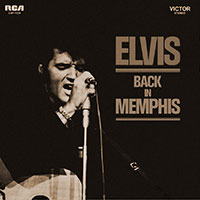
Back In Memphis, 2012 FTD Edition

Back In Memphis, 2012 FTD Edition

Original Album

Elvis loved Memphis, and no matter which of his eras you reference, he made some of his best music there.

The original Back In Memphis album was actually a 1970 re-release of Record 2 of the 1969 2-LP set From Memphis To Vegas/From Vegas To Memphis. Record 1 of that set was also re-released in 1970, as Elvis In Person.

Back In Memphis was a follow-up to the impeccable From Elvis In Memphis, recorded during the same 1969 sessions at American Sound Studio in Memphis. Unfortunately, the results were not nearly as strong.

In fact, Back In Memphis was one of the only disappointments I encountered in my first few years of collecting Elvis music. I was a huge fan of The Memphis Record, a 1987 retrospective album for the American sessions – compiling the entirety of From Elvis In Memphis, most of the singles, and selections from Back In Memphis.

While sound quality has come a long way since then, The Memphis Record was definitely a huge influence on me becoming the borderline obsessive Elvis fan I am today. I couldn’t wait to hear the remaining songs when RCA re-released Back In Memphis in the early 1990s on CD.

It turned out, though, that every “new-to-me” song on the album (i.e., those that weren’t on The Memphis Record) bordered on horrible. A bad Elvis CD, and from 1969 at that… I was shocked. I rarely played it.

Since that time, I’ve come to appreciate at least one of those Back In Memphis recordings that I initially hated: “Do You Know Who I Am,” which is a beautiful song.

If I play Back In Memphis these days, I prefer to kick it off by playing Elvis In Person. To me, Back In Memphis holds up better as Record 2 of a 2-LP set than it does as a stand-alone title. Elvis In Person, on the other hand, is powerful enough on its own.

Back In Memphis begins with “Inherit The Wind,” a great song written by Eddie Rabbitt – who also wrote “Kentucky Rain.” While I enjoy “Inherit The Wind,” I do not believe it was a good choice for first song.

Up next is “This Is The Story,” which sounds like a leftover – leading to an abysmal feeling for the beginning of Back In Memphis.

Fortunately, “Stranger In My Own Home Town” revs things into high gear. This is one of Elvis’ best performances from the American sessions, and it should have been the lead-off song for Back In Memphis. In fact, RCA wisely used it to kick off The Memphis Record. Say what you will about the sound, The Memphis Record had flawless sequencing.

Back In Memphis downshifts into low gear again with “Just A Little Bit Of Green.” Though better than “This Is The Story,” this is still lesser material. Elvis’ performance, as with just about everything he touched in 1969, is commendable, but the song itself is simply not worthwhile.

“Side 1” of the original album closes out with a real stinker, Neil Diamond’s “And The Grass Won’t Pay No Mind.” This is one of the few Elvis songs that I find nearly unlistenable. Keep in mind that this is coming from a guy who is a fan of “Old MacDonald.” To say that I give Elvis songs the benefit of the doubt is an understatement. This one is horrible, by far the worst on the album.

“Side 2” kicks off with “Do You Know Who I Am,” a very moving performance that always gets to me when I take the time to feel the words.

“I remember you said that you had to forget about me and be free. Do you know who I am, or have you forgot about me?”

Then we are back to sub-mediocre material with “From A Jack To A King.” Perhaps better than a typical movie song, but not by much.

Back In Memphis finishes strong, though. “The Fair’s Moving On,” “You’ll Think Of Me,” and, to a lesser extent, “Without Love” are all terrific songs.

All in all, it makes for an uneven album that pales in comparison to From Elvis In Memphis.

Bonus Song

As a bonus, FTD includes the stereo version of “Suspicious Minds,” which was not released until a few years after Elvis’ death. The original single released in 1969 was mono and can be found on the 2009 Legacy Edition of From Elvis In Memphis.

What else can be said about “Suspicious Minds” beyond that it is one of Elvis Presley’s true masterpieces?

Some have argued that RCA should have included it on the original Back In Memphis, but that would have been problematic because a live version of “Suspicious Minds” was included on the Elvis In Person portion of the original release.

Instead, RCA should have considered using “Don’t Cry Daddy,” “Rubberneckin'”, “Kentucky Rain,” and even “My Little Friend” to bolster this lackluster album. The problem with those, however, is that they had not yet been released as singles prior to From Memphis To Vegas/From Vegas To Memphis hitting stores.

Anyway, the “Suspicious Minds” bonus song is welcome here, particularly since it allows the meat of this 2-CD edition to include every take of this classic.

Sound quality on this release is amazing, by the way. I probably don’t mention that enough anymore, because I have gotten used to this level of quality over the last few years of Elvis releases.

First Takes

Inherit The Wind (Take 1; rehearsal; Take 4/master with vocal overdub #1): Take 1 and the rehearsal are instrumental only, both short. Vocal overdub #1 that Elvis performed against Take 4 is a gem. This is one of those where it is so clear that it sounds as if he is standing in your living room while performing the song. I’m thrilled to add this one to my collection. Previously unreleased.

A Little Bit Of Green (Take 1): Elvis sounds great here, of course, but I still don’t care very much for the song. This is a previously unreleased take. I think I like it better than the master, though that may just be the fact that it is “new” compared to that one. It is possible that this take could make the song grow on me. I like the stripped-down nature of it.

And The Grass Won’t Pay No Mind (Takes 1-3; 5): This is a collection of previously unreleased false starts that did not change my opinion of this awful song.

Do You Know Who I Am (Take 1): This is a nice alternate, though I prefer the master. Previously released on Memphis Sessions.

From A Jack To A King (Takes 1-3): Takes 1 and 2 are false starts. Take 3 is worse than the master. Previously released on Memphis Sessions.

You’ll Think Of Me (Takes 1-6): Takes 1 through 5 are false starts. Take 6 is pleasant, but feels somewhat plodding at times compared to the master. Previously unreleased.

Without Love (Take 1): This alternate, which is very similar to the master, was previously released on Suspicious Minds.

Suspicious Minds (Takes 1-4; rehearsal; Take 5; rehearsal): This one track is the reason I had to have this CD upon release, rather than picking it up at some point down the road in 2013. Here are Elvis Presley’s first five attempts at “Suspicious Minds,” all blown takes. Elvis swears on some of his mistakes, and FTD has not edited his language. I commend this decision, since this is a collectors label. Anyway, I love hearing “Suspicious Minds” start to come together. Other than parts of the rehearsal segments, most of this track is previously unreleased.

Suspicious Minds (Take 6): This track begins with two more previously unreleased false starts before Elvis finally nails a complete take – as previously released on ELVIS: From Nashville To Memphis – The Essential 60s Masters I.
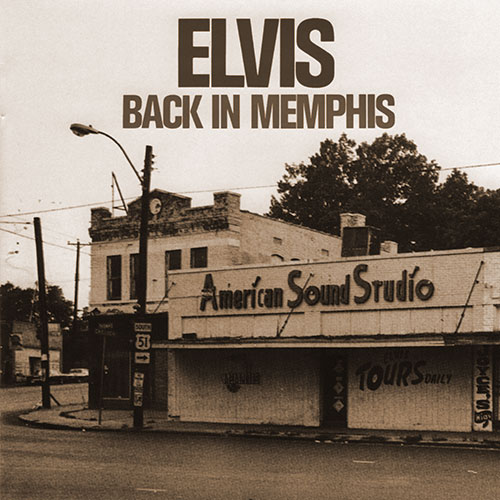
Back In Memphis - FTD Booklet Cover

Back In Memphis – FTD Booklet Cover

Rehearsals

For some reason, FTD includes the undubbed “Stranger In My Home Town” master in this rehearsal section. This version was available before on Reconsider Baby and Memphis Sessions. “Stranger In My Own Home Town” is a song where I strongly prefer the dubbed version.

There is also a true rehearsal of “A Little Bit Of Green.” Elvis sings it very slow at first but eventually moves it closer to the familiar speed. I like this previously unreleased informal version better than the master.

January Outtakes

Up next are three takes of “You’ll Think Of Me.” Take 8, though previously released on Made In Memphis, is new to me. Take 14 was previously released on Memphis Sessions. Take 16 was previously released on Suspicious Minds. All three takes are enjoyable.

Then, it’s back to “A Little Bit Of Green” for takes 2 and 3. Take 2 consists of a couple of false starts, while take 3 is actually the undubbed master with Elvis’ original vocals (he re-recorded his vocals to the song at a September session later that year in Nashville). He struggles with it in the January session. Fascinating, and exactly the kind of previously unreleased track that a collectors label should provide.

The previously unreleased vocal overdub #2 for “Inherit The Wind” proves interesting because Elvis spends part of it joking around, including use of his mock country voice.

Two false starts of “Without Love” are followed by Take 4 – previously released on Memphis Sessions. It’s a decent take, but this song wears on me after awhile. Too much style, not enough substance.

Take 7 of “Suspicious Minds” quickly re-energizes me, though. How I love this song. This take was previously released on Platinum: A Life In Music, though there are some extra talking bits before and after the song here.

February Outtakes

Up first is the master Take 6 of “And The Grass Won’t Pay No Mind”, undubbed except for Elvis vocal repairs. While I still detest the underlying song, I do find this version better than the master.

Take 4 of “Do You Know Who I Am” was first released on Made In Memphis, but it is new to me and, thus, a highlight of this release. Elvis seems really into the song. He begins to clown around at the end and states afterwards, “You’re gonna save that last take, aren’t you? Because the first part of the take was pretty good.”

Unfinished Masters

“This Is The Story” kicks off with a false start Take 1, followed by the undubbed Take 2 – previously released in shorter form on Memphis Sessions. This simpler version is far preferable to the master. I also enjoy the live version (Collectors Gold) due to Elvis injecting some humor into this melodramatic piece.

More “You’ll Think Of Me”, this time the undubbed master Take 23. This is a terrific track.

Back to “A Little Bit Of Green.” This time, it is master Take 3 with Elvis’ vocal overdub replacement, but without the other dubs. Accordingly, Elvis sounds much stronger here than in the “January Outtakes” instance of this track. Also, the song is admittedly much improved in its simpler form without the other overdubs. Oh what confusing webs ensnare Elvis fans.

Two false starts from Take 4 kick off “From A Jack To A King,” followed by the undubbed and unedited master Take 5 – previously unreleased. I prefer it over the released master, though this still won’t be a favorite. I may play it a little more often, though.

Next is the undubbed master (Take 5) of “Without Love,” previously unreleased and mostly unremarkable.

Here, at last, is the undubbed/unedited master Take 8 of “Suspicious Minds.” Boy, was it worth the wait. You’ll want to crank this one up and wake up your neighbors, folks. Wow. It is incredible to hear this song in its stripped-down form. While it is not better than the official master, I believe it will stand right alongside it for me. There are plenty of other great tracks on FTD’s Back In Memphis, but this one alone is worth the cost of admission.

From “Suspicious Minds” to “And The Grass Won’t Pay No Mind” (master Take 6 with vocal overdub). Maybe this illustrates as well as any other two examples of the contradictory nature of Elvis’ career. So much incredible talent that is alternatively poured into a treasured work or into utter dreck. Yet, in both cases, the talent is always there.

Further proving my point, after “And The Grass Won’t Pay No Mind” comes another great track, Take 7 (master, with vocal overdub) of “Do You Know Who I Am”. I love this one, too – including more fooling around by Elvis near the end. I can’t wait to go back and listen again to all of these “Do You Know Who I Am” takes.

Finally, “The Fair’s Moving On” (Take 1 master, with vocal overdub) provides an approriate album closer as Elvis sings, “Yes, the fair’s moving on, and I’ll soon be gone…” Another delightful track.

Cover & Booklet

As when FTD released Elvis In Person in the Classic Album series, the front cover art duplicates the reissue version of Back In Memphis, leaving out the From Vegas To Memphis title. At least they were consistent, but I would have preferred both use the From Memphis To Vegas/From Vegas To Memphis cover variants, as the odds of the original 2-LP version getting a re-release on its own are slim to none.

From Memphis To Vegas/From Vegas To Memphis actually would have made a great Legacy Edition release, but both Elvis In Person and Back In Memphis have already been part of separate releases in that series as supporting titles for On Stage and From Elvis In Memphis respectively.

The Back In Memphis FTD booklet cover is fantastic. I like to think of these as the album covers for the FTD editions, and this is one of their best alternate designs – right up there with the booklet cover for That’s The Way It Is FTD Classic Album edition.

The liner notes reveal no new information and often sound awkward. For example:

“One of the new songs Elvis performed at his shows was an extended seven-minutes plus arrangement of a yet to be released song from the Memphis Sessions, a Mark James penned song about the break-up of a relationship titled ‘Suspicious Minds’.”

I also wish the “In And Outtakes” notes had been more informative about the various takes, overdubs, etc. Instead, I had to use the Elvis Presley Recording Sessions section of the excellent Keith Flynn’s Elvis Presley Pages to unravel some of my personal confusion when compiling this review. Compared to initial releases, FTD has come a long way in the amount of information provided – but there is still room to grow.


When I first heard the original Back In Memphis, over twenty years ago, I was surprised by my disappointment. After listening to this expanded FTD release of the album, I am surprised yet again. Not by disappointment this time, but by how much I enjoyed it.

Verdict: 10 (out of 10)
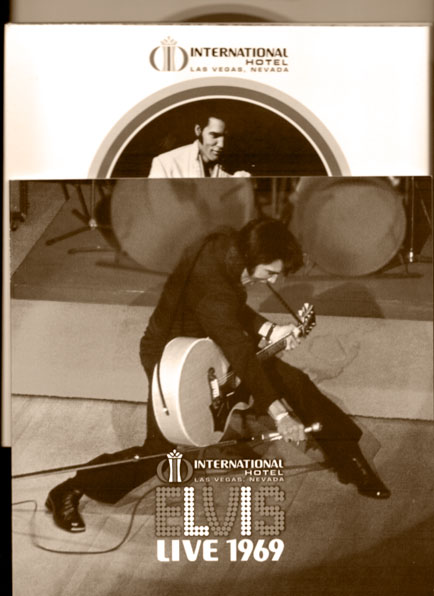
REVIEW – Live In Vegas: August 26, 1969 Dinner Show CD (FTD)

Live In Vegas: August 26, 1969 Dinner Show CD (Follow That Dream Records, 2011)

If you believe some fans, surely we’ve already heard enough 1969 Las Vegas concerts. Now that Live In Vegas: August 26, 1969 Dinner Show is available from FTD, let’s take a closer look at their claims.

Claim: If you’ve heard one 1969 show, you’ve heard them all.
Verdict: FALSE

For those who believe there are no more revelations to discover in these shows, I can easily pull one example of many from this release alone. For over 40 years now, Elvis fans have listened to the 1969 compilation Elvis In Person. How many ever realized that Elvis dedicated the specific performance of “Suspicious Minds” contained on that album to Barbara McNair, one of his Change Of Habit co-stars?

Elvis evidently thought a lot of McNair, who played Sister Irene, for he plugged her upcoming TV series, The Barbara McNair Show, when presenting her to the audience. As mentioned, Elvis’ introduction of the familiar version of “Suspicious Minds” is now slightly different: “A new record that just came out, ladies and gentlemen, I hope you like it, I’d like to do this especially for Barbie, it’s called ‘Suspicious Minds.'”

Though it is the sixth full-length show released from this engagement, Live In Vegas actually marks the first release of a concert that contributed songs to the Elvis In Person compilation (“Suspicious Minds” and “Can’t Help Falling In Love”). One of the joys of being able to hear complete 1969 shows like this one is re-discovering a song within its original context.

Claim: Every 1969 show had the same set list.
Verdict: FALSE

Live In Vegas is actually the first full show released thus far to include “My Babe” (previously compiled on Elvis Aron Presley) or “Inherit The Wind” (previously compiled on Collectors Gold). This is also the first full show so far where Elvis omits “Are You Lonesome Tonight” and only the second where he omits “What’d I Say.”

Incidentally, the inane argument that the set lists were always the same wasn’t even true of the first five shows released. Don’t get me wrong – of course, the core set lists are similar. These shows were all recorded within less than a week’s time, after all. The amusing part is that some fans apparently expect that Elvis should have completely revamped his show night after night. The 1969 concerts were about as perfect as any Elvis did in his career, but that’s not good enough for some.

Claim: If you’ve already heard the Midnight Show from this same date on All Shook Up, Live In Vegas will just be more of the same.
Verdict: FALSE

Though indeed recorded just a few hours apart from one another, the shows captured on All Shook Up and Live In Vegas are quite different from one another and do not play like repeats of the same show. The biggest difference is tone. While Elvis seems unable to control his infectious laughter through much of All Shook Up – including the fantastic “Are You Laughing Tonight” – he is much more focused on Live In Vegas. In fact, other than a few snickers here and there, there is little foreshadowing in the Dinner Show as to what will occur in the Midnight Show.

As far as the songs performed for these specific shows, the Dinner Show (Live In Vegas) features “Memories,” “My Babe,” and “Inherit The Wind,” which are not present on the later show. The Midnight Show (All Shook Up), on the other hand, features “I Can’t Stop Loving You,” “Are You Lonesome Tonight,” “Rubberneckin’” and “This Is The Story,” which are not present on the earlier show.

I find being able to listen to two shows from the same day during this incredible time of Elvis’ career to be one of the most positive aspects of this release, certainly not a drawback. It is fascinating to imagine being there for that single day, somehow fortunate enough to have tickets to both shows.

Show & Sound Quality

I’m just glad Ernst Jorgensen and the rest of Sony’s Follow That Dream team do not subscribe to the sort of claims refuted above. If they did, we might have missed out on Live In Vegas.

With that out of the way, we can now move on to more important things, like show and sound quality. The first few times I played this disc, my opinion was that no 1969 show had ever sounded this vibrant.

I have played all six full shows this week and part of me believes that Live In Vegas is the best of the complete 1969 shows released so far, in terms of Elvis’ performance. I am not quite ready to say that yet, though. I want to give more time for the newness to wear off and allow myself to compare the various shows more objectively. Like all of the other 1969 shows thus far released, though, this is without a doubt one of Elvis’ greatest concerts.

Elvis treats his classics with more respect in 1969 than he would in later years. “Blue Suede Shoes,” “All Shook Up,” “Love Me Tender,” “Jailhouse Rock,” and “Don’t Be Cruel” are all contenders as his best 1969 versions.

“You see, they fixed these lights up for Nancy Sinatra. They wouldn’t do it for me. That shows where the pull is. . . . I’ll show ’em, I won’t come back,” Elvis states shortly after welcoming the audience early on. Nancy’s engagement on the same stage would begin on August 29, just a day after Elvis’ would end. Elvis stuck around and caught her show and, despite his joke, returned to the International for another engagement just six months after this first one.

“Hound Dog” is also great, once you get past his cringe-inducing introduction of the song that also plagues every other version released so far from this engagement.

There are two tracks I always pay close attention to on the 1969 shows. One is “Suspicious Minds” – already a known factor on this album – and the other is the “Mystery Train/Tiger Man” medley. Elvis does a kickin’ rendition of this medley on Live In Vegas.

While Ronnie Tutt’s jungle drums are the focus in the first bits of “Tiger Man” before the second guitar break, the mix turns over to James Burton’s rockin’ guitar riffs for the other half of the song. It makes for a great compromise and one of the best versions of the song yet released.

I have yet to hear a bad version of “Runaway” from these shows, and this one is no exception. What a terrific performance from Elvis, driven again by James Burton. Too bad it was dropped from the show after 1969.

“Yesterday” is the typical “I’m not half the stud…” version and, as usual, the tacked on “Hey Jude” ending is no help.

After introducing the band, Elvis has Barbara McNair stand and introduces her as “a young lady that I just got through making a picture with called Change Of Habit, and I found her to be one of the nicest, warmest, lovingest people I’ve ever met.” When audience members complain they could not see her, he has the lights turned back on so she can stand up again.

It’s really cool hearing Elvis promote one of his movies on stage. Since he took a break from concerts through most of the 1960s, when he made the bulk of his movies, this was not an opportunity he had very often.

“In The Ghetto” is beautiful, similar to the Elvis In Person version.

On both of his August 26 shows, Elvis omits his breakneck speed version of “What’d I Say” and, in my opinion, the shows are all the better for it. “Suspicious Minds” is the ideal penultimate song, segueing perfectly into “Can’t Help Falling In Love.”

Speaking of “Can’t Help Falling In Love,” the Elvis In Person version has always been my favorite from 1969, and it sounds even better here.

* * *

Live In Vegas showcases Elvis Presley at his best on stage in a sound presentation that is richly mastered and crystal clear.

Sony reportedly has another six full shows from this engagement in its vault, including three more that contributed songs to the Elvis In Person album: the August 25 Dinner Show and the August 24 & 25 Midnight Shows.

There will always be complainers–even when Elvis was alive, he couldn’t please everyone, not even in 1969–but here’s hoping the rest of those 1969 shows, particularly the Elvis In Person ones, are eventually released. I’m looking forward to hearing each and every one of them.