What Graceland’s broken gates reveal about us

Over the weekend, I was happy to see a portion of one of Thomas’ Elvis Today blog posts picked up by no less than Elvis Information Network and ElvisNews.com.

While at ElvisNews.com, another story also caught my eye: Graceland Gates Damaged.

In the middle of the night on Friday, a motorist apparently crashed through Graceland’s famous music gates, shouted something to a security guard, and then fled the scene.

Appalling behavior, of course, but what I found even more appalling were the views of some of the Elvis fans that posted reactions on ElvisNews.com.

Attention immediately focused on the suspect’s race, while some called Graceland’s surroundings a “ghetto” and a “hood” and suggested that the whole area be bulldozed and its occupants evicted. To top it off, insults were hurled at the entire city of Memphis.

I have a simple question. How can people who spend so much time listening to Elvis manage never to hear his message?

There was a guy who said one time, he said, ‘You never stood in that man’s shoes, or saw things through his eyes. Or stood and watched with helpless hands while the heart inside you dies. So help your brother along the way, no matter where he starts. For the same God that made you, made him, too – these men with broken hearts.'” –Elvis Presley, 1970, quoting Hank Williams, Sr.

Though often associated with extravagant wealth, Elvis rose out of a poor background. From his early days of fame all the way through to the end, he often gave to his community. Though he eventually had everything, he obviously remembered what it was like to have nothing.

People don’t you understand? A child needs a helping hand, or he’ll grow to be an angry young man some day. Take a look at you and me, are we too blind to see, or do we simply turn our heads and look the other way?” –From “In The Ghetto,” Elvis Presley song, 1969 (written by Mac Davis)

The answer is not to extend Graceland’s walls out and create an antiseptic Disneyland for Elvis fans. The answer is not to kick out Graceland’s neighbors in the name of “improvement,” but rather to help those same neighbors improve their community.

Yes, there is crime in Shelby County. Yes, there is crime in Memphis. Don’t look too far out of your own backdoor, though, because you might find out that crime is closer than you think.

Graceland is a part of Memphis, just like Elvis once was a part of Memphis. To ignore Memphis, to ignore the context of Graceland – whether in the past when Elvis lived there or in the present day when thousands of fans spend money to visit there – is to turn visiting Graceland into something no more real than visiting the Magic Kingdom. Sure, it’s a lot of fun, but at the end of the day, it’s all meaningless illusions.

Is that really what Elvis fans want for Graceland? I think we can do better.

If I can dream of a better land, where all my brothers walk hand-in-hand, tell me why can’t my dream come true?” –From “If I Can Dream,” Elvis Presley song, 1968 (written by W. Earl Brown)

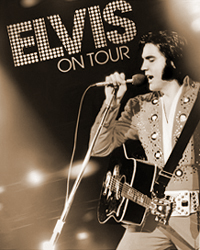
Elvis On Tour Blu-ray/DVD coming August 3

Elvis On Tour (1972)

Elvis On Tour (1972)

This week, Warner Home Video and Elvis Presley Enterprises announced the Elvis On Tour Blu-ray and DVD release date as August 3. There will also be a special screening of the movie on August 14 in Memphis during Elvis Week.

You read that right, we’re only four months away from the Elvis On Tour release!

Elvis On Tour features Elvis on the road and in rehearsals in the spring of 1972. Sandwiched between 1970’s colossal That’s The Way It Is and 1973’s Aloha From Hawaii, MGM’s Golden-Globe-winning documentary often seems to be overlooked among Elvis events. The second documentary produced about him, Elvis On Tour also represents Elvis’ 33rd and final movie.

Previously available in wide release only on VHS, Elvis On Tour is finally making its debut on Blu-ray and DVD. So, it is a little late to the DVD party, but just in time for the high-definition Blu-ray party!

While there will apparently not be any previously unreleased footage in this release, the press release does mention a number of songs that were featured only in the 1992 home video Elvis: The Lost Performances.

My hope is that the 1972 songs from The Lost Performances will be available as fully restored bonus features, along with the original theatrical version of the film. Blu-ray movies also allow for the possibility of “branching” — where you can choose between variations of a movie.

As we count down the months to the Elvis On Tour release, The Mystery Train will have more articles celebrating this event. Keep checking back, folks.

This is a great time to be an Elvis fan!

Return of the Rocker Starts an Obsession

Close-up of Return of the Rocker (1986)

Close-up of Return of the Rocker (1986)

In my childhood, I mostly listened to Elvis through borrowing records from my Mom and brother.

That all changed in 1987. Back then, you could still hear music on AM radio, and Oldies stations still played more than the same 200 songs they recycle today.

A local AM radio station was playing the live version of “I’ve Lost You” by Elvis that very morning as I waited anxiously on the phone. I was 11-years-old and on a strange winning streak. It seemed just about any contest I entered at that time, I won.

This radio call-in contest was for the prize to end all prizes, though. The winner of this contest would receive an Elvis LP record album, Return of the Rocker.

I had been trying for a week or two to win this one. To win, you simply had to be the tenth caller once they announced the contest each weekday morning. They had been giving away the album for some time, as my brother had won it over a month before. I was determined to win as well.

Usually such call-in contests went like this for me:

  1. Dial the number.
  2. Hear busy signal.
  3. Hang up.
  4. Hit re-dial.
  5. Hear busy signal.
  6. Go back to 3 until it finally rings, someone answers, states there has already been a winner, and hangs up.

The phone was ringing, and sooner than normal this time. The DJ, “Large” Larry, answered by simply saying the name of the station. I paused, as this had never happened before. “Am I a winner?” I asked sheepishly.

“Yes, you are!” He said. Realizing (and, looking back, probably surprised by) my age, the DJ asked me a few questions about what grade I was in and whether or not I thought my teacher was good-looking.

I didn’t care about the DJ’s shenanigans, though. I had just won my first-ever Elvis album! A week or two later, a certificate arrived in the mail that could be redeemed at the now defunct Peaches Music for a free copy of Return of the Rocker.

I would eventually spend a lot of time browsing the Elvis Presley section in Peaches, but I believe this was my first time in the store. I didn’t browse too long that day, just grabbed Return of the Rocker, checked out without problems, and hurried my Mom on the car ride home so I could finally play this record.

The record player I had back then was a hand-me-down from my older sister. It was vintage 1970s, I think, and kind of folded up to be carried around – though it was really too heavy to do that since it had a couple of bookshelf speakers as well.

I gently placed the needle on Side A of Return of the Rocker and was instantly rewarded with a rousing saxophone intro to an Elvis song I had never heard before, “King of the Whole Wide World.”

“The poor man wants the oyster,” Elvis sang, “The rich man wants the pearl, but the man who can sing but he hasn’t got a thing, he’s the king . . . of the whole wide world. Come on and sing! Sing, brother, sing!”

I was blown away. My life was never the same after that moment. Over the next few weeks, while pondering the incredible front and back cover art by Mark Chickinelli (I would love to find a print of his full cover art painting someday), I must have played the record dozens and dozens of times.

The rest of it was just as good as the opener, and it was full of songs that were new to me.

Side A
King of the Whole Wide World (1961)
(Marie’s The Name) His Latest Flame (1961)
Little Sister (1961)
A Mess Of Blues (1960)
Like A Baby (1960)
I Want You With Me (1961)

Side B
Stuck On You (1960)
Return To Sender (1962)
Make Me Know It (1960)
Witchcraft (1963)
I’m Comin’ Home (1961)
Follow That Dream (1961)

Return of the Rocker may have just been a compilation record of previously released songs, but that record was everything to me.

The Elvis Adventure Is Just Beginning

Elvis Presley in 1968

Elvis Presley in 1968

Have you ever noticed that the first post on a new blog is almost always boring? Let’s get the mundane one out of the way.

Welcome to The Mystery Train, an Elvis Presley blog. I’ve been toying with the idea of starting an Elvis blog for about two years now. In the meantime, I’ve been using sporadic posts on my mostly sci-fi blog as an outlet for writing about Elvis. In addition, I’ve guest blogged over at Elvis Today and ElvisBlog.

In fact, it was a recent post by Elvis Today’s Thomas that encouraged me to finally take the plunge and start an all Elvis blog of my own. Though I will no doubt decrease the number of posts about Elvis on my sci-fi blog, I will continue being available for guest stints on other Elvis blogs.

I actually started writing about Elvis nearly twenty years ago. From 1992 to 1997, I was the president of an official Elvis Presley fan club. I’m not sure how many there are now, but there were about 450 official clubs back then. Mine was only a “club” in the loosest sense of the term, though.

At its peak, my Elvis fan club had maybe fifty concurrent members. During all of those years, we never held a single meeting! In reality, the club existed solely as an excuse for me to create and write a quarterly newsletter about Elvis (kids, we had to use an archaic delivery system back then – consisting of items called “paper,” “envelopes,” and “postage stamps”).

I was 16 when I started that club, certainly one of the younger fan club presidents at that particular time. It was not exactly popular for 16-year-olds to like Elvis back then. While I may have been young, I had grown up listening to Elvis and had a lot to say about him.

These days, I am rapidly (and I do mean rapidly) approaching 35. All those years have gone by, yet Elvis is still there providing the soundtrack to my life – and I still have a lot to say about him. That’s why I’m here.

As for you, hold on tight, this train’s leaving the station! Enjoy your ride.


A refreshing portrait of Elvis after the Army [The Film Frontier blog]

I run across cool stuff every now and then that I just want to point out to you. Peter Guralnick’s Last Train To Memphis: The Rise of Elvis Presley represents the definitive account of Elvis’ early years. Though many herald it along with Last Train, his follow-up volume, Careless Love: The Unmaking of Elvis Presley, often leaves something to be desired.

Guralnick at least treats his subject with a sympathetic eye, which is better than most Elvis biographers, but his disdain for much of Elvis’ post-Army career is still evident. As someone who happens to love and enjoy this later Elvis, I do not like to see those years so easily dismissed. The great thing is, someone else has already said all of this far better than I ever could.

Drjohncarpenter over on the For Elvis CD Collectors message board recommended “Elvis In The Dark” by Daniel Wolff. It contains a critical look not only at the post-Army Elvis, but also at Guralnick’s biography. Wolff is the author of a Sam Cooke biography as well as a couple of volumes on Bruce Springsteen. After reading this piece, one of the best I have ever seen about Elvis, my hope is that Wolff will write a Presley biography some day as well.

* * *

There was a sad announcement this week in the Elvis world. Sylvia Shemwell recently passed away. She was a member of the Sweet Inspirations, the vocal group that backed Elvis on stage from his return to live performances in 1969 through his death in 1977.

Before becoming part of Elvis’ show, the Sweet Inspirations were already a Grammy-winning gospel group that once backed Aretha Franklin. Outside of their time with Elvis, their best known hit was “Sweet Inspiration,” released in 1968.

Sylvia appears with Elvis in the documentary movies That’s The Way It Is (1970) and Elvis On Tour (1972). She also appears with him in the television specials Aloha From Hawaii (1973) and Elvis In Concert (1977) as well as countless live concert albums.

You see a more recent photo of her over on ElvisNews.com: Sylvia Shemwell Passed Away.

As for the official Elvis site, as far as I could find, there was no mention of her in their news section. They did, however, find the time to promote a so-called Elvis “Tribute” Artist competition.

My thoughts and prayers are with her family and friends during this time. Sylvia: Thank you for the music.

* * *

Myrna Smith, another member of the Sweet Inspirations who backed Elvis during the same time and events, was recently hospitalized in Great Britain. It sounds like she is doing better, though, and will hopefully be released soon.

John Wilkinson played rhythm guitar for Elvis in the 1969 through 1977 era, again appearing in those same events. Wilkinson is battling cancer and was recently hospitalized in Missouri.

I was thinking the other day, because of Elvis, I have been listening to these people for pretty much my entire life. I wish all of them well.

REVIEW: Good Times CD Set (2009 FTD Edition)

Good Times CD set (Follow That Dream Records, 2009)

A perfect presentation for an imperfect album

Good Times marked the second album released from Elvis’ 1973 sessions at Stax studio in Memphis. This version from the Follow That Dream collectors label includes all ten tracks from the original album and thirty-seven additional tracks of alternate takes and undubbed masters. FTD’s Classic Album series serves as the best possible format for this album, with sound quality in most cases as good or better than previous releases.

Take Good Care Of Her

  • Disc 1, Track 01, Master—Take 6: You have to give Elvis credit. Musically, he openly dealt with his relationship issues from just about every angle imaginable. In “Always On My Mind,” the singer begged forgiveness and asked for another chance from his wife. In “Separate Ways,” he accepted the split as inevitable. In “Take Good Care Of Her,” Elvis even directed a surprisingly benign message at his soon-to-be ex-wife’s new love interest. Whether his real-life actions measured up to his song choices is a debate for another time, but certainly, Elvis found creative sparks in his relationship problems that fueled many of his later recordings. Though many could be labeled as “dark” or “depressing,” these deeply personal recordings also may be the best insight into how Elvis was feeling during the last few years of his life. Though “Take Good Care Of Her” is not a great song by itself, it is Elvis’ personal conviction and passion that somehow make it more than it really should be.
  • Disc 1, Track 11, Rehearsal & Take 1: Here, we get a short rehearsal segment, followed by Elvis’ first attempt to record the song. Elvis almost sings to himself during the rehearsal, an interesting listen just for the “fly on the wall” aspect. Absent from the master take, you can hear a hint of bitterness in Elvis’ voice as he goes through Take 1. “Just to be around her was my greatest pleasure, she was everything my future held in store,” he sings sadly.
  • Disc 2, Track 06, Takes 2, 3: Take 2 falls apart just seconds into the song. Take 3 is complete, but unremarkable.
  • Disc 1, Track 23, Take 4: Nothing special here, either, though you can still hear more bitterness than on the master.
  • Disc 2, Track 17, Take 5: Producer Felton Jarvis apparently brings this take to an early close, causing Elvis to curse and comment, “Now I know how Jesus felt with that thorn in his side.”
  • Disc 2, Track 18, Take 6 (Undubbed Master): One of the best services that FTD provides us Elvis fanatics is supplying the undubbed versions of many of his master recordings. These stripped-down versions are often revelations, sometimes sounding better than the released recordings. For this song, though, I actually slightly prefer it with the overdubs. It is nice to have both options for this and the other songs on this album, though – a real selling point for this release and many others in the Classic Album series.

Loving Arms

  • Disc 1, Track 02, Master—Take 3: “Loving Arms” is one of Elvis’ best country songs – ranking right up there with just about anything on Elvis Country. This is a superb performance, one of the highlights of Good Times. This FTD release is the best this song has ever sounded, as if you are standing in the studio with Elvis as he pleads, “If you could only hear me now. . . .”
  • Disc 1, Track 12, Take 1 & Rehearsal: Elvis plays around with the tempo of “Loving Arms” during Take 1, obviously trying to find the “sweet spot.” By the end, you can hear the confidence in his voice as he begins to get it just right. After the take, Elvis and the other musicians work out a new ending for the song.
  • Disc 2, Track 02, Take 2: This is another faster take on the song. It’s probably too fast, but the power of his voice still makes it a worthwhile listen.
  • Disc 2, Track 12, Take 3 (Undubbed Master): I must note again that sound quality here is simply amazing, especially considering these recordings are over 35 years old. I prefer the dubbed version, mostly because the ending of the song is improved by removing the obnoxiously loud chorus on the last note.

I Got A Feelin’ In My Body

  • Disc 1, Track 03, Master—Take 3: There are three songs that drag Good Times down from being a real contender for one of the top albums of his career. Unfortunately, they all come right in a row. First up among the losers is “I Got A Feelin’ In My Body,” a fast-paced gospel number on which Elvis sounds like he is trying too hard. The song is not very good, and Elvis is unable to save it this time.
  • Disc 1, Track 13, Take 1: By the end of Take 1, Elvis begins playing around with the words, yet keeps the song from completely falling apart.
  • Disc 2, Track 03, Take 2: This sounds more like a rehearsal than an actual attempt, particularly at the beginning. Elvis obviously knows it’s not quite there yet as well, for he laughs near the end.
  • Disc 2, Track 13, Rehearsal & Take 3 (Undubbed Master): Even this master take does not sound like they have quite worked the song out, probably the source of some my issues with this recording. This is marginally better than the dubbed version, though. Outside of the context of playing this album in its entirety, I would still rarely, if ever, play this song.
  • Disc 1, Track 21, Take 4: A take beyond the master, which is actually somewhat rare at an Elvis session. Perhaps evidence that they were not completely satisfied with Take 3, either. Still not something I would choose to hear often, but I do like it better than Take 3. Elvis sounds more comfortable with the song than on previous takes.
  • Disc 2, Track 19, Take 7: Elvis sounds tired on Take 7. The pace is a little slower, but not a real improvement. By the end, I was hoping they would speed up to just get the thing over.

If That Isn’t Love

  • Disc 1, Track 04, Master—Take 4: It is evident on Disc 4 of the Live In Las Vegas boxed set when Elvis introduces Dottie Rambo, writer of “If That Isn’t Love,” that he thinks a lot of her. That is why it pains me to criticize this song. Elvis recorded many great gospel numbers in his career, but unfortunately, this is not one of them. As is often the case, Elvis puts a lot of effort into the song, but it is just sub-par material.
  • Disc 1, Track 14, Take 1: This take was a surprise for me. I actually liked it, certainly better than the master. It turns out this was first released on Rhythm & Country, but it did not stand out to me back then.
  • Disc 2, Track 07, Take 4 (Undubbed Master): This undubbed take is better than the released master, but not as good as Take 1.
  • Disc 1, Track 24, Splice of Takes 5 (LFS) & 7: Referring to Take 4, Elvis tells Jarvis to “save that last one” before beginning Take 5. This splice of Take 5 (a long false start) and the end of Take 7 is also better than the master Take 4. The song is still lacking, but at least is more listenable.
  • Disc 2, Track 14, Takes 6, 7: A mistake on piano ends Take 6 just seconds in. Next, is Take 7, complete but forgettable.

She Wears My Ring

  • Disc 1, Track 05, Master—Take 10: “She Wears My Ring” is the worst song on Good Times, and one of the worst from Elvis’ mostly stellar 1970s studio work.
  • Disc 2, Track 09, Takes 1-7: Elvis and the band get a case of the laughs in these early takes, which go by rather quickly. Much like some of the 1960s movie tunes, studio chatter and laughter is far more interesting than the actual song in question.
  • Disc 1, Track 15, Take 8: Elvis and company manage to cool the laughter and make a decent take, better than the master.
  • Disc 2, Track 15, Take 10 (Undubbed Master): Elvis sounds bored to me but Jarvis declares, “That’s a gas!” at the end.

I’ve Got A Thing About You Baby

  • Disc 1, Track 06, Master—Take 15: The payoff for making it through the last three songs begins with “I’ve Got A Thing About You, Baby.” This one is from Tony Joe White, familiar to Elvis fans as the writer and original performer of “Polk Salad Annie.” While Elvis’ early versions of “Polk Salad” more or less followed White’s original, Elvis’ take on “I’ve Got a Thing About You, Baby” is faster and funkier than White’s. This mostly positive, upbeat song is exactly what this album needs. Elvis only briefly falls into more jaded territory with the “Ain’t it just like a woman” verse. This one deserved to be a big hit.
  • Disc 1, Track 16, Take 1: Fourteen takes would separate this take from the master, and it shows. Elvis sings it slightly differently, and stumbles over a few of the words in this fast-paced version.
  • Disc 2, Track 8, Take 5: This is a fun song, so listening to take after take is no problem. Enjoyable but unremarkable take.
  • Disc 2, Track 16, Takes 6, 8, 10, 11: Multiple takes on a single FTD track can mean only one thing: lots of false starts. These takes are slower than 1 and 5, about the speed of the released version. Elvis flubs the lyrics on the otherwise promising 6 and 8, then calls for a “big, huge idiot board” to show the words. He flubs Take 10 as well. “I’m too crazy to be serious,” Elvis notes and then pulls off a longer Take 11, flubbing some of the lines near the close and finally ending the song slightly early.
  • Disc 1, Track 22, Take 14: Elvis makes it all the way through this spirited take of the song. With the overly complicated lyrics, it’s no wonder this song did not become a mainstay of his concert repertoire.
  • Disc 2, Track 1, Takes 15 (Rough Mix of Master): This rough mix is pretty close to the released version.

My Boy

  • Disc 1, Track 07, Master—Take 3: On “My Boy,” Elvis worries about the effects of a potential breakup on a child. My impression is that Elvis fans either love or hate this song. I’ll take this soul-searching performance over “Hound Dog” or “Teddy Bear” any day.
  • Disc 1, Track 17, Take 1: Elvis approaches “My Boy” seriously from the start, making it obvious that the song is important to him. I love this take, which is a little slower and has a simpler sound than the released version. Though Elvis misses a note near the end, this one is nevertheless as great as the master.
  • Disc 2, Track 5, Take 2: Another serious attempt. Elvis stutters a bit about halfway through, but marches on through the song anyway. An okay take, but the lesser of the three. “I can’t sing it no more,” Elvis jokes when Jarvis calls for another take.
  • Disc 2, Track 20, Take 3 (Undubbed Master): Despite his joke, Elvis delivers on Take 3. An interesting listen here without the overdubs.

Spanish Eyes

  • Disc 1, Track 08, Master—Take 4: “Spanish Eyes” is a good example of “standard fare” for Elvis’ studio work in the 1970s – not his best, and not his worst. According to the liner notes, he recorded this one at the request of girlfriend Linda Thompson. Enjoyable as much for the acoustic guitar work as Elvis’ vocals. Sound quality is a huge improvement over the prior CD release of this album.
  • Disc 1, Track 18, Takes 1, 2: Elvis flubs Take 1 early, and then delivers a decent second take. Again, be sure to listen out for the beautiful acoustic guitar on this one.
  • Disc 2, Track 21, Take 3: Pianist David Briggs hits a sour note, so Elvis’ portion of this short take consists only of him singing the first word, “Blue.” Some fun studio chatter starts this track out, though. Briggs also spoils a first attempt at Take 4. “He’s gettin’ crazy!” Elvis says. With no new take called, the track ends just in time for the official Take 4 on the next track.
  • Disc 2, Track 22, Take 4 (Undubbed Master): Nice to have, but I prefer the dubbed version.

Talk About The Good Times

  • Disc 1, Track 09, Master—Take 4: Elvis’ version of “Talk About the Good Times” just doesn’t work as well as two of his other Jerry Reed covers, “Guitar Man” and “US Male.” Perhaps it’s because Reed is not present in the studio to provide guitar accompaniment this time. The underlying song and its associated message are strong. Lyrics like “Most folks couldn’t tell you who their neighbors are. All the guns are loaded, front doors are bolted,” are even more relevant now than in the 1970s. However, Elvis could have done so much better than just the okay version he delivered of this song. Instead, the finished product just sounds like a frantic rush job.
  • Disc 2, Track 10, Takes 1, 2: Take 1 starts out promisingly enough, guitar driven in the vein of “Promised Land” with less of the often annoying piano of the released version. Elvis stumbles over the lyrics, though, and curses the take to an early close. Take 2 is even shorter. Elvis looks away from the lyrics and misses them again. He then recites part of the Lord’s Prayer in a mock serious tone. Odd stuff.
  • Disc 1, Track 19, Take 3: Other than the master, this is apparently the only other complete take Elvis did of this song. Piano is unfortunately more prominent than on the first take. By the next take, it really takes over.
  • Disc 2, Track 11, Take 4 (Undubbed Master): They obviously took a “good enough” approach on this song. A real missed opportunity.

Good Time Charlie’s Got The Blues

  • Disc 1, Track 10, Master—Take 9: The album’s best song is saved for last. Like “Loving Arms,” “Good Time Charlie’s Got The Blues,” is one of Elvis’ greatest country performances – as good or better than anything on Elvis Country. Sound quality is the best it has ever been. You are there.
  • Disc 2, Track 4, Takes 1, 4, 6: “Just keep it down to Earth,” Elvis reminds the band as they start Take 1 of “Good Time Charlie’s Got The Blues.” Elvis starts cursing about his cord before he can even sing, though. On Take 4, Elvis makes it through about the first third of the song before he gets distracted and thinks they’re at the end of the song. He jokingly blames it on his pal Charlie Hodge. Take 6 is complete, but Elvis still sounds distracted. The song is not quite together yet.
  • Disc 1, Track 20, Takes 7, 8: Elvis flubs the lyrics in the first verse, and then does an impromptu parody of the song as only Elvis can. A must-listen. When Jarvis notes that this is now Take 8, Elvis is surprised. “It is? Damn, these takes are going by fast.” “Some of them have been very short,” Jarvis points out, getting a chuckle out of Elvis. Take 8 is just about as good as the released version.
  • Disc 2, Track 23, Take 9 (Unedited, Undubbed Master): The expanded FTD version of Good Times closes out with a surprise, an unedited, undubbed version of the “Good Time Charlie’s Got The Blues” master that is even better than the released version. This track alone makes the FTD Good Times an essential release.

* * *

FTD does a fine job on the accompanying booklet this time out. One of the things that has always bothered me about Good Times is that Elvis doesn’t look quite right on the cover, particularly his lips. I won’t give it away here, but the booklet finally reveals why this is so.

FTD’s version of Good Times turns out to be a fine upgrade of the original album, truly capturing the spirit of a collectors label by bringing the original cuts together in pristine sound quality along with tons of additional takes. Ten years in, FTD seems to have hit its stride, and its Classic Album series has become essential.

Songs: 6 (out of 10)

Audio Quality: 10

Liner Notes/Booklet: 7

Original Album Cover Art: 6

Overall Experience: 9


Celebrate 75 years of Elvis with his best recordings [The Film Frontier blog]

75 Years of Elvis PresleySeventy-five years ago today, on January 8, 1935, Elvis Aaron Presley was born in a humble, two-room house in the small town of Tupelo, Mississippi. His twin brother, Jesse Garon, was stillborn. Elvis would remain an only-child.

Two decades later, Elvis led a cultural revolution through the introduction of a new style of music that fused country, rhythm & blues, and gospel. Eventually, it would become known as rock ‘n’ roll . . . and Elvis as the King.

Freely moving back and forth among his favorite musical genres rather than limiting himself only to rock ‘n’ roll, Elvis recorded nearly 750 different songs in his lifetime. In celebration of what would have been his 75th birthday, here is a ranking of what I consider Elvis Presley’s best recordings.

#1: Always On My Mind (Rehearsal-1972)
[Writers: Mark James/Wayne Carson/Johnny Christopher]
Album: This Is Elvis
Just a day after his formal recording of the song, Elvis poured his heart even more into this rehearsal of “Always On My Mind” staged for MGM. The cameras were rolling for the movie Elvis On Tour, but this performance unfortunately hit the cutting room floor in favor of the similarly-themed “Separate Ways.” 1981’s posthumous documentary and soundtrack This Is Elvis later resurrected it. A window into his soul, this is the finest Elvis performance yet released.
Other notable version: 1972 master (Separate Ways).

#2: If I Can Dream (Alternate-1968)
[W. Earl Brown]
Memories
In the United States, 1968 saw the assassinations of civil rights leader Martin Luther King, Jr. and Presidential candidate Robert F. Kennedy. However, television provided two quiet visions of hope to close the year. First, there was this tremendous recording by Elvis, which ended his December 3 TV special. With its message of peace and brotherhood, “If I Can Dream” transcended even Elvis, ultimately meaning far more than yet another hit or the beginning of a comeback. He would never sing with more conviction than on this song. Exactly three weeks later, the crew of Apollo 8, in orbit around the moon on a test flight, read from the book of Genesis to a live TV audience. These separate yet linked moments in television history helped begin the healing process.
Other notable versions: 1968 master (ELVIS-TV Special); 1968 alternate (A Life In Music).

#3: Suspicious Minds (Live-1969)
[Mark James]
Elvis At The International
Other notable versions: 1969 master (Worldwide 50 Gold Award Hits, Volume 1); 1970 live (That’s The Way It Is: Special Edition [2000]).

#4: Mystery Train (1955)
[Herman “Little Junior” Parker/Sam Phillips]
For LP Fans Only
Other notable versions: 1969 live (Collectors Gold); 1969 live (From Memphis To Vegas/From Vegas To Memphis); 1970 live (That’s The Way It Is: Special Edition [2000]); 1970 live (One Night In Vegas).

#5: Can’t Help Falling In Love (1961)
[George Weiss/Hugo Peretti/Luigi Creatore]
Blue Hawaii
Other notable versions: 1961 alternate (Blue Hawaii [1997 Special Edition]); 1968 live (ELVIS-TV Special); 1969 live (From Memphis To Vegas/From Vegas To Memphis); 1970 live (That’s The Way It Is: Special Edition [2000]).

#6: Are You Lonesome Tonight (1960)
[Roy Turk/Lou Handman]
Elvis’ Golden Records, Volume 3
Other notable versions: 1969 live/”laughing” version (Elvis Aron Presley); 1968 live (Memories); 1969 live (Elvis: Viva Las Vegas-Limited Edition [2007]).

#7: Reconsider Baby (1960)
[Lowell Fulson]
Elvis Is Back!

#8: Jailhouse Rock (1957)
[Jerry Leiber/Mike Stoller]
Elvis’ Golden Records
Other notable version: 1968 live (ELVIS-TV Special).

#9: One Night (1957)
[Dave Bartholomew/Pearl King]
50,000,000 Elvis Fans Can’t Be Wrong: Elvis’ Gold Records Volume 2
Other notable version: 1968 live (Memories [Disc 2, Track 15]).

#10: Baby, Let’s Play House (1955)
[Arthur Gunter]
A Date With Elvis

#11: Love Me (1956)
[Jerry Leiber/Mike Stoller]
Elvis
Other notable versions: 1968 live (Memories); 1970 live (That’s The Way It Is: Special Edition [2000]); 1970 live (Live In Las Vegas).

#12: How The Web Was Woven (1970)
[Clive Westlake/Dave Most]
That’s The Way It Is
Other notable version: 1970 alternate (The Nashville Marathon).

#13: Baby, What You Want Me To Do (Live-1968)
[Jimmy Reed]
Tiger Man [Track 6]
Other notable version: 1968 live (Memories [Disc 2, Track 16]).

#14: Kentucky Rain (1969)
[Eddie Rabbitt/Dick Heard]
Worldwide 50 Gold Award Hits, Volume 1
Other notable version: 1970 live (Elvis Aron Presley).

#15: Santa Claus Is Back In Town (1957)
[Jerry Leiber/Mike Stoller]
Elvis’ Christmas Album
Other notable version: 1968 live (Tiger Man).

#16: Don’t Be Cruel (1956)
[Otis Blackwell]
Elvis’ Golden Records
Other notable versions: 1957 live (A Golden Celebration); 1968 live (Memories).

#17: Polk Salad Annie (Live-1970)
[Tony Joe White]
Today, Tomorrow & Forever
Other notable versions: 1970 live master (On Stage); 1970 live (That’s The Way It Is: Special Edition [2000]).

#18: I’ve Lost You (1970)
[Ken Howard/Alan Blaikley]
Worldwide Gold Award Hits, Volume 2

#19: Stranger In The Crowd (1970)
[Winfield Scott]
That’s The Way It Is
Other notable version: 1970 live (That’s The Way It Is: Special Edition [2000]).

#20: You’ve Lost That Lovin’ Feelin’ (Live-1970 [Extended])
[Barry Mann/Cynthia Weil]
That’s The Way It Is: Special Edition (2000) [Disc 2]

#21: Walk A Mile In My Shoes (Live-1970)
[Joe South]
Live In Las Vegas [Disc 2]
Other notable versions: 1970 live (Polk Salad Annie); 1970 live master (On Stage).

#22: Just Pretend (1970)
[Doug Flett/Guy Fletcher]
That’s The Way It Is
Other notable version: 1970 live (Live In Las Vegas).

#23: The Wonder Of You (Live-1970)
[Baker Knight]
On Stage

#24: Lawdy, Miss Clawdy (Live-1968)
[Lloyd Price]
Memories
Other notable version: 1956 master (For LP Fans Only).

#25: Trying To Get To You (Live-1968)
[Rose Marie McCoy/Margie Singleton]
A Life In Music
Other notable version: 1955 master (Elvis Presley).

* * *

Though his life was relatively short, Elvis made good use of his time here by bringing joy to many people and making the world better than it would have been without him. That is just about the most any of us can really hope to accomplish on this Earth. Today, his songs continue to inspire millions – including me. I cannot imagine my life without his music.

Happy birthday, Elvis, and thank you.