Top 10 Elvis News Stories of 2012

The Mystery TrainLast year (two days ago), Kees wrote a guest post here on The Mystery Train covering what he considers some of 2012’s Elvis news highlights.

To return the favor, I wrote a guest post today for his site covering my Top 10 Elvis News Stories of 2012. Check it out over at Elvis Day By Day.

Guest Post: A Trip Down 2012 (Part 2)

The Best News Stories 2012 (A) by Kees

Halfway through the year, as part of a “double post” with Ty, I compiled an article listing what I considered the Elvis news highlights of 2012 through that point. Now, on the verge of 2013, it is time for me to finish with what I consider the most important Elvis news stories from the last six months. Let’s pick it up where we left off.

A Boy From Tupelo

July 28: The Holy Grail

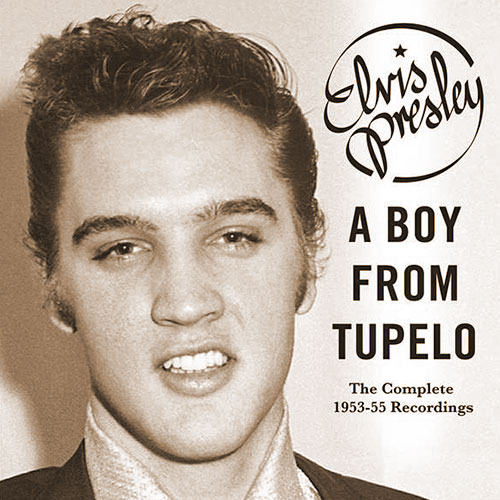
One of the best news stories of 2012 was, of course, the announcement of the release of A Boy From Tupelo by Ernst Jorgensen. July gave us the tracklisting, confirmation of a previously unreleased song entitled “Little Mama,” and several live performances of songs we only knew from studio recordings.  Three days later, the box was released. Funny to see how all details were kept secret, especially in this day and age when nothing appears to be safe.

Wire Machine

July 13: A Miracle

Miracles do exist. On July 13, news broke that YouTube user “amberola1b” posted a previously unreleased recording of Elvis singing “I Forgot To Remember To Forget” live at the Louisiana Hayride on October 1, 1955. How ironic it is that after ten years of work, Jorgensen finally announces the release of Elvis’ body of work from that era and then this recording surfaces. News went through the Elvis world like a wildfire.

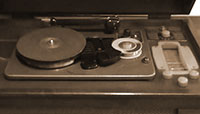
The song was recorded on an early Silvertone “wire” recording machine. We initially hear Buzz Busby and the Bayou Boys before Horace Logan introduces Elvis, Scotty, and Bill with their “modern-day type” new single, “I Forgot To Remember To Forget.” 
The reaction from Jorgensen was, “Wow – it’s unbelievably beautiful. I’m still trying to recover from the shock.”

The audio quality was very good, especially considering that it was a camcorder capturing the antique machine playing the wire. It almost sounded better than the new concert recordings on the A Boy From Tupelo set. This discovery showed that miracles can still happen. Who knows what is still out there ready to be discovered?

Especially because you could listen to the newly discovered song, this was one of the highlights of the year for me. I enjoyed being an Elvis fan again.

It was sad that Elvis Presley Enterprises did not appear interested in this news. I mailed them several times but got no other answer than, “Thank you for sending your email concerning a new live recording of Elvis. Unfortunately, I don’t know anything about the new recording besides the link that you shared with me in your prior email.” EPE never mentioned the newly discovered recording.

One day after the song hit the Elvis world, the owner discovered the potential value of what he had put online and threatened all those linking to his video with copyright violations. The song was bootlegged by various fan clubs and appeared on a handful of CDs, so fans could still enjoy this recording. An official release still has yet to see the light.

Graceland book

July 6: Graceland Through The Years 1957-1977

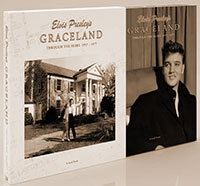
Boxcar Enterprises released a book, Graceland Through The Years 1957-1977, on July 6. The first edition of the book, limited to 2000 copies, sold out immediately. I enjoyed reading this book very much. It brought back a lot of memories of walking through the famous mansion in 2001. I still cannot believe that a former bootlegger can produce a book like this, rather than EPE, which is sitting on a wealth of original information and memorabilia. Graceland Through The Years contains 450 pages with over 1000 photos, many never before published.

Bootleg Elvis book

July 3: A Bootleggers Treasure

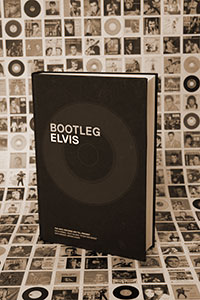
Speaking of bootleggers, the book Bootleg Elvis was also released in July. With the Graceland and Tupelo books, this release marks another essential book release. It documents all known vinyl bootleg releases, with additional background information from the original bootleggers themselves. It is not the kind of book you sit down and read cover-to-cover, but it is an essential reference and fun book to browse through every now and then. It is always fun to look up the vinyl in your own collection (no I found no hidden treasure …). When will the follow-up on all bootleg CDs appear?

August 1: The Holy Grail From Another Planet

August 1, 2012 marked the release of A Boy From Tupelo book and CD set – an essential release for any fan who wants to know everything from the early years of Elvis Presley’s career in music. I’m still reading it and will be for some time. Thank you, thank you very much, Ernst!

Sony Legacy also spread the news on the Prince From Another Planet double CD/DVD set containing Elvis’ legendary concert performances from Madison Square Garden. Sony simultaneously released three Madison Square Garden products:

1.) A vinyl re-issue of the original 1972 album As Recorded At Madison Square Garden. [Music On Vinyl also re-issued this same title.]

2.) A double CD containing the original mixes of Elvis’ June 10 shows as originally released on As Recorded At Madison Square Garden and 1997’s An Afternoon In The Garden.

3.) The Prince From Another Planet double CD/DVD set containing new mixes of both June 10 shows, with the DVD including audience footage from the afternoon show.

One would expect that the two CD sets would be the same, but Sony instead decided that the sets would contain different mixes and masterings of these concerts. Also, the footage on the DVD does not cover the entire concert, so Sony chose to show a black screen while the audio continues. Why not create a mini concert with only the available footage?

Elvis with Sheila Ryan

Elvis with Sheila Ryan

September 18: Sheila Ryan Died

This year quite a few people from the Elvis world died. Bernard Lansky, who dressed him in the early days, friends like Patti Parry and Lance Legault, people he worked with professionally or admired, like Tony Curtis, musicians, directors, and concert promotors.

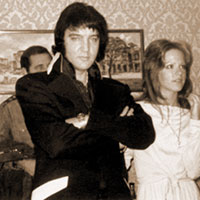
One stood out from the rest for me – his one-time girlfriend Sheila Ryan. She passed away at the age of 59 after a battle with cancer. After Elvis and Linda Thompson broke up, he dated Sheila for a while in 1974. They first met in Las Vegas. Elvis performed “And I Love You So” many times during his concerts and dedicated it to Sheila.

October 23: Hits From The Seventies

The Follow That Dream Collectors label released the Hits Of the 70’s compilation in October. Is it a very important release? I guess not, but it does mark a new direction for the collectors label. Could it be the bottom of the barrel is finally in sight after 100+ FTD releases?

The CD itself got mixed reactions and reviews, mainly because it did not contain any previously unreleased material. For me personally, that’s no problem, the music on this compilation is very good and I enjoy listening to it very much. Releases like this bring back memories of discovering Elvis when I was young.

November 28: Elvis Inducted into Memphis Music Hall of Fame

Elvis, among other Memphis music greats, was inducted into the Memphis Music Hall of Fame during a musical tribute held at the Cannon Center for the Performing Arts in downtown Memphis.

Memphis is often known as the cradle for legendary musicians in blues, soul, and rock ‘n’ roll. Until now, there was no Hall Of Fame – which was new to me. Walking around Memphis and enjoying all the different links to many kinds of music, this had escaped me.

The event was sponsored by the Memphis Rock ‘n’ Soul Museum. The ceremony consisted of 25 inductees who maintained strong ties to the Memphis community and were pioneers in the music industry. Other Memphians honoured were Sun Studio founder Sam Phillips, DJ Dewey Phillips, blues legends BB King, Howlin’ Wolf, and Isaac Hayes, among many others.

According to the Memphis Commercial Appeal, Priscilla Presley accepted on behalf of Elvis and noted that Elvis’ musical influences included several of his fellow inductees. “I know he would be humbled and pleased to be included in standing with them tonight at this inaugural event,” she said in a video message presented during the ceremony.

Back In Memphis, 2012 FTD Edition

November 5: Back In Memphis

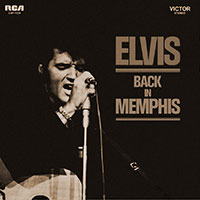
The Follow That Dream label announced the release of Back In Memphis in their Classic Album” series. This is one of my all-time favourite albums with great recordings like “Inherit the Wind”, “Stranger in My Own Hometown” and, of course, the fan-favorite “Suspicious Minds” – which FTD added as a bonus track. The additional alternate takes of these and other songs from the original album never sounded so good.

November 26: Elvis Files Vol. 1 ’53-’56

Erik Lorentzen shared a preview of the first volume of his Elvis Files anthology. This volume contains the years 1953 through 1956. These years turned the boy into a man and finally the King of Rock ‘n’ Roll. If I think of Elvis, images from this era come to mind. For me, this is what embodies Elvis. Two volumes are still shrink-wrapped and will probably be after I receive this volume. The first volume chronicles Elvis’ rise from his pre-SUN discovery to becoming the world’s biggest new sensation – over more than 500 pages and 1,200 photos. Featuring all Elvis events from 1953-1956, every working moment, the early tours, the first Las Vegas trip, recording sessions, the TV shows, and lots of unseen and unpublished images (according to the press-release). Originally announced for release in December 2012, it will be available early 2013.

December 21: Aloha From Hawaii – 40th Anniversary Edition

The year closes with a bang! Boxcar Enterprises announced that, in association JAT Publishing, it will release a 40th Year Anniversary special book in celebration of Elvis’ iconic Aloha from Hawaii, titled Elvis – Aloha via Satellite, in February 2013.

This massive, comprehensive 450-page volume is packaged and housed the same as Elvis Presley’s Graceland Through The Years. The book comprises hundreds upon hundreds of photographs, many of which have never before been seen.  Also collected exclusively are scores of historical memorabilia and the Colonel’s original internal documents and scripts. According to the press release, this is intended to create a time-travel experience of sorts documenting the most ground breaking event in the annals of television history.

2012 Wrap-up

So this wraps up 2012. Was it a good year? Browsing through the 290 posts I did on my Elvis Day By Day blog I can only say it was. On only 75 days, I did not find anything interesting to post. After years with only a few outstanding releases, 2012 raised the bar on CD and book releases, while vinyl made a comeback.

I did not get much of the 35th anniversary celebrations, but we got A Boy From Tupelo, for many fans a “holy grail”, we got a lot of vinyl, we got the Prince From Another Planet, a newly discovered recording of “I Forgot To Remember to Forget”, many import releases, and a series of great books. A few years ago, we thought the well had run dry, but I believe we may still get a few surprises in the years to come. See you around next year!

/Kees, Elvis Day By Day

The Best News Stories 2012 (B) by Kees

A Man From Elvis Presley Boulevard

Readers,

I sincerely hope you like my new FTD Album review.

My best wishes,
TY

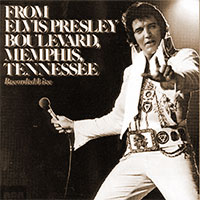
A review of the new FTD edition of From Elvis Presley Boulevard

The Original Album

The first ten tracks of FTD’s From Elvis Presley Boulevard, Memphis, Tennessee represent the original album that RCA released in May 1976. Recorded at Graceland in February of that year, this album is thematically the saddest ever released by Elvis. It also may be the most honest look at himself ever made available by the man living behind the gates of that home on Elvis Presley Boulevard. Despite the at times overblown production, From Elvis Presley Boulevard is a beautiful and moving album. Highlights include “For The Heart,” “Hurt,” “Never Again,” and “Love Coming Down.”
Today, Elvis is often spoken of as a singles artist rather than an album artist. Part of this comes from the admittedly mishmash quality of some of his albums. RCA had been hauling leftovers out from the vault since the very beginning when it included rejected SUN cuts like “I Love You Because” on the much-lauded Elvis Presley album in 1956. There is no question, though, that From Elvis Presley Boulevard two decades later is a coherent album through and through.
In fact, the twenty years that separate the albums Elvis Presley and From Elvis Presley Boulevard are quite evident – which is a good thing. Elvis did not devolve into an Oldies act looking to recapture past glories by singing the same types of songs over and over. As an artist, he changed over the years rather than stagnating with one style. That is not to say that From Elvis Presley Boulevard is superior to Elvis Presley – but that it is, quite rightly, an entirely different experience. It reflects the years of living the man did in those twenty years.
While Elvis Presley may be described as a bright, optimistic album, From Elvis Presley Boulevard is dark and moody. There are still bits of joy, but they are scattered and buried. Elvis had been intensely exploring “lost love” songs since at least 1972, and From Elvis Presley Boulevard represents the culmination of that often depressing but still worthwhile journey.  From Elvis Presley Boulevard is certainly among the twenty best albums that Elvis released during his lifetime.
That the Elvis of 1956 is different from the Elvis of 1960 or 1976 is one of the things that draws me to his music. No matter my mood or what is going on in my life, there always seems to be an Elvis that fits. This particular album has brought me comfort when I needed it. It is part of my journey.
Sound here on this 2012 edition is terrific. Listen to “Danny Boy”, a song Elvis had been fooling around with for decades, and you may imagine that he is singing in your den rather than his own.
The Alternate Album
Next up on disc 1 is an “alternate” version of the album using different takes of the same songs in the same sequence as the original album. I love this concept. As evidenced on A Life In Music and The Jungle Room Sessions, alternate takes of these songs can be quite revealing because they do not contain any of the post-session overdub work that either plagued or enhanced a given song.
Take 1 of “Hurt” falls apart after only a minute, though Elvis sounds great. The slightly weaker Take 2 made its debut on A Life In Music, but sound quality seems better here. I have not done A/B comparisons on any of these songs, though, so this is just based on an admittedly faulty memory.
Take 11 of “Never Again” first appeared on The Jungle Room Sessions. Again, the sound quality seems much improved to me. While I have long enjoyed The Jungle Room Sessions, there was always a muffled quality to the sound that I am not picking up here on this new release. In any event, this happens to be one of my favorite songs on the album, and this is a fine rendition.
Take 4 of “Blue Eyes Crying In The Rain” is a newly released version. Here’s a song that definitely benefits from the simpler sound compared to the released master. Check out that guitar solo at about the 1:45 mark. Unfortunately, Elvis’ voice is not quite up to par at times on this run-through – yet, it still works. “Baby, blue eyes cryin’ in the rain…” he sings near the end. Overall, he sounds much more engaged in the recording than we have been led to believe at this point of his life. This may be my new favorite version.
A Life In Music was also the debut of Take 9 of “Danny Boy,” though to my ears, this sounds different than that version. Perhaps it is only the apparent improved sound quality. Though foreboding, I love Elvis’ take on this song. At 41, that boy could still sing when he wanted!
The FTD producers get a little creative with “The Last Farewell” by creating a composite of takes 3 and 2. The master version from the original album itself was a splice of takes 5 and 3. Take 2 was previously released on The Jungle Room Sessions. As with the standalone Take 2, this new composite version is superior to the released master with overdubs. The interesting thing about this alternate album so far is that Elvis’ voice does not have as much of a depressing quality as evidenced on the released album. I am not sure why that is, whether it was a product of the subsequent overdubs or simply which takes were selected for use.
“For The Heart” is Take 1, as originally released on A Life In Music. Featuring rock ‘n’ roll infused with country, this is one of the hidden gems of the 1976 sessions. Terrific song.
Take 6 is previously unreleased for “Bitter They Are, Harder They Fall.” As with the original version, nothing really stands out about it. It is just an average album cut.
“Solitaire” always gets to me, especially the opening… “There was a man… a LONELY man…” This is take 3, previously released on The Jungle Room Sessions. How I love this song, though it can bring tears to my eyes. He was putting his pain right there on the record for all to hear.
The previously unreleased Take 3 of “Love Coming Down” is as genuine and effective as the superb master. In fact, in some ways, it may even be better – including a brief, unexpected spoken part on “and lookin’ back now…” early on in the song.
The previously unreleased Take 4 of “I’ll Never Fall In Love Again” falls apart within seconds, while Take 5 was first heard on The Jungle Room Sessions. Here is one where I definitely prefer the original album version. I cannot stand the piano work on this version. The piano portion sounds like it was intended for use at a retirement home, and it distracts me from the rest of the performance.
The Alternate Single
Every imaginary album deserves an imaginary single to promote it, and that is what FTD delivers here – mirroring the “Hurt”/”For The Heart” single released in March 1976.
Up first are previously unreleased versions of “For The Heart” — two false starts and then the complete Take 5B. It is an energetic and engaging performance.
Disc 1 concludes with a composite of Takes 4 and 3 of “Hurt.” Take 3 was previously released alone on The Jungle Room Sessions. This is a nice composite that will definitely get many spins by me.
The Making Of
Disc 2 consists of additional takes of the various songs from this album. Though I personally would have preferred a sequential presentation for this portion, reflecting the order in which Elvis recorded the songs, I can understand FTD’s decision to place entertainment considerations above historical ones. Besides, it is easy enough to re-order the songs if desired.
“For The Heart” kicks things off right with Takes 2 and 3A, previously released on The Jungle Room Sessions. Next up is Take 1 of “Bitter They Are, Harder They Fall.” This was first released on Made In Memphis, a CD I do not have. This is actually the first recording of the February session at Graceland. This is not a particularly compelling take. Elvis often sounds uncertain.
Next are two previously unreleased takes of “I’ll Never Fall In Love Again.” Take 1 is a false start, while Take 3 is complete – including that annoying piano. Elvis is hard to listen to on this one, yelling parts of the song. Between that and the piano, I found myself wishing for the song to end.
Take 3 of “Hurt” was previously issued on The Jungle Room Sessions. As with that album, it begins here with a false start and then the take is re-tried. A decent enough performance, though I prefer the master.
Take 1 of “The Last Farewell” is previously unreleased. It is okay, but certainly not a highlight. The take falls apart about three-fourths of the way through the song.
The next attempt, Take 2, of “The Last Farewell” follows. As noted above, this was originally released on The Jungle Room Sessions. I think I like the composite version from Disc 1 better.
“Never Again” features three false starts (Takes 1-3) before jumping ahead to the complete Take 9 – all previously unreleased. Take 9 is okay, but a disappointment compared to the versions on Disc 1.
“For The Heart” Take 4A first appeared on the excellent Today, Tomorrow & Forever. For those who have not been able to collect all of the individual releases, FTD’s Classic Album series does a commendable job bringing together previously released material such as this. Enjoyable, but I much prefer Take 1 from Disc 1.
Takes 6 and 7 of “Danny Boy” make their debut here, the earliest takes yet released of this song. Elvis sounds off on Take 6 and he eventually quits about a minute into the song. “Let’s take it up to E” he says before trying again on Take 7. When he once again struggles with the high notes, he quits again and states, “I liked it in C better. That’s how I’d like to do it, better.” [Interestingly, Ernst Jorgensen’s quote in A Life In Music, page 398, of Elvis saying, “I can’t make it. I’ve got too much sh-t in me, man…” when he blows take 7 has either been edited out or never actually happened.]
Take 8 is next, in C, and Elvis indeed does a better job this time, managing to complete the take – as previously released on The Jungle Room Sessions.
Made In Memphis included Take 4 of “Love Coming Down.” I find that I do not enjoy this take as much as the master or Take 3.
Take 1 of “Blue Eyes Crying In The Rain” is only a false start. Take 2, previously released on The Jungle Room Sessions, does not have the spark of Take 4. For all takes, a simpler arrangement would have greatly benefited this song. Imagine something similar to Elvis’ 1967 recording of “You’ll Never Walk Alone” as an example of what I mean. Instead, there is just too much going on here.
Take 5 of “Solitaire” is a previously unreleased false start. Take 7 was previously issued on Made In Memphis and, thus, is new to me. An okay version.
“Hurt” Take 6 is a previously unreleased false start. Take 5 is from Today, Tomorrow & Forever, a strong version.
As previously released on The Jungle Room Sessions, up next are takes 3, 4, and 5 of “Bitter They Are, Harder They Fall.” Takes 3 and 4 are false starts due to interruptions by a ringing phone and a barking dog. I guess that’s what happens when you try to record an album in your den. Take 5 manages to be complete, and Elvis puts in an enthusiastic performance.
Take 5A of “For The Heart” was first issued on Made In Memphis. Great version! This sounds pretty close to the master.
Take 4, a very brief false start, of “The Last Farewell” is previously unreleased. It is followed by the undubbed master of the song, which is superior to the album version.
I’m not exactly sure what a “master rough remix” is, but it turns out to be somewhat enjoyable for “I’ll Never Fall In Love Again” – except for that darn piano kicking it 1920s style every now and then.
For “Never Again,” we are treated to a “master remix” – this one is apparently not rough. (By the way, we are not talking JXL or Viva Elvis style remixes here, but simply changes to the original mixing channels – lest there be any confusion.)  And this one really is a treat. “Never Again” sounds wonderful like this. I would have been interested to hear the whole album receive this kind of treatment.
Finally, FTD’s From Elvis Presley Boulevard closes out with a “master rough remix” of “Danny Boy.” A beautiful recording, it seems, no matter the mix.
Disc 1 is definitely the highlight of this release. I imagine I’ll be playing that one quite often. Disc 2, while not a total letdown, mostly features some of the lesser takes.
Packaging/Booklet/etc.
As usual, the front cover mimics the original album – though I really do not like the printed inclusion of what was actually a sticker applied to the shrink wrap on the original version. It makes for a cheap look. The back cover is FTD-designed, and they have chosen to include a relatively poor photo of Elvis. He looks tired. Certainly not something to include on a cover, but FTD does not exactly have a great track record when it comes to choosing appropriate images.
The inside gatefold includes the original back cover, which I prefer. It includes a letter from Elvis stating, “I sincerely hope you like my new RCA Album.” The CDs mimic the tan labels of the original album release.
The booklet is standard fare for the Classic Album series, including a timeline and a listing of takes. The vintage RCA communications around the cover art and album content are, as always, of interest, though I wish there could have been more in this case. Apparently, Graceland was at one time to be featured on the cover in addition to Elvis. Though no reason is given, this may have been dropped for looking too similar to 1974’s Recorded Live On Stage In Memphis album.
Communication related to recording at Elvis’ home would have also been interesting to read, but nothing is provided. Like the cover, most of the booklet’s Elvis photos were taken by Ed Bonja at Elvis’ June 10, 1975, concert at the Mid-South Coliseum in Memphis. Just about every photo inside the booklet would have been a better choice to use on the back cover.
Overall
Follow That Dream Records delivers a fantastic upgrade to From Elvis Presley Boulevard. This release, especially Disc 1, will be stuck in my CD player for quite awhile. I eagerly await FTD’s take on the concluding chapter of the Graceland sessions, Moody Blue.


From Elvis Presley Boulevard to your CD player

From Elvis Presley Boulevard (1976)I’ve been a little behind on Elvis news lately, so I just found out that one of my favorite albums is getting an FTD release in October. From Elvis Presley Boulevard, Memphis, Tennessee, recorded at Graceland in 1976, will now be an expanded, 2-CD edition. This marks yet another exciting release for 2012.

September 20, 2012, Update: Back In Memphis, the lesser of the two resulting albums of his 1969 American Sound Studio sessions, will be the FTD Classic Album release for December. Also to be released by FTD that month is a 2-CD package consisting of a 1972 rehearsal tape and an August 1972 Las Vegas show.

It’s Here

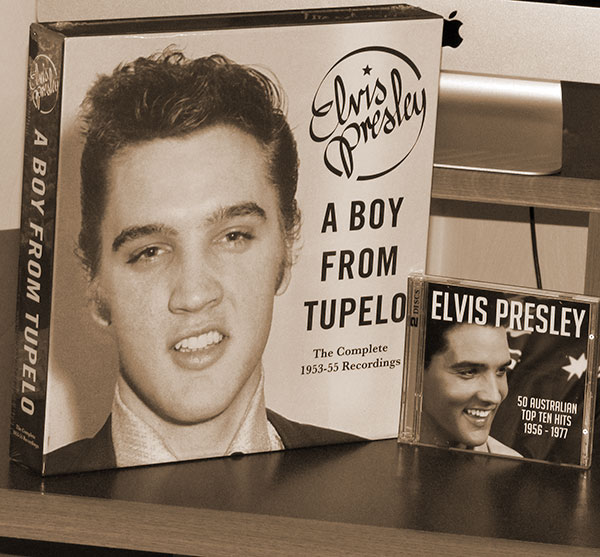
A Big Monster (A Boy From Tupelo)

I included the standard CD in the picture to give you an idea of the scale. A Boy From Tupelo is a big monster, weighing every bit of the promised 11 pounds.

Needless to say, this is the last time I’ll be posting for awhile. I’ve got a lot of reading and listening to do!

Guest Post: From Hawaii To The Rest Of The World

What if the previously unreleased cassette recording of Elvis rehearsing the day before his opening show at the Las Vegas Hilton on January 26, 1973, had been a rehearsal for an upcoming world tour instead? In an alternate universe, a review of the recently released From Hawaii To Las Vegas album from FTD would have sounded a bit different…. You’ve just crossed over into… the edge of reality.

The Edge Of Reality

[Read the full post by Thomas Melin over on Elvis Today Blog.]

Check out A Boy From Tupelo track listing

A Boy From Tupelo (concept cover art)

This has been another fantastic week of Elvis release news. Today, Follow That Dream Records revealed the track listing for the long-awaited A Boy From Tupelo: The Complete 1953-55 Recordings, FTD’s SUN boxed set that includes a 512-page book and three CDs. FTD, Sony’s collectors label for Elvis fans, will release the set next month.

It appears that Elvis Matters was the first site to break the track listing news, though I first read about it over on a For Elvis CD Collectors Forum thread started by Greg1995. On that thread, FECC member Good Time Charlie took the time to reformat the track listing to make it more palatable. I’ve used his version for the below, with a few very minor tweaks of my own. A big thank you to Charlie for allowing me to use his work.

Elvis Presley: A Boy From Tupelo – The Complete 1953-55 Recordings

Disc 1: MRS Acetates, The SUN Masters & The RCA Masters

01) My Happiness 2:33
02) That’s When Your Heartaches Begin 2:52
03) I’ll Never Stand In Your Way 2:04
04) It Wouldn’t Be The Same (Without You) 2:09
05) Harbor Lights 2:38
06) I Love You Because 2:43
07) That’s All Right [45 RPM SUN Master] 2:00
08) Blue Moon Of Kentucky [45 RPM SUN Master] 2:07
09) Blue Moon 2:44
10) Tomorrow Night 3:01
11) I’ll Never Let You Go (Little Darlin’) 2:27
12) I Don’t Care If The Sun Don’t Shine 2:32
13) Just Because 2:34
14) Good Rockin’ Tonight 2:15
15) Milkcow Blues Boogie [78 RPM SUN Master] 2:39
16) You’re A Heartbreaker [78 RPM SUN Master] 2:13
17) I’m Left, You’re Right, She’s Gone [Slow version] 2:43
18) Baby Let’s Play House 2:19
19) I’m Left, You’re Right, She’s Gone 2:38
20) I Forgot To Remember To Forget 2:31
21) Mystery Train 2:30
22) Tryin’ To Get To You 2:36
23) When It Rains It Pours 2:06
24) That’s All Right 1:59 [RCA single version]
25) Blue Moon Of Kentucky 2:05 [78 RPM SUN Master]
26) I Love You Because 2:45 [RCA LP version – spliced from takes 3 & 5]
27) Tomorrow Night 2:56 [RCA LP version – overdubbed and slowed down]

Tracks 1-2: Self-financed demo recorded July, 1953 at SUN Studio, Memphis.
Source for tracks 1-2: Digital transfer of acetate.

Tracks 3-4: Self-financed demo recorded January 4, 1954 at SUN Studio, Memphis.
Source for tracks 3-4: Digital transfer of acetate in very poor condition.

Track 5 possibly recorded July 5, 1954.
Tracks 6-7 recorded July 5, 1954 at SUN Studio, Memphis.
Sources for tracks 5-6: Original SUN tapes.
Source for track 7: 45 rpm SUN single (plastic).

Track 8: Recorded July 7, 1954 at SUN Studio, Memphis.
Source for track 8: 45 rpm SUN single (plastic).

Track 9: Likely recorded between August 15 and 19, 1954 at SUN Studio, Memphis.
Source for track 9: Original SUN tape.

Tracks 10-14 likely recorded between September 12-16, 1954 at SUN Studio, Memphis.
Sources for tracks 10, 11, 13 and 14: RCA reference tapes (30 ips).
Source for track 12: Digital transfer of SUN tape, with repairs from a digital transfer of a tape copy.

Tracks 15-16 recorded either mid-November or mid-December 1954 at SUN Studio, Memphis.
Sources for tracks 15-16: 78 rpm SUN single (shellac).

Track 17 Recorded between mid-November 1954 and mid-April 1955 at SUN Studio, Memphis.
The reel has March 5 written on it, but Elvis was at the Louisiana Hayride that day.
Source for track 17: Original SUN tape.

Track 18 likely recorded between January 30 and February 4, 1955 at SUN Studio, Memphis.
“I Got a Woman” and “Tryin’ to Get to You” were also recorded, but have been lost.
Source for track 18: RCA reference tape (30 ips).

Track 19 likely recorded mid-April 1955 at SUN Studio, Memphis.
Source for track 19: RCA reference tape (30 ips), with first part of ending from RCA tape copy (15 ips) and last part of ending from digital transfer of the RCA EPA-965 production master tape.

Tracks 20-22 recorded mid-July, 1955 at SUN Studio, Memphis.
Source for track 20: SUN tape copy.
Source for track 21: SUN tape copy, with ending from digital transfer of 78 rpm RCA single.
Source for track 22: RCA reference tape (30 ips).

Track 23 recorded November 1-4, 1955 at SUN Studio, Memphis.
Source for track 23: Original SUN (vocal channel) slapback tape.
Elvis’ 1957 re-recording of the song was released under the title “When It Rains, It Really Pours.”

Source for track 24: RCA reference tape (30 ips).

Source for track 25: Elvis at SUN master, derived from digital transfer of 78 RPM SUN single (shellac).

Track 26: Steve Sholes’ original notes have these takes as 2 & 4.
Source for track 26: RCA master tape.

Source for track 27: 1965 RCA work part tape for the Elvis for Everyone LPM-3450 production master tape.

Disc 2: The SUN Studio Sessions

01) Harbor Lights (takes 1-2, level adjustments) 0:33
02) Harbor Lights (take 3/M) 2:53
03) Harbor Lights (take 4) 2:38
04) Harbor Lights (takes 5-6) 1:23
05) Harbor Lights (take 7) 2:25
06) Harbor Lights (take 8) 0:26
07) I Love You Because (take 1) 0:23
08) I Love You Because (take 2) 3:28
09) I Love You Because (take 3) 3:36
10) I Love You Because (take 4) 0:40
11) I Love You Because (take 5) 3:28
12) That’s All Right (takes 1-2) 0:20
13) That’s All Right (take 3) 1:58
14) Dialogue 0:20
15) Blue Moon Of Kentucky [slow tempo outtake] 1:08
16) Blue Moon (takes 1-3) 0:38
17) Blue Moon (take 4) 2:59
18) Blue Moon (take 5) 3:25
19) Blue Moon (takes 6-7) 0:53
20) Blue Moon (take 8) 3:01
21) Blue Moon (take 9/M) 2:44
22) Dialogue fragment [before “Tomorrow Night”] 0:11
23) I’ll Never Let You Go (Little Darlin’) [incomplete take] 0:49
24) Good Rockin’ Tonight [fragment from vocal slapback tape] 0:10
25) I Don’t Care If The Sun Don’t Shine (takes 1-2) 1:13
26) I Don’t Care If The Sun Don’t Shine (take 3/M) 2:35
27) I’m Left, You’re Right, She’s Gone (slow version, take 1) 3:00
28) I’m Left, You’re Right, She’s Gone (slow version, take 2) 2:51
29) I’m Left, You’re Right, She’s Gone (slow version, take 3) 2:51
30) I’m Left, You’re Right, She’s Gone (slow version, take 4) 0:10
31) I’m Left, You’re Right, She’s Gone (slow version, take 5/M) 2:40
32) I’m Left, You’re Right, She’s Gone (slow version, take 6) 2:40
33) I’m Left, You’re Right, She’s Gone (slow version, take 7) 1:35
34) How Do You Think I Feel (guitar slapback tape, rehearsal + take 1) 3:17
35) How Do You Think I Feel (guitar slapback tape, rehearsals) 1:14
36) When It Rains It Pours (vocal slapback tape, take 1) 1:37
37) When It Rains It Pours (vocal slapback tape, take 2 – rehearsal) 2:12
38) When It Rains It Pours (vocal slapback tape, takes 3-4) 2:14
39) When It Rains It Pours (vocal slapback tape, take 5/M) 2:02
40) When It Rains It Pours (vocal slapback tape, take 6-7) 1:40
41) When It Rains It Pours (vocal slapback tape, take 8) 1:40

Tracks 1-6 possibly recorded July 5, 1954 at SUN Studio, Memphis.
Source for tracks 1-6: Original SUN tape.

Tracks 7-13 recorded July 5, 1954 at SUN Studio, Memphis.
Source for tracks 7-13: Original SUN tape.

Tracks 14-15 likely recorded July 7, 1954 at SUN Studio, Memphis.
Source for tracks 14-15: Digital transfer of SUN tape.

Tracks 16-21 likely recorded between August 15 and 19, 1954 at SUN Studio, Memphis.
Source for tracks 16-21: Original SUN tape.

Tracks 22-26 likely recorded between September 12 and 16, 1954 at SUN Studio, Memphis.
Source for track 22: RCA reference tape (30 ips) for “Tomorrow Night”.
Sources for tracks 23-26: Digital transfers of SUN tapes (also see source note for Disc 1, track 12).

Tracks 27-33 recorded between mid-November 1954 and mid-April 1955 at SUN Studio, Memphis.
The reel has March 5 written on it, but Elvis was at the Louisiana Hayride that day.
Source for tracks 27-33: Original SUN tape.

Tracks 34-35 recorded between mid-November 1954 and mid-April 1955 at SUN Studio, Memphis.
Source for tracks 34-35: Digital transfer of SUN (guitar channel) slapback tape.

Tracks 36-41 recorded between November 1-4, 1955 at SUN Studio, Memphis.
Source for tracks 36-41: Original SUN (vocal channel) slapback tape.

Disc 3: Live & Radio Performances

01) That’s All Right 2:52
02) Blue Moon Of Kentucky 2:23
03) Shake, Rattle And Roll 2:24
04) Fool, Fool, Fool 1:59
05) Hearts Of Stone 2:02
06) That’s All Right 1:52
07) Tweedlee Dee 2:51
08) Shake, Rattle And Roll 2:23
09) KSIJ Radio commercial with DJ Tom Perryman 0:16
10) Money Honey 2:43
11) Blue Moon Of Kentucky 2:04
12) I Don’t Care If The Sun Don’t Shine 2:33
13) That’s All Right 1:54
14) Tweedlee Dee 2:15
15) Money Honey 2:17
16) Hearts Of Stone 1:37
17) Shake, Rattle And Roll 1:39
18) Little Mama 2:03
19) You’re A Heartbreaker 2:06
20) Good Rockin’ Tonight 2:36
21) Baby Let’s Play House 2:22
22) Blue Moon Of Kentucky 1:47
23) I Got A Woman 3:03
24) That’s All Right 2:17
25) Tweedlee Dee 2:47
26) Interview with Mae Boren Axton 3:19
27) That’s All Right 2:37
28) I’m Left, You’re Right, She’s Gone 3:16
29) Baby Let’s Play House 3:19
30) Maybellene 3:09
31) That’s All Right 2:49
32) Interview with Bob Neal 5:31

Tracks 1-2 recorded at Louisiana Hayride debut, Shreveport, Louisiana, October 16, 1954.
Source for tracks 1-2: RCA reference tape copy.

Tracks 3-4 recorded at KDAV Radio, Lubbock, Texas, January 6, 1955.
Source for tracks 3-4: Digital transfer of acetate.

Tracks 5-7 likely recorded at the Louisiana Hayride, Shreveport, Louisiana, January 15, 1955.
Source for tracks 5-7: Digital transfer of acetate in very poor condition.
Some parts duplicated and edited to create near-complete performances.

Track 8 recorded at WJOI Radio, Florence, Alabama January 19, 1955.
Source for track 8: Digital transfer of acetate in poor condition.

Track 9 recorded at KSIJ Radio, Gladewater, Texas, 1955.
Source for track 9: Digital transfer.

Tracks 10-13 likely recorded at the Louisiana Hayride, Shreveport, Louisiana, January 22, 1955.
Source for tracks 10-13: Digital transfer of acetate in very poor condition. Some parts duplicated and edited to create near-complete performances.

Tracks 14-19 likely recorded at the Louisiana Hayride, Shreveport, Louisiana, March 5, 1955.
Source for tracks 14-19: Digital transfer of fragments of acetate in very poor condition (which was destroyed in the process). Some parts duplicated and edited to create near-complete performances.

Tracks 20-24 likely recorded at the Eagles’ Hall, Houston, Texas, March 19, 1955. Track 21 could be from a different performance the same week.
Source for tracks 20-24: RCA reference tape copy.

Track 25 recorded at Gladewater High School, Gladewater, Texas, April 30, 1955.
Source for tracks 25: RCA reference tape copy.

Track 26 recorded at motel in Jacksonville, Florida on either May 12 or July 28, 1955.
Source for track 26: Digital transfer of 1981 BBC broadcast tape copy.

Track 27 recorded at the Jimmie Rodgers Memorial Festival, Meridian, Mississippi, May 26, 1955.
Source for track 27: Broadcast tape.

Track 28 recorded at the Louisiana Hayride, Shreveport, Louisiana, July 2, 1955.
Source for track 28: Digital transfer of acetate in very poor condition. Some parts duplicated and edited to create near-complete performance.

Tracks 29-31 recorded at the Louisiana Hayride, Shreveport, Louisiana, August 20, 1955.
Source for tracks 29-31: RCA reference tape copies.

Track 32 recorded at WMPS Radio, Memphis Tennessee, between August 29-31, 1955.
Source for track 32: Digital transfer.

* * *

A Boy From Tupelo looks like it will indeed be the definitive SUN set. I’m most looking forward to hearing the original SUN 45 RPM version of “That’s All Right.” I’ve only heard the RCA version, which has added echo.

In Other News…

One of the many reasons I finally pounced on Elvis: The Complete Masters Collection was to obtain the Vic Anesini mastering of Elvis As Recorded At Madison Square Garden, which has been in dire need of an audio upgrade since its original CD release in the early 1990s. As soon as I placed the order, I thought, “Now everyone will have to thank me for finally buying it, as this will guarantee a Sony Legacy Edition release of Madison Square Garden in the near future.” This kind of thing happens to me all the time, you see.

Sure enough, Sony recently announced a Legacy Edition release of As Recorded At Madison Square Garden. So, you’re welcome!

The Legacy Edition, due in October for the US, will contain a remastered version (presumably, Anesini’s) of the original album using the vintage mix of the June 10, 1972, Evening Show. Sony will couple it with the June 10, 1972, Afternoon Show, previously released as An Afternoon In The Garden, to make a nice two-disc set. Since I already have the upgraded As Recorded At Madison Square Garden on The Complete Masters Collection, I’ll be skipping this Legacy Edition.

However, Sony is releasing another Madison Square Garden set at the same time. Prince From Another Planet: As Recorded At Madison Square Garden is a three-disc set consisting of two CDs and one DVD. The CDs will contain new mixes of both of the June 10 shows by Michael Brauer (i.e., this is not the vintage As Recorded At Madison Square Garden mix that will be on the Legacy Edition).

Since the historic mix has been properly preserved, this is a chance to do something different. I’m excited to hear what Brauer has come up with for these shows.

The 40-minute DVD will contain portions of Elvis’ Madison Square Garden press conference (a favorite of mine) and live performance material from the show. To date, no video footage of the Madison Square Garden shows has been officially released, so that alone makes Prince From Another Planet a must-have for fellow fans of this Elvis era.

So, something funny happened when I was Googling for more information on Prince From Another Planet. I found out that I named it!

Well, not really. However, I came across my own comment from July 3, 2011, on this very blog in the search results:

“[C]an you imagine… a 5 CD set, the 1972 equivalent of ‘Young Man With The Big Beat,’ containing the 3 CDs I mentioned above [the remaining April 1972 ‘Elvis On Tour’ shows], plus the two Garden shows to round out the other 2 CDs? Call it ‘A Prince From Another Planet.’ Then, the Garden shows could be a Legacy Edition as a separate release as well (much like the ‘Elvis Presley’ Legacy Edition is to the 1956 boxed set).”

I had forgotten all about this and was literally shocked to read my own words. I’m sure it’s a total coincidence, of course.

(In case it’s not a coincidence, though, and Sony is really reading this little blog – just give me a call, because I have plenty more Elvis ideas. I’ll be waiting by the phone.)