THAT’S THE WAY IT IS: SPECIAL EDITION coming to Blu-ray in August

Elvis Presley performs live in August 1970

Elvis Presley in THAT’S THE WAY IT IS: SPECIAL EDITION (1970/2000)

From ElvisMatters:

An exclusive screening of the world premiere of Warner Bros.’ newly-remastered version of Elvis: That’s The Way It Is – Special Edition will be held at the Orpheum Theatre [in Memphis, Tennessee]. The Elvis concert documentary will be available for the first time on Blu-ray on August 12. Fans will be treated not only to the newly-remastered film, but will also get to experience an outtake performance or sequence never-before-seen on the big screen. In addition, the screening will feature an on-stage performance by Terry Blackwood and The Imperials and “Elvis: That’s The Way It Is” related artifacts on display in the lobby, direct from the Graceland Archives.

I have not yet been able to find confirmation of this on the official Elvis.com or Graceland.com sites, but it is not unusual for them to be behind on even their own news. I even tried the Orpheum site.

If this pans out, I would not be surprised if additional screenings are added across the United States via Fathom Events, as was done to promote the Elvis On Tour Blu-ray in 2010.

Perhaps Warner will be more accurate in its product descriptions for That’s The Way It Is: Special Edition Blu-ray than they were for the Elvis On Tour Blu-ray.

Update: Graceland.com has now confirmed the screening and Blu-ray release for August, though the press release is unclear on certain product details. Look for plenty of coverage here in coming months.

Scoring the win by a knockout, the new Elvis Song Champion of the World. . . .

It has been a grueling contest, but sixty-four songs have finally been narrowed to one. Thank you to everyone who participated. Votes came in from all over the world, making this a truly international event.

I also want to thank everyone who took the time in this final round to submit suggestions about the site. Since the replies are anonymous, I am unable to thank you individually, but please know your comments are appreciated. Some of them validated plans I already had in the works, while others were new concepts that I will take under consideration. One of them, I have already implemented, but more on that later.

Back to the Elvis Mania 2014 tournament, it came down to “Mystery Train” versus “Suspicious Minds.” As Colin commented when the championship round began, “This is the hardest choice yet!”

However, the readers of The Mystery Train have spoken, in overwhelming fashion.

In an 84% to 16% victory, scoring the win by a knockout, the new Elvis Song Champion of the World . . . “Suspicious Minds”!

In his lifetime, Elvis released five main versions of “Suspicious Minds.” His original, January 1969 studio recording of the song was backed with “You’ll Think Of Me” and released as a single that August. “Suspicious Minds” became his first number one hit since “Good Luck Charm” in 1962.

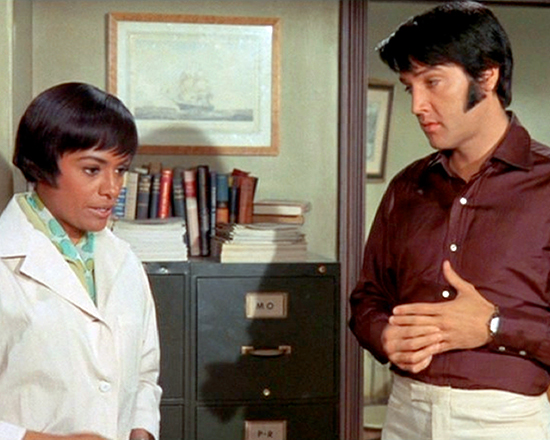
Barbara McNair and Elvis Presley in CHANGE OF HABIT (1969)

Barbara McNair and Elvis Presley in CHANGE OF HABIT (1969)

Just as “Suspicious Minds” hit the airwaves and record shops, Elvis was appearing throughout August in Las Vegas at the International Hotel. RCA recorded several of his concerts, including his August 26, 1969, Dinner Show. At this concert, Elvis performed a nearly eight-minute version of the song, which he dedicated to Barbara McNair, his Change of Habit co-star who was in the audience. Though his dedication was edited out, the performance was featured on the Elvis In Person portion of the double LP From Memphis To Vegas/From Vegas To Memphis.

Captured live at the August 12, 1970, Midnight Show, a six-minute version of “Suspicious Minds” in Vegas became a setpiece of the documentary film Elvis-That’s The Way It Is. Elvis fans had to watch the movie to enjoy it, though, for the performance remained otherwise unreleased until 2000 – 23 years after the singer’s death.

Live versions of “Suspicious Minds” also featured prominently on the albums As Recorded At Madison Square Garden (1972) and Aloha From Hawaii via Satellite (1973) as well as the Aloha From Hawaii TV broadcast. The song even appeared briefly in the 1972 documentary Elvis On Tour.

In Ken Sharp’s Writing For The King (2006), songwriter Mark James described how he came up with the song: “I had the idea for ‘Suspicious Minds’ and it started coming to me one night. First the title came and I thought about it and lived with it for a while. Then the lyric came to me, ‘caught in a trap, I can’t walk out because I love you too much, baby.’ What I was trying to say is we can’t live together or attain our dreams or build on anything if we don’t trust one another” (p. 213). James released his version as a single in 1968, but it failed to find an audience.

Many other artists have recorded “Suspicious Minds” since Elvis, including Waylon Jennings (1970), Dee Dee Warwick (1971), Fine Young Cannibals (1985), Dwight Yoakam (1992), and Daughtry (2007). With an arrangement inspired by Warwick’s recording, Martina McBride has a version of “Suspicious Minds” coming out tomorrow on her new album, Everlasting.

To view the full results of Elvis Mania 2014, check out the tournament’s page on Challonge.com. Among those eligible (i.e., not including me), “JakeMarston” earned the highest score for his predictions. He will receive a Legacy Edition CD of an Elvis title of his choice, courtesy of The Mystery Train.

Only it is no longer The Mystery Train. One of the suggestions that came in during the last round was, “After crowning Suspicious Minds as the best Elvis song, rename blog to The Suspicious Minds Blog.” The person went on to explain that he or she was only joking, but I have decided to move forward with the suggestion anyway.

For the next month, The Mystery Train will now be known as The Suspicious Minds Blog. Until then, we’re caught in a trap.

Elvis Presley in 1969

Elvis Presley in 1969

“To @!#?@! with the Hilton Hotel . . . the Showroom, too”

A few weeks ago, I purchased a batch of Follow That Dream CDs, and I’ve been working my way through them. By far, the most interesting is one I’ve been spinning this week.

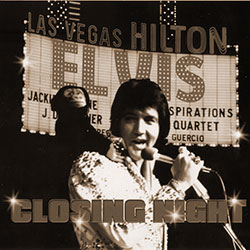
Closing Night (2004)Closing Night is actually a 2004 release. For reasons that have escaped my memory, I didn’t pick this one up back then.

Maybe it was the poorly Photoshopped cover that turned me off. Though if cover art were a real consideration for me, I fear much of my Elvis collection wouldn’t be here.

Or, maybe I was worried that this notorious show was a train wreck.

More than likely, though, it was probably a budgetary consideration. Though I support FTD, I can’t afford to buy every single release. Instead, I pick and choose.

In any event, I can explain why I finally purchased this CD. Back in July, Elvis super fan Ian Fraser mentioned this show in a comment to a post here on The Mystery Train. His enthusiasm made me want to try out Closing Night.

The Closing Night CD actually contains selections from two September 3, 1973, concerts at the Hilton Hotel’s Showroom in Las Vegas. Tracks 1 through 7 are from the Dinner Show, while tracks 8 through 25 are from the Midnight Show (the actual closing show that Ian mentions in his comments).

It’s definitely an unusual show, but not a train wreck by any means. It’s intriguing to hear Elvis uncharacteristically blowing off steam while on stage. Plus, there are great live versions of “Trouble” and “My Boy,” not to mention “Bridge Over Suspicious Minds” and the spoken word only version of “Softly, As I Leave You.”

What have you been listening to this week?

Experience Elvis at full throttle in Young Man With The Big Beat (UPDATE: Individual songs available for purchase on Amazon)

Available today from Sony’s RCA/Legacy label, the five-CD boxed set Young Man With The Big Beat features a ton of 1956 material. For die-hard fans, the crown jewel of the set is the first-ever release of Elvis’ December 15, 1956, concert that marked the singer’s final appearance on the Louisiana Hayride radio program.

Also released today is the Sony Legacy edition of his debut album, Elvis Presley, which is paired with his second album, Elvis.

Note that this set is also available for purchase in digital format (audio only) at a substantially reduced price for the full set.

UPDATE: Possibly along with others, Amazon US is offering the opportunity to buy individual tracks in digital format. This means fans who only want the Hayride material do not have to purchase the entire set. Thank you to Sony for this consideration.

Below is a full break-down of the Young Man With The Big Beat set, adapted from Sony’s press release and marketing material.

Disc 1: Studio Recordings

17 tracks recorded in New York, Nashville, and Hollywood, starting with the 12 songs on the debut LP, Elvis Presley (‘1254’), followed by non-LP single A-sides and B-sides, and EP tracks.

  1. Blue Suede Shoes
  2. I’m Counting On You
  3. I Got A Woman
  4. One-Sided Love Affair
  5. I Love You Because
  6. Just Because
  7. Tutti Frutti
  8. Trying To Get To You
  9. I’m Gonna Sit Right Down And Cry (Over You)
  10. I’ll Never Let You Go (Little Darlin’)
  11. Blue Moon
  12. Money Honey
  13. Heartbreak Hotel
  14. I Was The One
  15. My Baby Left Me
  16. Lawdy, Miss Clawdy
  17. Shake, Rattle And Roll

Disc 2: Studio Recordings

22 tracks recorded in New York, Nashville, and Memphis, starting with the 12 songs on the second LP, Elvis (‘1382’), followed by non-LP single A-sides and B-sides, and EP tracks.

  1. Rip It Up
  2. Love Me
  3. When My Blue Moon Turns To Gold Again
  4. Long Tall Sally
  5. First In Line
  6. Paralyzed
  7. So Glad You’re Mine
  8. Old Shep
  9. Ready Teddy
  10. Anyplace Is Paradise
  11. How’s The World Treating You
  12. How Do You Think I Feel
  13. I Want You, I Need You, I Love You
  14. Hound Dog
  15. Don’t Be Cruel
  16. Any Way You Want Me (That’s How I Will Be)
  17. Too Much
  18. Playing For Keeps
  19. Love Me Tender
  20. Let Me
  21. Poor Boy
  22. We’re Gonna Move

Disc 3: Live Recordings

Rare remasters of shows at the Frontier Hotel in Las Vegas (four songs); Little Rock, Arkansas (seven songs); and a recently discovered, previously unreleased concert in Shreveport, Louisiana, in December (ten songs).

Recorded Live At The Venus Room, Frontier Hotel, Las Vegas, May 6

1.  Heartbreak Hotel
2.  Long Tall Sally
3.  Blue Suede Shoes
4.  Money Honey

Recorded Live At The Robinson Memorial Auditorium, Little Rock, Arkansas, May 16

5.  Heartbreak Hotel
6.  Long Tall Sally
7.  I Was The One
8.  Money Honey
9.  I Got A Woman
10. Blue Suede Shoes
11. Hound Dog

Recorded Live At The Hirsch Youth Center, Louisiana Fairgrounds, Shreveport, Louisiana, December 15

12. Heartbreak Hotel
13. Long Tall Sally
14. I Was The One
15. Love Me Tender
16. Don’t Be Cruel
17. Love Me
18. I Got A Woman
19. When My Blue Moon Turns To Gold Again
20. Paralyzed
21. Hound Dog

Disc 4: Outtakes

Four outtakes from the first historic RCA session in January (“I Got A Woman,” “Heartbreak Hotel,” “I’m Counting On You,” “I Was The One”), segueing into the complete session of February 3rd (11 takes of “Lawdy, Miss Clawdy” and 12 takes of “Shake, Rattle And Roll”); plus the first of the interviews – the complete Warwick Hotel (NYC) interview by Robert Brown in March.

  1. I Got A Woman – take unknown
  2. Heartbreak Hotel – take 06
  3. I’m Counting On You – take 13
  4. I Was The One – take 02
  5. Lawdy, Miss Clawdy – take 01
  6. Lawdy, Miss Clawdy – take 03
  7. Lawdy, Miss Clawdy – take 04
  8. Lawdy, Miss Clawdy – take 05
  9. Lawdy, Miss Clawdy – take 06
  10. Lawdy, Miss Clawdy – takes 07, 08, 09
  11. Lawdy, Miss Clawdy – take 10 (master)
  12. Lawdy, Miss Clawdy – takes 11, 12
  13. Shake, Rattle And Roll – takes 01, 02
  14. Shake, Rattle And Roll – takes 03, 05, 06, 07
  15. Shake, Rattle And Roll – take 08
  16. Shake, Rattle And Roll – takes 09, 10, 11, 12, 12 (undubbed master)
  17. The Complete Warwick Hotel Interview

Disc 5: Interviews

The Paul Wilder interview, plus his interviews with Colonel Parker and Oscar Davis; plus two segments of Elvis’ rarely heard candid monologue, “The Truth About Me,” and two advertisements for RCA Victrolas.

  1. The Complete TV Guide Presents Elvis interview
  2. Colonel Parker Interview
  3. The Truth About Me
  4. The Truth About Me Interview
  5. Victrola Radio ad 1
  6. Victrola Radio ad 2

Book

The focal point of the book, spread across its 80 pages, will be a unique, meticulously-researched, day-by-day chronology of Elvis’ iconic year, including every concert, every recording date, every television appearance, personal events in Elvis’ life, and much more. A dazzling photo array of memorabilia will illustrate each day and entry. Concert ticket stubs, RCA memoranda, letters from fans, postcards from Elvis to his family, tour itineraries, magazine covers and articles, trade charts, fan club relics, RCA publicity photos, concert photos, candid photos, and more will be a feast for the eyes and the imagination as 1956 unfolds.

Other Items

Will also include five rare 8×10 photographs, five original-size poster replicas, and a replica concert ticket stub.

Guest Post: Fashion For A King doesn’t fit diehard fan

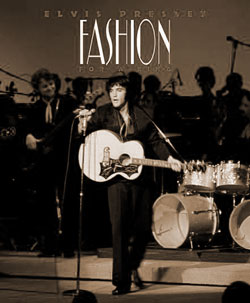
Fashion For A King (2011)

Fashion For A King (2011)

Let me just start out by saying that I am not an Elvis book collector. I buy very, very few Elvis books, and the ones I do usually tend to be reference type books, along the lines of Joe Tunzi’s Sessions books. In other words, I am a discerning Elvis book collector and don’t simply pick up every single tome with Elvis’ picture on the cover. Simply put, there has to be a good reason for me to buy one. Being a jumpsuit fanatic, I had always wanted a book that would document the suits Elvis wore in minute detail. Thus, when I heard about Fashion for a King I knew it would have to be one of my rare Elvis book purchases.

When I saw the press release for Fashion for a King, I was thrilled. An entire book (500+ pages) about Elvis’ jumpsuits? What could be better? (For me, anyway. I know some people groan at the thought.) According to the press release, the book promised to be “a full documentary of Elvis’ jumpsuits,” covering “the background story of each and every suit” – a “fully documented story and pictures of Elvis Presley’s stage outfits” and “an encyclopedia for fans…to learn more about these great original stage outfits.”

Needless to say I was excited. An encyclopedia of each and every suit, with documentation? My head filled with visions of unseen photographs and close-ups of each suit, along with documentation about when each suit was worn. Although not explicitly stated, I did get the impression that each concert would be individually documented, if not with a photo, then at least with a date and a listing of which suit was worn. In short, the press release promised a lot, and since the book had been written by fans, who often obsess about such details, I was very much looking forward to a reference that I would look at time and time again, much like I do with my Sessions books.

Unfortunately, upon paging through the book after I got it, it immediately became clear that it was much less than was I was anticipating. The majority of the photos in the book were ones I had seen before, either from well known sources, Follow That Dream releases, or simply from surfing the Internet. Only about 20 or so were new to my eyes, and it seemed as though the rest had been cobbled together from various sources that almost anyone could find. I felt a bit cheated paying over $100 US for a book full of photos that I probably could assemble most of myself given a few days of Internet usage. However, I could forgive the lack of rare photos if the rest of the book (the jumpsuit specifics) made up for it. Unfortunately the book failed in that area as well.

The text was bland and repetitive and followed exactly the same format in each section: Elvis’ tour lasted from this date to this date, he wore XYZ jumpsuits during the tour and he had Y band members with him. While the descriptions of which jumpsuits were worn on what dates were sadly lacking, oddly, the authors saw fit to inject commentary within the descriptions about Elvis’ health, state of mind, girlfriends or spending habits, often in the form of generalizations. I found it hard to distinguish whether or not the authors were trying to sympathize with Elvis or to condemn him. Regardless, in my opinion, a simple list of shows, dates, suits, capacities, grosses, and band members would have been much superior to prose that alternated from factual statements about dates and locations to editorial comments about Elvis’ state of mind. Somehow, in a work billed as an encyclopedia of Elvis’ jumpsuits, I wasn’t expecting to read about Elvis’ love life, or his spending, or the Colonel’s gambling habits. All of these things have been covered elsewhere. As it stands, the text came across to me as a canned, generic version of the stereotypical Elvis timeline that a non-fan might parrot back to you when talking about Elvis. In other words, lots of generalities, few actual facts, and most glaringly, very little relevance to what the book was ostensibly about. Oddly, though, given the lack of actual text concerning the specifics of Elvis’ jumpsuit usage, almost every section has specific details about the types of microphones Elvis used on a given tour, even down to the color of the tape used to secure the microphone windscreen – if only the jumpsuit information was this detailed and orderly!

To be fair, some of Elvis’ jumpsuits are described in detail, although I personally found the descriptions hard to follow, as often the authors would mention that Elvis wore ‘X’ jumpsuit with ‘Y’ belt during a specific Vegas engagement while not having a photo of said jumpsuit (and particularly said belt) to accompany the text. This was especially confusing when describing jumpsuits and belts that were originally created in previous years (say, when talking about jumpsuits and belts worn in both 1973 and 1974, for example). The text more often than not wound up reading like “Elvis wore jumpsuit X with original belt 1, although sometimes with non-original belt 2, along with jumpsuit Y” – I found myself having to page backwards through the book to remind myself if I actually saw a photo of “original belt 1” at some point. Given that I am a lifelong Elvis fan and a jumpsuit aficionado, I can only imagine how confused an average Elvis fan, or a new Elvis fan, might be with the descriptions. Having some photos of the jumpsuits as displayed at Graceland when talking about minutiae like how many buttons were on the sleeves of the given jumpsuit or how belt X had two chains per loop while belt Y had only one would have provided some excellent visual counterpoints to the printed details. Again, I am approaching this from the standpoint of someone who LOVES reading about things like how the differing versions of the flame suit can be determined by the color of the kick pleat in the legs, and even I found some of the text hard to follow.

Design-wise, the book is laid out well, but I did find that the authors included photos of Elvis wearing a given jumpsuit in a later year placed within the discussions from a previous year (with shots of Elvis from 1972, for example, appearing in sections covering Elvis’ November 1971 tours). While I can understand using shots from different periods when describing a specific jumpsuit, the book is primarily organized about specific tours and engagements, so personally I would have found it more stylistically interesting to include 72 shots with 72 tours where a given suit was worn. Again, including some static shots of the jumpsuits themselves when talking about their design would have been more interesting and appropriate to this reader.

The book is clearly a labor of love on the part of the authors, and one can tell that they enjoyed putting it together, but overall, I can’t really find much in the book that will interest the diehard fan, and in particular the diehard jumpsuit fan. The book has the feel of a project that fans might do in their spare time for their own enjoyment, which is essentially what this sprang from, according to the press release. As mentioned, I could see myself doing something similar just for the fun of it, although if I were to put it in book form for wider consumption I personally would feel an obligation to provide something, even if not necessarily new, at least useful as a reference.

Although this release is not produced by FTD, it was released in conjunction with them, and as with previous FTD book products, some Elvis music is included, this time in the form of Elvis’ Omaha, Nebraska show from July 1, 1974, and a Las Vegas show from December 14, 1975. Both of these have been around on the CD/CDR circuit, with parts of the former also being available in the form of some very good 8mm footage, but neither has appeared on soundboard. Both are a welcome treat, showing Elvis in good form, with the 1975 show providing an excellent set list. I remember hearing this show years ago as an audience recording and really enjoying it and the soundboard version confirms what I thought at the time. Elvis seems relaxed and in a good mood, and gives some very committed and unrushed performances. The oldies are tossed together and dispensed with in the first third of the show, leaving the remaining two-thirds for more powerhouse material, including “How Great Thou Art” (with a reprise of the ending), “Just Pretend,” “You Gave Me A Mountain,” and a rare (for this time period) performance of “Until It’s Time For You To Go.” Even more unusually, the show even features a performance of “It’s Now or Never” with Elvis singing the Italian lyrics. The show is also quite long for Vegas, running about 75 minutes. Overall, this show alone more than makes up for the book in my opinion, and I am very happy that this particular show has finally been released on soundboard.

The Omaha show is also of a good standard, with Elvis’ performance (in my opinion) being more serious and energetic than other releases from this time period, like June 19 in Amarillo or June 29 in Kansas City. Again, a nice bonus and nice compensation after my disappointment with the book.

In short, I was disappointed by Fashion for a King in almost every respect. On a scale of 1 to 10, I’d have to rate it right down the middle, with only the authors’ obvious love for the subject and the two included CDs saving it from a bottom of the barrel rating. Ironically, in thinking about it, this book might actually be more appealing (from a content standpoint) to a casual fan, as it does offer some nice photos in a coffee table book format. But for the diehard jumpsuit lovers like me, there is unfortunately little new on offer.

/Bryan Gruszka, Strange Paradise Online


Bryan Gruszka has been an Elvis fan since he was 6-years-old. A self-confessed jumpsuit afficionado, his favorite period is the 1970s. When not occupied with Elvis, Bryan is developing a book and website about Strange Paradise, an obscure Canadian gothic soap opera. Feel free to drop him a line or check out his website.
REVIEW: Stage Rehearsal CD (FTD)

Stage Rehearsal (FTD CD)

August 10, 1970. The MGM camera crew has been following Elvis around for almost a month now. This afternoon, it’s time for one final rehearsal before the opening show later tonight. No camera crew allowed this time, but RCA is rolling tape in preparation for the concert recordings. Follow That Dream Records’ latest release, Stage Rehearsal, takes us behind the scenes of this event.

One of the things I’d been wondering about this release was how FTD would deal with the fact that most of the songs from this rehearsal were incomplete, due to having a “late start.” The first several seconds of these songs were not recorded. After all, RCA never intended this rehearsal for release.

The way I saw it, FTD had at least three options:

1.) Leave the recordings alone and let them start in progress — a bit jarring, but historically accurate
2.) Fade the songs up slightly as they start in progress — a little less jarring
3.) Repair the beginnings using recordings from other summer 1970 rehearsals — requires more work and is not historically accurate

I usually try to avoid reading the opinions of others when I’m planning to review something. That way, my expectations and reactions do not get swayed one way or the other in advance. Sometimes, this is impossible with FTD releases because I am in the United States, and we tend to receive them two or three weeks after most of the rest of the world.

In the case of Stage Rehearsal, I came across a comment revealing that FTD had repaired the beginnings of the songs by using live versions. My initial reaction was shock and dismay. Why would they make such a strange choice?

Once I had the actual CD in hand last week, though, and played it for the first time, it became obvious why FTD chose this path.

The sound quality of the August 10, 1970, stage rehearsal contained on this CD is comparable to the concert recordings that began later that night and continued for the next few days. To my knowledge, there are no other That’s The Way It Is rehearsals that have this level of sound quality. Using subpar sounding rehearsals as lead-ins would have probably been too obvious as splices. Instead, FTD elected to go with the live recordings to more closely match the sound of this rehearsal.

My personal preference would have been that FTD just release the rehearsal as-is, with truncated introductions. This is supposedly a collectors label, after all.

However, I can understand and appreciate their desire to make this a quality listening experience. After all, we were Elvis listeners prior to becoming Elvis historians! In this case, entertainment value won out over historic context. Considering how much I otherwise enjoy this CD, I can forgive them that.

One thing different about this rehearsal compared to some of the others I’ve heard over the years is that it does not feature Elvis really working on the songs. It feels more like a live show in that regard. This may be because this is literally hours before the opening show (captured on One Night In Vegas, a must-have FTD) and most of the kinks have already been worked out, or it could be because the recording was obviously turned off between songs. Two of the songs are repeated, so that’s evidence they were doing some work.

The stage microphones experience feedback a number of times, foreshadowing what would happen later that night during the actual concert. I wonder why this problem was not resolved prior to the show, since it was evident in the rehearsal?

There are many loose, fun moments but, in the end, the real appeal of the 1970 portion is the sound quality. None of the versions are revelations, though “version 1” of both “You Don’t Have To Say You Love Me” and “You’ve Lost That Lovin’ Feelin'” are stellar. Oddly enough, “version 2” of both of these songs splices the exact same live introductions as used on version 1. I suppose the tempo matched better than other alternatives, but this really shows why repairing the audio in this fashion was not the way to go.

A few years ago, Warner Brothers released “The Richard Donner Cut” of Superman II, showing what that director’s version of the 1980 movie may have been like had he not been replaced midway through production. To augment the available footage, screen tests of the main actors were used. This footage looks totally different compared to the rest of the film. Stage Rehearsal‘s “what if” splices between live and rehearsal material reminds me of this.

The 1972 and 1973 bonus songs that comprise the rest of this CD were recorded on a portable tape recorder. Therefore the sound quality is akin to “When The Snow Is On The Roses” and other recordings of that nature. These are definitely listenable, though they suffer a bit in following up the near-pristine-sounding 16-track recordings from 1970. I suggest playing the bonus songs first to avoid this effect.

Finally, here, we get some rehearsal work, which is pretty much lacking from the 1970 portions of this CD.

Any Day Now: By 1972, it seemed that Elvis had all but abandoned the songs he recorded at American Sound Studios only three years earlier, save the obligatory “Suspicious Minds.” Apparently not, though, for here’s Elvis sounding awesome on “Any Day Now,” leaving me to wonder why this apparently did not become part of the show.

True Love Travels On A Gravel Road: This is a good version, but seems less concert-ready than “Any Day Now.” It could’ve worked for occasional use as something different. Who knows, maybe he did use it that way.

Portrait Of My Love: Elvis does a brief, unidentified blues number before launching into “Portrait of My Love” on a whim. This is not so much a “rehearsal,” then, as it is an off-the-cuff song. It’s pretty and probably would’ve been a decent number if further developed. Wonderful to hear a “new” Elvis song, I might add.

I’m Leavin’ It All Up To You: Another “new” Elvis song. This one sounds pretty basic, but I believe that is because Elvis severely shortened it.

The funny thing is, I bought this CD because of the 1970 material, but it is the 1972 and 1973 material that stands out.

Ultimately, Stage Rehearsal is a well-intentioned release that I recommend with reservations. It offers 1970 rehearsals in terrific sound quality, but with unfortunate splicing decisions. It also offers some 1972 and 1973 rarities, but in subpar sound quality. Be aware of what you’re buying so that you won’t be disappointed. Then, just crank it up and enjoy. That’s what Elvis is supposed to be all about anyway.

Elvis revamps his show

Inspired by a recent eBay auction of Elvis’ handwritten rehearsals set list from August 1974, Thomas has a posted another creative piece over on his Elvis Today Blog. This is a must-read:

“The Handwritten Las Vegas Rehearsal Set List” — Elvis Today Blog

Sony’s Follow That Dream collectors label for Elvis fans documented the rehearsals on the 2-CD set From Sunset to Vegas. The unique opening show of this engagement is one of two concerts that appear on FTD’s 2-CD Nevada Nights.

“The Twelfth Of Never” and “Softly, As I Leave You” from the August 16, 1974, rehearsal first appeared on 1995’s Walk A Mile In My Shoes.

I always find it a little eerie while listening to “Softly” in particular to think that Elvis would pass away exactly three years later.

He felt himself start to die, and he took his notepad from the side of the bed, and he wrote, ‘Softly, I will leave you, softly. For my heart would break, if you should wake, and see me go…'” –From “Softly As I Leave You,” Elvis Presley version, August 16, 1974