Elvis Live at His Las Vegas Peak

This is Part 8 of an occasional series reviewing Elvis: The Complete Masters Collection.

Well, as I was saying, volume 10 of Elvis: The Complete Masters Collection is called Live In Las Vegas and compiles Elvis In Person and On Stage, two of Elvis Presley’s best albums.

When Elvis made his debut at the International Hotel in Las Vegas on July 31, 1969, it had been 3,050 days since his last public concert. With that in mind, the 1,935 days that have elapsed since my last entry in this review of Elvis: The Complete Masters Collection don’t sound so bad, do they?
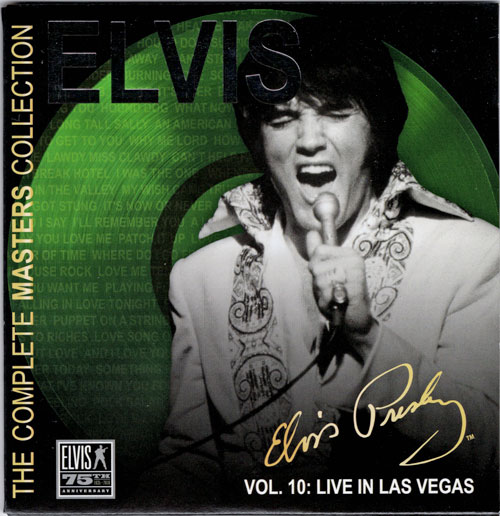
ELVIS: THE COMPLETE MASTERS COLLECTION – VOLUME 10 CD front sleeve - 2009, from TY's collection

ELVIS: THE COMPLETE MASTERS COLLECTION – VOLUME 10 CD front sleeve (2009, from TY’s collection)

CD Vol. 10: Live In Las Vegas

As I’ll talk about later, the compilers had an opportunity to do something really creative with the sequencing of this CD, but they took the easy route instead.

The first 12 tracks are the 1970 album Elvis In Person At The International Hotel, Las Vegas, Nevada, which was actually first released as record 1 of From Memphis To Vegas/From Vegas To Memphis in 1969. Do you think the RCA folks got paid by the character for their album titles back then?

The final 10 tracks are the album On Stage – February, 1970. One of my favorite little tidbits about that album, besides the unnecessary comma in the title, is that Elvis’ name does not appear anywhere on the front or back cover.

Elvis In Person pulls together recordings from Elvis’ August 1969 engagement at the International, whereas On Stage primarily assembles songs from his February 1970 return engagement but tosses in a couple more highlights from August 1969.

01. Blue Suede Shoes (August 25, 1969 Midnight Show [MS]): Trumpets blare, the rhythm group springs into action, and then Elvis takes the stage as Elvis In Person begins with a rocking rendition of Carl Perkins’ “Blue Suede Shoes.”

02. Johnny B. Goode (August 24, 1969 MS): From one rock ‘n’ roll anthem to the next, Elvis rips into Chuck Berry’s “Johnny B. Goode,” with his strongest version of the song from a vocals perspective released to date. James Burton on lead electric guitar is killing it in the right channel. The Sweet Inspirations sound great, too!

03. All Shook Up (August 25, 1969 MS): Elvis next launches into “All Shook Up,” certainly one of his finest performances of the 1957 classic. Ronnie Tutt on drums really drives this one. After the song, Elvis mentions that this is his first live appearance in nine years.

04. Are You Lonesome Tonight? (August 24, 1969 MS): Elvis sings a compelling version of his 1960 hit “Are You Lonesome Tonight,” with Sweet Inspiration Cissy Houston’s vocals soaring throughout. At the end of the track, in an excerpt from the August 24, 1969 Dinner Show (DS), Elvis introduces his “message song” for the night, which turns out to be . . .

05. Hound Dog (August 25, 1969 MS): Elvis attacks the opening of this song so forcefully that I’m just now getting up from the floor to try to type my thoughts as Burton completes his mid-song guitar solo. Best version from the 1968-1977 era.

06. I Can’t Stop Loving You (August 25, 1969 MS): This is a pretty enough version of Don Gibson’s “I Can’t Stop Loving You,” but Elvis would do it better from August 1970 through 1972 when he put a little more oomph into it. Bizarrely dubbed-in from another moment, an audience member screaming incoherently near the end doesn’t help this version, either. Elvis’ voice is gorgeous here, though, don’t get me wrong.

Listening closely to Elvis In Person as an album for the first time in awhile, it also becomes apparent that this is really a showcase for the incredible Sweet Inspirations as well.

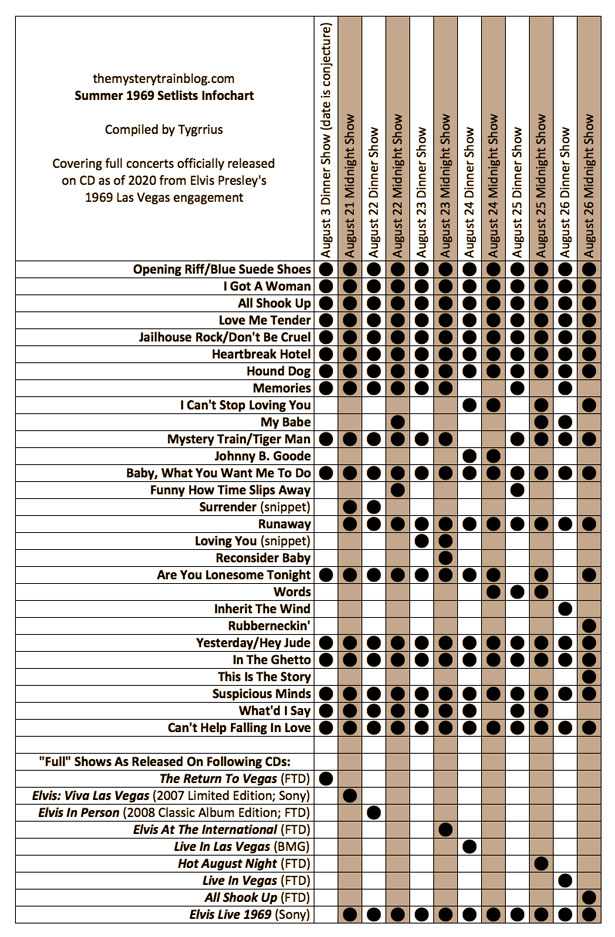
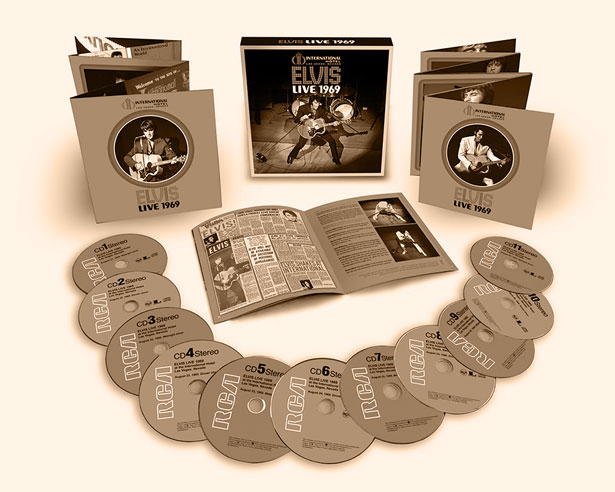
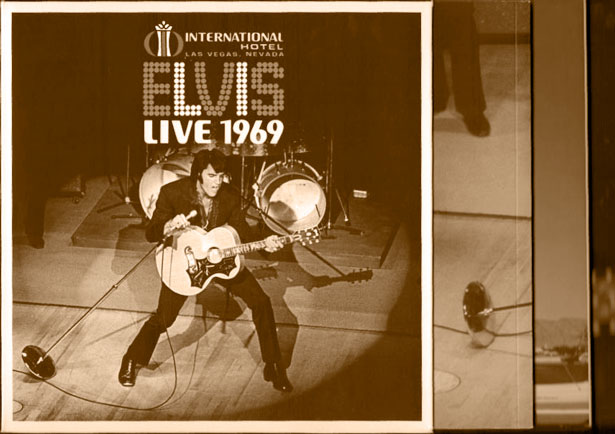
If I play this performance of “I Can’t Stop Loving You,” I grab the one from disc 9 of 2019’s ELVIS LIVE 1969: International Hotel, Las Vegas, Nevada. Note that the tradition has carried on and that the Sony folks must get paid by the character for their titles, too. Anyway, the August 25, 1969 MS is one of Elvis’ greatest recorded concerts and the one that provided most of the masters for Elvis In Person.

07. My Babe (August 25, 1969 MS): Elvis rocks “My Babe,” his best version of Willie Dixon’s blues number. I love the extra guitar flourish by Burton at the end, too.

08. Mystery Train/Tiger Man (August 25, 1969 MS): The problem with a review of a fantastic album like Elvis In Person is that you run out of superlatives. Here is a no-holds-barred take on the “Mystery Train/Tiger Man” medley – possibly the best version of this combination ever recorded.

Elvis’ 1955 Sun master of “Mystery Train” is surely among his top five recordings ever. No live version has a chance of beating it, but the song still works perfectly here in tandem with “Tiger Man.” As always, this medley also spotlights Burton and Tutt. The best track on this CD.

09. Words (August 25, 1969 MS): Now, Elvis slows things way down with “Words,” a 1968 Bee Gees song. This is a great version, though I do prefer Elvis’ August 1970 take on the song.

This CD sounds fantastic, by the way. If I close my eyes I can pretend, just for a moment, that I’m in the showroom. At the end of the track, in a moment from the August 26, 1969 DS, Elvis introduces the next number as, “A record that just did very well for me recently, ladies and gentlemen.”

10. In The Ghetto (August 26, 1969 DS): That record, of course, is “In The Ghetto,” which made it to number 3 on the charts. This is a solid live version that remains true to the studio version, outside of being a tad faster. This, of course, was the true message song for the night.

11. Suspicious Minds (August 26, 1969 DS): It’s not that this is a bad version of “Suspicious Minds,” but there are a few others from the August 1969 engagement that I would have chosen ahead of this iteration. Really, any Midnight Show version probably would have been better than this Dinner Show version.

When Elvis’ producer Felton Jarvis witnessed the live version of “Suspicious Minds” earlier in this engagement, he went back and added similar horns and a fading down/up/down effect to the January 1969 studio master to attempt to replicate the feel. Backed with “You’ll Think Of Me” from the same sessions, the “Suspicious Minds” studio single hit the streets on August 26, literally the day of this Elvis In Person live recording, and made its way to number one.

12. Can’t Help Falling In Love (August 26, 1969 DS): After the two versions recorded in front of the small studio audiences of the 1968 ELVIS special, this is the next greatest live version of “Can’t Help Falling In Love.” Similar to “Are You Lonesome Tonight,” Houston’s vocals are near-operatic. This would be a fantastic end to a CD, except our CD doesn’t end here.
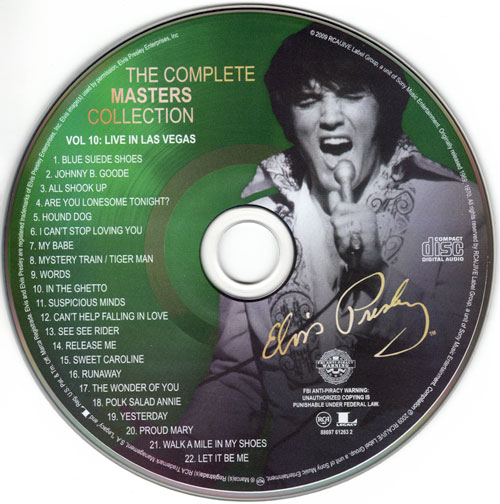
ELVIS: THE COMPLETE MASTERS COLLECTION – VOLUME 10 CD (2009, from TY’s collection)

13. See See Rider (February 18, 1970 MS): On Stage kicks off with “See See Rider,” which Elvis actually wouldn’t begin using as an opening song in his concerts for another couple of years. Did he get the idea from the sequencing of this album? This is one of my favorite Burton guitar solos. It is also Elvis’ best version of “See See Rider,” though the one on 2002’s Today, Tomorrow & Forever from this same engagement comes pretty close.

14. Release Me (February 18, 1970 MS): Elvis sings a committed version of “Release Me” and everyone does a great job backing him up. Despite all of that, this well-worn classic is just not a song I often enjoy very much.

15. Sweet Caroline (February 16, 1970 DS): Up next, Elvis takes on Neil Diamond’s 1969 hit “Sweet Caroline.” I actually like Elvis’ version of “Sweet Caroline” better than Diamond’s, and it’s pretty cool to watch him sing it in Elvis: That’s The Way It Is, too. Elvis sounds like he’s having fun, so that makes it enjoyable as well. This is Elvis’ best version of “Sweet Caroline.”

16. Runaway (August 25, 1969 DS): Elvis has a solid take on Del Shannon’s 1961 classic.

17. The Wonder Of You (February 18, 1970 MS): I love Elvis’ version of “The Wonder Of You,” a song first released by Ray Peterson in 1959. This live version was released as a single by Elvis and peaked at number nine. I love Elvis’ vocal interplay with Burton’s guitar solo on this.

18. Polk Salad Annie (February 18, 1970 MS): The only real competition for best track on this CD versus “Mystery Train/Tiger Man” is right here – “Polk Salad Annie.” Elvis begins the song with his “little story” that explains the lyrics. Tony Joe White’s 1969 classic is a perfect choice for Elvis’ live show. Jerry Scheff owns this song on electric bass. A similar rendition filmed a few months later for Elvis: That’s The Way It Is should not be missed, though this February version is superior.

19. Yesterday (August 25, 1969 DS): And now, Elvis sings The Beatles with a solid version of their 1965 hit “Yesterday.” This live version is actually one half of a medley that concluded with “Hey Jude,” but the original compiler of On Stage wisely left it off. Elvis’ “Yesterday” is stronger without it.

20. Proud Mary (February 16, 1970 DS): Next, Elvis sings Creedence Clearwater Revival by taking on their 1969 hit “Proud Mary.” While I prefer Elvis’ 1972 versions of “Proud Mary,” this is certainly a spirited and worthy take.

21. Walk A Mile In My Shoes (February 19, 1970 MS): Joe South first released the incredible “Walk A Mile In My Shoes” on his 1969 album Don’t It Make You Want To Go Home? and the single came out just a few weeks before Elvis’ live version was captured.

When Elvis sang “Walk A Mile In My Shoes” in this engagement, it was the first half of a medley with “In The Ghetto,” which was an inspired combination. For On Stage, the original compiler unfortunately excised the “In The Ghetto” portion. Nevertheless, “Walk A Mile In My Shoes” is another of my favorite songs on this CD.

Elvis notes at the end of this track that the next song had been released by a few different people.

22. Let It Be Me (February 17, 1970 MS): Elvis does a phenomenal job on this song, but so do the Sweet Inspirations – who were actually one of the groups that had released “Let It Be Me” prior to Elvis taking a turn at the song. Their 1967 version, which can be heard on their self-titled album, is not to be missed.

In terms of song selection and sequencing, this Franklin Mint set of Elvis’ complete masters does not strictly adhere to a session or album chronology. Those two approaches were later covered by re-releases of this material by Sony/RCA.

With that in mind, I think it would have been a much more interesting listening experience to put the first side of Elvis In Person, tracks 1-7, at the beginning, then both sides of On Stage, tracks 13-22, followed by the second side of Elvis In Person, tracks 8-12. This essentially would give you the feel of one incredible concert covering both seasons rather than two separate albums thrown together.

No matter how you sequence it, though, if you want to hear the Elvis Presley Show at its peak in Las Vegas, this CD just about covers it. The August 1970 engagement would begin at this same level, broadening the setlist to include new material from his June 1970 sessions.

I’ve been listening to the live recordings from this disc for 15 years now, and Vic Anesini’s mastering work continues to hold up as a stellar representation of the original releases of Elvis In Person and On Stage.

I hope to see you in 1,935 days or less for our next installment.
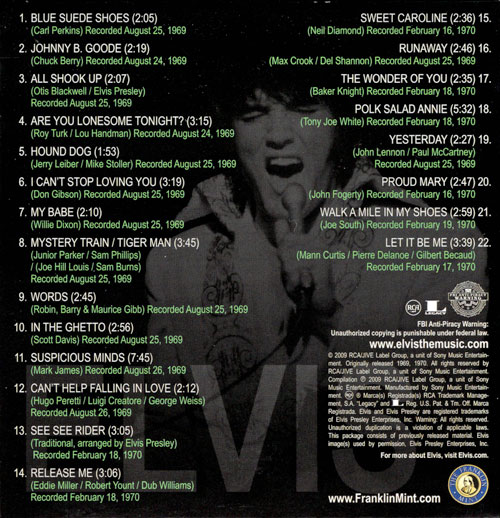
ELVIS: THE COMPLETE MASTERS COLLECTION – VOLUME 10 CD back sleeve (2009, from TY’s collection)


“We can make our plans, but the LORD determines our steps.”
Proverb 16:9 NLT
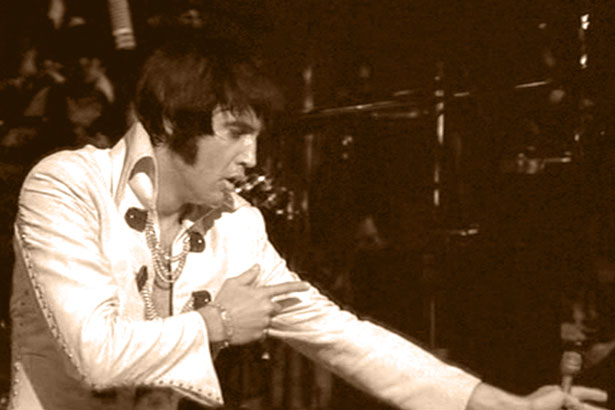
July 19 Represents a Beginning and an End for Elvis Presley

Portions of this post were first published on one of my pop-culture blogs, now retired.


July 19, 1954

The date is July 19, 1954, and Sun releases the debut record of 19-year-old Elvis Presley. Produced by Sam Phillips, the single consists of “That’s All Right” backed with “Blue Moon of Kentucky.” Elvis, who in childhood dreamed of being “the hero of the comic book,” begins his adventure.

The years come and go. In many ways, Elvis accomplishes far more than he could have possibly dreamed, including becoming a musical hero throughout the world. As they do for everyone, though, some of his dreams still manage to slip away from him.

The date is July 19, 1977, and RCA releases Moody Blue, an album that proves to be the final Elvis record before his death exactly four weeks later at the age of 42. An unprecedented level of fame helped Elvis place himself on a path that brought his earthly journey to a tragic end.

Only 23 years, a mere blink of history’s eye, separate the release of the last Elvis record from the first.

More time passes. Other heroes come and go, yet Elvis somehow remains. As some fans fade away, others take their places.

The date is now July 19, 2022, but those 23 years continue to resonate.

Journey with The Mystery Train Elvis Blog today to the beginning and the end with two editions of Vinyl Elvis:

July 19, 1977


“Sing to the LORD, for he has done wonderful things. Make known his praise around the world.”
Isaiah 12:5

Vinyl Elvis: MOODY BLUE (1977)

Today marks the 45th anniversary of the July 19, 1977, release of Moody Blue, an album that turned out to be the last Elvis Presley record before his death four weeks later.

MOODY BLUE (RCA, 1977; from TY's collection)

MOODY BLUE (RCA, 1977; from TY’s collection)

Moody Blue
Label: RCA
Catalog Number: AFL1-2428
Recorded: 1974-1977 | Memphis, TN; Ann Arbor, Michigan; Kalamazoo, Michigan
Released: 1977

Before I had Elvis records of my own, I remember checking out a couple of his albums from the public library. I must have been about ten-years-old.

The two records I took home that day in 1985, which I believe represented the entirety of the library’s Elvis music collection, were The Sun Sessions and Moody Blue. The fact that I had borrowed both his very last record and a compilation of his very first records escaped me.

I enjoyed both albums, but the one that really drew me in was Moody Blue. For one thing, the record was pressed on blue vinyl. I had never seen anything like that. Plus, I just loved the sound of the album — particularly “Way Down,” which I played over and over.

I played “Way Down” for my older brother later that day to show off knowing a “new” Elvis song, only for him to inform me that he had his very own copy of Moody Blue.

At that time, I was not allowed to touch my brother’s records (and rightly so, as I was often unintentionally destructive of his things). Today, as he generously gave me all of his Elvis records several years ago, his copy of Moody Blue is mine.

Side A of MOODY BLUE (RCA, 1977; from TY's collection)

Side A of MOODY BLUE (RCA, 1977; from TY’s collection)

Side A

  1. Unchained Melody (1977)
    A compelling live version of “Unchained Melody” leads off the record. I normally prefer to open with a rocker, but this choice works perfectly for Moody Blue. Incidentally, this is my beloved bride’s favorite Elvis song she has heard so far, and she notes Elvis’ emphasis on the word “God” versus versions of this song by others. Indeed, in Elvis’ hands, the lyric “God speed your love to me” can be heard as “God, speed Your love to me.” Similarly, “I’ll be coming home, wait for me,” can be interpreted as “I’ll be coming Home, wait for me” in Elvis’ version. Elvis seems to be calling out not to a lost love, but to God.
  2. If You Love Me (Let Me Know) (1977)
    When I was listening to the library’s copy as a 10-year-old, I distinctly remember recognizing this live song from the Elvis In Concert album and wondering why this one sounded better. Part of the reason was that it was actually recorded a couple of months earlier than the version on Elvis In Concert. Some debate whether this song, made popular by Olivia Newton-John, should have been in his setlist. No matter, this is his best version of a song that obviously spoke to him.
  3. Little Darlin’ (1977)
    Next up is another live recording, Elvis’ fun take on the 1950s classic, “Little Darlin'”, which also provides a much-needed change in tempo. I love his ad-lib of “To hold in mine…your little foot…uh, hand!”
  4. He’ll Have to Go (1976)
    The tempo slows back down for “He’ll Have To Go,” the last studio recording ever made by Elvis. In addition to the resonance of the Elvis vocals, I love the guitar work of James Burton here. Six of the songs on this album were recorded at Graceland in 1976 in an effort to make the artist feel more comfortable, as Elvis in later years had become reluctant to record in a formal studio setting. Two sessions at a makeshift studio in his den resulted in sixteen songs, ten of which had already been used on the From Elvis Presley Boulevard album by the time RCA was assembling Moody Blue.
  5. Let Me Be There (1974)
    In early 1977, Elvis backed out of a planned session in Nashville to finish the Moody Blue album. Instead, a few live performances were recorded that April. Only three suitable songs were captured, however, which brought the album’s total to nine. In desperation, RCA re-released “Let Me Be There” from 1974’s Recorded Live On Stage In Memphis album to round out Side A of Moody Blue. Another Olivia Newton-John hit, “Let Me Be There” fits well on Moody Blue, despite being slightly older than the other recordings. In addition to the Newton-John connection tying it to “If You Love Me,” it was also recorded in Memphis like the majority of the other songs on this album.

Side B

Side B of MOODY BLUE (RCA, 1977; from TY's collection)

Side B of MOODY BLUE (RCA, 1977; from TY’s collection)

  1. Way Down (1976)
    All of the songs on Side B of Moody Blue were recorded at Graceland. I probably have the master of “Way Down” on at least a half dozen CDs. None of them sound as incredible as listening to this record. Is it all in my head? Possibly, but if it is, do not tell me. “Way Down” really rocks, making it an appropriate A-side for what turned out to be Elvis’ last single before his death.
  2. Pledging My Love (1976)
    “Pledging My Love” is another terrific performance by Elvis. He might have lost much of the joy in his life by this point, but you can still hear it on this song.
  3. Moody Blue (1976)
    I find it cool that the album’s title song is buried in the middle of Side B. “Moody Blue,” another great song, almost sounds like disco. Compare the guitar licks on “Moody Blue” with Kool & the Gang’s “Celebration” (1980), for instance.
  4. She Thinks I Still Care (1976)
    Elvis recorded many country songs, particularly in the 1970s. “She Thinks I Still Care” is a stellar performance. At the end, he just will not let the song go, either.
  5. It’s Easy For You (1976)
    “It’s Easy For You” was written by Broadway legends Andrew Lloyd Webber and Tim Rice, bringing to a close an album that was almost as varied as Elvis’ entire career: Adult Contemporary, Country, and Rock ‘n’ Roll. It is hard to ask for more in an Elvis album, and I still consider Moody Blue one of his best. A fun bit of trivia: Note the misspelling of Webber’s name on the Moody Blue Side B label in the image above. Proofreading has apparently never been a strong point for Elvis’ music label.

I mentioned that my brother did not let me touch his records when I was young. This turned out to be a good thing for me, as Moody Blue sounds flawless. Not a crackle or a pop to be heard on either side.

Back cover of MOODY BLUE (RCA, 1977; from TY's collection)

Back cover of MOODY BLUE (RCA, 1977; from TY’s collection)

The interesting thing about Moody Blue is that such a fantastic album could result from not only a hodgepodge of recordings but also such a low point in Elvis’ life. “You don’t have to face the music, you don’t have to face the crowd,” he laments on “It’s Easy For You.” Depression, loneliness, and various personal demons were consuming his life by this point. Years of prescription drug addiction and abuse were beginning to take a public toll.

Part of the credit for the unlikely strength of Moody Blue must go to producer Felton Jarvis. While he occasionally went too far with overdubs on previous Elvis projects, Moody Blue is all the better for his extra work and attention to detail–particularly on the 1977 live recordings. Credit must also go to the musicians and vocalists who worked with Elvis on the album. On occasion, they carry Elvis. Finally, credit is due to Elvis as well, who managed to pull these performances from somewhere inside himself, despite not being in the right frame of mind to record.

Inner sleeve (front) from MOODY BLUE (RCA, 1977; from TY's collection)

Inner sleeve (front) from MOODY BLUE (RCA, 1977; from TY’s collection)

I love the inner sleeves on vintage Elvis albums. Check out the ads for other albums, which must have acted as combination check lists and wish lists for fans of the time. In some cases, it was also a way to see some alternate cover designs. For example, note the Moody Blue concept artwork in the bottom left of the image below.

Inner sleeve (back) from MOODY BLUE (RCA, 1977; from TY’s collection)

The fall of the curtain came much too early for Elvis, but Moody Blue certainly made for an impressive last act. If you collect Elvis on vinyl, this one is a must.


“Anyone who believes in Me may come and drink! For the Scriptures declare, ‘Rivers of living water will flow from His heart.'”
John 7:38

THAT’S THE WAY IT IS: Six in the Summer of ’70

Elvis Presley performs “Polk Salad Annie” at the August 12, 1970, Midnight Show, in Las Vegas, Nevada, captured for the ELVIS: THAT’S THE WAY IT IS documentary film (MGM)

About seven years ago, I wrote a review of That’s The Way It Is: Deluxe Edition. The 2014 Elvis Presley boxed set included 8 CDs and 2 DVDs, and my review rambled on about them for nearly 10,000 words.

Despite the length of that review, there are some loose ends that I would finally like to begin tying up regarding my all-time favorite Elvis event. I don’t know how many posts this will actually take, and they won’t necessarily run sequential to one another, either. Such is the way of things when you ride The Mystery Train.

By the time of the That’s The Way It Is project, Elvis had already performed two month-long engagements at the International Hotel in Las Vegas. From July 31 to August 28, 1969, he performed 57 concerts, 11 of which RCA recorded in full near the end of the series and compiled into the Elvis In Person half of the From Memphis To Vegas/From Vegas To Memphis double album.

Elvis performed another 57-show engagement from January 26 through February 23, 1970. RCA recorded portions of nine shows from the middle of this engagement, which resulted in the core of the album On Stage.

MGM’s camera crews were rolling for the Elvis: That’s The Way It Is documentary as he began his 3rd engagement on August 10, 1970. Marketed as the “Elvis Summer Festival,” this one ran through September 8 and included 59 shows. RCA recorded the first 6 concerts in full–concluding with the August 13 Dinner Show. Only four of the live songs found their way onto the That’s The Way It Is album, which acted as a tie-in to the film but otherwise featured studio songs Elvis had recorded in June.

These first three engagements at the International Hotel include some of the greatest live performances of Elvis’ career, but the vast majority of the recordings languished away in RCA’s vaults until long after his death. While performances of individual songs were often superior in the two previous engagements, to the extent there was overlap, the overall shows in the third engagement, as captured for That’s The Way It Is, are better than any that preceded or followed them.

All right, if I’m not careful, I’ll be on the way to another unreadable 10,000 word post. I love this topic, but let’s get on with it.

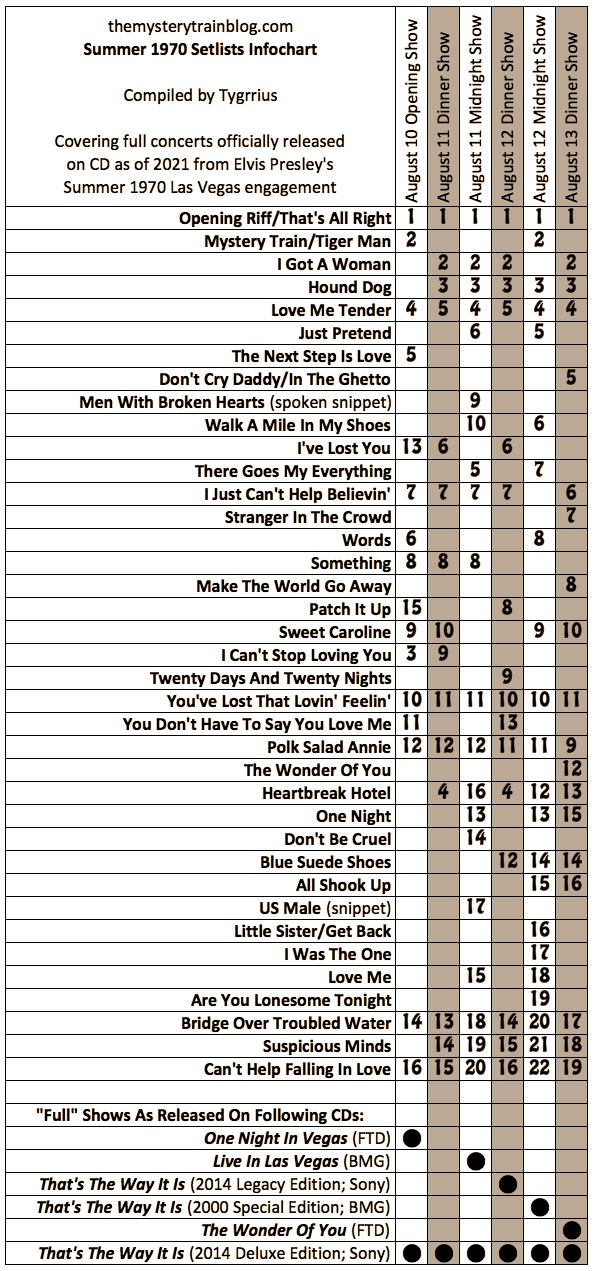
To assist with today’s post, I created the following infochart covering the six concerts RCA recorded for That’s The Way It Is. The numbers in the concert columns represent the sequence he performed those songs in that particular show.

Elvis Presley Summer 1970 Setlists Infochart | Compiled by TY

Focusing on the 6 shows that RCA recorded in the course of 4 days, Elvis performed only 6 of the songs at every single concert:

  • That’s All Right
  • Love Me Tender
  • You’ve Lost That Lovin’ Feelin’
  • Polk Salad Annie
  • Bridge Over Troubled Water
  • Can’t Help Falling In Love

All of these are strong highlights, with only a couple of exceptions in individual shows.

The following songs appeared in 5 of the 6 concerts:

  • Hound Dog
  • I Just Can’t Help Believin’
  • Heartbreak Hotel
  • Suspicious Minds

Of these, the highlights are tremendous versions of “Suspicious Minds” and “I Just Can’t Help Believin'”. While the “Suspicious Minds” live performances are not quite as good as his August 1969 renditions, the August 1970 versions are still stellar and far better than the ones captured in February 1970. Though again inferior to 1969, “Hound Dog” and “Heartbreak Hotel” remain entertaining at this point and are not yet the throwaways they would unfortunately soon become – particularly “Hound Dog.”

Not including snippets, the following songs appeared in only 1 of the 6 concerts:

  • The Next Step Is Love
  • Don’t Cry Daddy/In The Ghetto
  • Stranger In The Crowd
  • Make The World Go Away
  • Twenty Days And Twenty Nights
  • The Wonder Of You
  • Don’t Be Cruel
  • Little Sister/Get Back
  • I Was The One
  • Are You Lonesome Tonight

All of the one-off songs have something to offer. One of the great “misses” of the time period, in my opinion, is “Stranger In The Crowd” not being chosen and promoted as a single for That’s The Way It Is, in lieu of “You Don’t Have To Say You Love Me.” The “Stranger In The Crowd” studio track is amazing, and his subsequent rehearsals with his core rhythm group for the live show prove it could have been dynamite. Unfortunately, the sole live version is marred by featuring too much of the Imperials vocal group and the orchestra’s horns. If only the Elvis team had worked out a simpler arrangement that was closer to those early rehearsals.

As it was his most recent hit at the time of these concerts, it is interesting that Elvis performed “The Wonder Of You” only once during the six shows.

Featuring Elvis on electric guitar, “Little Sister/Get Back,” “I Was The One,” “Love Me” (August 12 version only), and “Are You Lonesome Tonight” are all top-notch. Even the non-guitar version of “Love Me” (August 11) is a stand-out and far better than any post-1970 version.

With revised arrangements, “Words” and “I Can’t Stop Loving You” are two songs Elvis improves in Summer 1970 over his Summer 1969 performances.

Other highlights of the overall six-concert span include “Mystery Train/Tiger Man” (of course) and “Just Pretend.”

These are darn-near perfect shows. The only major Elvis categories they are lacking are gospel and the blues. It is unfortunate that Elvis did not perform “Oh Happy Day” at any of these concerts, despite having rehearsed it at the last minute, as he surely would have recorded a superlative version at this time in his career. However, the gospel sound is certainly present on a few of the secular recordings, including showstoppers “I Just Can’t Help Believin'” and “Bridge Over Troubled Water.” As for the blues, some of that influence can certainly be heard in the aforementioned electric guitar segment from the August 12 Midnight Show.

Here is my “August 1970 Ultimate Show” playlist recipe for this concert engagement. As noted, Elvis’ setlist varied widely each night, so no single show actually contained all of these songs. In fact, such a concert would have been longer than any show Elvis actually gave in his entire life, to my knowledge.

  1. Opening Riff/That’s All Right (August 10, 1970, Opening Show [OS])
  2. Mystery Train/Tiger Man (August 12, 1970, Midnight Show [MS])
  3. I Got A Woman (August 13, 1970, Dinner Show [DS]
  4. Hound Dog (August 11, 1970, MS)
  5. Love Me Tender (August 11, 1970, MS)
  6. The Next Step Is Love (August 10, 1970, OS)
  7. Just Pretend (August 11, 1970, MS)
  8. Don’t Cry Daddy/In The Ghetto (August 13, 1970, DS)
  9. Men With Broken Hearts/Walk A Mile In My Shoes (August 11, 1970, MS)
  10. I’ve Lost You (August 11, 1970, DS)
  11. There Goes My Everything (August 11, 1970, MS)
  12. I Just Can’t Help Believin’ (August 12, 1970, DS)
  13. Stranger In The Crowd (August 13, 1970, DS)
  14. Words (August 12, 1970, MS)
  15. Something (August 11, 1970, MS)
  16. Make The World Go Away (August 13, 1970, DS)
  17. Patch It Up (August 10, 1970, OS)
  18. Sweet Caroline (August 12, 1970, MS)
  19. I Can’t Stop Loving You (August 11, 1970, DS)
  20. Twenty Days And Twenty Nights (August 12, 1970, DS)
  21. You’ve Lost That Lovin’ Feelin’ (August 12, 1970, MS)
  22. You Don’t Have To Say You Love Me (August 10, 1970, OS)
  23. Polk Salad Annie (August 12, 1970, MS)
  24. The Wonder Of You (August 13, 1970, DS)
  25. Heartbreak Hotel (August 12, 1970, MS)
  26. One Night (August 12, 1970, MS)
  27. Don’t Be Cruel (August 11, 1970, MS)
  28. Blue Suede Shoes (August 12, 1970, MS)
  29. All Shook Up (August 12, 1970, MS)
  30. US Male (August 11, 1970, MS)
  31. Little Sister/Get Back (August 12, 1970, MS)
  32. I Was The One (August 12, 1970, MS)
  33. Love Me (August 12, 1970, MS)
  34. Are You Lonesome Tonight (August 12, 1970, MS)
  35. Bridge Over Troubled Water (August 11, 1970, DS)
  36. Suspicious Minds (August 12, 1970, MS)
  37. Can’t Help Falling In Love (August 12, 1970, MS)

Though I did not structure it this way on purpose, all 6 shows are represented in this “best of” playlist. If you want an even fuller compilation, you could even include “Introductions By Elvis” from the August 12 Midnight Show after “Polk Salad Annie” and before “The Wonder Of You.”

As you can probably predict from the above playlist, my favorite show of the Summer 1970 engagement is the August 12 Midnight Show (disc 6 of 2014’s That’s The Way It Is: Deluxe Edition and disc 2 of 2000’s That’s The Way It Is: Special Edition). In fact, this is my favorite Elvis concert ever. It features an impeccable setlist, Elvis in top form, and the fun electric guitar segment.

Though he still had many stellar recordings and accomplishments ahead of him, Elvis was never quite as awesome again as he was in Summer 1970. I am grateful we have so much material from that time period to enjoy. I wouldn’t be as strong an Elvis fan without the magic of That’s The Way It Is.

Blessings,
TY


“We put our hope in the LORD. He is our help and our shield. In him our hearts rejoice, for we trust in his holy name. Let your unfailing love surround us, LORD, for our hope is in you alone.”
Psalm 33:20-22

Elvis: The Ultimate Live Top Ten Hits (Part 4)

This is the finale of a four post series covering Elvis Presley’s best officially-released live recording of each of his US top ten hits.

[Read Part 3]

Released as a 2-LP set in 1987, The Top Ten Hits contained all 38 of Elvis’ top 10 hits on Billboard‘s key US charts. Other than a few outliers that failed to make the top 10 and are not on the set (“Blue Suede Shoes,” “Blue Christmas,” “Viva Las Vegas,” “My Way,” and “A Little Less Conversation”), it includes all of his most famous songs for the general public. Indeed, outside of boxed sets, The Top Ten Hits remains one of the most comprehensive Elvis releases to date when it comes to mainstream songs.

Today’s post will feature hits included on Side D of The Top Ten Hits, most of which were studio recordings on the original album.

01. Return To Sender (hit version recorded 1962)
Ultimate Live Version: August 1, 1976, Hampton Roads, VA, New Haven ’76
Per request, Elvis performs “Return To Sender” off the top of his head at a concert in Hampton Roads, Virginia. Included as a bonus track on New Haven ’76, this is the only officially released live version of the song. Considering it was recorded in 1976, the nadir of Elvis concert years, it actually isn’t horrible.

02. Devil In Disguise (hit version recorded 1963)
Ultimate Live Version: None available
It is unfortunate that Elvis never performed live in the mid-1960s. This song would surely have resulted in a classic rendition at that time.

03. Bossa Nova Baby (hit version recorded 1963)
Ultimate Live Version: None available
A medley of “Return To Sender” and “Bossa Nova Baby” might have been fun in his 1969 live shows to acknowledge a couple of hit songs from his 1960s movies.

04. Crying In The Chapel (hit version recorded 1960)
Ultimate Live Version: None available
Voice-wise, 1968 probably would have been the best time for Elvis to have performed “Crying In The Chapel” live. I don’t see where it would really fit in any of his four shows captured for the ELVIS special, though. August 1970 probably would have been a good vocal opportunity for it, too. I would love to hear the Blossoms or the Sweet Inspirations backing Elvis on this instead of the Jordanaires.

Elvis Presley performs “The Wonder Of You” at the August 13, 1970, Dinner Show, in Las Vegas, Nevada, captured for the ELVIS: THAT’S THE WAY IT IS documentary film (MGM)

05. In The Ghetto (hit version recorded 1969)
Ultimate Live Version: August 26, 1969, Dinner Show, Las Vegas, NV, From Memphis To Vegas/From Vegas To Memphis [Elvis In Person]
Elvis’ live versions of “In The Ghetto” never quite lived up to the studio versions. While he usually performed it strongly, he never seems as “into” the song. A stripped-down version, with just Elvis and an acoustic guitar would have been ideal.

06. Suspicious Minds (hit version recorded 1969)
Ultimate Live Version: August 25, 1969, Midnight Show, Hot August Night
An apparent mistake is actually what gives this live version of “Suspicious Minds” an edge over other stellar versions recorded in the same concert series. After James Burton’s opening guitar solo, Elvis fails to begin singing, so Burton continues the solo. Overall, this live version is even better than the studio master.

07. Don’t Cry Daddy (hit version recorded 1969)
Ultimate Live Version: February 18, 1970, Dinner Show, Las Vegas, NV, Greatest Hits, Volume One
While I love “Don’t Cry Daddy,” it does not work as well in a live concert setting, and I can understand why Elvis dropped it by 1971. That said, this live version is top-notch.

08. The Wonder Of You (hit version recorded live, February 18, 1970, Midnight Show, Las Vegas, NV, On Stage)
Ultimate Live Version (after hit recorded):
August 13, 1970, Dinner Show, Las Vegas, NV, The Way It Was
I have found that time behaves inconsistently in certain situations and for certain people. Elvis’ entire career, for instance, was compressed into about 21 years, yet he left a wealth of material behind that continues to forge his musical legacy. Elvis released his February 1970 live version of “The Wonder Of You” as a single in April 1970, and it peaked at number nine on June 27, 1970. Less than two months later, during one of the concerts captured for the MGM documentary movie Elvis: That’s The Way It Is, he introduces this August 1970 live recording by stating, “I had a record out last year that–-this year . . . this year, wasn’t it?–-that did pretty good for me. I’d like to sing it for you.” In this case, two to four months in “Elvis time” was like a year in normal time.

09. Burning Love (hit version recorded 1972)
Ultimate Live Version: April 18, 1972, San Antonio, TX, Close Up
Featured in the documentary movie Elvis On Tour (MGM, 1972), this rockin’ version of “Burning Love” exceeds any other live renditions released thus far. The March 1972 studio master remains the best, however.

Well, that about wraps things up for our look at Elvis’ best officially released live recordings of his hit songs. Over 43 years after his death, Elvis Presley concert recordings continue to surface. With that in mind, we may have to check in on these live hits again in a few years.

Thanks for reading.

Your Conductor,
TY


“Do not let your hearts be troubled. You believe in God; believe also in me.”
John 14:1

Elvis: The Ultimate Live Top Ten Hits (Part 1)

Elvis Presley rocks “Heartbreak Hotel” during taping of 1968’s ELVIS special (NBC)

I was 13 years old during Spring Break of 1988. At that point, I had about a half dozen Elvis Presley albums to my name. At the record store that week, I bought my first 2-record set. The Top Ten Hits was part of an “Elvis Presley Commemorative Issue” series that marked a decade since his 1977 death. I eventually obtained all four of the albums in the series, though I never did mail away for the special bonus album (a future eBay purchase, no doubt).

I had been collecting Elvis records for about a year at that point, and The Top Ten Hits certainly firmed up the foundation of my new obsession by containing all 38 of Elvis’ top 10 hits on Billboard‘s key US charts. These are what I now call mainstream or “general public” Elvis songs in that they are his most famous songs. Back then, these were the ones that various radio stations would still play.

The only two general public Elvis songs that failed to make the US top ten and, thus, this album were “Blue Suede Shoes” (peaked at #20) and “Viva Las Vegas” (peaked at #29). If we include posthumous releases, 1977’s “My Way” (peaked at #22) and 2002’s JXL Radio Edit Remix of “A Little Less Conversation” (peaked at #50) are also general public Elvis songs that are not present on this 1987 release. Except for those few titles and maybe “Blue Christmas,” everything else is here from a mainstream audience perspective. Outside of boxed sets, which really belong in their own category, The Top Ten Hits remains one of the most comprehensive Elvis releases to date when it comes to the general public.

I wore this record out in my 7th and 8th grade years, to the point where many of these songs became boring to me for a time. I will at some point cover this and the other Elvis Presley Commemorative Issue albums as part of my ongoing Vinyl Elvis series. Today, however, I want to use The Top Ten Hits as a jumping off point for a series of four posts covering Elvis’ best live performance of each of his hits. As is the norm here on The Mystery Train, the focus will be on officially released recordings. No bootlegs.

Today’s post will feature hits included on Side A of The Top Ten Hits, all of which were studio recordings on the original album.

01. Heartbreak Hotel (hit version recorded 1956)
Ultimate Live Version: June 29, 1968, 6 PM Show, Burbank, CA, ELVIS-TV Special
Recorded in front of small studio audience for Elvis’ 1968 NBC television special, ELVIS, this version of “Heartbreak Hotel” rocks more than any of his other takes on the song. It is unfortunately a shortened version, though, due to being part of a medley with “Hound Dog” and “All Shook Up.” I once created a splice with the June 27, 1968, 6 PM Show version of “Heartbreak Hotel” to partially rectify this (inspired by and in the same vein as the “Blue Suede Shoes” splice on the This Is Elvis album, except starting with the June 29 “stand up” show version and ending with the June 27 “sit down” show version).

02. I Want You, I Need You, I Love You (hit version recorded 1956)
Ultimate Live Version: June 5, 1956, Los Angeles, CA, A Golden Celebration
As performed on the Milton Berle Show, following a skit with the host.

03. Hound Dog (hit version recorded 1956)
Ultimate Live Version: December 15, 1956, Shreveport, LA, Young Man With The Big Beat: The Complete ’56 Elvis Presley Masters
The finale of one of Elvis’ greatest recorded concerts, this version of “Hound Dog” is not to be missed.

04. Don’t Be Cruel (hit version recorded 1956)
Ultimate Live Version: January 6, 1957, New York, NY, A Golden Celebration

Credit: The Ed Sullivan Show channel (YouTube)

After Elvis released “Don’t Be Cruel,” he caught an act in Las Vegas that was doing a number of his songs. The lead singer was Jackie Wilson, and Elvis liked his version of “Don’t Be Cruel” better than his own. When Elvis performed the song on his third Ed Sullivan Show appearance in 1957, he incorporated some of Wilson’s upgrades to the song. What I love about this story is that Elvis inspired Wilson, who, in turn, inspired Elvis. Incidentally, this is the infamous “from the waist up” Sullivan performance where TV cameras were ordered not to show Elvis’ hips and legs – which, of course, only added to his legend. Watch it above or over on YouTube.

05. Love Me Tender (hit version recorded 1956)
Ultimate Live Version: June 29, 1968, 8 PM Show, Burbank, CA, ELVIS-TV Special
This live version, recorded for the 1968 ELVIS special, far exceeds Elvis’ original studio recording of the song from 1956. His voice is like velvet.

06. Love Me (hit version recorded 1956)
Ultimate Live Version: June 27, 1968, 6 PM Show, Burbank, CA, Memories: The ’68 Comeback Special
This was a close call with the August 12, 1970, Midnight Show, version of “Love Me,” but I slightly prefer the raw sound of the 1968 version.

07. Too Much (hit version recorded 1956)
Ultimate Live Version: January 6, 1957, New York, NY, A Golden Celebration
This is the only live version officially released of “Too Much,” to my knowledge, so it wins by default. A decent if sloppy version, performed on the Ed Sullivan Show and broadcast from the waist up.

08. All Shook Up (hit version recorded 1957)
Ultimate Live Version: August 26, 1969, Midnight Show, Las Vegas, NV, All Shook Up
The earliest available live version of “All Shook Up,” which is closer to the arrangement of the studio recording, is March 25, 1961, but the performance is tepid compared to his 1968 and 1969 versions.

09. Teddy Bear (hit version recorded 1957)
Ultimate Live Version: January 26, 1970, Opening Show, Las Vegas, NV, The On Stage Season: The Opening And Closing Shows 1970
This live version of “Teddy Bear” was a pleasant surprise on one of my favorite FTD releases.

10. Jailhouse Rock (hit version recorded 1957)
Ultimate Live Version: June 29, 1968, 8 PM Show, Burbank, CA, ELVIS-TV Special

Credit: Vevo’s Elvis Presley channel (YouTube)

As with a few of the others on today’s list, this incredible live version of “Jailhouse Rock” was captured for the 1968 ELVIS special. It almost equals the flawless studio recording. Watch it above or over on YouTube.

If only some of Elvis’ 1957 concerts had been recorded. Perhaps ultimate live versions of “Too Much,” “All Shook Up,” and possibly even “Jailhouse Rock” would have been among them. Every now and then, new recordings are unearthed. I maintain hope that a 1957 concert will eventually see the light of day.

I pray all of you are doing well and staying healthy. Drop a note in the comments below about some of your favorite live versions of these Elvis classics.

Blessings,
TY

[Read Part 2]


“Dear brothers and sisters, when troubles of any kind come your way, consider it an opportunity for great joy. For you know that when your faith is tested, your endurance has a chance to grow. So let it grow, for when your endurance is fully developed, you will be perfect and complete, needing nothing.”
James 1:2-4

A look at “I Believe”

Elvis Presley in LOVING YOU (1957, Paramount)

Kicking off his first session of the new year, Elvis Presley recorded “I Believe” on January 12, 1957, at Radio Recorders in Hollywood. It was his first formal recording of a song of faith. The same session also produced the smash hit “All Shook Up,” which ruled atop the Billboard Top 100 chart for eight weeks to become the number one single of 1957.

RCA first released “I Believe” on the Peace In The Valley Extended Play (EP) album in April 1957. The song made its Long Play (LP) album debut on Elvis’ Christmas Album six months later. In October 1970, RCA released a reconfigured version of Elvis’ Christmas Album on its budget Camden label, leaving out “I Believe.” Instead, a reissue of “I Believe” appeared on the March 1971 Camden LP You’ll Never Walk Alone – one of the best of the Elvis budget releases.

Take a listen to Elvis’ recording of “I Believe” below or over on Youtube.

Credit: Vevo’s Elvis Presley channel (YouTube)

Ervin Drake, Irvin Graham, Jimmy Shirl, and Al Stillman wrote “I Believe” in 1952 for singer/actress Jane Froman. The most popular version, however, belongs to Frankie Laine‘s 1953 recording.

Elvis’ interpretation of the song did not seem to draw from Laine, however. Elvis named Roy Hamilton among his influences, and he no doubt had Hamilton’s 1955 version of “I Believe” in mind when he recorded it. Check it out on Youtube or below.

Credit: Roy Hamilton – Topic channel (YouTube)

What strikes me when listening to Hamilton’s sublime recording is that I can hear not only the influence on Elvis’ “I Believe” in particular, but also on Elvis’ vocals in general. Elvis had many influences, but most of them I do not hear as directly as that of Hamilton.

Now that we have heard two versions of “I Believe,” I want to attempt to interpret a couple lines of the lyrics within a Biblical context. Note that I am not implying the songwriters agree. This is just me thinking about the lyrics from a personal perspective.

“I believe for everyone who goes astray, Someone will come to show the way.”

The truth is, as humans, all of us go astray. Jesus died so that our sins would be forgiven, however, and Heaven would still be available to us. He already paid for all of our sins, but our contribution to the admission ticket to Paradise is belief in Him (see John 3:16), for Jesus is literally the “way” to Heaven.

“Jesus told him, ‘I am the way, the truth, and the life. No one can come to the Father except through me.'”
John 14:6 NLT

Early Christians were even called “followers of the Way,” including in Acts of the Apostles in the New Testament.

“I believe above the storm the smallest prayer can still be heard.”

I was surprised to discover in the course of research for this post that there is actually some debate among Biblical scholars about whether God truly hears every prayer. To be clear, I do not claim to be a Bible expert. Though I have read it cover-to-cover four times, and currently working on two more read-throughs, the Bible is a dense work. However, in my humble opinion, there is no debate here. Of course God hears every prayer. He’s God! He’s omniscient. Does he grant every request? Of course not, but that’s a whole other discussion.

[Side Note: An interesting oddity about the Elvis version of “I Believe” is that he sings “the smallest prayer can still be heard” whereas the other half dozen or so versions I listened to by various singers for this post, including Hamilton, sing, “the smallest prayer will still be heard.” As this is The Mystery Train, I naturally used the Elvis version of the lyrics.]

One of the wonderful aspects of prayer is that you need not shout for God to hear you. He does, indeed, hear the quietest voice. In fact, you need not speak your prayer at all. You can think to God at any time, and He hears you. For believers, this is taken even a step further. If we can’t pray or don’t know what to pray, the Holy Spirit even steps in and prays for us (Romans 8:26-27).

In life, all of us encounter many storms. As a follower of Jesus, I now find comfort in Him through any such disturbances. I went through multiple life-changing events last year, for instance, many of which could have turned into tumultuous storms, but I approached each of them with much prayer, and Jesus brought me peace (John 14:27) and calm.

“The ropes of death entangled me; floods of destruction swept over me. The grave wrapped its ropes around me; death laid a trap in my path. But in my distress I cried out to the LORD; yes, I prayed to my God for help. He heard me from his sanctuary; my cry to him reached his ears.”
Psalm 18:4-6 NLT

My first exposure to “I Believe” was probably Elvis’ You’ll Never Walk Alone album. When I was a teenager in the 1980s, my family and I were on vacation somewhere or other. Anytime we went to a different place, I would always scour any store we happened to visit for Elvis items not available at home. At a Kmart or similar store, I found a cassette tape version of You’ll Never Walk Alone.

By this time, I had my first Walkman. This was about the third pre-recorded Elvis tape I ever owned. I would go on to acquire less than a dozen total, as my focus was on records and, later, CDs. Tapes were usually either releases I couldn’t find on record or gifts from others. Of course, I probably made well over a hundred Elvis mix tapes for my own use, which was the real appeal of cassette decks.

Anyway, I knew nothing about You’ll Never Walk Alone when I bought it. I just saw it had a lot of song titles I didn’t recognize. It was actually the first Elvis inspirational album I ever owned. I can remember playing it on my Walkman in the car ride home from that vacation. Headphones allow for such an intimate listening experience, and they were perfect for You’ll Never Walk Alone.

I didn’t have any Elvis reference books at the time, so I thought the songs were all recorded around the same time. It sounded like a coherent album. In reality, the compilation included songs from throughout the range of 1957-1969. Elvis’ inspirational and Christmas songs from various decades mix together better than his other music.

“I Believe” kicked off Side 2 of the cassette. As with many other songs on that release, it became a favorite. What I love about Elvis’ version of the song is how his voice eases back and forth effortlessly between gentle innocence and assertive conviction. I should note that I believed in God for as long as I could remember, but I was more skeptical about the Jesus aspect. However, I would explore and encounter Him in different ways over the years, including through Elvis’ many faith-based recordings. It wasn’t until 2018 that all the puzzle pieces came together for me, and I was led to Jesus.

At that point, as a new creation (2 Corinthians 5:17), I began to experience the world in fresh ways. For instance, I was never an “outdoors” person. Now, I am often drawn to it. Walking in parks has become a favorite activity.

Music I had heard for decades began to take on new meanings. Suddenly, Elvis’ catalog of faith-based music was not just a collection of beautifully performed songs, but the most compelling and personal statements of his entire career.

My best friend taught me something she calls, “finding signs of Him.” What she means by that is taking a few minutes to stop, breathe, listen, look, and find God. There are signs of Him everywhere. “I Believe” understands this as well with the lyrics, “Every time I hear a newborn baby cry or touch a leaf or see the sky, then I know why I believe.” Evidence of God literally surrounds us.

To conclude our look at “I Believe” today, I want to sign off with my favorite version. This is Mahalia Jackson, 1953. Listen to her voice, surely evidence of God.

Credit: Mahalia Jackson – Topic channel (YouTube)


“And it is impossible to please God without faith. Anyone who wants to come to him must believe that God exists and that he rewards those who sincerely seek him.”
Hebrews 11:6