A Squirrel Loose at the Big, Freaky International Hotel (Part 4: The Epic Conclusion)

This is the finale of a 4-part look at Sony’s 2019 Elvis Live 1969 boxed set, which contains all 11 concerts RCA recorded during Elvis Presley’s August 1969 engagement at the International Hotel in Las Vegas.

[Read Part 1 | Read Part 2 | Read Part 3]

To paraphrase Elvis, there ain’t no end to this post, baby! I have committed not to push this review to five parts, however, as to move on to other topics next week.

That said, I still want to delve into some song and show specifics for the 1969 engagement, so today’s post is going to run long, amounting to a double ride. No extra charge. To help with this portion of the discussion, my analytical side provided the following infochart.
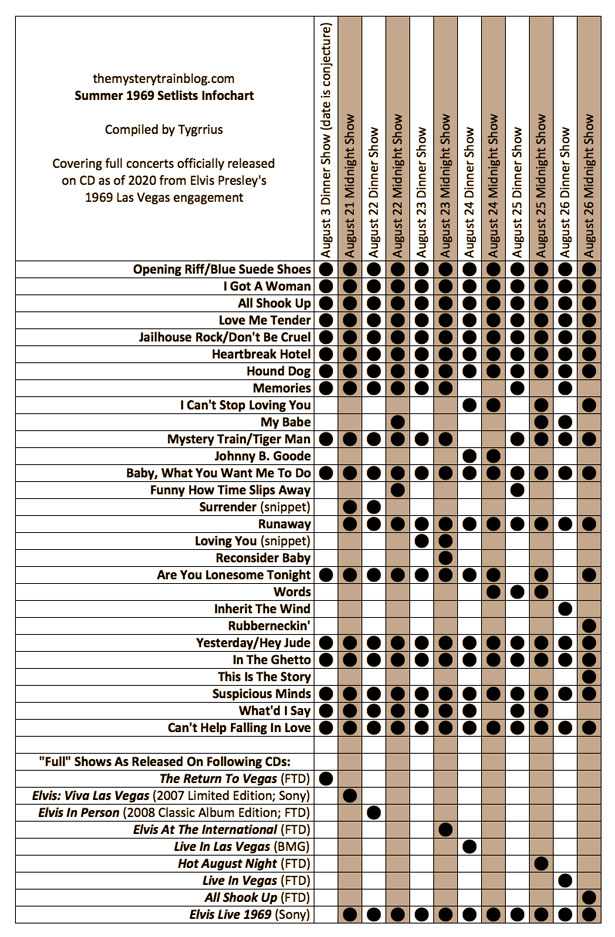
Elvis Presley Summer 1969 Setlists Infochart | Click image for larger version | Compiled by TY

Though not part of the 11-CD Elvis Live 1969 boxed set, which focuses on RCA’s multitrack recordings, I included the informal soundboard recording from the early days of the engagement for reference as well. To date, its only official CD release as a more-or-less “full” show remains FTD’s The Return To Vegas. It would have made a great bonus disc on the Elvis Live 1969 set, as the overall feel of this show is slightly different than a few weeks later, and it even features an extended version of “Mystery Train” and a couple of alternate arrangements. Perhaps it was a cost-saving measure.

Anyway, focusing on the 11 shows that RCA recorded, Elvis performed 13 of the songs every single night – most of which formed the beginning and end of the shows. Of these, the strongest are “Suspicious Minds,” “Can’t Help Falling In Love,” “Runaway,” “In The Ghetto,” “Blue Suede Shoes,” and “All Shook Up.” With the studio version released as a single during this engagement and destined to become Elvis’ last number one hit, “Suspicious Minds” is particularly stunning. The 1969 live version stands as an incredible example of how Elvis reinvented his sound for these shows.

Most disappointing among the core songs are “Jailhouse Rock/Don’t Be Cruel” and “Baby, What You Want Me To Do.” “Jailhouse Rock” pales in comparison to the 1957 studio master as well as the 1968 live master. Both it and “Baby, What You Want Me To Do” notably lack the raw power and punch of the ELVIS television special performances from the previous summer. Understandably, there is a difference between performing 4 shows in 2 nights for a television special versus 57 shows in 29 nights for this Vegas engagement. Elvis no doubt needed to save his voice, but these performances in particular come up short.

Though many others are nearly as good, the one song Elvis improves in 1969 over his 1968 rendition is the “Tiger Man” portion of “Mystery Train/Tiger Man,” fueled by James Burton on lead guitar and Ronnie Tutt on drums. Like “Suspicious Minds,” the powerhouse “Mystery Train/Tiger Man” is a true highlight of this engagement. Unfortunately, Elvis drops it in favor of “Johnny B. Goode” for a couple of the shows. Now, one of those “Johnny B. Goode” performances was quite incredible and made it onto Elvis In Person, but I wish Elvis had dropped something else on those two occasions to make room for it, such as “Runaway.” That is no slam on “Runaway,” which I absolutely love and is among the highlights of the engagement for me.

A better substitution that Elvis provides on four nights is replacing the weak “Memories” with “I Can’t Stop Loving You.” I enjoy the studio versions of “Memories,” as recorded for the 1968 ELVIS special, but it just never worked live.

Additional highlights of the overall 11-concert span include three performances of “My Babe” and several of “Are You Lonesome Tonight.”

Of the one-off songs, the only one that really stands out from a performance perspective is “Reconsider Baby,” the blues song that Elvis returned to time and again over the years. “Rubberneckin’,” “Inherit The Wind,” and the abysmal “This Is The Story” are notable solely because these are the only live versions available. “Rubberneckin'” would have worked better with an arrangement closer to the funky studio master.

Though released as a limited edition 2-record set earlier in 2019, the August 23 Dinner Show makes its CD debut here. Not a single performance had previously been released on CD from this show – the only such concert on the set. The show is also unusual in that the Imperials backing group is not present, leaving full duties to the Sweet Inspirations – my preference, anyway. The show features exceptional versions of “Mystery Train/Tiger Man,” “Are You Lonesome Tonight,” “I Got A Woman,” and “What’d I Say” – the last of which benefits from a shorter rendition than the other shows.


“I had sideburns. Long hair. Fourteen years ago, it was weird. You think it’s weird now? Fourteen years ago, I couldn’t walk around the street: ‘Get him! Get him! […] He’s a squirrel.’ So I was […] shaking. In fact, that’s how I got in this business was shaking. It may be how I get out of it, too.”
–Elvis Presley, 1969

Four weeks ago now, I decided to write a post where I would share what I consider the best version of every song that RCA recorded during the Summer 1969 engagement. “I will kick it off by mentioning the Elvis Live 1969 boxed set from last year,” I thought – not intending to write a review. It would be a couple paragraphs and then the song list. Done. An easy post to warm up the engine of The Mystery Train again.

Well, here we are, 4 weeks, 4 posts, and over 4,500 words later, and I am finally coming to the original intent of that very first post (after, of course, having written a rather haphazard review after all).

Before I backed up these shows to iTunes, I separated out the majority of the talking portions as their own tracks (oh, if only Sony would do this, it would save me so much time). This allows me to create playlists more focused on the music – which improves the 1969 experience to a huge degree. To an extent, you can replicate this by pressing skip at the end of most tracks, as Sony normally places all of the talking at the end of a track (even if that talking introduces the next song, another pet peeve of mine — but that’s why I just save them the way I want them).

Here is my “August 1969 Ultimate Show” playlist recipe for this concert engagement. As we just discussed, Elvis’ setlist varied to some extent each night, so no single show actually contained all of these songs.

Disc references are to the Elvis Live 1969 set, but of course, you could use any available previous release as well. This playlist clocks in at about 71 minutes, keeping in mind my iTunes versions of the tracks have most of the talking trimmed out to separate tracks.

  1. Opening Riff/Blue Suede Shoes (8/25/1969 Dinner Show [DS]) 2:36 (Disc 8)
  2. I Got A Woman (8/23/1969 DS) 3:05 (Disc 4)
  3. All Shook Up (8/26/1969 Midnight Show [MS]) 1:32 (Disc 11)
  4. Love Me Tender (8/26/1969 MS) 2:21 (Disc 11)
  5. Jailhouse Rock/Don’t Be Cruel (8/24/1969 DS) 2:12 (Disc 6)
  6. Heartbreak Hotel (8/24/1969 DS) 1:56 (Disc 6)
  7. Hound Dog (8/22/1969 DS) 1:48 (Disc 2)
  8. Memories (8/25/1969 DS) 2:50 (Disc 8)
  9. I Can’t Stop Loving You (8/25/1969 MS) 2:36 (Disc 9)
  10. My Babe (8/22/1969 MS) 2:00 (Disc 3)
  11. Mystery Train/Tiger Man (8/22/1969 MS) 3:21 (Disc 3)
  12. Johnny B. Goode (8/24/1969 MS) 2:10 (Disc 7)
  13. Baby, What You Want Me To Do (8/25/1969 MS) 1:52 (Disc 9)
  14. Funny How Time Slips Away (8/22/1969 MS) 2:21 (Disc 3)
  15. Surrender (8/21/1969 MS) 0:29 (Disc 1)
  16. Runaway (8/23/1969 MS) 2:16 (Disc 5)
  17. Loving You (8/23/1969 DS) 0:21 (Disc 4)
  18. Are You Laughing Tonight (8/26/1969 MS) 2:53 (Disc 11)
  19. Reconsider Baby (8/23/1969 MS) 3:28 (Disc 5)
  20. Words (8/24/1969 MS) 2:31 (Disc 7)
  21. Yesterday/Hey Jude (8/25/1969 DS) 4:15 (Disc 8)
  22. Inherit The Wind (8/26/1969 DS) 2:52 (Disc 10)
  23. Rubberneckin’ (8/26/1969 MS) 2:21 (Disc 11)
  24. This Is The Story (8/26/1969 MS) 2:46 (Disc 11)
  25. In The Ghetto (8/25/1969 DS) 2:47 (Disc 8)
  26. Suspicious Minds (8/25/1969 MS) 7:14 (Disc 9)
  27. What’d I Say (8/23/1969 DS) 1:57 (Disc 4)
  28. Can’t Help Falling In Love (8/26/1969 DS) 2:10 (Disc 10)

While it was not my intent, nor even a consideration in crafting this list, it turns out that all 11 shows are represented – an indication of Elvis’ strength and consistency during this Vegas engagement (though the August 21 Midnight Show barely squeaks in with a short version of “Surrender”).

For those of you who want to include them (you know who you are), you could slot in the “Monologue” career retrospective from the August 24 Dinner Show before “Baby, What You Want Me To Do” and add “Introductions By Elvis” from the August 21 Midnight Show prior to “In The Ghetto.” This adds less than nine minutes, resulting in a total length of just under 80 minutes for the August 1969 Ultimate Show. That’s right in line with the length of the August 23 Midnight Show, but with nine more songs due to less talking throughout.

After careful analysis, my favorite show of the 1969 engagement is the August 25 Midnight Show, disc 9 of Elvis Live 1969 and previously released on FTD’s excellent Hot August Night. It features top-notch versions of “Mystery Train/Tiger Man,” “Suspicious Minds,” “Runaway,” “My Babe,” “Are You Lonesome Tonight,” “Hound Dog,” “Blue Suede Shoes,” “All Shook Up,” “I Can’t Stop Loving You,” among others. In fact, 7 of the 12 masters that RCA chose for Elvis In Person came from this show. That is probably the only reason it is not better represented in my August 1969 Ultimate Show playlist above, as I was tending to avoid master versions in the event of a tie with another version. Elvis may have put a little extra into this particular show due to the celebrities in attendance, including Tom Jones, Nancy Sinatra, Lightnin’ Hopkins, Buddy Hackett, and Shelley Fabares.
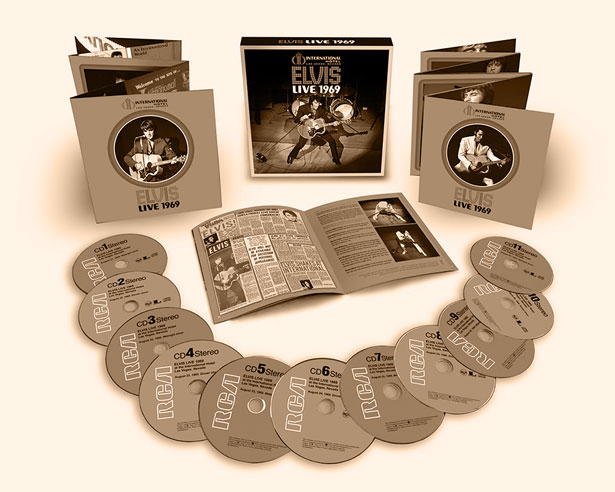

ELVIS LIVE 1969 (Sony, 2019) | Click image for larger, full-color version | Original image credit: Sony

“If I take time out to drink water, just look at me and say, ‘Is that him? I thought he was bigger than that. Squirrelly-looking guy.'”
–Elvis Presley, 1969

If you’re not in for the whole Elvis Live 1969 boxed set, 2010’s On Stage: Legacy Edition (Sony) is probably sufficient for casual or budget-minded fans, as it neatly highlights Elvis’ Summer 1969 and Winter 1970 Vegas engagements on 2 CDs and can still be found for about $12 US. CD 2 features Elvis In Person as well as additional songs recorded live in 1969. Keep in mind that both “Runaway” and “Yesterday” on the On Stage album, featured on CD 1, are from August 1969 as well.

If you are more on the obsessive side like me, but don’t already have most of these shows, I can definitely recommend Elvis Live 1969. Just be sure to shop around, as Elvis Live 1969 can often be found quite reasonably priced – considering the number of included shows. For example, Graceland is charging full list price as of this writing, but you can find it elsewhere for less than 60% of that price.

Among Elvis’ Las Vegas engagements at the International/Hilton Hotel, Summer 1969 ranks second only to Summer 1970 for me. I place Winter 1970 third. While the number of available shows in official releases is significantly less and disallows detailed comparisons, subsequent Vegas seasons in 1971-1976 are nowhere close to the 3 of 1969 & 1970.

To see one of these 1969 shows must have been something really special.

Blessings,
TY


“You can make many plans, but the LORD’s purpose will prevail.”
Proverb 19:21
A Squirrel Loose at the Big, Freaky International Hotel (Part 1)

“Welcome to the big, freaky International Hotel, with these little, weirdo dolls on the walls and these little funky angels on the ceiling. You ain’t seen nothing until you’ve seen a funky angel, boy. I tell you for sure.”
–Elvis Presley, 1969, on the ornate design of the hotel’s concert showroom

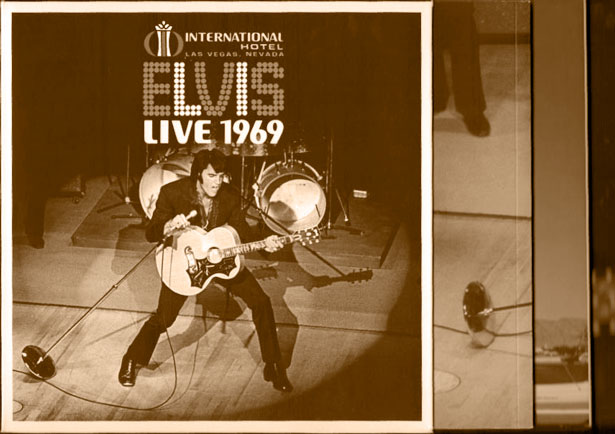
Sony Legacy last year released Elvis Live 1969, a boxed set containing all 11 concerts RCA recorded during Elvis Presley’s August 1969 engagement at the International Hotel in Las Vegas, Nevada.

The concert series, which spanned 57 shows from July 31 to August 28, represented the singer’s first appearance on a public stage in nearly 9 years – though he had performed 4 shows in front of small audiences at NBC’s studio in Burbank, California, as part of taping his ELVIS television special the previous summer.

RCA cherry-picked 12 of the strongest performances from 3 of the 1969 shows to form the Elvis In Person portion of the From Memphis To Vegas/From Vegas To Memphis double album, released in November 1969. A year later, RCA re-released Elvis In Person as a stand-alone album with the same content.

As for the rest of the performances, they amazingly remained in the vault until after Elvis’ death. While RCA released several individual songs over the years, including a compilation disc on 1991’s Collectors Gold boxed set, a complete 1969 show did not officially surface until 2001’s Live In Las Vegas boxed set.

By the time of Elvis Live 1969 last year, however, 7 of the 11 shows had already been released in their entireties on CD, with a good portion of songs from 3 of the 4 remaining shows having been released as well – many of them on Sony’s Follow That Dream (FTD) collectors label for Elvis fans.

Elvis Live 1969 stands out among the previous releases because it gathers all of the recordings in one place for the first time, with homogeneous sound quality. The recordings capture the August 21-26 portion of the engagement.

Sony Legacy’s ELVIS LIVE 1969 boxed set (2019, from TY’s collection)

Mixed by Matt Ross-Spang in what was apparently a marathon session, Elvis Live 1969 features a “slapback” echo effect mimicking the sound of Elvis’ first recordings in 1954 & 1955 at Sun Studio in Memphis. Ross-Spang had applied the same effect to alternate takes on 2016’s Way Down in the Jungle Room, an overview of Elvis’ last formal recordings in 1976 at Graceland.

As it was not representative of the original intent in 1976 or 1969, some fans have been quite critical of Ross-Spang’s slapback effect. As for me, I don’t mind it at all. It breathed some life into the 1976 studio recordings and brought Elvis’ music full-circle, in a sense, with an homage to the Sun sound. Though less effective on the 1969 live recordings, it’s not too distracting. On a few songs, such as “Mystery Train,” which of course originated in the Sun era anyway, the effect can actually be phenomenal.

Where I differ from Ross-Spang on Elvis Live 1969 is on some of his mixing choices, especially as far as which instruments are prominent. For instance, horns overwhelm a portion of James Burton’s lead guitar solo in the middle of the “Blue Suede Shoes” opener on all 11 shows. The horns weren’t even audible at all during Burton’s solo on the original Elvis In Person album and most of the subsequent revisits of this material.

The horns distracting from the lead guitar vaguely reminds me of Elvis’ February 11, 1956, appearance on Stage Show (CBS), the Jackie Gleason-produced television series hosted by Tommy and Jimmy Dorsey. In his third of six appearances on the program, Elvis debuts “Heartbreak Hotel” for the national TV audience. At the point where Scotty Moore would normally rip into his now classic electric guitar solo, a trumpeter improvises a jazz-inspired solo instead. While I enjoy jazz, it did not work in the context of this rock ‘n’ roll song. Fortunately, Moore is able to let loose in performances of “Heartbreak Hotel” on two subsequent shows. The 1969 “Blue Suede Shoes” is thankfully not affected to nearly this extent, though, for Burton is at least playing his solo!

Another example is that Larry Muhoberac’s piano is mixed far too loudly on certain shows, especially the August 26 Midnight Show, the last 1969 concert captured. Was Ross-Spang running out of time or is this truly how he felt the show should sound? “Mystery Train/Tiger Man,” which should be a showcase for the guitar and drums, suffers greatly from the distracting and overbearing piano in this particular show.

The August 25 Dinner Show and August 26 Dinner Show versions of “Mystery Train/Tiger Man” are similarly impacted by too much piano in the mix. Five of the remaining shows that include this medley fortunately keep the piano at low or moderate volumes, while the August 25 Midnight Show version, which was the performance used as the master on Elvis In Person, actually strikes a great balance – having the piano quite present but at an appropriate level.

Of course, it is all a matter of taste. For an Elvis live show, I want the lead guitar (Burton), Elvis guitar (when applicable), drums (Ronnie Tutt), and bass (Jerry Scheff) prominent in the mix among the instruments, generally in that order of priority, but certainly varying to some extent per song.

The rock ‘n’ roll numbers, at least, should heavily feature guitar, drums, and bass. That is the core of rock ‘n’ roll, Elvis style. The piano, other guitars, and orchestra should be present as needed, but not so much as to overwhelm that core. The piano is far less annoying on a slow song like “Love Me Tender,” for instance, where it better suits being prominent in the mix.

To be clear, the mixing on the majority of these shows is great. For example, “Mystery Train/Tiger Man” is mixed to perfection on the August 22 Midnight Show and is of course buoyed by a committed and powerful vocal performance by Elvis, as with many of the songs in this boxed set. This version of “Mystery Train” I can’t help but crank up every single time it comes on, much as I do with the 1955 Sun studio master.

Ross-Spang also tends to favor the Sweet Inspirations over the Imperials, as far as the background vocalists – an approach I heartily support. Millie Kirkham notwithstanding, Elvis sounds better with female voices behind him instead of males, and I love the Gospel-infused quality of the Sweet Inspirations. I should note that I intend no disrespect to any of the musicians and singers involved, all of whom are very talented. I am just talking about how I best feel the music when it comes to Elvis.

Before I get too far off track here, I think that covers it for the technical aspects of the set. I actually wasn’t even intending for this to become a review per se, but I just go where the writing leads me.

Next week, we’ll continue our look at Elvis Live 1969 and, possibly, get to the actual reason I started this post.

Blessings,
TY

[Read Part 2]


“Speak up for those who cannot speak for themselves; ensure justice for those being crushed. Yes, speak up for the poor and helpless, and see that they get justice.”
Proverb 31:8-9

A Quick Look at ELVIS PRESLEY: THE SEARCHER Soundtrack [Pastimescapes blog]

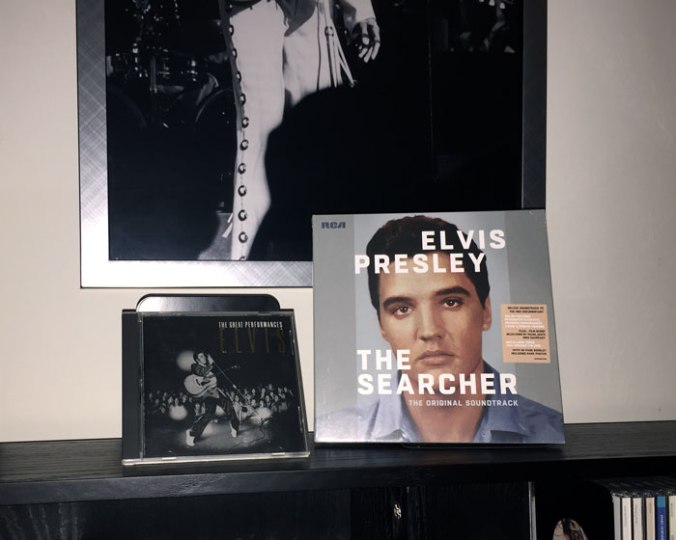
ELVIS: THE GREAT PERFORMANCES (1990) and ELVIS PRESLEY: THE SEARCHER (2018) soundtracks (Front)

ELVIS: THE GREAT PERFORMANCES (1990) and ELVIS PRESLEY: THE SEARCHER (2018) soundtracks (Front)

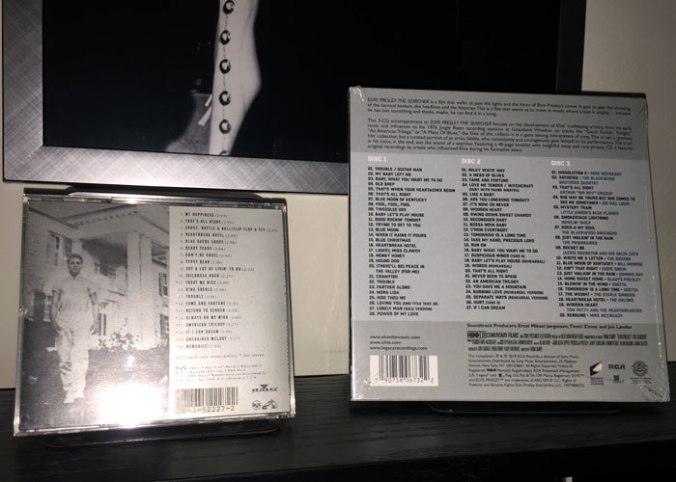
Just a couple of shots of the beautifully packaged soundtrack to the upcoming HBO documentary Elvis Presley: The Searcher. This is the 3-CD version. 1-CD and vinyl versions are also available. The soundtrack hit stores yesterday.

I threw a standard-sized CD case in there for size comparison (The Great Performances).

ELVIS: THE GREAT PERFORMANCES (1990) and ELVIS PRESLEY: THE SEARCHER (2018) soundtracks (Back)

ELVIS: THE GREAT PERFORMANCES (1990) and ELVIS PRESLEY: THE SEARCHER (2018) soundtracks (Back)

I’m not opening this until after I watch the documentary, so this is all I can really say about the soundtrack for now. Both parts of Elvis Presley: The Searcher premiere Saturday, April 14.


See below for the documentary’s trailer:

Royal Philharmonic Orchestra Makes Me Wonder If I Really Need a New Elvis CHRISTMAS Album [Pastimescapes blog]

If there is one constant at Christmastime, it is that there will be a “new” Elvis Christmas album available for purchase. These are normally just reshuffled sequences of selections from the two dozen or so seasonal songs Elvis Presley first released in 1957, 1966, 1968, and 1971. Only occasionally has there been any creativity in these posthumous releases–such as 1982’s Memories of Christmas or 2008’s Elvis Presley Christmas Duets albums.

While Christmas Duets was mostly a “miss,” at least it was an attempt to try something new. Now, in 2017, RCA/Sony/Legacy attempts again to freshen up the classics with Christmas. The album features the Royal Philharmonic Orchestra (RPO) providing new backing music for Elvis’ vocals. How does this latest attempt fare?

As I enjoyed both of the previous Elvis/RPO offerings (2015’s If I Can Dream and 2016’s The Wonder of You), I mostly knew what to expect going in. One aspect I found surprising this time, though, is that I immediately loved this album. With the two former albums, I had to play them through a couple of times to really “get” them. You could say I learned to love the If I Can Dream and The Wonder of You Elvis/RPO albums, while it was love at first listen with Christmas.

The Deluxe Edition of Christmas includes the Elvis vocals from all 12 (8 Christmas and 4 gospel) songs on 1957’s Elvis’ Christmas Album. It also contains Elvis performances of five Christmas selections originally part of 1971’s Elvis Sings the Wonderful World of Christmas. I recommend the Deluxe Edition (red cover) because it contains four more tracks than the standard version (tan cover), yet is at a similar price point.

I must admit, I was skeptical of the track listing before actually playing the album. Surely, the RPO would not mix well with bluesy classics like “Santa Claus Is Back In Town” and “Merry Christmas Baby.” While the originals are stone-cold classics, these new interpretations also manage to work in their own right.

What really makes this album stand out, though, are the Elvis vocals. They are so crystal clear. It is frustrating that they do not sound this way more often on standard releases, without newly recorded backgrounds, but I can only assume there is some technological reason that prevents this.

Though strong albums, If I Can Dream and The Wonder of You both had a few tracks where the RPO concept just did not work very well. Not so here. Every track on Christmas works. This is the best of the Elvis/RPO trilogy.

While I consider this a near-perfect album, given the concept, there is, unfortunately, a missed opportunity. “I’ll Be Home On Christmas Day,” which ranks second only to “Santa Claus Is Back In Town” as the best Elvis Christmas song of all, is missing in action here. Unless they plan an EP for some future Christmas, there are really not enough Elvis Christmas songs remaining to warrant a second full-length album, so they are probably not holding it back for that reason. I am not sure what happened, but perhaps an orchestral arrangement for the song simply did not work.

Unlike Christmas Duets, which had a pedestrian approach to many tracks, the arrangements here, by Robin Smith and Sally Herbert, offer much interest. I love the fuller sound. Also unlike Christmas Duets, I suspect this album will become a permanent fixture in my Christmas music rotation in the years ahead – alongside the originals, of course.

Do I really need a new Elvis Christmas album? It turns out the answer is, yes. This year, more than ever.

Christmas is a beautiful album.

Overall Rating: 10 out of 10.

CHRISTMAS (2017) [Deluxe Edition]

CHRISTMAS (2017) [Deluxe Edition]

Tracks

Christmas
Elvis Presley with the Royal Philharmonic Orchestra

  1. Santa Claus Is Back In Town [Elvis portions recorded 1957, Hollywood]
  2. White Christmas [Elvis portions recorded 1957, Hollywood]
  3. Here Comes Santa Claus [Elvis portions recorded 1957, Hollywood]
  4. Merry Christmas Baby [Elvis portions recorded 1971, Nashville]
  5. Blue Christmas [Elvis portions recorded 1957, Hollywood]
  6. I’ll Be Home For Christmas [Elvis portions recorded 1957, Hollywood]
  7. Winter Wonderland [Elvis portions recorded 1971, Nashville]
  8. Santa Bring My Baby Back [Elvis portions recorded 1957, Hollywood]
  9. Silver Bells [Elvis portions recorded 1971, Nashville]
  10. O Little Town Of Bethlehem [Elvis portions recorded 1957, Hollywood]
  11. O Come All Ye Faithful [Elvis portions recorded 1971, Nashville]
  12. The First Noel [Elvis portions recorded 1971, Nashville]
  13. Silent Night [Elvis portions recorded 1957, Hollywood]
  14. Peace In The Valley (Deluxe Edition only) [Elvis portions recorded 1957, Hollywood]
  15. I Believe (Deluxe Edition only) [Elvis portions recorded 1957, Hollywood]
  16. Take My Hand, Precious Lord (Deluxe Edition only) [Elvis portions recorded 1957, Hollywood]
  17. It Is No Secret (Deluxe Edition only) [Elvis portions recorded 1957, Hollywood]

The Royal Philharmonic Orchestra recorded 2017 at Abbey Road Studio 2, London.

July 19 Represents a Beginning and an End for Elvis Presley [Pastimescapes blog]

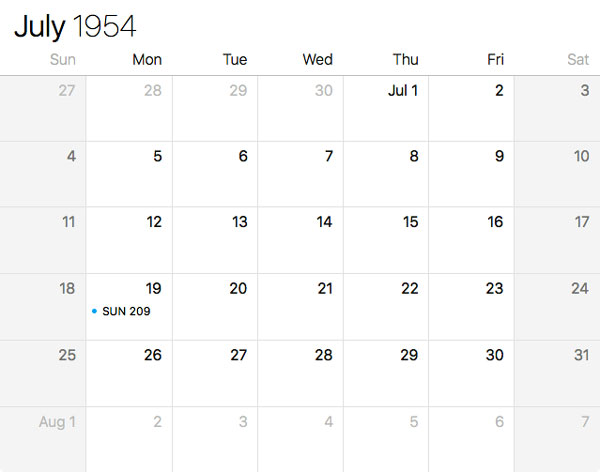
July 19, 1954

The date is July 19, 1954, and SUN releases the debut record of 19-year-old Elvis Presley. Produced by Sam Phillips, the single consists of “That’s All Right” backed with “Blue Moon of Kentucky.” Elvis, who in childhood dreamed of being “the hero of the comic book,” begins his adventure.

The years come and go. Elvis achieves many of his dreams, including becoming a musical hero throughout the world. Like everyone, he also loses other dreams along the way.

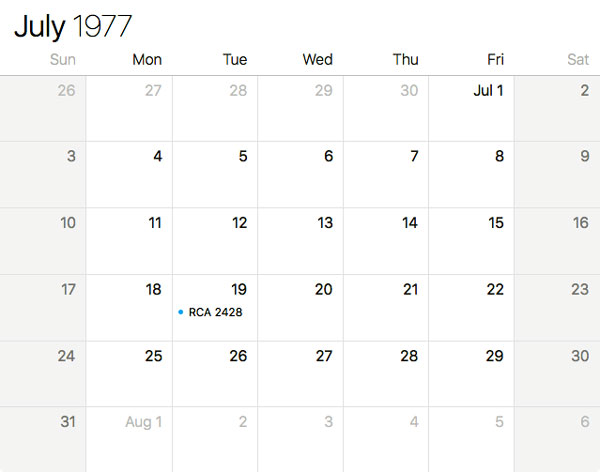
The date is July 19, 1977, and RCA releases Moody Blue, an album that proves to be the final Elvis record before his death exactly four weeks later at the age of 42. An unprecedented level of fame helped Elvis place himself on a path that brought his journey to a tragic end.

Only 23 years, a mere blink of history’s eye, separate the release of the last Elvis record from the first.

More time passes. Other heroes come and go, yet Elvis somehow remains. As some fans fade away, others take their place.

The date is now July 19, 2017, but those 23 years continue to resonate.

Journey with Pastimescapes today to the beginning and the end with two editions of Vinyl Elvis:

July 19, 1977

Take a Ride on the Mystery Train with Updated A BOY FROM TUPELO [Pastimescapes blog]

One of the best Elvis Presley stories in recent memory was an audio collector’s July 2012 discovery of a live recording of “I Forgot To Remember To Forget.” Not realizing the rarity of what he had found, the collector posted the 1955 Louisiana Hayride radio show segment on YouTube as a curiosity piece.

Once Elvis experts began to take notice, it was soon revealed that this performance had never been heard by the public since the original October 1955 broadcast. It was also in better audio quality than most other Elvis live recordings from the same era. Ernst Jorgensen, Sony’s Elvis chief, acquired the recording, and the video came down.

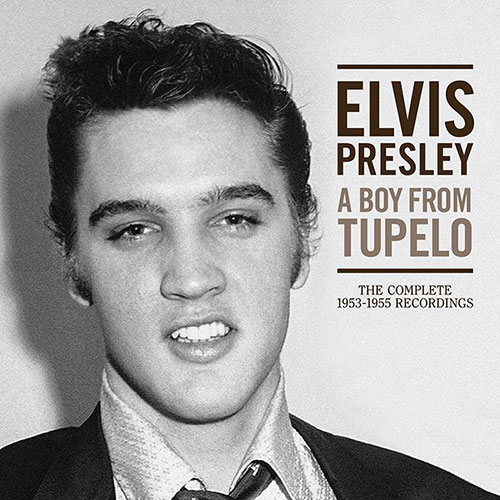
Meanwhile, A Boy From Tupelo: The Complete 1953-1955 Recordings, a limited-edition collection covering the same time period, was on the verge of release. Unfortunately, it was too late to add the newly found recording, so the massive book and 3-CD set was slightly less comprehensive than it otherwise would have been when Sony’s Follow That Dream (FTD) collectors label released it in August 2012.

Though I never did finish writing my review at the time, A Boy From Tupelo was a masterpiece even if only for the three CDs. Due to its limited availability, however, many fans were unable to obtain a copy. Five years later, it unfortunately sells for six or seven times its original price.

Sony announced today that an updated version of A Boy From Tupelo will be available as a mainstream release on July 28.

The live recording of “I Forgot To Remember To Forget” is finally taking its rightful place on this set and making its debut on an official release. Thank you to “amberola1b” (the audio collector who discovered the recording) and Jorgensen for making this possible.

I consider A Boy From Tupelo to be one of the most important releases since Elvis died in 1977, and I am glad that it will now be readily available at a reasonable price to any music fan that wants it.

While I had been hoping for a boxed set of Elvis On Tour (1972) concerts and rehearsals this year, A Boy From Tupelo is even better than that would have been. Sony’s mainstream Elvis releases have been very 1970s-heavy for the last several years, so Elvis On Tour can wait a few more years, as far as I am concerned.

While the original came with a 512-page book, this 2017 edition will be condensed to 120 pages. The music will also be available in a digital download edition. A 1-LP vinyl edition will be available, containing only the SUN masters (i.e., no alternate or live recordings).

A BOY FROM TUPELO (2017 Sony Edition)

A BOY FROM TUPELO (2017 Sony Edition)

Which “Jungle Room” Elvis CD Should You Buy? [Pastimescapes blog]

[Side Note: Introducing the new look of Pastimescapes, which now leverages the Expound theme. Look for more tweaks in the coming days.]

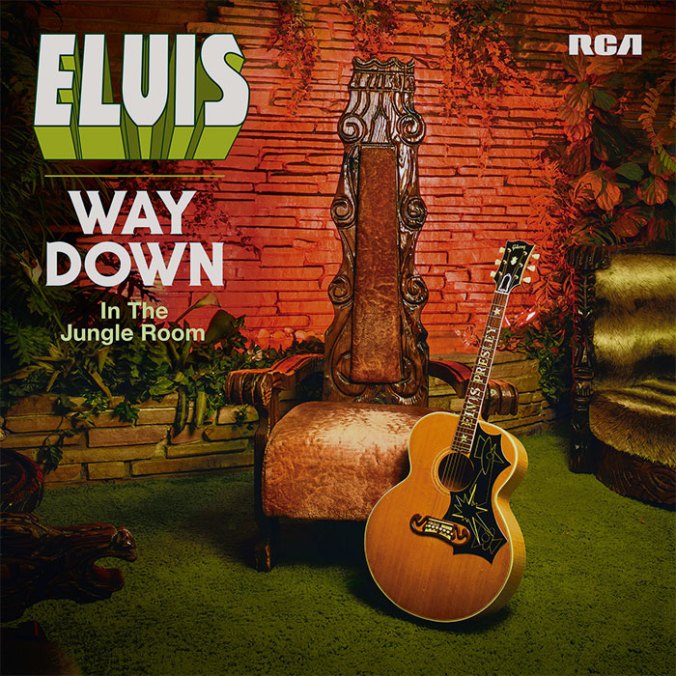
Cover of WAY DOWN IN THE JUNGLE ROOM (2016, Sony)

Cover of WAY DOWN IN THE JUNGLE ROOM (2016, Sony)

Memphis. When it comes to Elvis Presley, there is something magical about the music he created in his adopted hometown.

That magic is tangible, no matter if we are talking about his early SUN sides of 1954-1955, the American Sound sessions of 1969, the Stax recordings of 1973, the Mid-South Coliseum concerts of 1974, or the Graceland sessions of 1976 – where his home’s den was converted into a makeshift recording studio.

Those Graceland sessions, which proved to be the last “studio” recordings of Elvis’ career, initially resulted in two albums: From Elvis Presley Boulevard, Memphis, Tennessee, and the bulk of Moody Blue.

Since then, of course, alternates and outtakes from the Graceland sessions have appeared on numerous releases. The Jungle Room Sessions, for instance, is reportedly one of the best-selling CDs ever released by the Follow That Dream (FTD) collectors label for Elvis fans. The disc is so-named for the nickname given after Elvis’ death to Graceland’s uniquely decorated den.

Earlier this month, Sony released the latest compilation of these songs, Way Down In The Jungle Room. The release contains all of the Graceland master recordings on Disc 1 and selected alternates/outtakes on Disc 2.

Due to already having all of the material from both discs, I had actually planned to skip Way Down In The Jungle Room. I then found out more information about Disc 2 by reading Bob Mehr’s Memphis Commercial Appeal article on the project.

Thanks to the article, I did not skip it, and I can now highly recommend Way Down In The Jungle Room due to the incredible sound of Disc 2’s alternate/outtake versions – newly mixed by Matt Ross-Spang at Sam Phillips Recording Service.

However, my purpose today is not so much to review Way Down In The Jungle Room, but to expand upon an answer to a question I recently received from Wellsy – a Pastimescapes reader and longtime Elvis fan. A frequent commenter, he even wrote a guest post on The Mystery Train a few years back for me.

Wellsy emailed me on vacation from Memphis about some CDs he was considering purchasing. Somewhere in the course of our ongoing exchange, he asked, “What is the difference between FTD’s The Jungle Room Sessions and Sony’s Way Down In The Jungle Room?”

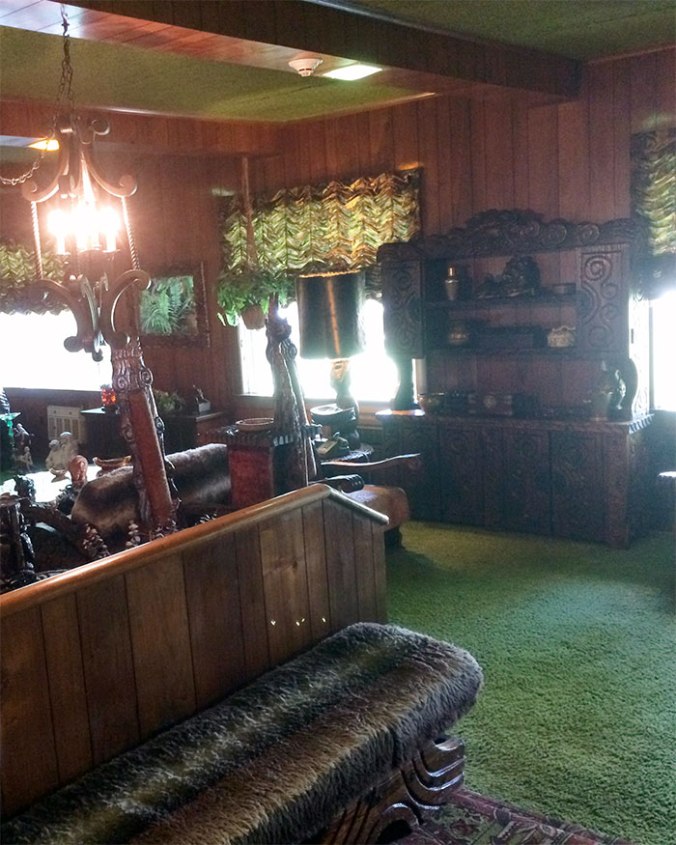
Frozen In Time: Graceland's den in 2016 essentially looks the same as it did in 1977. According to legend, Elvis bought the Witco furnishings after his father commented that it was ugliest furniture he had ever seen. (Photo by Wellsy.)

Frozen In Time: Graceland’s den in 2016 essentially looks the same as it did in 1977. According to legend, Elvis bought the Witco furnishings after his father commented that it was ugliest furniture he had ever seen. (Photo by Wellsy.)

If you are interested in the Graceland sessions, the underlying question is which of the Elvis releases covering this material should you buy? In addition to Way Down In The Jungle Room, there have been quite a few, including:

  • From Elvis Presley Boulevard (RCA): Masters from the February 1976 Graceland sessions (#19 on my recent “50 Greatest Elvis Albums” list)
  • Moody Blue (RCA): Remaining masters from the February and October 1976 Graceland sessions, supplemented with live recordings from 1974 and 1977 (#7 on my list)
  • The Jungle Room Sessions (FTD): Alternates/outtakes from the 1976 Graceland sessions
  • From Elvis Presley Boulevard (FTD Classic Album Edition): Masters and alternates/outtakes from the original RCA album, including relevant portions of The Jungle Room Sessions in improved sound quality and some previously unreleased tracks
  • Moody Blue (FTD Classic Album Edition): Masters and alternates/outtakes from the original RCA album, including relevant portions of The Jungle Room Sessions in improved sound quality and some previously unreleased tracks

People who know me offline, and I am sure some online have picked up on this as well, understand that I am a very analytical person. Sometimes to the point of annoyance, but, hey, it pays the bills. Anyway, I thought it might be interesting to compare some of the releases covering the Graceland sessions in a more visual fashion.

The below chart captures the master and other complete takes for each of the songs recorded at the Graceland sessions that have been officially released to date. In an attempt to keep this to a manageable size, I left out things like rehearsals, false starts, and FTD-generated splices.

Graceland Sessions Comparison Chart

As noted in the graphic, my key information sources for the above were:

Any mistakes you might find, though, were entirely of my own making.

So, which one should you buy?

For typical, casual, new, or would-be Elvis fans, I recommend you buy Way Down In The Jungle Room. It gives you all of the master takes as well as a manageable number of alternates in great sound quality. This 2-CD set is a real value at less than US $15. Incidentally, there is also an LP vinyl version, but it does not include the masters.

For “totally insane” Elvis fans (like me), who enjoy listening to multiple alternates of the same song, I recommend you buy the FTD “Classic Album” editions of From Elvis Presley Boulevard and Moody Blue. Each of these 2-CD sets will run you around US $30, but they are more than worth it to experience the making of these albums. However, you will probably want to pick up the seemingly redundant Way Down In The Jungle Room as well at some point – simply for the sound experience on Disc 2.

No matter which you choose, settle back and enjoy some Memphis magic, courtesy of Elvis.


Thanks to Wellsy for inspiring this topic as well as giving permission to use his photo of Graceland’s den.