REVIEW: Elvis – The Complete Masters Collection (Part 6)

This is Part 6 of an occasional series reviewing Elvis: The Complete Masters Collection. Read Part 5.


CD Vol. 8: Country Roots

This volume of The Franklin Mint‘s 36-disc Elvis: The Complete Masters Collection (mastered by Vic Anesini) presents songs that the booklet describes as follows:

“Elvis’ renditions of some of the biggest country songs ever. His tribute to country music and the legends who created it: Hank Williams, Red Foley, and many others.”

This sounds like a potential winner to me, but let’s see how it plays out.
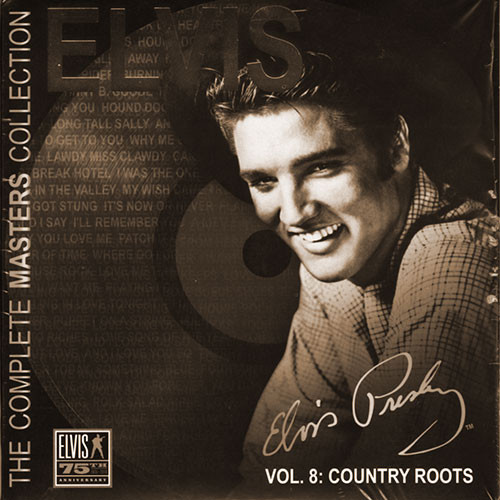
Elvis: The Complete Masters Collection - Volume 8

Elvis: The Complete Masters Collection – Volume 8

01. I Love You Because: Of the 21 songs that make up this CD, the compiler could not have made a choice worse than “I Love You Because” to use as the lead-off track. When Elvis Presley made this recording at SUN Records in 1954, owner and producer Sam Phillips wisely rejected it. Shortly thereafter, Elvis, bassist Bill Black, and guitarist Scotty Moore “stumbled upon” the rock ‘n’ roll sound when horsing around with “That’s All Right.” Unfortunately, RCA Records – beginning a trend that would last for the rest of Elvis’ life – dug “I Love You Because” out of the rejects pile and issued a spliced version in 1956 not only on the Elvis Presley LP but as the A-Side of a single! The single failed to chart, and this recording is of interest only as a historical curiosity. (Recorded: 1954)

02. Blue Moon Of Kentucky: “Blue Moon Of Kentucky,” on the other hand, is a perfect representation of “Elvis Country.” A rhytym & blues-infused take on a country/bluegrass song, “Blue Moon Of Kentucky” served well as the B-Side of “That’s All Right” (a country-infused take on a rhythm & blues number). In some markets, “Blue Moon Of Kentucky” was more popular than the A-Side – likely because the song was a little more conventional for those audiences than the comparatively wild “That’s All Right.” (Recorded: 1954)

03. I’ll Never Let You Go: “I’ll Never Let You Go” is another 1954 SUN reject that RCA issued in 1956 on the Elvis Presley LP and as an A-Side single. While not stellar, this one is far more listenable than “I Love You Because.” This one features a slow start before eventually speeding up – a precursor of what Elvis would do not only on “Milkcow Blues Boogie” later that year, but also on live versions of “Hound Dog” years later in 1972. (Recorded: 1954)

04. How’s The World Treating You: “How’s The World Treating You” is a decent recording by Elvis. This one is slow and sleepy, as with the beginning of “I’ll Never Let You Go.” Unlike that track, however, this one stays slow and sleepy. (Recorded: 1956)

05. Old Shep: Elvis had been singing Red Foley’s “Old Shep” since childhood before he formally recorded it in September 1956. As a dog-lover, I find this melodramatic yet effective song hard to listen to at certain points in my life – depending on how my dog is doing at the time. I take these things to heart. A great, classic Elvis recording. (Recorded: 1956)

06. Your Cheatin’ Heart: I love Elvis’ take on Hank Williams’ “Your Cheatin’ Heart,” though I slightly prefer a more enthusiastic alternate take over this master. It would be years before Elvis made such an overtly country recording again. (Recorded: 1958)

07. A Fool Such As I: There is very little country left in Elvis’ iconic version of “A Fool Such As I,” a song that had been previously recorded by Hank Snow. (Recorded: 1958)

08. It’s A Sin: “It’s A Sin” was first recorded by Eddy Arnold in 1947. Elvis’ version is pretty, but a little lethargic for my tastes. (Recorded: 1961)

09. Just Call Me Lonesome: In addition to the How Great Thou Art sessions, another early sign of the comeback was Elvis returning to country music. “Just Call Me Lonesome” is a great representative of that return. What I love about “Elvis Country” is that instead of whining sounds sometimes associated with the genre, Elvis usually provides velvet vocals. (Recorded: 1967)

10. You Don’t Know Me: Elvis’ moving rendition of Eddy Arnold’s “You Don’t Know Me” was unfortunately buried on the Clambake soundtrack album. The first version I ever heard of “You Don’t Know Me” was actually by Ray Charles. The first time I heard it, in the original theatrical cut of Groundhog Day, I remember wishing that Elvis had recorded it. I was pleasantly surprised a few years later when the unknown-to-me Elvis recording surfaced on From Nashville To Memphis: The Complete 60s Masters I. Incidentally, Elvis also recorded a different version of “You Don’t Know Me” for the Clambake movie, but it is far inferior to this re-recording and was not released until after his death (other than in the actual movie). (Recorded: 1967)

11. I’m Movin’ On: Next up are some songs recorded at American Sound Studios in Memphis in early 1969, not long after the successful airing of the ELVIS television special. At first, “I’m Movin’ On” sounds a little too country, but then Elvis rocks into it to produce a spectacular version. (Recorded: 1969)

12. I’ll Hold You In My Heart (Till I Can Hold You In My Arms): “I’ll Hold You In My Heart” is an appealing little song that Elvis sings into the ground, ultimately going nowhere. (Recorded: 1969)

13. After Loving You: One of the huge highlights of the American sessions, “After Loving You” features the “new” Elvis at his best. Elvis had been playing around with this song at home for years, even taking a stab at piano on an earlier take at this session before giving up the keys. One of the best recordings of his career. (Recorded: 1969)

14. It Keeps Right On A-Hurtin’: “It Keeps Right On A-Hurtin'” is another pretty song that really does little to stand out among Elvis’ stellar 1969 recordings. (Recorded: 1969)

15. Little Cabin On The Hill: Versions of the next five songs were featured on the 1971 album I’m 10,000 Years Old: Elvis Country, often considered one of his finest. However, these mixes and edits are actually from the 1995 Walk A Mile In My Shoes boxed set. They do not match the original masters from Elvis Country. Here, Elvis launches into a Bill Monroe impersonation he had been fooling around with since at least 1956, as evidenced by the Million Dollar Quartet jam session. Good stuff. (Recorded: 1970)

16. I Really Don’t Want To Know: Elvis owns “I Really Don’t Want To Know,” one of the best on Elvis Country or any of his other albums. I love the piano work on this one by David Briggs. (Recorded: 1970)

17. Faded Love: I much prefer the shorter edit of “Faded Love” as released during Elvis’ lifetime than this overly long 1995 version. Anyway, Elvis does a fine, if forgettable, job on the Bob Wills classic. (Recorded: 1970)

18. Tomorrow Never Comes: Elvis delivers one of his most powerful performances on “Tomorrow Never Comes.” The song starts softly and slowly builds into a breathtaking, accusatory crescendo that Elvis actually had to re-record as an insert. Again, one of the very best songs of his career. (Recorded: 1970)

19. Make The World Go Away: I love hearing Elvis’ version of well-known songs, and “Make The World Go Away” is no exception. That voice. You gotta listen to James Burton on guitar on this one, too. Burton helped define the sound of Elvis’ final decade, and it is no wonder Elvis was reluctant to take the stage without him. (Recorded: 1970)

20. Green, Green Grass Of Home: I first heard Elvis’ version of “Green, Green Grass Of Home” on an RCA cassette tape I had in the 1980s called Elvis Country, one of two tapes by that name I owned – both of which had completely different lineups from each other as well as his 1971 album of the same name. Though recorded five years later for the Today sessions, this song would have fit in well on the real Elvis Country album as well. As with the much-maligned “My Boy,” this is the kind of dramatic song that often spoke to Elvis and that I, for one, enjoy hearing him sing. (Recorded: 1975)

21. Are You Sincere: Coming right after “Green, Green Grass Of Home,” Elvis’ voice sounds comparatively weaker on “Are You Sincere.” This goes against conventional Elvis wisdom, as this one was recorded two years earlier. They were recorded in different studios with different equipment, so any number of factors could be involved. Still, “Are You Sincere” is a worthy performance, first released on his 1973 album Raised On Rock. (Recorded: 1973)

While it contains a number of terrific country songs, the individual parts of this CD do not add up to a high-quality whole. Whether due to kicking off with the lackluster “I Love You Because” or the uneveness of the remaining selections, Country Roots never takes off as a compilation. Instead, it feels more random than anything else.

[Read Part 7.]

King Creole: A Stone For Danny Fisher

A Stone For Danny Fisher: Now A Major Motion Picture From Paramount

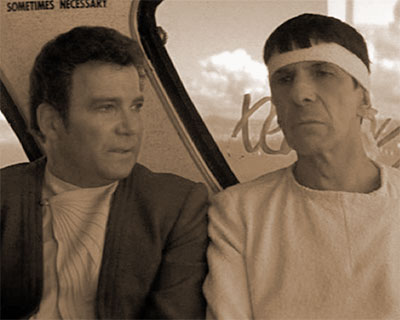
Herbert Baker and Michael Vincent Gazzo based the King Creole screenplay on the 1952 novel A Stone For Danny Fisher by Harold Robbins. Until I read the book, my knowledge of the author was limited to the following exchange between Jim Kirk and Spock in 1986’s Star Trek IV: The Voyage Home.

Jim Kirk and Spock discuss language on 20th century Earth in STAR TREK IV

Jim Kirk (William Shatner) and Spock (Leonard Nimoy) discuss language on 20th century Earth in STAR TREK IV: THE VOYAGE HOME (1986).

In the film, the Enterprise crew has journeyed back in time 300 years to 20th century Earth. Kirk has been trying to fit in with the natives.

Spock: Your use of language has altered since our arrival. It is currently laced with, shall I say, more colorful metaphors….
Kirk: You mean the profanity?
Spock: Yes.
Kirk: That’s simply the way they talk here. Nobody pays any attention to you unless you swear every other word. You’ll find it in all the literature of the period.
Spock: For example?
Kirk: Well, the collected works of Jacqueline Susann, the novels of Harold Robbins.
Spock: Ah. The giants.

With Vulcan sarcasm in mind, I was not quite sure what to expect from Robbins’ novel.

While I feel the acting potential of Elvis Presley was never fully realized, even I acknowledge that he probably would have been less than convincing in 1958 playing a Jewish boxer from Brooklyn. Who am I to say, though? Maybe he would have pulled it off.

While Danny Fisher morphs into a religiously-ambiguous singer from New Orleans in King Creole, the interesting thing about reading the novel is that it does feel like the same character. The book, then, acts as an excellent back story for the film. According to biographer Peter Guralnick, Elvis even read the novel as part of his preparations for the movie (Last Train To Memphis, page 450).

Guralnick’s claim is backed up by the sheer strength of Elvis’ performance in the role. The character seems more than what is on the page of the film script, and I believe Elvis reading the novel beforehand is part of what makes Danny so believable. This is a character who has already lived, already has a history, before the events of the movie begin. Compare that with Vince Everett of Jailhouse Rock, who seems to fade into existence just to serve the purpose of the movie.

A Stone For Danny Fisher is written in first person perspective, meaning in this case that Danny is actually the one telling his story. I could not help but imagine much of the book with Elvis as Danny.

As one would expect, the novel captures a much broader story than the film does. While the movie focuses on Danny at 19-years-old in 1958, the book covers his life from 8-years-old in 1925 up until 27-years-old in 1944.

Only touched upon in the film, one of the recurring elements of the novel is Danny’s house. Danny’s family moves from a tight apartment into a more spacious home. Moving day is his eighth birthday, and his father tells him the house is his present.

I turned and pressed my lips to the cool floor. “I love you, house,” I whispered. “You’re the most beautiful house in the whole world, and you’re mine and I love you.”

Danny’s father loses the house during the depths of the Great Depression in 1932, and they are forced to move again. From that point on, his relationship with his father is different.

That was the night when for the first time I admitted to myself that it was not my house, that it really belonged to someone else, and there was no heart left in me for tears.

As in the movie, Danny takes Nellie to see his old house, vowing to someday buy it back.

Nellie listens to Danny talk about his house in KING CREOLE

Nellie (Dolores Hart) listens to Danny (Elvis Presley) talk about his house in KING CREOLE (1958).

The movie version of the scene is illustrative of the issues in the relationship between Danny and Nellie. More so than any other point in the movie, Danny is being open with Nellie and sharing something that is extremely important to him. She misses this entirely, barely reacting at all. It is a telling moment, as the two characters appear to be in the middle of completely different conversations.

Danny: You see that house over there? Way over there. See it? That used to be our house. Pa bought it when I was about 8-years-old. It was kind of my birthday present. We sure had a lot of happy times there. I’m gonna buy that house back someday or one just like it. And I guarantee nobody’s gonna take it away from me. Nobody.
Nellie: I told my mother about you. I told her I met a million-dollar boyfriend in a five and ten cents store.

In the novel, Nellie is much more present in the scene. It draws them closer together, while the film version seems to distance them.

We were standing on a dark empty corner, almost ten o’clock at night, in a neighborhood in Brooklyn she had never even known about. I raised my hand and pointed across the street. “See it?” I asked. […] “It’s my house. I used to live there. Maybe soon we’ll be able to move back.”

A sudden light came into her eyes. She glanced quickly at the house, then back at me. Her mouth softened gently. “It is a beautiful house, Danny,” she said in an understanding voice.

My hand tightened on her arm. “Papa gave it to me for my birthday when I was eight years old,” I explained to her. […]

“And now you will move back here,” she whispered softly, pressing her face against my shoulder. “Oh, Danny, I’m so happy for you!”

As told through Danny’s eyes, the writing of the novel varies from crude to eloquent. Even the movie shows some of this dichotomy of character. Think of the crudeness of Danny propositioning the innocent Nellie outside of Room 205 versus the eloquence of him singing “As Long As I Have You,” for instance. While the overall tone is often gritty, I was surprised at the beauty of certain passages of the novel. Though a boxer and later a business man of questionable virtue, Danny has a poet’s soul.

I find Danny in King Creole to be a frustrating character because he seems to have a good heart, yet keeps taking the wrong steps or simply getting bad breaks. The novel version of Danny has many of the same qualities. Like his house, true happiness often seems just within his reach, before it is ripped away from him. Seeing this pattern, Nellie eventually becomes afraid of the house, afraid of what will happen when Danny finally obtains what he has sought for so long.

Reading the book made me realize that Baker and Gazzo’s screen adaptation represents a masterpiece of writing in its own right. It pulls bits and pieces from the novel and carves out a new, yet familiar story. To reference more recent Star Trek movies, King Creole feels like an alternate universe version of the Danny Fisher story.

It was almost as if I were watching this from a seat in the movies. I wasn’t really a part of it. It was another guy named Danny Fisher, and he had gone away two years ago and never really come back.

Though the fates of certain characters differ from the film, the book also offers the rare opportunity to find out “what happens next.”

While a departure from what I normally read, A Stone For Danny Fisher is a worthwhile, well-written novel that sheds more light on the story behind King Creole and the material that inspired how Elvis portrayed his character.


My grandmother worked in the ticket booth of a theater for decades. I dedicate this series of movie posts to her, who would have turned 103 this year. I often remember her when I watch movies.

FTD elevates Back In Memphis to essential status

Last month, Sony’s Follow That Dream collectors label for Elvis fans released its Classic Album version of Back In Memphis. With the holidays over, I’ve finally had some time to listen to this 2-CD set.

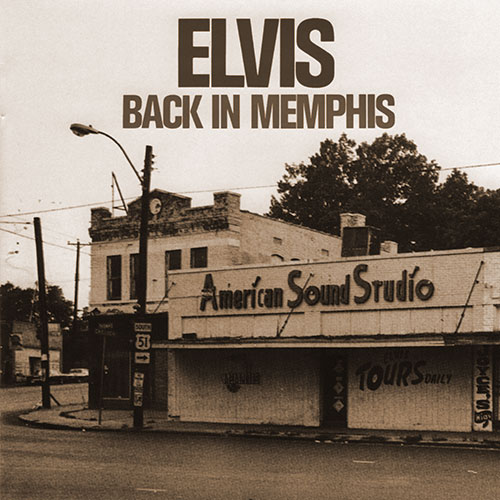
Back In Memphis, 2012 FTD Edition

Back In Memphis, 2012 FTD Edition

Original Album

Elvis loved Memphis, and no matter which of his eras you reference, he made some of his best music there.

The original Back In Memphis album was actually a 1970 re-release of Record 2 of the 1969 2-LP set From Memphis To Vegas/From Vegas To Memphis. Record 1 of that set was also re-released in 1970, as Elvis In Person.

Back In Memphis was a follow-up to the impeccable From Elvis In Memphis, recorded during the same 1969 sessions at American Sound Studio in Memphis. Unfortunately, the results were not nearly as strong.

In fact, Back In Memphis was one of the only disappointments I encountered in my first few years of collecting Elvis music. I was a huge fan of The Memphis Record, a 1987 retrospective album for the American sessions – compiling the entirety of From Elvis In Memphis, most of the singles, and selections from Back In Memphis.

While sound quality has come a long way since then, The Memphis Record was definitely a huge influence on me becoming the borderline obsessive Elvis fan I am today. I couldn’t wait to hear the remaining songs when RCA re-released Back In Memphis in the early 1990s on CD.

It turned out, though, that every “new-to-me” song on the album (i.e., those that weren’t on The Memphis Record) bordered on horrible. A bad Elvis CD, and from 1969 at that… I was shocked. I rarely played it.

Since that time, I’ve come to appreciate at least one of those Back In Memphis recordings that I initially hated: “Do You Know Who I Am,” which is a beautiful song.

If I play Back In Memphis these days, I prefer to kick it off by playing Elvis In Person. To me, Back In Memphis holds up better as Record 2 of a 2-LP set than it does as a stand-alone title. Elvis In Person, on the other hand, is powerful enough on its own.

Back In Memphis begins with “Inherit The Wind,” a great song written by Eddie Rabbitt – who also wrote “Kentucky Rain.” While I enjoy “Inherit The Wind,” I do not believe it was a good choice for first song.

Up next is “This Is The Story,” which sounds like a leftover – leading to an abysmal feeling for the beginning of Back In Memphis.

Fortunately, “Stranger In My Own Home Town” revs things into high gear. This is one of Elvis’ best performances from the American sessions, and it should have been the lead-off song for Back In Memphis. In fact, RCA wisely used it to kick off The Memphis Record. Say what you will about the sound, The Memphis Record had flawless sequencing.

Back In Memphis downshifts into low gear again with “Just A Little Bit Of Green.” Though better than “This Is The Story,” this is still lesser material. Elvis’ performance, as with just about everything he touched in 1969, is commendable, but the song itself is simply not worthwhile.

“Side 1” of the original album closes out with a real stinker, Neil Diamond’s “And The Grass Won’t Pay No Mind.” This is one of the few Elvis songs that I find nearly unlistenable. Keep in mind that this is coming from a guy who is a fan of “Old MacDonald.” To say that I give Elvis songs the benefit of the doubt is an understatement. This one is horrible, by far the worst on the album.

“Side 2” kicks off with “Do You Know Who I Am,” a very moving performance that always gets to me when I take the time to feel the words.

“I remember you said that you had to forget about me and be free. Do you know who I am, or have you forgot about me?”

Then we are back to sub-mediocre material with “From A Jack To A King.” Perhaps better than a typical movie song, but not by much.

Back In Memphis finishes strong, though. “The Fair’s Moving On,” “You’ll Think Of Me,” and, to a lesser extent, “Without Love” are all terrific songs.

All in all, it makes for an uneven album that pales in comparison to From Elvis In Memphis.

Bonus Song

As a bonus, FTD includes the stereo version of “Suspicious Minds,” which was not released until a few years after Elvis’ death. The original single released in 1969 was mono and can be found on the 2009 Legacy Edition of From Elvis In Memphis.

What else can be said about “Suspicious Minds” beyond that it is one of Elvis Presley’s true masterpieces?

Some have argued that RCA should have included it on the original Back In Memphis, but that would have been problematic because a live version of “Suspicious Minds” was included on the Elvis In Person portion of the original release.

Instead, RCA should have considered using “Don’t Cry Daddy,” “Rubberneckin'”, “Kentucky Rain,” and even “My Little Friend” to bolster this lackluster album. The problem with those, however, is that they had not yet been released as singles prior to From Memphis To Vegas/From Vegas To Memphis hitting stores.

Anyway, the “Suspicious Minds” bonus song is welcome here, particularly since it allows the meat of this 2-CD edition to include every take of this classic.

Sound quality on this release is amazing, by the way. I probably don’t mention that enough anymore, because I have gotten used to this level of quality over the last few years of Elvis releases.

First Takes

Inherit The Wind (Take 1; rehearsal; Take 4/master with vocal overdub #1): Take 1 and the rehearsal are instrumental only, both short. Vocal overdub #1 that Elvis performed against Take 4 is a gem. This is one of those where it is so clear that it sounds as if he is standing in your living room while performing the song. I’m thrilled to add this one to my collection. Previously unreleased.

A Little Bit Of Green (Take 1): Elvis sounds great here, of course, but I still don’t care very much for the song. This is a previously unreleased take. I think I like it better than the master, though that may just be the fact that it is “new” compared to that one. It is possible that this take could make the song grow on me. I like the stripped-down nature of it.

And The Grass Won’t Pay No Mind (Takes 1-3; 5): This is a collection of previously unreleased false starts that did not change my opinion of this awful song.

Do You Know Who I Am (Take 1): This is a nice alternate, though I prefer the master. Previously released on Memphis Sessions.

From A Jack To A King (Takes 1-3): Takes 1 and 2 are false starts. Take 3 is worse than the master. Previously released on Memphis Sessions.

You’ll Think Of Me (Takes 1-6): Takes 1 through 5 are false starts. Take 6 is pleasant, but feels somewhat plodding at times compared to the master. Previously unreleased.

Without Love (Take 1): This alternate, which is very similar to the master, was previously released on Suspicious Minds.

Suspicious Minds (Takes 1-4; rehearsal; Take 5; rehearsal): This one track is the reason I had to have this CD upon release, rather than picking it up at some point down the road in 2013. Here are Elvis Presley’s first five attempts at “Suspicious Minds,” all blown takes. Elvis swears on some of his mistakes, and FTD has not edited his language. I commend this decision, since this is a collectors label. Anyway, I love hearing “Suspicious Minds” start to come together. Other than parts of the rehearsal segments, most of this track is previously unreleased.

Suspicious Minds (Take 6): This track begins with two more previously unreleased false starts before Elvis finally nails a complete take – as previously released on ELVIS: From Nashville To Memphis – The Essential 60s Masters I.

Back In Memphis - FTD Booklet Cover

Back In Memphis – FTD Booklet Cover

Rehearsals

For some reason, FTD includes the undubbed “Stranger In My Home Town” master in this rehearsal section. This version was available before on Reconsider Baby and Memphis Sessions. “Stranger In My Own Home Town” is a song where I strongly prefer the dubbed version.

There is also a true rehearsal of “A Little Bit Of Green.” Elvis sings it very slow at first but eventually moves it closer to the familiar speed. I like this previously unreleased informal version better than the master.

January Outtakes

Up next are three takes of “You’ll Think Of Me.” Take 8, though previously released on Made In Memphis, is new to me. Take 14 was previously released on Memphis Sessions. Take 16 was previously released on Suspicious Minds. All three takes are enjoyable.

Then, it’s back to “A Little Bit Of Green” for takes 2 and 3. Take 2 consists of a couple of false starts, while take 3 is actually the undubbed master with Elvis’ original vocals (he re-recorded his vocals to the song at a September session later that year in Nashville). He struggles with it in the January session. Fascinating, and exactly the kind of previously unreleased track that a collectors label should provide.

The previously unreleased vocal overdub #2 for “Inherit The Wind” proves interesting because Elvis spends part of it joking around, including use of his mock country voice.

Two false starts of “Without Love” are followed by Take 4 – previously released on Memphis Sessions. It’s a decent take, but this song wears on me after awhile. Too much style, not enough substance.

Take 7 of “Suspicious Minds” quickly re-energizes me, though. How I love this song. This take was previously released on Platinum: A Life In Music, though there are some extra talking bits before and after the song here.

February Outtakes

Up first is the master Take 6 of “And The Grass Won’t Pay No Mind”, undubbed except for Elvis vocal repairs. While I still detest the underlying song, I do find this version better than the master.

Take 4 of “Do You Know Who I Am” was first released on Made In Memphis, but it is new to me and, thus, a highlight of this release. Elvis seems really into the song. He begins to clown around at the end and states afterwards, “You’re gonna save that last take, aren’t you? Because the first part of the take was pretty good.”

Unfinished Masters

“This Is The Story” kicks off with a false start Take 1, followed by the undubbed Take 2 – previously released in shorter form on Memphis Sessions. This simpler version is far preferable to the master. I also enjoy the live version (Collectors Gold) due to Elvis injecting some humor into this melodramatic piece.

More “You’ll Think Of Me”, this time the undubbed master Take 23. This is a terrific track.

Back to “A Little Bit Of Green.” This time, it is master Take 3 with Elvis’ vocal overdub replacement, but without the other dubs. Accordingly, Elvis sounds much stronger here than in the “January Outtakes” instance of this track. Also, the song is admittedly much improved in its simpler form without the other overdubs. Oh what confusing webs ensnare Elvis fans.

Two false starts from Take 4 kick off “From A Jack To A King,” followed by the undubbed and unedited master Take 5 – previously unreleased. I prefer it over the released master, though this still won’t be a favorite. I may play it a little more often, though.

Next is the undubbed master (Take 5) of “Without Love,” previously unreleased and mostly unremarkable.

Here, at last, is the undubbed/unedited master Take 8 of “Suspicious Minds.” Boy, was it worth the wait. You’ll want to crank this one up and wake up your neighbors, folks. Wow. It is incredible to hear this song in its stripped-down form. While it is not better than the official master, I believe it will stand right alongside it for me. There are plenty of other great tracks on FTD’s Back In Memphis, but this one alone is worth the cost of admission.

From “Suspicious Minds” to “And The Grass Won’t Pay No Mind” (master Take 6 with vocal overdub). Maybe this illustrates as well as any other two examples of the contradictory nature of Elvis’ career. So much incredible talent that is alternatively poured into a treasured work or into utter dreck. Yet, in both cases, the talent is always there.

Further proving my point, after “And The Grass Won’t Pay No Mind” comes another great track, Take 7 (master, with vocal overdub) of “Do You Know Who I Am”. I love this one, too – including more fooling around by Elvis near the end. I can’t wait to go back and listen again to all of these “Do You Know Who I Am” takes.

Finally, “The Fair’s Moving On” (Take 1 master, with vocal overdub) provides an approriate album closer as Elvis sings, “Yes, the fair’s moving on, and I’ll soon be gone…” Another delightful track.

Cover & Booklet

As when FTD released Elvis In Person in the Classic Album series, the front cover art duplicates the reissue version of Back In Memphis, leaving out the From Vegas To Memphis title. At least they were consistent, but I would have preferred both use the From Memphis To Vegas/From Vegas To Memphis cover variants, as the odds of the original 2-LP version getting a re-release on its own are slim to none.

From Memphis To Vegas/From Vegas To Memphis actually would have made a great Legacy Edition release, but both Elvis In Person and Back In Memphis have already been part of separate releases in that series as supporting titles for On Stage and From Elvis In Memphis respectively.

The Back In Memphis FTD booklet cover is fantastic. I like to think of these as the album covers for the FTD editions, and this is one of their best alternate designs – right up there with the booklet cover for That’s The Way It Is FTD Classic Album edition.

The liner notes reveal no new information and often sound awkward. For example:

“One of the new songs Elvis performed at his shows was an extended seven-minutes plus arrangement of a yet to be released song from the Memphis Sessions, a Mark James penned song about the break-up of a relationship titled ‘Suspicious Minds’.”

I also wish the “In And Outtakes” notes had been more informative about the various takes, overdubs, etc. Instead, I had to use the Elvis Presley Recording Sessions section of the excellent Keith Flynn’s Elvis Presley Pages to unravel some of my personal confusion when compiling this review. Compared to initial releases, FTD has come a long way in the amount of information provided – but there is still room to grow.


When I first heard the original Back In Memphis, over twenty years ago, I was surprised by my disappointment. After listening to this expanded FTD release of the album, I am surprised yet again. Not by disappointment this time, but by how much I enjoyed it.

Verdict: 10 (out of 10)

REVIEW: Elvis – The Complete Masters Collection (Part 5)

This is Part 5 of an ongoing series reviewing Elvis: The Complete Masters Collection. Read Part 4.

I’m planning to significantly scale back this review series. I’m actually up to Volume 17 now in listening, as I gave up trying to review them as I go. This is mostly because I was not patient enough to wait. The process was just going too slow and taking away from the enjoyment. However, since I already had a draft of the below review for weeks now, I figured I might as well share it with you.


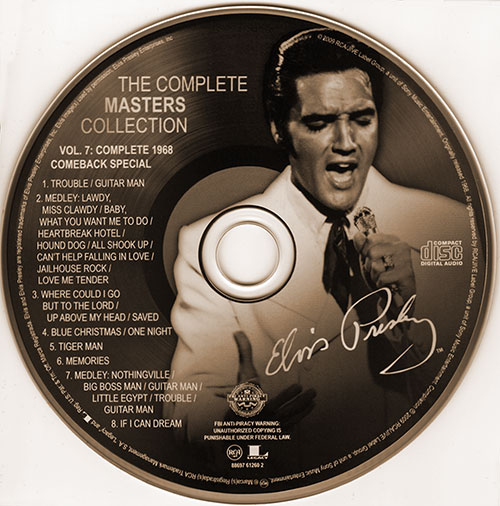
CD Vol. 7: Complete 1968 Comeback Special

This volume of The Franklin Mint‘s 36-disc Elvis: The Complete Masters Collection (mastered by Vic Anesini) presents songs recorded for the ELVIS television special in June 1968.

Elvis: The Complete Masters Collection - Volume 7

01. Trouble/Guitar Man: This was the perfect way to open both the ELVIS special and the accompanying soundtrack album. Culled from 1958’s King Creole, “Trouble” has never sounded better than it does in this performance a decade later.

In the setting of the special, “Guitar Man” bares little resemblance to Elvis’ 1967 country recording. This version rocks.

Though true to the original album, I would have preferred that the overdubbed applause at the end of this studio track had been omitted for this release. Exceptions were made for other recordings on this set, including on this very CD, and this is another exception I would have welcomed.

02. Lawdy, Miss Clawdy [Live]: In the live, “sit down” segment of the show, Elvis tears into “Lawdy, Miss Clawdy.” This is a terrific rendition that helps set the tone for the entire album. Elvis is back.

Baby, What You Want Me To Do [Live]: Elvis performs a brief snippet of “Baby, What You Want Me To Do” and then launches into a fun bit of reminiscing.

Heartbreak Hotel/Hound Dog/All Shook Up [Live]: The album then transitions to the “stand up” segment with a rocking “Heartbreak Hotel,” combined with strong versions of “Hound Dog” (I love the Native-American-inspired percussion) and “All Shook Up.”

This is the best live version of “Heartbreak Hotel.” Too bad it is part of a medley and incomplete. Years ago, I made an edit of this recording and the one at his first sit down show in order to create a “complete” version for my own personal use (inspired by a similar edit of “Blue Suede Shoes” on This Is Elvis, except mine began with the stand up show and ended with the sit down show).

Sound quality is so excellent on Complete 1968 Comeback Special that it makes a recording flaw in this medley more obvious – a microphone or amplifier feedback sound is present in the background through much of the medley, beginning with “Hound Dog.” When I went back to check, I was surprised to find that this actually existed on previous release sources as well – though not as obvious.

Can’t Help Falling In Love [Live]:  Hands-down, this is the best live version of “Can’t Help Falling In Love.” Absolutely beautiful. Again, here we have excellent sound quality, but that feedback tone is also present at times in the background. I fear it is one of those things where, now that I have heard it, I will not be able to “un-hear” it.

Jailhouse Rock [Live]: For my money, there are really only two killer versions of “Jailhouse Rock.” The 1957 original and this 1968 live recording. Even just a year later, Elvis had lost the raw edge to this song.

Unfortunately, there is noticeable distortion near the end of “Jailhouse Rock,” almost like garbled tape (not the feedback tone discussed earlier). What a disappointment. Not present on previous releases, this issue was first introduced on 2008’s ELVIS: The Complete ’68 Comeback Special boxed set (Disc 3, Track 21). Also on that set, the same version of “Jailhouse Rock” can be heard without the distortion on Disc 1 – which presents the original ELVIS-TV Special album. However, the overall recording is in much lesser sound quality. I understand that tapes can be damaged, but surely a better effort could be made for one of the pivotal moments of Elvis’ career? As this also affected The Complete Elvis Presley Masters, a pricier incarnation of the complete masters [7], Sony should be embarrassed.

Love Me Tender [Live]: I have to admit, though some may not be able to comprehend this, I am not a big fan of Elvis’ original 1956 recording of “Love Me Tender.” It bores me to tears. I definitely prefer his 1968 live versions. As with “Can’t Help Falling In Love” earlier in the show, I love the velvet sound of his voice on this.

03. Where Could I Go But To The Lord/Up Above My Head/Saved: This track begins with Elvis discussing the gospel and rhythm & blues origins of rock ‘n’ roll at one of the sit down shows. It then segues into a medley of studio-recorded inspirational songs. In the actual television special, the medley is a huge production number with Elvis surrounded by dancers while the Blossoms, including Darlene Love, provide backing vocals. Though the recording is great, I find this one much more interesting to watch than only hear.

04. Blue Christmas [Live]: In both the original broadcast version of the ELVIS special and its accompanying soundtrack, creative editing inspired a myth. “I’d like to do my favorite Christmas song, of all the ones I’ve recorded,” Elvis says. He then launches into “Blue Christmas.” For years, people justifiably believed that “Blue Christmas” was Elvis’ favorite Christmas song.

It was not until the 1998 release of Tiger Man, containing the unedited version of the sit down show from which the recording was taken, that the truth became known to a wider audience. It turned out that Elvis did not sing “Blue Christmas” as his favorite but “Santa Claus Is Back In Town.” In fact, though he could not remember some of the words, he sang a bluesy version that was a highlight of that particular show. Not only that, but when he did finally launch into “Blue Christmas,” it was an extended version compared to the original master. So, not only did the TV special and original album create the “Blue Christmas” as Elvis’ favorite Christmas song myth, they even artificially shortened said song.

True to the original master as released in Elvis’ lifetime, the recording here on Complete 1968 Comeback Special matches that of the original album. Elvis performs a terrific version of “Blue Christmas,” far exceeding his 1957 studio recording. I’ll stick to the real story and full-length version on Tiger Man, though.

One Night [Live]: “I think I’ll put a strap around this and stand up,” Elvis says near the end of the first sit down show, but there is no strap to be found for the electric guitar he has borrowed from Scotty Moore. Drummer DJ Fontana announces the next song as “No Strap” and Charlie Hodge, also on stage, sings “No strap today. . .” which Elvis immediately turns into a brief parody of “One Night” by picking up with “. . . is what I’m now looking for, the things I did and I saw, would make the dream . . . where, where, where, where’s the strap?”

He then launches into the song proper, including some of the original “One Night Of Sin” lyrics that had been too risque for 1957. He soon stands up, placing one foot on his chair to prop the guitar on his knee, while Charlie (and later Lance LeGault) holds the microphone for him. While some of the “ad-libs” earlier in the night were indeed scripted, Elvis wanting to stand up with the guitar during the sit down show is not one of them. For the second sit down show, though the guitar still had no strap, it was obvious they had worked out more of the logic – including how to adjust the microphone stand, allowing Elvis to stand up a few times. It is this off-the-cuff moment in the first show that holds the real magic, though. All the fun aside, it is also a great, raw performance of “One Night.”

05. Tiger Man [Live]: Though it originally appeared neither on the ELVIS-TV Special album nor the broadcast, “Tiger Man” was actually the first recording released from those made for the 1968 ELVIS special, on the album Singer Presents Elvis Singing Flaming Star And Others. “Tiger Man” was originally slated for the special, but was replaced by “Blue Christmas” at the insistence of Elvis’ manager due to the December air date. “Tiger Man” is another wonderful performance that Elvis drives with the electric guitar. The compiler made a good choice placing it back in context with other songs from the special rather than saving it for a separate disc.

[Side note: Elvis only performed “Tiger Man” on the second sit down show. Near the end of the first sit down show, Elvis states, “We’d like to do one more song for you because we have another audience waiting to come in” and then proclaims, “Man, I just work here,” when the audience sounds disappointed. He then starts looking for the guitar strap as described with “One Night” above. While he was apparently not referring to the closer “Memories” as the “one more song,” I wonder if it was actually “Tiger Man” that he was planning to sing before being inspired to do the impromptu reprise of “One Night”? Most of the renditions on the first sit down show are superior to those of the second, so a first show “Tiger Man” might have been quite the performance if the proper guitar strap had been available.]

06. Memories [Stereo Version]: Though Elvis performed two live versions of “Memories” during the special tapings, they were not nearly as good as his studio master. Rather than use the live recording featured on the television broadcast, the ELVIS-TV Special soundtrack album featured a mono version of the studio recording with overdubbed applause. RCA sure did love faking live versions with overdubbed applause in the late 1960s and early 1970s.

In this instance, the compiler makes an exception and uses a stereo version of the studio recording, fortunately without the fake audience. Technically, this mix was never released in Elvis’ lifetime, though, for even his 1968 single of the studio version was in mono.

Written by Mac Davis, “Memories” is a beautiful song and this is, by far, my favorite version. 1968’s “Memories” would go on to play over the closing credits of 1972’s Elvis On Tour, as well as posthumous documentaries – including This Is Elvis.

07. Nothingville/Big Boss Man: I have often wondered if “Nothingville” was slamming Nashville or Hollywood (“phony little two-bit town where nothing’s real”). If “Nothingville” is about Hollywood and the movies, that puts an interesting spin on this segment of the special – which is more than a little reminiscent of Elvis’ movies anyway.  In any event, the song fits within the context of one of the show’s production numbers, but it is almost too short to really matter. Next up is a carny barker inviting passers-by to experience an exotic dancer. Elvis launches into an altered version of “Big Boss Man” where the one being worked to death is actually the dancer rather than the singer. The song loses most of its blues roots here, but the arrangement is still effective.

Guitar Man/Little Egypt/Trouble/Guitar Man: To be honest, all of track 7 is really a letdown compared to the quality of the rest of the special.

08. If I Can Dream [Stereo Version]: Always a contender for his greatest performance, “If I Can Dream” caps off the special just right – with Elvis moving forward. As with “Memories,” a stereo mix is used here that was not released during Elvis’ lifetime. The album version was in mono and included overdubbed applause on the studio recording, while the single version of the studio recording was in mono as well.

All-in-all, due to the sound issues on “Jailhouse Rock,” and, to a lesser extent, “Hound Dog,” “All Shook Up,” and “Can’t Help Falling In Love,” Complete 1968 Comeback Special turns out to be the most disappointing volume of this set thus far. A real travesty since this is some of his best material. Does anyone bother to listen to Elvis CDs prior to release?

Though a minor issue, the CD also has a misleading title, for it would take several CDs to truly represent the “complete” 1968 “Comeback Special” recordings. This is but a small sampling. Even a few Comeback recordings released during Elvis’ lifetime, if restricted to that, have been left out.

Sources

(7) “Complete Masters compared/contrasted with Franklin Mint” by elvissessions, For Elvis CD Collectors Forum, 2010.


Read Part 6.

Prince From Another Planet highlights an unreachable star

Sony released three new Elvis titles to US stores on Tuesday, all of them related to his 1972 appearances at Madison Square Garden. While I commend Sony for bringing these releases to market, they have also brought along with them much confusion over the similar contents.

I’m no miracle worker, but I’ll try to clear this up for you as best I can.

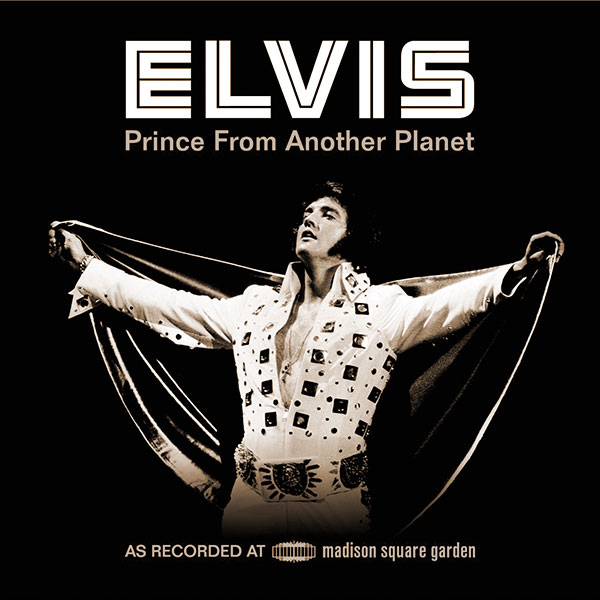
Prince From Another Planet: As Recorded At Madison Square Garden is a 2-CD/1-DVD boxed set. CD 1 is a 2012 mix by Michael H. Brauer of Elvis’ June 10, 1972, afternoon show at the Garden, mastered by Vic Anesini. CD 2 is a 2012 mix by Brauer of Elvis’ June 10 evening show at the Garden, mastered by Anesini. The DVD contains a new documentary (Like A Prince From Another Planet), footage from Elvis’ June 9 press conference in New York, and fan-shot 8-millimeter footage of the June 10 afternoon show. Also included is a 50-page book, featuring liner notes by Lenny Kaye.

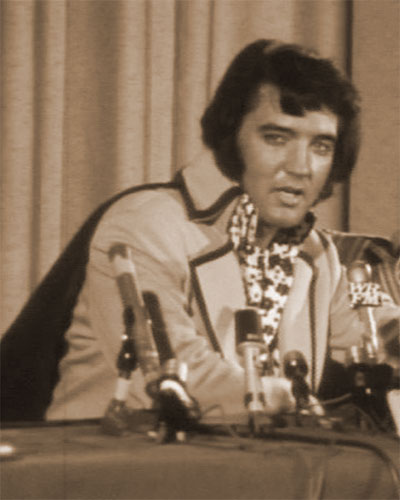
Elvis Presley's 1972 New York press conference

Elvis at his June 9, 1972, press conference

Elvis As Recorded At Madison Square Garden: Legacy Edition is a 2-CD set. CD 1 is a vintage 1972 mix of Elvis’ June 10 evening show at the Garden, mastered by Anesini in 2007. This represents the 1972 album Elvis As Recorded At Madison Square Garden, which hit store shelves only a week after the actual show. Due to Anesini’s mastering, which was first released on 2009’s Elvis: The Complete Masters Collection and 2010’s The Complete Elvis Presley Masters, the sound quality is improved over the 1992 CD release. CD 2 is a vintage 1997 mix of Elvis’ June 10 afternoon show at the Garden, mastered by Anesini for this 2012 edition. This represents the 1997 album An Afternoon In The Garden.

Sony has also released a new vinyl version of Elvis As Recorded At Madison Square Garden. This 2-LP release of the June 10 evening show is a newly mastered version of the vintage 1972 mix. Despite the fact that it is now two records, this does not contain the afternoon show. The original 1972 vinyl issue of this album was only one record, but the two record format is for better sound quality.

As you can see, fans of Elvis in 1972 have a nice selection from which to choose. As for me, I went with the deluxe Prince From Another Planet set because I wanted to hear the 2012 mixes. The Legacy Edition was not appealing to me because I already have the vintage As Recorded At Madison Square Garden mix as mastered by Anesini on The Complete Masters Collection, and I was not interested in a new mastering of the 1997 mix of An Afternoon In The Garden. I may eventually pick up the vinyl, though I tend to gravitate more towards records produced while Elvis was alive.

Prince From Another Planet (2012)

I’m not going to do a formal review, but I can’t close out without saying that Prince From Another Planet is incredible. Brauer has done a fantastic job mixing these shows. Crank up your sound system and maybe, just maybe, you can be transported back to June 10, 1972, and experience Elvis at the Garden.

As you might expect, the difference is most striking on the evening show. To say that the 1972 mix was rushed would be an understatement. This new 2012 mix finally illuminates this show in the fashion it deserves.

The Like A Prince From Another Planet documentary is worthwhile. I would like to see more documentaries of this nature, highlighting specific points in Elvis’ career. It does “spoil” a lot of the fan-shot footage, though, so you may want to watch that first.

The amateur video of the June 10 afternoon show looks about as good as 8 millimeter footage can possibly appear. Do not go in expecting professional Elvis On Tour or Aloha From Hawaii quality, though. This understandably looks grainy on large television sets. Though the original footage was silent, Sony has meticulously synched the 2012 mix of the show’s audio with the footage. To put it mildly, the footage is stunning and makes for a terrific experience . . . almost.

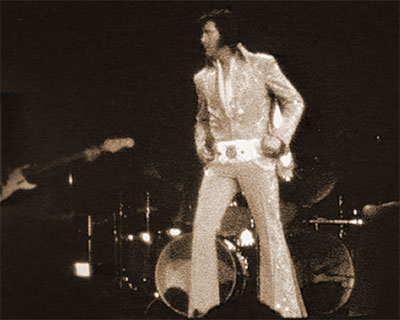
Elvis on stage at the Garden

Elvis on stage at the Garden

Only about twenty minutes of footage from this sixty minute show actually exists. During parts of the show for which there is no footage, the screen goes black while the audio continues. There are several long stretches of songs with no footage at all. To be honest, I cannot imagine a member of the “general public” (i.e., someone who is not an obsessed Elvis fan) sitting through this. Even I became restless at times, afraid to take my eyes off the big blank screen for fear I would miss the video. Sony should have provided an option to “View All Footage” and skip over the blank portions. This is but a minor quibble, though. Keep in mind while watching this that Warner Home Video is sitting on hours of professionally-filmed 1972 tour footage of Elvis. Unfortunately, Sony has no control of that footage, so kudos to them for at least bringing us this grainy alternative.

My larger complaint with the set has to do with the packaging. It is beautiful, but fails miserably at its primary job – protecting the CDs and DVD. Good luck getting them out without scratching the discs and/or creasing the packaging. As it is, my DVD has a fault during the press conference, and I have no doubt that the packaging and my admittedly anxious hands are to blame.

Elvis and the music more than make up for these shortcomings, though. If you are a fan of Elvis in 1972, Prince From Another Planet is a must-have. If you are not a fan of Elvis in 1972, I do not think this release will change your opinion. That’s okay, though. Everyone is entitled to be wrong!

* * *

Coming so soon on the heels of the recent storm, this New York themed release also reminded me to think of those in New York and neighboring areas that are affected. I think it would be a great gesture, and certainly within the spirit of Elvis’ generosity, if Sony were to release a single from this set with proceeds to benefit disaster relief efforts. In any event, we fans can also help on our own by donating funds to the American Red Cross.

A Man From Elvis Presley Boulevard

Readers,

I sincerely hope you like my new FTD Album review.

My best wishes,
TY

A review of the new FTD edition of From Elvis Presley Boulevard

The Original Album

The first ten tracks of FTD’s From Elvis Presley Boulevard, Memphis, Tennessee represent the original album that RCA released in May 1976. Recorded at Graceland in February of that year, this album is thematically the saddest ever released by Elvis. It also may be the most honest look at himself ever made available by the man living behind the gates of that home on Elvis Presley Boulevard. Despite the at times overblown production, From Elvis Presley Boulevard is a beautiful and moving album. Highlights include “For The Heart,” “Hurt,” “Never Again,” and “Love Coming Down.”
Today, Elvis is often spoken of as a singles artist rather than an album artist. Part of this comes from the admittedly mishmash quality of some of his albums. RCA had been hauling leftovers out from the vault since the very beginning when it included rejected SUN cuts like “I Love You Because” on the much-lauded Elvis Presley album in 1956. There is no question, though, that From Elvis Presley Boulevard two decades later is a coherent album through and through.
In fact, the twenty years that separate the albums Elvis Presley and From Elvis Presley Boulevard are quite evident – which is a good thing. Elvis did not devolve into an Oldies act looking to recapture past glories by singing the same types of songs over and over. As an artist, he changed over the years rather than stagnating with one style. That is not to say that From Elvis Presley Boulevard is superior to Elvis Presley – but that it is, quite rightly, an entirely different experience. It reflects the years of living the man did in those twenty years.
While Elvis Presley may be described as a bright, optimistic album, From Elvis Presley Boulevard is dark and moody. There are still bits of joy, but they are scattered and buried. Elvis had been intensely exploring “lost love” songs since at least 1972, and From Elvis Presley Boulevard represents the culmination of that often depressing but still worthwhile journey.  From Elvis Presley Boulevard is certainly among the twenty best albums that Elvis released during his lifetime.
That the Elvis of 1956 is different from the Elvis of 1960 or 1976 is one of the things that draws me to his music. No matter my mood or what is going on in my life, there always seems to be an Elvis that fits. This particular album has brought me comfort when I needed it. It is part of my journey.
Sound here on this 2012 edition is terrific. Listen to “Danny Boy”, a song Elvis had been fooling around with for decades, and you may imagine that he is singing in your den rather than his own.
The Alternate Album
Next up on disc 1 is an “alternate” version of the album using different takes of the same songs in the same sequence as the original album. I love this concept. As evidenced on A Life In Music and The Jungle Room Sessions, alternate takes of these songs can be quite revealing because they do not contain any of the post-session overdub work that either plagued or enhanced a given song.
Take 1 of “Hurt” falls apart after only a minute, though Elvis sounds great. The slightly weaker Take 2 made its debut on A Life In Music, but sound quality seems better here. I have not done A/B comparisons on any of these songs, though, so this is just based on an admittedly faulty memory.
Take 11 of “Never Again” first appeared on The Jungle Room Sessions. Again, the sound quality seems much improved to me. While I have long enjoyed The Jungle Room Sessions, there was always a muffled quality to the sound that I am not picking up here on this new release. In any event, this happens to be one of my favorite songs on the album, and this is a fine rendition.
Take 4 of “Blue Eyes Crying In The Rain” is a newly released version. Here’s a song that definitely benefits from the simpler sound compared to the released master. Check out that guitar solo at about the 1:45 mark. Unfortunately, Elvis’ voice is not quite up to par at times on this run-through – yet, it still works. “Baby, blue eyes cryin’ in the rain…” he sings near the end. Overall, he sounds much more engaged in the recording than we have been led to believe at this point of his life. This may be my new favorite version.
A Life In Music was also the debut of Take 9 of “Danny Boy,” though to my ears, this sounds different than that version. Perhaps it is only the apparent improved sound quality. Though foreboding, I love Elvis’ take on this song. At 41, that boy could still sing when he wanted!
The FTD producers get a little creative with “The Last Farewell” by creating a composite of takes 3 and 2. The master version from the original album itself was a splice of takes 5 and 3. Take 2 was previously released on The Jungle Room Sessions. As with the standalone Take 2, this new composite version is superior to the released master with overdubs. The interesting thing about this alternate album so far is that Elvis’ voice does not have as much of a depressing quality as evidenced on the released album. I am not sure why that is, whether it was a product of the subsequent overdubs or simply which takes were selected for use.
“For The Heart” is Take 1, as originally released on A Life In Music. Featuring rock ‘n’ roll infused with country, this is one of the hidden gems of the 1976 sessions. Terrific song.
Take 6 is previously unreleased for “Bitter They Are, Harder They Fall.” As with the original version, nothing really stands out about it. It is just an average album cut.
“Solitaire” always gets to me, especially the opening… “There was a man… a LONELY man…” This is take 3, previously released on The Jungle Room Sessions. How I love this song, though it can bring tears to my eyes. He was putting his pain right there on the record for all to hear.
The previously unreleased Take 3 of “Love Coming Down” is as genuine and effective as the superb master. In fact, in some ways, it may even be better – including a brief, unexpected spoken part on “and lookin’ back now…” early on in the song.
The previously unreleased Take 4 of “I’ll Never Fall In Love Again” falls apart within seconds, while Take 5 was first heard on The Jungle Room Sessions. Here is one where I definitely prefer the original album version. I cannot stand the piano work on this version. The piano portion sounds like it was intended for use at a retirement home, and it distracts me from the rest of the performance.
The Alternate Single
Every imaginary album deserves an imaginary single to promote it, and that is what FTD delivers here – mirroring the “Hurt”/”For The Heart” single released in March 1976.
Up first are previously unreleased versions of “For The Heart” — two false starts and then the complete Take 5B. It is an energetic and engaging performance.
Disc 1 concludes with a composite of Takes 4 and 3 of “Hurt.” Take 3 was previously released alone on The Jungle Room Sessions. This is a nice composite that will definitely get many spins by me.
The Making Of
Disc 2 consists of additional takes of the various songs from this album. Though I personally would have preferred a sequential presentation for this portion, reflecting the order in which Elvis recorded the songs, I can understand FTD’s decision to place entertainment considerations above historical ones. Besides, it is easy enough to re-order the songs if desired.
“For The Heart” kicks things off right with Takes 2 and 3A, previously released on The Jungle Room Sessions. Next up is Take 1 of “Bitter They Are, Harder They Fall.” This was first released on Made In Memphis, a CD I do not have. This is actually the first recording of the February session at Graceland. This is not a particularly compelling take. Elvis often sounds uncertain.
Next are two previously unreleased takes of “I’ll Never Fall In Love Again.” Take 1 is a false start, while Take 3 is complete – including that annoying piano. Elvis is hard to listen to on this one, yelling parts of the song. Between that and the piano, I found myself wishing for the song to end.
Take 3 of “Hurt” was previously issued on The Jungle Room Sessions. As with that album, it begins here with a false start and then the take is re-tried. A decent enough performance, though I prefer the master.
Take 1 of “The Last Farewell” is previously unreleased. It is okay, but certainly not a highlight. The take falls apart about three-fourths of the way through the song.
The next attempt, Take 2, of “The Last Farewell” follows. As noted above, this was originally released on The Jungle Room Sessions. I think I like the composite version from Disc 1 better.
“Never Again” features three false starts (Takes 1-3) before jumping ahead to the complete Take 9 – all previously unreleased. Take 9 is okay, but a disappointment compared to the versions on Disc 1.
“For The Heart” Take 4A first appeared on the excellent Today, Tomorrow & Forever. For those who have not been able to collect all of the individual releases, FTD’s Classic Album series does a commendable job bringing together previously released material such as this. Enjoyable, but I much prefer Take 1 from Disc 1.
Takes 6 and 7 of “Danny Boy” make their debut here, the earliest takes yet released of this song. Elvis sounds off on Take 6 and he eventually quits about a minute into the song. “Let’s take it up to E” he says before trying again on Take 7. When he once again struggles with the high notes, he quits again and states, “I liked it in C better. That’s how I’d like to do it, better.” [Interestingly, Ernst Jorgensen’s quote in A Life In Music, page 398, of Elvis saying, “I can’t make it. I’ve got too much sh-t in me, man…” when he blows take 7 has either been edited out or never actually happened.]
Take 8 is next, in C, and Elvis indeed does a better job this time, managing to complete the take – as previously released on The Jungle Room Sessions.
Made In Memphis included Take 4 of “Love Coming Down.” I find that I do not enjoy this take as much as the master or Take 3.
Take 1 of “Blue Eyes Crying In The Rain” is only a false start. Take 2, previously released on The Jungle Room Sessions, does not have the spark of Take 4. For all takes, a simpler arrangement would have greatly benefited this song. Imagine something similar to Elvis’ 1967 recording of “You’ll Never Walk Alone” as an example of what I mean. Instead, there is just too much going on here.
Take 5 of “Solitaire” is a previously unreleased false start. Take 7 was previously issued on Made In Memphis and, thus, is new to me. An okay version.
“Hurt” Take 6 is a previously unreleased false start. Take 5 is from Today, Tomorrow & Forever, a strong version.
As previously released on The Jungle Room Sessions, up next are takes 3, 4, and 5 of “Bitter They Are, Harder They Fall.” Takes 3 and 4 are false starts due to interruptions by a ringing phone and a barking dog. I guess that’s what happens when you try to record an album in your den. Take 5 manages to be complete, and Elvis puts in an enthusiastic performance.
Take 5A of “For The Heart” was first issued on Made In Memphis. Great version! This sounds pretty close to the master.
Take 4, a very brief false start, of “The Last Farewell” is previously unreleased. It is followed by the undubbed master of the song, which is superior to the album version.
I’m not exactly sure what a “master rough remix” is, but it turns out to be somewhat enjoyable for “I’ll Never Fall In Love Again” – except for that darn piano kicking it 1920s style every now and then.
For “Never Again,” we are treated to a “master remix” – this one is apparently not rough. (By the way, we are not talking JXL or Viva Elvis style remixes here, but simply changes to the original mixing channels – lest there be any confusion.)  And this one really is a treat. “Never Again” sounds wonderful like this. I would have been interested to hear the whole album receive this kind of treatment.
Finally, FTD’s From Elvis Presley Boulevard closes out with a “master rough remix” of “Danny Boy.” A beautiful recording, it seems, no matter the mix.
Disc 1 is definitely the highlight of this release. I imagine I’ll be playing that one quite often. Disc 2, while not a total letdown, mostly features some of the lesser takes.
Packaging/Booklet/etc.
As usual, the front cover mimics the original album – though I really do not like the printed inclusion of what was actually a sticker applied to the shrink wrap on the original version. It makes for a cheap look. The back cover is FTD-designed, and they have chosen to include a relatively poor photo of Elvis. He looks tired. Certainly not something to include on a cover, but FTD does not exactly have a great track record when it comes to choosing appropriate images.
The inside gatefold includes the original back cover, which I prefer. It includes a letter from Elvis stating, “I sincerely hope you like my new RCA Album.” The CDs mimic the tan labels of the original album release.
The booklet is standard fare for the Classic Album series, including a timeline and a listing of takes. The vintage RCA communications around the cover art and album content are, as always, of interest, though I wish there could have been more in this case. Apparently, Graceland was at one time to be featured on the cover in addition to Elvis. Though no reason is given, this may have been dropped for looking too similar to 1974’s Recorded Live On Stage In Memphis album.
Communication related to recording at Elvis’ home would have also been interesting to read, but nothing is provided. Like the cover, most of the booklet’s Elvis photos were taken by Ed Bonja at Elvis’ June 10, 1975, concert at the Mid-South Coliseum in Memphis. Just about every photo inside the booklet would have been a better choice to use on the back cover.
Overall
Follow That Dream Records delivers a fantastic upgrade to From Elvis Presley Boulevard. This release, especially Disc 1, will be stuck in my CD player for quite awhile. I eagerly await FTD’s take on the concluding chapter of the Graceland sessions, Moody Blue.


REVIEW: Elvis – The Complete Masters Collection (Part 4)

This is Part 4 of an ongoing series reviewing Elvis: The Complete Masters Collection. Read Part 3.


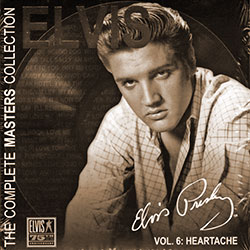
CD Vol. 6: Heartache

Elvis: The Complete Masters Collection - Volume 6This volume of The Franklin Mint‘s 36-disc Elvis: The Complete Masters Collection (mastered by Vic Anesini) presents songs falling under the theme of “Heartache.” The booklet describes this disc as “Twenty haunting melodies that reveal Elvis’ familiarity with the darker side of love.”

Heartache is certainly a theme Elvis revisited often in his recordings over the years. Many of my favorite Elvis songs would probably fit into this category, so I’m excited to give Heartache a spin.

01. That’s When Your Heartaches Begin: Elvis actually first recorded “That’s When Your Heartaches Begin” as a demo at the Memphis Recording Service in 1953. This is his professional version, though, recorded four eventful years later for RCA. He does a masterful job with the song, including the spoken-word recital in the middle – a technique that he would perfect even further a few years later with the similar “Are You Lonesome Tonight.” (Recorded: 1957)

02. Don’t: If you listen too closely to the words to “Don’t,” it can actually sound creepy from a modern perspective:

“Don’t, don’t,” that’s what you say each time that I hold you this way. When I feel like this and I want to kiss you, baby don’t say “don’t.”

This song should be judged within the context of innocence from which it sprang, though. The Jerry Leiber & Mike Stoller song features masterful lyrics, indicative of the quality of material Elvis lost out on when his association with that team ended. “Don’t” includes a quite beautiful and sincere love pledge:

I’m your love and yours I will stay. This you can believe, I will never leave you, Heaven knows I won’t.

Oddly, this track has about ten seconds of extra silence at the end once the song concludes – not reflected in the runtime on the CD sleeve, either. (1957)

03. Are You Lonesome Tonight?: “Are You Lonesome Tonight” is an Elvis masterpiece, recorded shortly after the end of his stint in the US Army. Listen to that voice. He was back, better than ever. (1960)

04. Starting Today: “Starting Today” is the first of four songs written by Don Robertson that appear on Heartache. This is a quiet, likable song. (1961)

05. (Marie’s The Name) His Latest Flame: “His Latest Flame” is one of three Doc Pomus songs on this disc. “His Latest Flame” is fantastic and includes a much-needed increase in tempo over the opening songs of Heartache. (1961)

06. Anything That’s Part Of You: Another Don Robertson song, “Anything That’s Part Of You” is as relevant to broken relationships today as it was when first recorded. This is a perfect, subtle performance by Elvis. (1961)

07. Just Tell Her Jim Said Hello: It’s hard for me to believe this weak number is from Leiber & Stoller, yet it is. “Just Tell Her Jim Said Hello” sounds like it should be a movie tune. (1962)

08. Suspicion: Doc Pomus delivers the goods again, this time with the fantastic “Suspicion.” I first heard this song on a cassette variant of Elvis Country and have loved it ever since. (1962)

09. She’s Not You: “I’d trade all of someone new for anything that’s part of you,” lamented Elvis in “Anything That’s Part Of You.” On “She’s Not You,” though the writers are different, he continues that theme: “She’s everything a girl should be, but she’s not you.” For this song, Doc Pomus teamed up with Leiber & Stoller, ensuring a sure-fire hit when also combined with another great performance by Elvis. The original pressing of Franklin Mint’s Elvis: The Complete Masters Collection contained an error on this track – the last several seconds were missing. They issued replacement discs and subsequent pressings (including mine) have not had this error [6]. (1962)

10. They Remind Me Too Much Of You: More from the pen of Don Robertson, “They Remind Me Too Much Of You” again continues the theme of “Anything That’s Part Of You” and “She’s Not You,” except now the singer has reached the stage where he wants all reminders of the love gone wrong wiped away. Robertson’s lyrics are masterful at portraying the anguish: “Must I evermore be haunted, day after day my whole life through, by the memory of each moment that I spent alone with you?” (1962)

11. What Now, What Next, Where To: “What Now, What Next, Where To,” while still lamenting a lost love, manages to strike some hopeful tones as well. This is the fourth and final Robertson composition on Heartache, wrapping up this mini-storyline as the singer finally moves on. I have to give the compiler credit for putting all of these songs together, actually making for a coherent album of sorts. (1963)

12. Blue River: I can’t stand this song and hardly ever play it. The sooner “Blue River” ends, the better. (1963)

13. It Ain’t No Big Thing (But It’s Growing): I had to go and say that, didn’t I? As soon as “Blue River” ends, an even worse song begins, “It Ain’t No Big Thing.”  While Elvis’ June 1970 marathon recording session in Nashville produced some of the best songs of his career, it also produced junk like “It’s Ain’t No Big Thing.” Nearly unlistenable. (1970)

14. I’ve Lost You [Live]: After two duds in a row, Elvis’ live version of “I’ve Lost You” is a welcome reprieve. While not as interesting as the studio version, this is still a fine performance in its own right. I love how his voice nearly blends with the Sweet Inspirations as the chorus repeats at the song’s end. (1970)

15. When I’m Over You: Like most songs, “When I’m Over You” is better than “It Ain’t No Big Thing,” but it is still one of the weaker songs from the 1970 Nashville sessions. I do enjoy the gospel sound that the background vocalists bring to the song. (1970)

16. I Will Be True: Accompanying himself on piano, Elvis takes on the Ivory Joe Hunter song “I Will Be True.” A decent performance, with much conviction. (1971)

17. Love Me, Love The Life I Lead: Elvis did not write this song, but it sure sounds like he could have:

If you’re gonna love me, love the life I lead. Need the things I need. Don’t try to change me. If you’re gonna take me, take me for what I am. I can’t be another man. I can’t be free from the life I lead.

Unfortunately, though Elvis must have connected with the lyrics, the song never really develops – a good song that probably could have been better. (1971)

18. Thinking About You: Featured on the Promised Land album and recorded at Stax Studio in Memphis, “Thinking About You” is one of Elvis’ best country songs. Wow, does it sound great on this set. Nice to have the original mix back. (1973)

19. Mr. Songman: “Mr. Songman” is a decent album cut that also served well as the flip-side to 1975’s “T-R-O-U-B-L-E.” (1973)

20. Woman Without Love: “Woman Without Love” is the worst of the songs Elvis recorded at his March 1975 Hollywood session that produced the very solid Today album. Unless I’m listening to the entire album in context, I always skip this dreadful song. (1975)

Though it contains a few duds (this is a complete masters collection, after all), Heartache is overall a stellar collection of songs. The early 1960s tracks in particular are real highlights.

Sources

(6) “Complete Masters compared/contrasted with Franklin Mint” by elvissessions, For Elvis CD Collectors Forum, 2010.


Read Part 5.