Sony releasing 5-CD boxed set celebrating 1956 – includes December 15 Louisiana Hayride concert

Today’s post was originally scheduled to be the conclusion of my coverage of Elvis Sings Guitar Man. Sony made a huge Elvis announcement today, though, so I’m shelving that piece for now.

Arriving on September 27 from Sony’s RCA/Legacy label, Young Man With The Big Beat features a plethora of 1956 material. For die-hard fans, the crown jewel of the 5-CD boxed set is the first-ever release of Elvis’ December 15, 1956, concert that marked the singer’s final appearance on the Louisiana Hayride radio program.

Only a portion of one song, “Hound Dog,” has been released from this show in the past. Based on that one song alone, I can tell you that we’re all in for one exciting ride.

The set can be pre-ordered at http://www.elvis.com/1956. From the press release, here is some additional information on a pre-order bonus:

Pre-order customers will also receive an exclusive replica vinyl 7” of Elvis’ first 45rpm EP for RCA Records. Sharing the same striking cover art as Elvis’ debut album, the EP features “Blue Suede Shoes,” “Tutti Frutti,” “I Got A Woman” and “Just Because.” This vinyl single is only available through this special website offer, and it will ship upon payment for the box set.”

Released the same day will be the Sony Legacy edition of Elvis Presley, which will be paired with Elvis.

Below is a full break-down of the Young Man With The Big Beat set, adapted from the press release and marketing material.

Disc 1: Studio Recordings

17 tracks recorded in New York, Nashville, and Hollywood, starting with the 12 songs on the debut LP, Elvis Presley (‘1254’), followed by non-LP single A-sides and B-sides, and EP tracks.

  1. Blue Suede Shoes
  2. I’m Counting On You
  3. I Got A Woman
  4. One-Sided Love Affair
  5. I Love You Because
  6. Just Because
  7. Tutti Frutti
  8. Trying To Get To You
  9. I’m Gonna Sit Right Down And Cry (Over You)
  10. I’ll Never Let You Go (Little Darlin’)
  11. Blue Moon
  12. Money Honey
  13. Heartbreak Hotel
  14. I Was The One
  15. My Baby Left Me
  16. Lawdy, Miss Clawdy
  17. Shake, Rattle And Roll

Disc 2: Studio Recordings

22 tracks recorded in New York, Nashville, and Memphis, starting with the 12 songs on the second LP, Elvis (‘1382’), followed by non-LP single A-sides and B-sides, and EP tracks.

  1. Rip It Up
  2. Love Me
  3. When My Blue Moon Turns To Gold Again
  4. Long Tall Sally
  5. First In Line
  6. Paralyzed
  7. So Glad You’re Mine
  8. Old Shep
  9. Ready Teddy
  10. Anyplace Is Paradise
  11. How’s The World Treating You
  12. How Do You Think I Feel
  13. I Want You, I Need You, I Love You
  14. Hound Dog
  15. Don’t Be Cruel
  16. Any Way You Want Me (That’s How I Will Be)
  17. Too Much
  18. Playing For Keeps
  19. Love Me Tender
  20. Let Me
  21. Poor Boy
  22. We’re Gonna Move

Disc 3: Live Recordings

Rare remasters of shows at the Frontier Hotel in Las Vegas (four songs); Little Rock, Arkansas (seven songs); and a recently discovered, previously unreleased concert in Shreveport, Louisiana, in December (ten songs).

Recorded Live At The Venus Room, Frontier Hotel, Las Vegas, May 6

 1.  Heartbreak Hotel
 2.  Long Tall Sally
 3.  Blue Suede Shoes
 4.  Money Honey

Recorded Live At The Robinson Memorial Auditorium, Little Rock, Arkansas, May 16

 5.  Heartbreak Hotel
 6.  Long Tall Sally
 7.  I Was The One
 8.  Money Honey
 9.  I Got A Woman
10. Blue Suede Shoes
11. Hound Dog

Recorded Live At The Hirsch Youth Center, Louisiana Fairgrounds, Shreveport, Louisiana, December 15

12. Heartbreak Hotel
13. Long Tall Sally
14. I Was The One
15. Love Me Tender
16. Don’t Be Cruel
17. Love Me
18. I Got A Woman
19. When My Blue Moon Turns To Gold Again
20. Paralyzed
21. Hound Dog

Disc 4: Outtakes

Four outtakes from the first historic RCA session in January (“I Got A Woman,” “Heartbreak Hotel,” “I’m Counting On You,” “I Was The One”), segueing into the complete session of February 3rd (11 takes of “Lawdy, Miss Clawdy” and 12 takes of “Shake, Rattle And Roll”); plus the first of the interviews – the complete Warwick Hotel (NYC) interview by Robert Brown in March.

  1. I Got A Woman – take unknown
  2. Heartbreak Hotel – take 06
  3. I’m Counting On You – take 13
  4. I Was The One – take 02
  5. Lawdy, Miss Clawdy – take 01
  6. Lawdy, Miss Clawdy – take 03
  7. Lawdy, Miss Clawdy – take 04
  8. Lawdy, Miss Clawdy – take 05
  9. Lawdy, Miss Clawdy – take 06
  10. Lawdy, Miss Clawdy – takes 07, 08, 09
  11. Lawdy, Miss Clawdy – take 10 (master)
  12. Lawdy, Miss Clawdy – takes 11, 12
  13. Shake, Rattle And Roll – takes 01, 02
  14. Shake, Rattle And Roll – takes 03, 05, 06, 07
  15. Shake, Rattle And Roll – take 08
  16. Shake, Rattle And Roll – takes 09, 10, 11, 12, 12 (undubbed master)
  17. The Complete Warwick Hotel Interview

Disc 5: Interviews

The Paul Wilder interview, plus his interviews with Colonel Parker and Oscar Davis; plus two segments of Elvis’ rarely heard candid monologue, “The Truth About Me,” and two advertisements for RCA Victrolas.

  1. The Complete TV Guide Presents Elvis interview
  2. Colonel Parker Interview
  3. The Truth About Me
  4. The Truth About Me Interview
  5. Victrola Radio ad 1
  6. Victrola Radio ad 2

Book

The focal point of the book, spread across its 80 pages, will be a unique, meticulously-researched, day-by-day chronology of Elvis’ iconic year, including every concert, every recording date, every television appearance, personal events in Elvis’ life, and much more. A dazzling photo array of memorabilia will illustrate each day and entry. Concert ticket stubs, RCA memoranda, letters from fans, postcards from Elvis to his family, tour itineraries, magazine covers and articles, trade charts, fan club relics, RCA publicity photos, concert photos, candid photos, and more will be a feast for the eyes and the imagination as 1956 unfolds.

Other Items

Will also include five rare 8×10 photographs, five original-size poster replicas, and a replica concert ticket stub.

* * *

I’ve lamented the seemingly constant focus on 1956 in the past. However, Elvis’ achievements in that year certainly cannot be overstated. This looks like a spectacular release, and the best part is that it’s on the mainstream label. This will certainly capture the attention of music critics and fans alike.

It wouldn’t be an Elvis boxed set without the inclusion of those four songs recorded live in Las Vegas on May 6, 1956, now would it? Those same performances, tracks 1-4 on Disc 3, have appeared on the following Elvis boxed sets:

  • Elvis Aron Presley
  • ELVIS: The King of Rock ‘n’ Roll – The Complete 50s Masters
  • Live In Las Vegas
The early to mid 1990s focused on decade boxed sets, while the late 1990s to early 2000s focused on outtake boxed sets. Will the 2010s become the decade of year boxed sets? Will success for this set mean that we’ll get a box for another year in the future? Who knows, but I can tell you one thing: Since 1977, there has never been a better time to be an Elvis Presley fan.

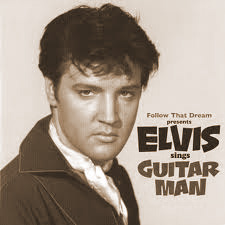
REVIEW: Elvis Sings Guitar Man 2-CD set (2011 FTD edition)

Elvis Sings Guitar Man (2011 FTD, booklet cover)

Elvis Sings Guitar Man (2011 FTD, booklet cover)

I’ve reviewed the main album masters from Elvis Sings Guitar Man in the past, so today’s review will focus on the alternate and bonus tracks that complete this latest release from Follow That Dream Records.

I should note that I don’t  have the FTD albums So High or Long Lonely Highway, so some of these tracks are new to me that may not be new to you.

“Guitar Man” [September 1967]

  • Disc 1, Track 16, Takes 1, 2, 5: After reading about this session many times over the years, it was great finally to hear for myself guitarist and singer/songwriter Jerry Reed  (the real “Guitar Man”) chatting in the studio. This is the kind of stuff that makes FTD shine, hearing a classic recording slowly come together. Sound is incredible. You can imagine you are in the studio. Take 5 is just plain fun to hear (first released on A Life In Music).
  • Disc 2, Track 11, Takes 7, 9: The ELVIS TV special may have still been a year away, but it is obvious from this track that Elvis’ comeback was already underway. Finally, he was starting to live up to his potential again. Elvis sounds inspired by Reed’s presence in the studio. Take 9 was first released on So High.
  • Disc 2, Track 12, Take 10: “Sing the living stuffing out of it, Elvis” producer Felton Jarvis encourages him just prior to this take. Oddly enough, though, take 10 is actually somewhat more subdued compared to takes 5 and 9. A decent take, but not a standout like the others. From Long Lonely Highway, this is the first take to include the “What’d I Say” jam ending.
  • Disc 2, Track 13, Takes 11, 12 (unedited, undubbed master): A treat to have the master take in its raw form here, keeping in line with the previously mentioned takes. It’s hard to sit still listening to this.

“Tomorrow Is A Long Time” [May 1966]

Disc 1, Track 17, Takes 1, 2: I mentioned above that Elvis’ comeback was underway by the September 1967 timeframe of “Guitar Man.” The opening round of the comeback actually began with the May 1966 sessions that produced this song as well as the Grammy-winning How Great Thou Art album. Though a departure for him at the time, Elvis is well-suited to this Bob Dylan tune. Take 2, first released on So High, is as good as the master, which was the very next take. Again, the sound on this CD is beyond impressive.

“Big Boss Man” [September 1967]

  • Disc 1, Track 18, Take 2: Back to the September 1967 session now, this was the second song with Jerry Reed on guitar. First heard on From Nashville To Memphis, this is overall a weak take that quickly becomes tiresome. Elvis is still trying to find his way.
  • Disc 2, Track 14, Takes 1, 3, 4, 5: This track is all false starts, but the studio chatter makes it interesting at least.
  • Disc 2, Track 15, Takes 7, 9: Jerry Reed infuses a bit of guitar-driven country into Jimmy Reed’s blues standard as the group closes in on a master. This is another impressive number. Take 9 was first released on Today, Tomorrow & Forever.

“Love Letters” [May 1966]

  • Disc 1, Track 19, Take 2: I’m not a huge fan of this song, but I will say this may well be the best version I’ve heard to date. Elvis doesn’t sound bored with it yet. In the past, I’ve generally favored his 1970 re-recording of this tune over the 1966 version. This 1966 take was first released on the Today, Tomorrow & Forever set. I don’t remember it standing out to me at the time, though.
  • Disc 2, Track 3, Takes 3, 4, 5, 7: “Too slow” Elvis announces quite correctly as the piano begins the song at what would have been a dreadful, snail’s pace. Takes 4 and 5 are also too slow, causing Elvis to end them early and call for a replay of the demo. Take 7 obviously benefits from that replay as far as tempo, but I still like Take 2 better. I’m ready to fall asleep by the end. Takes 3, 4, and 7 were first released on Collectors Gold.
  • Disc 2, Track 4, Take 8: One take back from the master. Elvis sounds weaker. Again, hard to sit through the whole thing. [First release: So High.]

“Indescribably Blue” [June 1966]

Disc 2, Track 9, Vocal Overdub Take 1: I’m not smart enough to explain why “Indescribably Blue” is a million times better than “Love Letters,” but I know that it is. One of his finest performances. Vocal overdub take 1 first released on Today, Tomorrow & Forever.

“Fools Fall In Love” [May 1966]

Disc 1, Track 20, Takes 1, 4: I think its the arrangement more than anything else that ruins what otherwise might have been a decent version of this Drifters classic. Take 4, first released on Long Lonely Highway, manages to be even more annoying than the master by including what sounds like a “chirping” trumpet in the right channel. Elvis does not yet sound as comfortable as he does on the final version.

“High Heel Sneakers” [September 1967]

  • Disc 1, Track 21, Take 5: Take 5 is more than worthy, benefiting from an awesome mix. Sounding more like a jam than a formal studio cut, this track will definitely go into heavy rotation for me. [First release: So High.]
  • Disc 2, Track 21, Takes 1, 6: Elvis sounds so good on Take 1, it’s a shame that Felton calls a halt to it early on for being too slow. Take 6 also falls apart.
  • Disc 2, Track 22, Take 7 (unedited master): First heard on From Nashville To Memphis, Elvis sings a line of “Ode To Billy Joe” before what became the master take begins. This “unedited” version runs nearly two minutes longer than the original single. As many fans have said before me, if only Elvis had gotten around to doing an entire blues album.

“Down In The Alley” [May 1966]

  • Disc 1, Track 22, Take 1 [First release: From Nashville To Memphis]
  • Disc 2, Track 1, Takes 2, 3, 4
  • Disc 2, Track 2, Take 6 [First release: So High]

Though the groove is somewhat similar, I definitely prefer “High Heel Sneakers” over “Down In The Alley.” It’s hard not to crack a smile at lyrics like, “I’ll plant you now and dig you later, because you’re a fine sweet potato,” though. Speaking of lyrics, for years I misheard one line of this song as, “The clock is striking on Uncle Sam…” so I never quite understood what that part of the song was supposed to mean. He actually says, “The clock is striking a mournful sound…” The funny thing is, I still have a hard time not hearing it as the “Uncle Sam” version, even though I know it’s wrong. In any event, if you like this song, you’ll enjoy takes 1 and 6. Takes 2, 3, and 4 are all false starts.

“Come What May” [May 1966]

  • Disc 1, Track 23, Take 2 [First release: So High]
  • Disc 2, Track 6, Takes 3, 4 [Today, Tomorrow & Forever]
  • Disc 2, Track 7, Take 6 [Collectors Gold]
  • Disc 2, Track 8, Take 7 [From Nashville To Memphis]

While fun, “Come What May” seems out-of-place on this album (right up there with “Fools Rush In”). Maybe the imaginary album should have been 12 tracks and these two listed as additional bonus songs. The more I listen to it, I think my main problem with this song is the trumpet. If only there was a version without it, I might like it more. I have nothing against trumpets in general, by the way. In fact, I used to play trumpet in middle school band way back when.

“Just Call Me Lonesome” [September 1967]

  • Disc 2, Track 19, Takes 3, 4 [First release: So High]
  • Disc 2, Track 20, Takes 5, 6

For this song, I was hoping for at least one take without the steel guitar. No such luck.

“You Don’t Know Me” [September 1967]

Disc 2, Track 23, Take 2: This alternate is a little slower. Elvis’ voice sounds like velvet. This was a perfect song for him. First released on So High.

“Singing Tree” [September 1967]

  • Disc 1, Track 24, Take 1 [First release: So High]
  • Disc 2, Track 16, Takes 2, 4 [Take 4: Close Up]
  • Disc 2, Track 17, Take 8
  • Disc 2, Track 18, Takes 10, 13 [Take 13: Long Lonely Highway]

I have a soft spot for “Singing Tree,” so I was interested to hear his first attempts at it. Take 1 is slower, but otherwise unremarkable. Take 8 has some potential, but begins to feel repetitive after awhile. One problem with all of these takes is simply too much Jordanaires for my tastes. As I’ve noted in the past, I really need a Jordanaire-specific mute button when listening to Elvis. After 13 takes without an acceptable master, they gave up on the song and moved on to “Just Call Me Lonesome” (above).

Disc 2, Track 24, Takes 1, 2, 3 (remake): The following night, Elvis and the band took another stab at “Singing Tree.” I definitely like the “remake” arrangement better. However, the background vocalists are even more annoying on take 3, so I won’t be playing it too often. Elvis throws in a somewhat incongruous “take it home, baby” near the end of the song. Remake take 5 would become the released master.

“I’ll Remember You” [June 1966]

  • Disc 1, Track 25, Vocal Overdub Take 2: Having grown up on the Aloha From Hawaii live version, I never heard the studio version of “I’ll Remember You” until release of the From Nashville To Memphis set. Though it is a remarkable performance, vocal overdub take 2, first released on So High, does not really stand out in a significant way from the master.
  • Disc 2, Track 10, Vocal Overdub (unedited master): This is a case where I prefer the edited version of a song. For my tastes, this unedited master, first released on From Nashville To Memphis, just goes on too long. As on most tracks, sound quality here is outstanding. Listen to the percussion in the right channel – awesome!

Bonus Song: “Beyond The Reef” [May 1966]

  • Disc 2, Track 5, Takes 1, 2 [undubbed master]: This has an informal feel that I enjoy. “Beyond The Reef” also fits in well as a bonus song on this album. Undubbed master first released on From Nashville To Memphis.
  • Disc 1, Track 15, Take 2 [overdubbed master]: The undubbed version is superior to this version. “Beyond The Reef” went unreleased during Elvis’ lifetime. This overdubbed version made its debut on 1980’s Elvis Aron Presley boxed set.

Source for “first release” information was the excellent Elvis In Norway site.

* * *

Cover art for Elvis Sings Guitar Man is well-done and suits the 1967 time period. The booklet is informative, and I particularly enjoyed seeing the repertoire (material submitted by Elvis’ music companies; songs requested directly by Elvis; song list sent to arranger) for a cancelled August 1967 session originally scheduled for Los Angeles. As for sound quality, it is incredible. FTD seems to be getting better and better with every release. In particular, the Classic Album series has reinvigorated the label.

The absolute highlight of this release for me is hearing Elvis Presley and Jerry Reed in the studio together on “Guitar Man” and “Big Boss Man.” It was a collaboration that would sadly prove to be all too short.

Elvis Sings Guitar Man is a unique album, compiling music from scattered releases to better document an important timeframe in Elvis’ career. The opening salvos of the comeback had been fired, but few noticed because of the release strategy around his music at that time. Whether acknowledged or not, Elvis had taken the first steps down his path of musical redemption. Big changes were just around the corner.

* * *

DISC 1

01) Guitar Man 2:22
02) Tomorrow Is A Long Time 5:24
03) Big Boss Man 2:54
04) Love Letters 2:52
05) Indescribably Blue 2:50
06) Fools Fall In Love 2:08
07) Hi-Heel Sneakers 2:48
08) Down In The Alley 2:54
09) Come What May 2:03
10) Mine 2:39
11) Just Call Me Lonesome 2:08
12) You Don’t Know Me 2:32
13) Singing Tree 2:22
14) I’ll Remember You 2:48

Bonus Song
15) Beyond The Reef (overdubbed version)

First Takes
16) Guitar Man – takes 1,2,5 4:22
17) Tomorrow Is A Long Time – takes 1,2 6:15
18) Big Boss Man – take 2 3:35
19) Love Letters –take 2 2:53
20) Fools Fall In Love – takes 1,4 2:40
21) Hi-Heel Sneakers – take 5 4:58
22) Down In The Alley – take 1 3:13
23) Come What May – take 2 2:12
24) Singing Tree – take 1 3:11
25) I’ll Remember You – vocal overdub take 2 4:14

DISC 2

May 1966 Sessions
01) Down In The Alley – takes 2,3,4 2:18
02) Down In The Alley – take 6 2:51
03) Love Letters – takes 3,4,5,7 4:39
04) Love Letters – take 8 3:12
05) Beyond The Reef – takes 1,2 (undubbed master) 5:42
06) Come What May – takes 3,4 2:27
07) Come What May – take 6 2:07
08) Come What May – take 7 – 2:21

June 1966 Sessions
09) Indescribably – (vocal overdub) take 1 2:55
10) I’ll Remember You – (unedited master) vocal overdub 1 4:10

1967 Sessions
11) Guitar Man – takes 7,9 2:52
12) Guitar Man – take 10 2:55
13) Guitar Man – takes 11, 12 (unedited/undubbed master) 4:02
14) Big Boss Man – takes 1,3,4,5 3:19
15) Big Boss Man – takes 7, 9 3:48
16) Singing Tree – takes 2,4 3:28
17) Singing Tree – take 8 3:03
18) Singing Tree – takes 10,13 3:44
19) Just Call Me Lonesome – takes 3,4 2:55
20) Just Call Me Lonesome – takes 5,6 2:31
21) Hi-Heel Sneakers – takes 1,6 2:51
22) Hi-Heel Sneakers – take 7 – (unedited master) 4:57
23) You Don’t Know Me – take 2 2:57
24) Singing Tree – (remake) takes 1,2,3 3:21
Witness Elvis recording “Guitar Man” with Jerry Reed

From Thomas’ latest post over at the Elvis Today Blog:

As the door to the studio opens and Jerry Reed walks in, Elvis looks at him and says, ‘Lord, have mercy, what is that?’ Jerry, not having shaved in about a week and still wearing the clothes from his interrupted fishing trip, nervously approaches Elvis with a battered guitar case in his hand…”

Experience the full post over on Elvis Today Blog.

Where Elvis never stood alone

I enjoy exploring all different areas of Elvis’ career. With Follow That Dream’s recent announcement that Amarillo ’77 will be among its June CD releases, I thought this would be a good time to take a look back at the 1977 recordings officially available to this point.

Not including the post-midnight tracks on FTD’s New Year’s Eve audience recording, there have been three key official releases of 1977 concert material in the years since the death of Elvis:

  • Unchained Melody (2007, FTD, covering February)
  • Spring Tours 77 (2002, FTD, covering March through May)
  • Elvis In Concert (1977, RCA, covering June; serves as soundtrack to TV special of same name)

All three of these releases have something to offer fans who are willing to listen.

Unchained Melody contains one of my favorite Elvis performances from any time, a stirring rendition of “Where No One Stands Alone,” with Elvis leading the way on piano. Recorded February 16 in Montgomery, Alabama, this marks the only known instance of Elvis performing this song live.

I actually prefer this nearly heart-wrenching version over his 1966 studio master of the song, recorded for How Great Thou Art. After hearing the raw emotions of this live version, the studio version sounds almost antiseptic – as if in 1966 Elvis had not really lived enough to fully convey the song compared to eleven years later.

Just a few days later, on February 21 in Charlotte, North Carolina, Elvis pulls out a blues number that he seemed to always have ready in his back pocket – “Reconsider Baby.”

Though Elvis formally recorded the song in 1960 for Elvis Is Back!, a 1956 version of the song from “The Million Dollar Quartet” jam at Sun Records made its debut on The King of Rock ‘n’ Roll in 1992. Live versions from 1961, 1969, and 1972 have also been released, all of which, like this 1977 track and its predecessor on New Year’s Eve, feature a committed Elvis. Lowell Fulson first recorded the song in 1954, around the same time that Elvis recorded “Good Rockin’ Tonight.” In Charlotte, “Reconsider Baby” is a good performance. Elvis never lost his feel for the blues.

At that same February 21, concert, Elvis also performs the only known live version of “Moody Blue” (outside of giving up after a false start in the same city the night before). This is another good performance. It is sometimes amazing how well Elvis could sing a song that he admittedly did not know. It is also a testament to the work of the TCB Band, that they could carry him when all he had was a lyric sheet. Lyric sheet or not, this is still a worthy listen.

At a Valentine’s Day show in St. Petersburg, Elvis takes over the piano momentarily from Tony Brown to show him how to play the intro to “Blueberry Hill.” What follows is a fantastic, though all too brief, take on the song – which Elvis first recorded in 1957.

A February 18 performance of “Release Me” in Columbia, South Carolina, is another highlight. For the briefest of moments, it sounds like it could be 1970 – but only a moment.

The highlight of Spring Tours 77 is beyond a doubt his March 26 performance of “Blue Christmas” in Norman, Oklahoma. The song takes on a different tone here than his bluesier 1968 live versions or his 1957 studio version. He sounds desperately sad, which is only underscored by our knowledge that he has already celebrated his final Christmas by this point. While I like the performance, this is not something I’ve added to my normal Christmas rotation. It’s just too sad.

The often-underrated Elvis In Concert contains a number of fine performances, including one of his best ever versions of “My Way” on June 21 in Rapid City. A brief snippet of “I Really Don’t Want To Know” from that same show also illustrates that he could still tap into his power. Even Omaha on June 19, sometimes described by others as one of his worst concerts, offers up a decent version of “How Great Thou Art” and an entertaining performance of “And I Love You So.”

My original intent in all of this was not to go through track-by-track highlights of 1977, but to point out that even one of Elvis’ lesser years can still hold magic. It is a mistake to focus only on certain aspects of Elvis’ career and to ignore the rest. While 1968-1971 may indeed be my personal favorite span, I would not want that to be the only Elvis I ever hear.

It is also unfair to use peak moments like 1968-1972 or 1954-1958 as the measuring sticks for everything else. Of course, everything is going to pale in comparison to those very special times in his life, but that does not mean that it lacks value. 1977 should not be ignored, not by Elvis Presley Enterprises, not by Sony & FTD, and most of all, not by us – his fans. I commend FTD for deciding to release Amarillo ’77.

So, pull out those 1977 recordings and give them a spin. He was on that stage for his fans, and he left these and other recordings as part of his legacy. They are an essential part of understanding the whole Elvis.

* * *

The Amarillo ’77 concert took place on March 24, 1977. Below is the track listing:

01 That’s All Right
02 Are You Lonesome Tonight
03 Reconsider Baby (intro only)
04 Love Me
05 If You Love Me
06 You Gave Me a Mountain
07 Jailhouse Rock
08 O Sole Mio/It’s Now or Never
09 Little Sister
10 Teddy Bear/Don’t Be Cruel
11 My Way
12 Band Introductions/Early Mornin’ Rain
13 What’d I Say/Johnny B. Goode
14 Band Introductions
15 School Days
16 Hurt
17 Hound Dog
18 Can’t Help Falling in Love
Bonus Tracks
19 And I Love You So
20 Fever
21 Love Me Tender
22 Blue Suede Shoes
23 Steamroller Blues
24 Help Me
25 Why Me, Lord
26 Bosom of Abraham
27 You Better Run
28 How Great Thou Art
29 Trying to Get to You

Space: An Elvis Odyssey [The Film Frontier blog]

Thomas Melin over at the Elvis Today Blog asks readers what song they would choose to be woken up to if they were flying in space for NASA (“Hound Dog Most Played Elvis Song In Space” — Elvis Today Blog). NASA’s astronaut wake-up songs are a tradition dating back to the mid-1960s. As Thomas notes, the most played Elvis song for astronauts is “Hound Dog.”

As much as I love Elvis, I have to admit that I would pick the classic Star Trek theme as my wake-up song. As for Elvis songs, it definitely would not be “Hound Dog.” That would not even make the long list, much less the short one.

Maybe something like “If I Can Dream,” or even “Follow That Dream” — because surely I would feel like I was dreaming if I were fortunate enough to be there.

Thomas is also the author of The Elvis Today Blog, a book that shares his thoughts and insights on Elvis, available now from Blurb.

Memphis! Elvis no stranger to hometown hits

Of those released during his lifetime, Elvis recorded over 100 songs in his adopted hometown of Memphis, Tennessee. Though this represented only 15% of his total output, there is no doubt that many of his greatest recordings originated from Memphis. Below is my personal ranking of his best Memphis songs.

#1 Suspicious Minds (1969)
Worldwide 50 Gold Award Hits, Volume 1

#2 Mystery Train (1955)
For LP Fans Only

#3 Baby, Let’s Play House (1955)
A Date With Elvis

#4 Kentucky Rain (1969)
Worldwide 50 Gold Award Hits, Volume 1

#5 Promised Land (1973)
Promised Land

#6 Good Rockin’ Tonight (1954)
A Date With Elvis

#7 That’s All Right (1954)
For LP Fans Only

#8 In The Ghetto (1969)
From Elvis In Memphis

#9 Any Day Now (1969)
From Elvis In Memphis

#10 Pledging My Love (1976)
Moody Blue

#11 Don’t Cry Daddy (1969)
Worldwide 50 Gold Award Hits, Volume 1

#12 After Loving You (1969)
From Elvis In Memphis

#13 Stranger In My Own Home Town (1969)
From Memphis To Vegas/From Vegas To Memphis [Back In Memphis]

#14 Wearin’ That Loved-On Look (1969)
From Elvis In Memphis

#15 Power Of My Love (1969)
From Elvis In Memphis

#16 Rubberneckin’ (1969)
Almost In Love

#17 Your Love’s Been A Long Time Coming (1973)
Promised Land

#18 Good Time Charlie’s Got The Blues (1973)
Good Times

#19 Way Down (1976)
Moody Blue

#20 It’s Midnight (1973)
Promised Land

#21 Blue Moon (1954)
Elvis Presley

#22 Long Black Limousine (1969)
From Elvis In Memphis

#23 Moody Blue (1976)
Moody Blue

#24 You Asked Me To (1973)
Promised Land

#25 Thinking About You (1973)
Promised Land

Besides being recorded in Memphis, another thing that most of these songs have in common is that their associated albums have not yet received the Classic Albums treatment by Sony’s Follow That Dream collectors label.

In fact, it was wishing for albums such as Promised Land, Moody Blue, From Elvis Presley Boulevard, The Sun Sessions, and From Elvis In Memphis that inspired me to create this list in the first place.

So, if not Memphis, where did Elvis record the most?

Some might guess Nashville, but it turns out that Elvis recorded most often in Hollywood, representing about 275 songs released during his lifetime (around 38% of his total output).

A last bit of trivia, Elvis recorded the song “Memphis, Tennessee” in Nashville, rather than Memphis, so it fails to even qualify for consideration on today’s Memphis list.

Elvis 1967: How Great Thou Art album

How Great Thou Art became Elvis’ first album release of 1967 when it hit record stores that February. The LP, recorded May 1966 in Nashville, featured the following songs:

SIDE 1

  • How Great Thou Art
  • In The Garden
  • Somebody Bigger Than You And I
  • Farther Along
  • Stand By Me
  • Without Him

SIDE 2

  • So High
  • Where Could I Go But To The Lord
  • By And By
  • If The Lord Wasn’t Walking By My Side
  • Run On
  • Where No One Stands Alone
  • Crying In The Chapel (October 1960)

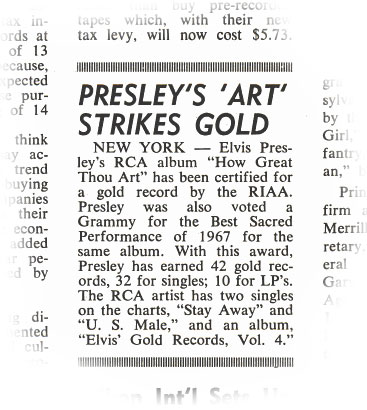
Though he had been nominated ten times in the past, Elvis went on to earn his first Grammy award for the How Great Thou Art album, which won for Best Sacred Performance of 1967. By March 1968, How Great Thou Art had also sold enough copies to earn a gold record.

Billboard article, March 30, 1968

Billboard article, March 30, 1968

After the lean years of 1964 and 1965, arguably the low points of his entire recording career, Elvis fired the opening salvos of what eventually became his comeback during that May 1966 session. How Great Thou Art features many moving performances, perhaps none more so than the title song. It also showcases the raucous energy of “Run On,” a song that rocked more than any of his recent secular efforts.

* * *
Research Sources

  • Elvis Presley: A Life In Music – The Complete Recording Sessions by Ernst Jorgensen, St. Martin’s Press, New York, 1998.
  • Billboard, Vol. 80, No. 13, Billboard Publications, Inc., March 30, 1968.
  • ELVIS: His Life From A To Z by Fred Worth and Steve Tamerius, Wings Books, New York, 1992.

Throughout 2011, The Mystery Train is commemorating the 44th anniversary of 1967. Why? Riders of this train love exploring Elvis’ entire career, not just the 1950s. Find out more here.