Elvis Movies: BLUE HAWAII

After an eight month break, I am continuing my rewatch of Elvis Presley movies. Next up in the random sequence is Blue Hawaii – his eighth movie. Except for the Elvis: That’s The Way It Is documentary, I’ve probably seen this one more than any of the others.


“Ecstatic romance … Exotic dances … Exciting music in the world’s lushest paradise of song!”
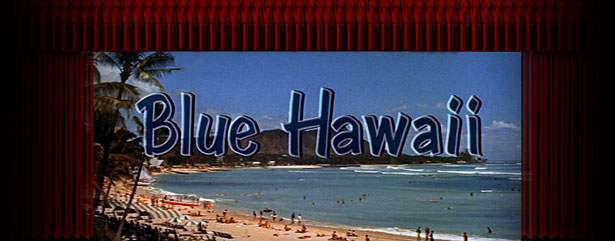
Blue Hawaii (Paramount)
Wide Release: November 22, 1961 (United States)
Starring: Elvis Presley, Joan Blackman, Angela Lansbury
Screenplay By: Hal Kanter
Story By: Allan Weiss
Music Score By: Joseph J. Lilley
Produced By: Hal B. Wallis
Directed By: Norman Taurog
Running Time: 101 Minutes


Just before filming began on Blue Hawaii, Elvis performed a benefit concert for the USS Arizona Memorial in Pearl Harbor. It would prove to be his last live performance until the June 1968 shows captured for the ELVIS television special (NBC) and his August 1969 concert series at the International Hotel in Las Vegas.
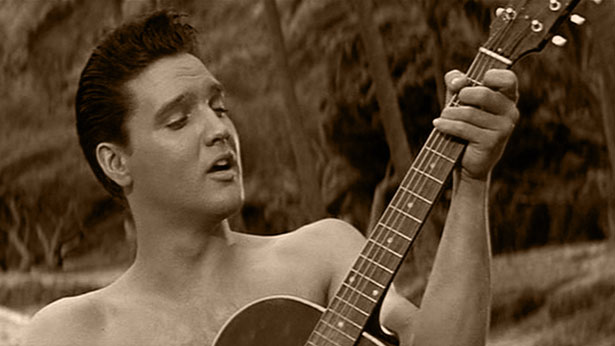
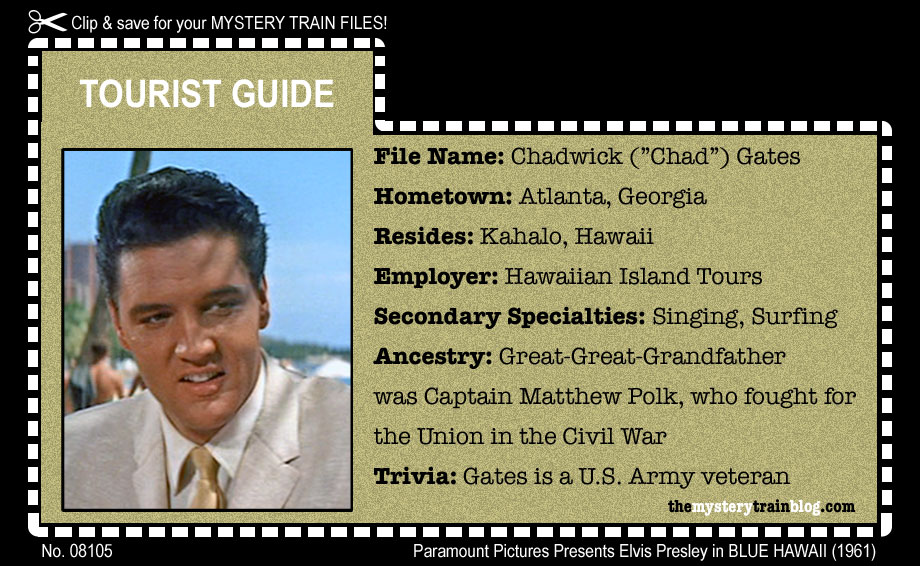
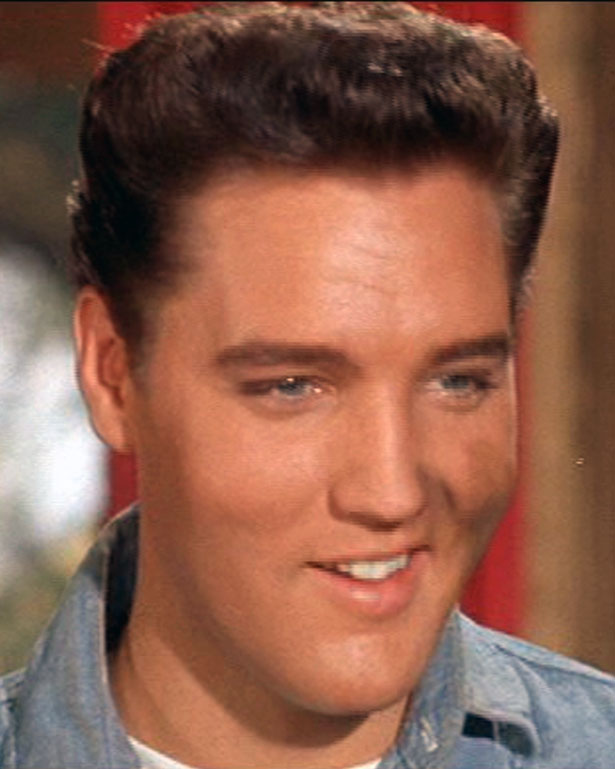
Elvis Presley is Chad Gates in 1961’s BLUE HAWAII (Paramount)

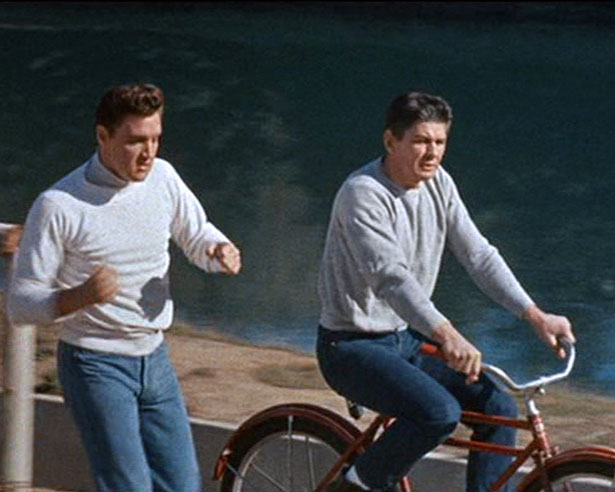
In Blue Hawaii, Elvis stars as Chadwick Gates – and I can’t even get started on this post without noting that if there was ever a less Elvis character name than “Chadwick” in one of his movies, I sure don’t know what it is. Anyway, after a 2-year stint in the U.S. Army, where he served in Europe, Chad returns to Kahalo, Hawaii, where he has lived for the last 15 years with his parents. His father is an executive at the Great Southern Hawaiian Fruit Company, and Chad’s entire future has been neatly laid out for him there – mostly by his mother.
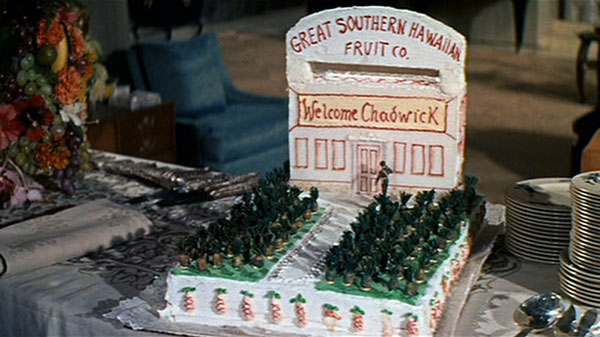
Chadwick’s mother has entire life plotted out for him in 1961’s BLUE HAWAII (Paramount)

Chad is having none of it, though. Instead, he hides out for a week at a beach shack until his father gets word through Chad’s girlfriend, Maile Duval, that he needs to come home before his mother finds out. The return home does not go well, particularly for the audience.

This is where we are introduced to one of the most annoying characters in any Elvis movie ever: Chad’s mother, Mrs. Sarah Lee Gates – portrayed by Angela Lansbury, who was only nine years older than Elvis.
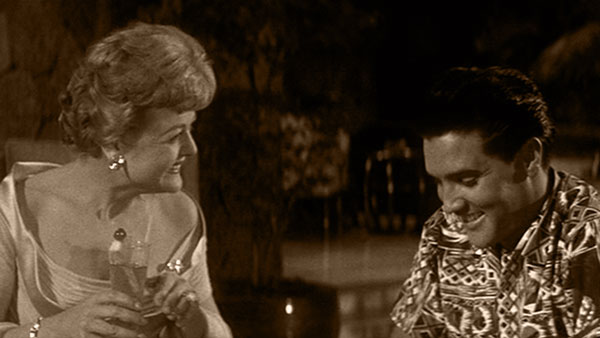
Angela Lansbury is Mrs. Sarah Lee Gates and Elvis Presley is Chad Gates in 1961’s BLUE HAWAII (Paramount)

Mrs. Gates is from Georgia, and, as much as the Hawaiian portrayals in this film unfortunately are often stereotypes, so, too, is Blue Hawaii‘s portrayal of a Southerner. Mrs. Gates, of course, has to speak in an over-the-top Southern accent, call her husband “Daddy,” and bring up the Civil War, including a required reference to General “Stonewall” Jackson of the Confederacy. She also notes embarrassment around the fact that a war hero relative was a “Yankee” (i.e., he fought for the North/Union, rather than the South/Confederacy).

Mrs. Gates is alcoholic, racist, classist, and just all around insufferable.

All that said, Roland Winters, who plays Mr. Fred Gates, Chad’s father, does an excellent job playing off of Lansbury’s outlandishness. Winters gets two of the funniest lines of the movie – in two separate scenes. In the first, Mr. Gates has just commented to his wife that Maile is pretty.

Mrs. Gates: “Daddy, aren’t you forgetting yourself?”
Mr. Gates: “I’m trying, Mother. I’m trying.”

Later, Chad storms out of the house after an argument with his parents.

Mrs. Gates: “Oh, Daddy, what did we do wrong?”
Mr. Gates: “Offhand, I’d say, we got married.”

Maile is portrayed by Joan Blackman. The character’s father is French and mother is Hawaiian. Blackman and Elvis often seem wooden together in Blue Hawaii, though they would have much better chemistry in the following year’s Kid Galahad.
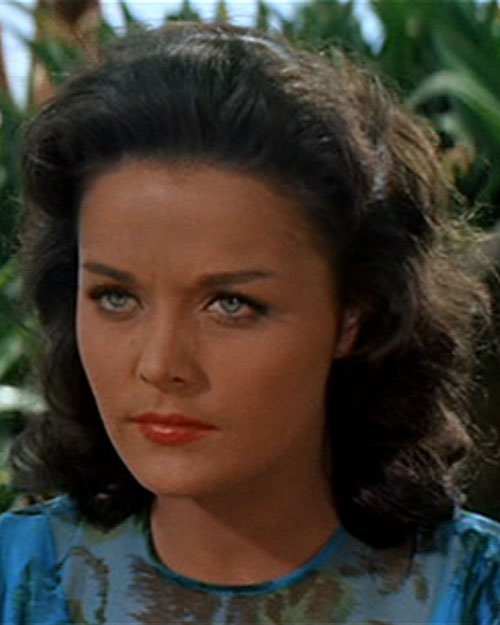
Joan Blackman is Maile Duval in 1961’s BLUE HAWAII (Paramount)

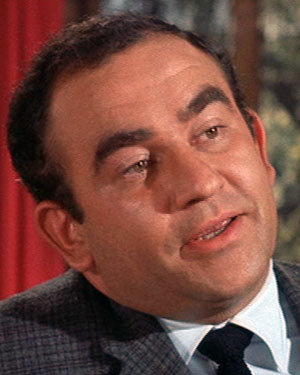
Shunning the fruit company, Chad instead decides to become a tourist guide and is soon hired by Floyd the Barber (Howard McNear), who owns the tourism company where Maile works. Okay, it’s not really Floyd the Barber, but Mr. Chapman does appear otherwise to be the exact same character that the beloved McNear played on the Andy Griffith Show from 1961 to 1967.
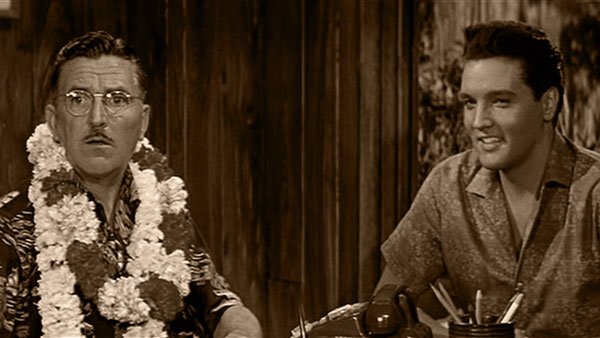
Howard McNear is Mr. Chapman and Elvis Presley is Chad Gates in 1961’s BLUE HAWAII (Paramount)

Chad’s first assignment? Escorting an attractive schoolteacher and four teenage girls around Hawaii, naturally. Jealousy and hilarity ensues. Well, jealousy anyway.

Jennie Maxwell’s portrayal of angry teenager Ellie Corbett soon livens up the movie, including this zinger she launches at Chad: “I believe you’re being paid to show us a good time. When does it start?”
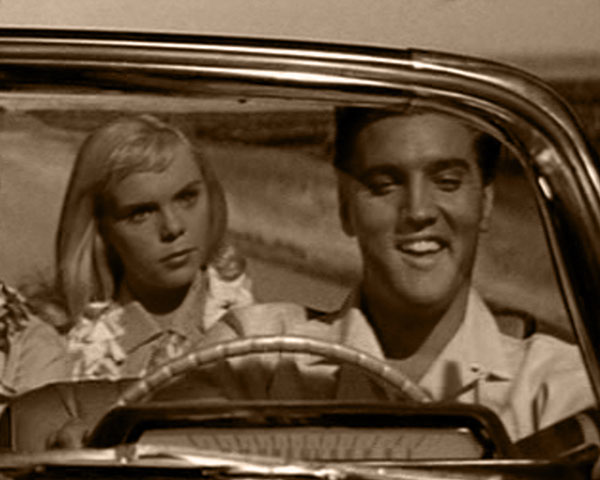
Jennie Maxwell is Ellie Corbett and Elvis Presley is Chad Gates in 1961’s BLUE HAWAII (Paramount)

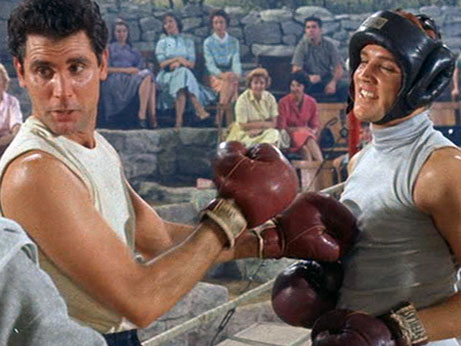
Considering that Blue Hawaii is his eighth movie overall and his fourth since returning from the Army in real life, Elvis’ acting is disappointingly poor several times – particularly when he does this high-pitched yelling thing that he tends to revert to in his movies when he seems uncomfortable in a scene (e.g., “I’ll getcha!” in one of the scenes of this movie).

I suspect director Norman Taurog was simply not focused on getting the best acting performance out of Elvis, and Hal Kanter’s flimsy script doesn’t help matters, either. Elvis had natural talent as a singer and musician, but he should have taken acting classes to hone his craft if he was serious about making films. 1957’s King Creole had already proven what Elvis could do under the guidance of an inspiring director (Michael Curtiz).

While Elvis may stumble on the acting side at times in Blue Hawaii, he brings his A-game on the music side. There are a number of stone-cold classic songs here, especially “Can’t Help Falling In Love” – which he sings in a beautiful version to Maile’s grandmother on her 78th birthday.

Years later, Elvis would reminisce about another musical highlight, saying, “We did a movie called Blue Hawaii, and in the movie, there was a song called the ‘Hawaiian Wedding Song,’ and it was so real, it took me two years before I realized, it was just a movie.”
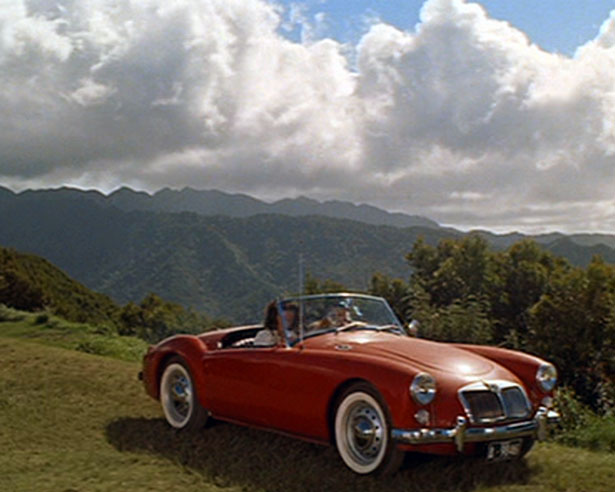
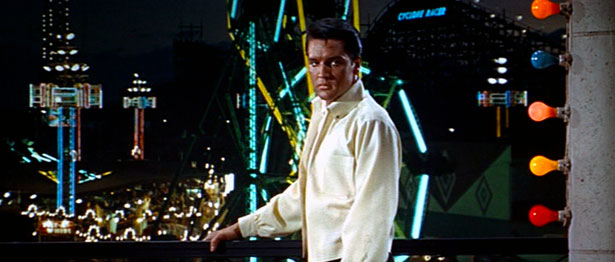
Hawaii is the real star of 1961’s BLUE HAWAII (Paramount)

Blue Hawaii has some highlights, including the idyllic locations, great music, and a sense of escapism, but overall, it feels like a missed opportunity. Its subsequent success at the box office, however, would help lock Elvis into mostly similar movies going forward.


Boldly Go

Frank Atienza, who played Ito O’Hara in Blue Hawaii, later played a Kohn villager in “The Omega Glory” (1968) episode of Star Trek.
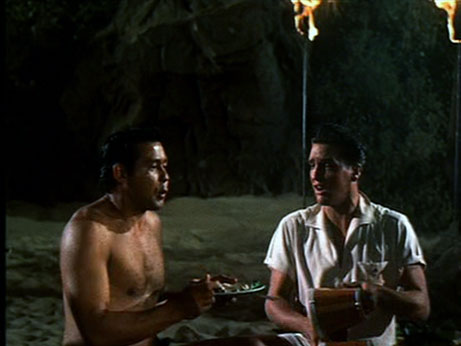
Frank Atienza is Ito O’Hara and Elvis Presley is Chad Gates in 1961’s BLUE HAWAII (Paramount)
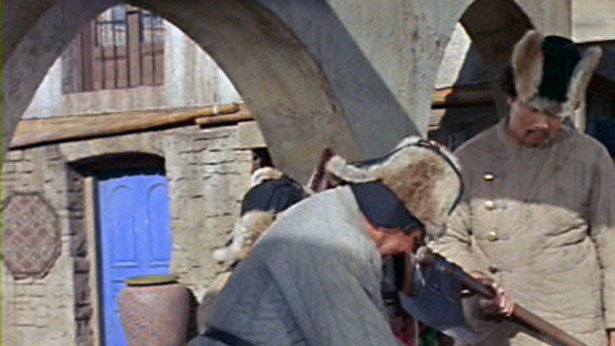
Frank Atienza (far right) is a Kohn villager in the 1968 STAR TREK episode “The Omega Glory” (Paramount)

Ron Veto, who has an uncredited role as a Hawaiian in Blue Hawaii, later appeared in numerous Star Trek episodes as a member of the crew of the USS Enterprise as well as other uncredited roles on the show.


Blue Hawaii Tote Board

  • Punches: 21+
  • Songs: 16
  • Kisses: 13

Songs In Blue Hawaii

  1. Elvis Presley: “Blue Hawaii” (1961), written by Leo Robin & Ralph Rainger
  2. Elvis Presley: “Almost Always True” (1961), written by Fred Wise & Ben Weisman
  3. Elvis Presley: “Aloha Oe” (1961), written by Queen Liliuokalani
  4. The Surfers: “Hawaiian Beach Chant (Slap Happy/Shave And A Hair Cut)” (1961) [performed twice], written by unknown
  5. Elvis Presley: “No More” (1961), written by Don Robertson & Hal Blair, based on “La Paloma” by Sebastián Iradier
  6. Elvis Presley: “Can’t Help Falling In Love” (1961), written by George Weiss, Hugo Peretti, & Luigi Creatore, based on the classical composition “Plaisir d’Amour” by Giovanni Martini
  7. Elvis Presley: “Rock-A-Hula Baby” (1961), written by Fred Wise, Ben Weisman, & Florence Kay
  8. Elvis Presley: “Moonlight Swim” (1961), written by Sylvia Dee & Ben Weisman
  9. Elvis Presley: “Ku-U-I-Po” (1961), written by George Weiss, Hugo Peretti, & Luigi Creatore
  10. Elvis Presley: “Ito Eats” (1961), written by Sid Tepper & Roy C. Bennett
  11. Elvis Presley: “Slicin’ Sand” (1961), written by Sid Tepper & Roy C. Bennett
  12. Elvis Presley: “Hawaiian Sunset” (1961), written by Sid Tepper & Roy C. Bennett
  13. Elvis Presley: “Beach Boy Blues” (1961), written by Sid Tepper & Roy C. Bennett
  14. Elvis Presley: “Island Of Love” (1961), written by Sid Tepper & Roy C. Bennett
  15. Elvis Presley: “Hawaiian Wedding Song (Ke Kali Nei Au)” (1961), written by Charles E. King, Al Hoffman, & Dick Manning

The Mystery Train’s Blue Hawaii Scorecard

  • Story: 2 (out of 10)
  • Acting: 3
  • Fun: 7
  • Songs: 8
  • Overall: 5 (For Elvis Fans Only)

Blue Hawaii Around The Web


Click image for larger, full-color version


“Get rid of all bitterness, rage, anger, harsh words, and slander, as well as all types of evil behavior. Instead, be kind to each other, tenderhearted, forgiving one another, just as God through Christ has forgiven you.”
Ephesians 4:31-32 NLT
As Recorded At RCA Hollywood Studios: ELVIS ON TOUR – First Reactions

Before the 15-city, April 1972 concert series chronicled in MGM’s Elvis On Tour documentary even began, Elvis Presley already had a busy year.

In mid-January, Elvis began rehearsals for his next Las Vegas season – his sixth such month-long engagement since 1969. From January 26 to February 23, he performed 57 concerts at the Las Vegas Hilton. RCA recorded portions of various concerts in mid-February. Most of these recordings would go unreleased during Elvis’ lifetime. “An American Trilogy,” however, was released as a single in April, while “It’s Impossible” would appear the following year on the Elvis (Fool) album.

His wife, Priscilla, had moved out of Graceland in late 1971, and the couple formally separated on February 23. A month later, on March 27, Elvis began a recording session at RCA’s Hollywood Studios. The session lasted through March 29 and yielded the following masters:

  • Separate Ways (Single A-Side)
  • For The Good Times (Studio version unreleased until 1995)
  • Where Do I Go From Here (Album cut)
  • Burning Love (Single A-Side)
  • Fool (Single B-Side)
  • Always On My Mind (Single B-Side)
  • It’s A Matter Of Time (Single B-Side)

Though Elvis was not a songwriter, many of the songs he chose to record during the session reflected his personal life and featured heartbreaking lyrics about love lost:

Separate Ways: “Someday when she’s older, maybe she will understand why her mom and dad are not together. The tears that she will cry when I have to say goodbye will tear at my heart forever” (written by Red West and Richard Mainegra).

For The Good Times: “Hear the whisper of the raindrops flowing soft against the window, make believe you love me one more time” (written by Kris Kristofferson).

Fool: “Fool, you didn’t have to hurt her. Fool, you didn’t have to lose her. Fool, you only had to love her, but now her love is gone” (written by Carl Sigman and James Last).

Always On My Mind: “If I made you feel second-best, girl, I’m so sorry I was blind” (written by Mark James, Wayne Carson, and Johnny Christopher).

Due to its happy lyrics, the singer had to be goaded into recording “Burning Love,” the only rock ‘n’ roll number of the session. It became his last big hit on the pop charts.

On March 30, MGM’s camera crews arrived at the studio and began rolling for the Elvis On Tour documentary. For two days, Elvis and his band re-created the recording session they had just completed and then rehearsed for the upcoming tour. The majority of these recordings are captured on Discs 5 and 6 of Sony’s new Elvis On Tour set, the focus of today’s post. As I have done with the live recordings, this will mostly be a stream-of-consciousness approach as I listen to the discs for the first time – so bear with me.


Disc 5 kicks off with a slightly slower, gritty-sounding version of “Burning Love.” Unfortunately, this version of “Burning Love” eventually falls apart. I really liked it!

After some studio chatter, another version of “Burning Love” kicks off. Maybe Elvis will finish this one. I honestly wasn’t looking forward to the studio discs on the set. I was more focused on the live concerts. Uh oh, a couple minutes in, and it sounds like it might turn into another long false start. All right, Elvis is back on track, maybe he will finish it. Close enough, anyway. I really enjoyed this version.

A third attempt at “Burning Love.” Sounds awesome! Definitely reminiscent of the master so far. Maybe Elvis will stay focused. We’re closing on the ending. Maybe a complete version. I love it!

Elvis sings a line of “Sweet, Sweet Spirit,” and then they are off into a rehearsal of “For The Good Times.” This is such a beautiful song.

I’m not sure why they never released Elvis’ studio version of “For The Good Times.” The live version recorded a few months later on As Recorded At Madison Square Garden, which is inferior, beat it to record stores, but surely they could have used it on a subsequent studio album? It seemed they were always trying to fill gaps on albums, so why not use a quality recording like this one that was just sitting in the vault?

Elvis sounds so good on this. His voice is perfect for this song. “For The Good Times” is one of those, like 1970’s “How The Web Was Woven,” where it’s fun even to listen to rehearsal snippets. There’s a lot of laughter and clowning around between takes. I’m glad his fellow performers are seemingly able to keep Elvis in good spirits during such a rough period.

“For The Good Times,” at least that I’ve heard so far, doesn’t work nearly as well in a live concert setting as it does here in the studio. While I do wish Elvis had tried “Always On My Mind” on stage, I suspect the same would have been true of that song.

I could listen to “For The Good Times” all day, which is a good thing, because there are apparently a lot of takes of this song on this set. I just like to close my eyes and listen to his voice.

Elvis sings a few lines of “El Paso” between takes, which I remember hearing before on FTD’s Elvis On Tour: The Rehearsals. Too bad he didn’t attempt a full version.

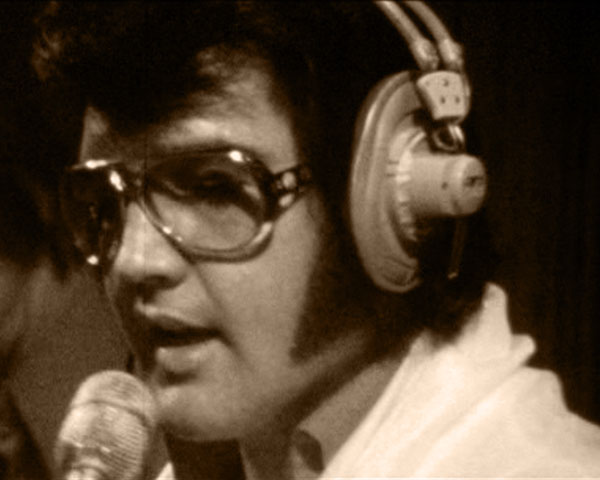
And suddenly they are rockin’ again with “Johnny B. Goode”! It falls apart quick, though. James Burton sounds so awesome on electric guitar. They launch it again, and it falls apart again just as Elvis begins to sing. I don’t know if this was the first session where Elvis is using headphones, but they seem really to bother him.

A third attempt… will they keep going this time? Oh, yes they will! This is the version which is excerpted at the beginning of the Elvis On Tour documentary and appears in full on the Elvis On Tour: The Rehearsals CD.

Then we pick up in progress on a rehearsal of “Always On My Mind.” This is one of my favorite songs, specifically the version from This Is Elvis – which was recorded during this mock session. Though the term wasn’t in use back then, that version was a bit of a remix in that it had some 1981 overdubs, but the untampered version was later released on The Great Performances and Elvis On Tour: The Rehearsals. I still tend to gravitate towards the This Is Elvis version.

Elvis has started a proper version of the song now. It’s not the This Is Elvis take yet, and it unfortunately turns out to be a long false start. The song begins again, but the band is not together, so it stops.

Take 3, and it’s the one from This Is Elvis. It sounds good. I love James’ guitar part on this, rather than the steel guitar of the master version. This gives it more of a pop and less of a country feel. In the realm of lost Elvis opportunities after his death, one of the biggest is that the This Is Elvis remix version of “Always On My Mind” was not released as a single in 1981. Instead, Willie Nelson got the hit when he recorded and released his version in 1982. Nelson’s version became so popular that many people think the song originated with him.

Now we are on to “Separate Ways.” I was typing about “Always On My Mind” and missed it. I need to back the CD up. Okay, here we go. Track 16. This feels slower than usual. Too slow. This might be one of the takes used in the Elvis On Tour movie. Let’s see if he cuts it for being too slow.

I don’t know how Elvis sang the lines about Lisa Marie, which I excerpted above. I wouldn’t have been able to get through it.

“I think I can do it better,” Elvis says after the song concludes. How many times is he going to torture himself?

Some of the dialogue from Elvis On Tour is here, including Elvis saying, “Ronnie, it seems a little bit slow in the beginning.” It appears he didn’t actually cut the song in progress like the movie makes it appear, though. This next take still seems a bit too slow. It was also used in the movie.

Elvis Presley recording at RCA Hollywood Studios on Thursday, March 30, 1972 (MGM)

On to “Proud Mary” – so presumably the concert rehearsals have begun. It’s an okay version. Lots of microphone feedback at times. This is one where it works better in concert, I guess because Elvis played off the energy of the crowd. Ronnie Tutt is great on drums, of course.

“Never Been To Spain” is next, much like in the live show. Elvis did not do a studio version of a number of these songs, including “Proud Mary” and “Never Been To Spain,” so these rehearsals could have filled that gap – but Elvis is simply not focused enough. This portion of the CD is disappointing – though not unexpected. I’m glad the mock studio session portions were so great, at least.

Hmm…the rest of this disc and then all of another disc with this? Come on Elvis, get on it, man.

“You Gave Me A Mountain” is next. I’ve been enjoying the live versions from this set, even though it’s normally not a standout song for me. The first attempt is a false start due to more microphone feedback. This is another one without a formal studio version. Elvis sounds tired or slightly out of it. He stops the song early on.

And then we’re on to “Until It’s Time For You To Go,” which has been tiring on the live shows and is really no better here. I wish they had finished “You Gave Me A Mountain” instead.

I hope there aren’t ten takes of “Until It’s Time For You To Go” on here. Otherwise, it might be time for me to go!

Yay, “Polk Salad Annie” is next. Elvis doesn’t seem right here, I unfortunately have to say. I guess something happened between the excellent mock session on the 30th and the lackluster rehearsal so far on the 31st.

Well, I guess the rehearsal version doesn’t have the Scheff solo like the live versions do. I have played it back a couple of times, but I keep getting distracted in the middle of it by how Elvis sounds. So, it is actually possible I missed it. I don’t have the heart to play it again.

“Love Me” is next. He sounds a little better here. At least at the beginning. I don’t know. If only Elvis had taken some time off to get his life together instead of making this movie – but he just wasn’t like that. The Elvis Presley Show must go on.

That’s the end of CD 5. A strong start and a poor finish. I can’t say I’m too excited anymore about CD 6, which picks up where this one left off.


All right, I took a little break and put some LEGOs together with my bride. Now, on with the rehearsal.

Up first is “All Shook Up.” At least Elvis has some spunk in him at the beginning of this song. Then, it’s time for “Heartbreak Hotel.” Elvis continues to sound a little better, and James Burton is terrific as always on electric guitar. The “Teddy Bear/Don’t Be Cruel” medley is up next. Elvis seems slightly more engaged with “Teddy Bear” than usual. Elvis then launches into the bluesy “Hound Dog” intro before accelerating into the full-speed version. You can tell he’s holding back here, which I think is fine for a rehearsal, actually. This is a song that thrives on an audience, so doing it with the band and a camera crew, I can see how it’s not that inspiring.

“The First Time Ever I Saw Your Face” is up next. He had recorded the song in Nashville in 1971, and it would soon be the B-Side of “An American Trilogy” in April. I like the arrangement here better than the single version. The Ronnie Tutt drumming adds an extra dimension to it. It’s not one of my favorite songs, but it is better than “Until It’s Time For You To Go” – particularly in this arrangement.

“A Big Hunk O’ Love” picks the pace back up. I love how this arrangement is so respectful of his original 1958 version. After a decent version, Elvis has them run through it again. And it is still good! Elvis seems much better now than at the beginning of the rehearsal. I love this song, especially the 1972 and 1973 versions.

The band then tears into a great version of “See See Rider.” Elvis seems quite engaged on the song, even without an audience.

Next in the rehearsals for the live show, they run through “For The Good Times” – the first overlap with the mock session. It’s not as fantastic as the previous day, but it still sounds good. A second attempt sounds better, though it eventually falls apart. They go a third time. Elvis’ voice really suits this song. He doesn’t like something, though, and he stops it early on, and they go a fourth time. I still like even these rehearsal versions better than the live versions I’ve heard thus far. That voice. Wow.

Elvis had recorded a studio version of “Funny How Time Slips Away” in 1970, after running through it live the previous year. They rehearse it next. The 1972 versions just don’t compare at all to the stellar 1970 studio version or even the 1969 live version. For 1972, this rehearsal isn’t a bad version, though. I like it better than the live versions I’ve heard of that year, at least.

Elvis rocks into “Burning Love” next, another overlap with the mock session of the previous day. And again, it’s not as good here, but it’s still a fun version. This feels faster than the previous day as well. The first rehearsal attempt falls apart near the end, so they go a second time.

I wish they would keep going with “Burning Love,” but instead they move to “Help Me Make It Through The Night,” which Elvis had recorded in 1971. It appeared the previous month on the album Elvis Now. It’s not a bad song, and Elvis is engaged on it.

“Can’t Help Falling In Love” is next. Too fast for my taste. An unremarkable version.

Elvis dips way back into his past with “Young And Beautiful,” a song from the movie Jailhouse Rock (1957). I would love to know how this one came about as a contender for his 1972 setlist. It has a decent arrangement and everything. Unfortunately, he did not put the song in the live show. This would have been far better than “Until It’s Time For You To Go,” for instance. I first heard this “Young And Beautiful” rehearsal on Elvis On Tour: The Rehearsals, and I have loved it ever since.

“Lawdy Miss Clawdy” sounds good. Elvis could still rock ‘n’ roll when he wanted. “Release Me” is next and sounds good as well. Elvis first recorded the song live during his early 1970 Las Vegas engagement. He sings slightly different lyrics in 1972, though. In 1970 he sings, “To live a lie would be a sin,” whereas in 1972 he sings, “To live a lie would bring us pain.” They run through “See See Rider” again for some reason. It sounds as good as earlier in the rehearsal. “See See Rider” is another song that made its debut in the early 1970 Vegas season. “Proud Mary,” again from the early 1970 Vegas season, is rehearsed a second time as well. This is much better than the version from the beginning of the rehearsal.

They run through “Never Been To Spain” again, too. I’m glad he hit these songs again so that we can have decent versions. If only they had done “Polk Salad Annie” again.

The rehearsals, which took place on Good Friday, close out with a number of inspirational songs. Up first is “I, John,” which Elvis had recorded in 1971 and would release on the He Touched Me album in April. The album would earn Elvis his second Grammy award. It’s a fun version of the song. Next is a brief rendition of “Bosom of Abraham,” which has a similar feel and also appears on He Touched Me. This performance appears in the Elvis On Tour movie.

The group then sings “You Better Run.” There is real joy in this music, and I’m glad this aspect of Elvis was captured.

A great version of “Lead Me, Guide Me,” also from He Touched Me, is next. This performance appears in the Elvis On Tour movie as well.

The group closes out the rehearsal and the CD with a medley of additional inspirational songs: “Must Jesus Bear The Cross Alone/Turn Your Eyes Upon Jesus/Nearer My God To Thee.” This is the kind of music Elvis sang when he was unwinding with friends, and it’s the perfect way to end the rehearsals.

These rehearsals had a rocky start, but finished strong. Overall, CDs 5 and 6 end up being winners.


Selected Sources

  • Elvis Presley: A Life In Music – The Complete Recording Sessions by Ernst Jorgensen, St. Martin’s Press, New York, 1998.
  • Elvis Day By Day: The Definitive Record Of His Life And Music by Peter Guralnick and Ernst Jorgensen, Ballantine Books, New York, 1999.
  • Elvis Presley In Concert, accessed February 12, 2023.
  • Keith Flynn’s Elvis Presley Pages, accessed February 12, 2023.
  • ELVIS: His Life From A To Z by Fred Worth and Steve Tamerius, Wings Books, New York, 1992.

“Lead me, O LORD, in thy righteousness because of mine enemies; Make thy way straight before my face.”
Psalm 5:8

As Recorded At San Antonio Convention Center: ELVIS ON TOUR – First Reactions

My last Elvis On Tour post was so off-the-cuff that I failed to give much background. MGM in 1972 filmed portions of Elvis Presley’s April concert tour for a documentary. Multitrack recorders captured audio from four of the concerts, which make up four of the six CDs of Sony’s Elvis On Tour set released last month (also released digitally in late 2022). Elvis’ record label released none of the audio recordings during his lifetime, and, until this release, only one of the four concerts had been officially available in audio form.

Here is the itinerary for the April 1972 concert tour, sourced from the 2010 Elvis On Tour Blu-ray book (Warner Home Video):

April 5: Buffalo, NY
April 6: Detroit, MI
April 7: Dayton, OH
April 8: Knoxville, TN (Afternoon Show)
April 8: Knoxville, TN (Evening Show)
April 9: Hampton Roads, VA (Afternoon Show)
April 9: Hampton Roads, VA (Evening Show) [Elvis On Tour CD 1]
April 10: Richmond, VA [Elvis On Tour CD 2]
April 11: Roanoke, VA
April 12: Indianapolis, IN
April 13: Charlotte, NC
April 14: Greensboro, NC [Elvis On Tour CD 3]
April 15: Macon, GA (Afternoon Show)
April 15: Macon, GA (Evening Show)
April 16: Jacksonville, FL (Afternoon Show)
April 16: Jacksonville, FL (Evening Show)
April 17: Little Rock, AR
April 18: San Antonio, TX [Elvis On Tour CD 4 | Close Up CD 4]
April 19: Albuquerque, NM

Elvis and his band played 19 shows for 15 straight days in 15 different cities. This must have been grueling. Last time I covered the previously unreleased Hampton Roads concert from the evening of Sunday, April 9, 1972. For today’s post, I’m going to jump ahead to Disc 4, which has a new mix of the San Antonio Convention Center concert from Tuesday, April 18, 1972. BMG released the first mix of this show way back in 2003. The reason I’m jumping ahead to this one is to “save” the remaining two previously unreleased concerts.

Elvis Presley performing at the San Antonio Convention Center on Tuesday, April 18, 1972 (MGM)

Though I stopped playing it once I heard this new set was coming, I already know this concert from Close Up, so there shouldn’t be any surprises here.

Also Sprach Zarathustra (Theme from 2001: A Space Odyssey)  I just love this opening. So perfect for an Elvis concert. If I recall correctly, it was conductor Joe Guercio’s wife who came up with the idea for this piece to introduce Elvis.

See See Rider: People might find listening to four shows recorded within nine days to be boring, but I enjoy it. I think of it as if I was fortunate enough to follow Elvis on part of his tour. Of course you’d hear mostly the same songs, but there would always be a little something different in there, too. It does make reviewing a little difficult, though, because my thoughts are as similar as the song versions. Anyway, this is a strong “See See Rider,” and Elvis sounds better than he does at the beginning of Hampton.

Proud Mary: I first heard “Proud Mary” on the As Recorded At Madison Square Garden (June 10, 1972, Evening Show) album. While his 1970 versions of “Proud Mary” might be better (e.g., On Stage), the 1972 versions remain compelling, and this is one of the best from that year. This version also appears in the film.

Never Been To Spain: All-in-all, San Antonio has a better start than Hampton. Elvis seems more focused. This is a great version of “Never Been To Spain,” another song that I first heard on the Madison Square Garden album. This version is better, and it appears in the movie.

You Gave Me A Mountain: Introduced during his February 1972 Las Vegas engagement, “You Gave Me A Mountain” became a mainstay of Elvis’ setlist. The song appears in Elvis On Tour (1972) [Hampton Roads version], Aloha From Hawaii (1973), and Elvis In Concert (1977). The version here is solid.

Until It’s Time For You To Go: This song just doesn’t work well live. Even the studio version of “Until It’s Time For You To Go” should have simply been an album track rather than becoming a single. Elvis begins to lose some focus here. Hopefully, “Polk Salad” will get things back on track.

Polk Salad Annie: A good version.

“Good evening, ladies and gentlemen. Welcome to the show,” Elvis says. This is probably the latest in a show I’ve heard Elvis welcome the audience. “I’d like to do some of my first records for you,” he continues, before jokingly singing a half-line of “Carry Me Back To Old Virginia.”

Wait, we are still in Texas, right? I guess Elvis wanted to go back to Virginia.

I don’t blame him.

Love Me: The only real interest here is James Burton on guitar.

All Shook Up

Teddy Bear/Don’t Be Cruel

Heartbreak Hotel: Elvis first introduced this bluesy arrangement in his 1969 Las Vegas shows. A decent version for 1972.

Hound Dog: The bluesy “Heartbreak Hotel” nicely sets up the bluesy “Hound Dog” intro before Elvis launches into the song full bore. Madison Square Garden has a better take on the slow-to-fast “Hound Dog,” though.

How Great Thou Art: Oh, to have been there to see Elvis perform “How Great Thou Art” live. This is another stellar version of the song he first recorded in 1966. Glen Hardin features on piano.

I Can’t Stop Loving You: This was one of my favorite songs on the Madison Square Garden album (it is hard to talk about Elvis live in 1972 without mentioning that classic album). This is a great version. This is one of the very rare occasions where 1972 versions of a song equal or exceed Elvis’ 1969 and 1970 versions.

Love Me Tender

Suspicious Minds: James Burton’s guitar intro is fantastic. The more I repeatedly listened to Hampton after writing my review, the less I liked the “Suspicious Minds” on there. This one seems much better so far. Well, not so fast, Elvis sounds distracted again. I like when he has fun, but “Suspicious Minds” is one of his best songs and is a highlight of concerts from this era, so it is disappointing when a version is subpar. Madison Square Garden has it beat by a mile.

Comin’ Home, Baby/Introductions By Elvis: This version of the introductions appears in the Elvis On Tour movie.

For The Good Times: Elvis’ voice is so beautiful. At times, “For The Good Times” sounds like a lullaby. I love his phrasing on “Don’t say a word about to-mor-row or forever. There’ll be time enough for sadness when you leave me.”

Burning Love: Featured in the movie, this is a killer version of “Burning Love.” Much better than Aloha From Hawaii several months later.

An American Trilogy: Dixie/Battle Hymn Of The Republic/All My Trials – Elvis substitutes “Disneyland” for “Dixieland” in the opening song of “An American Trilogy” before proceeding to perform an okay version. The orchestra is sloppy at times. Hampton remains his best version ever of “An American Trilogy.”

Funny How Time Slips Away: The 1970 studio version is so much better than any live version I’ve heard so far. This version of “Funny How Time Slips Away” is nothing special.

Can’t Help Falling In Love: Wow, the show seems short. I forgot to check the run time before starting the CD. Before “Funny How Time Slips Away,” Elvis said they weren’t leaving yet, and joked they still had 30 songs to go. I guess he really meant 2 songs to go. While San Antonio started stronger, Hampton is by far the better Elvis On Tour show of the two I’ve played so far.

So, it turns out the Texas show is just under 56 minutes long! About ten minutes shorter than Hampton.

Not a bad show, and it was definitely a welcome highlight of the Close Up box back in the day, but it is not all that memorable compared to other shows of 1972. Arguably, the two showstoppers of a 1972 Elvis concert are “Suspicious Minds” and “An American Trilogy,” and both versions here are subpar.

“How Great Thou Art” is certainly a stand-out here, though, as are some others, including “Never Been To Spain” and “I Can’t Stop Loving You.” It may not be his best show, but Elvis still delivers.


“All the nations You made will come and bow before You, Lord; they will praise Your holy name.”
Psalm 86:9

As Recorded At Hampton Coliseum: ELVIS ON TOUR – First Reactions

Some Elvis Presley fans have been waiting over 50 years for his record label to release an extensive collection of audio from MGM’s 1972 concert documentary Elvis On Tour. Though there have been some scattered releases over the years, a comprehensive, six-volume set for Elvis On Tour audio finally appeared last month on digital and this week on CD. It’s been only about 30 years of waiting for me, though, as I wasn’t aware of the amount of Elvis On Tour recordings until the early 1990s.

While much of this material has been bootlegged in varying degrees of quality, the vast majority of it has not been officially released. As I tend to avoid bootleg releases, it appears my patience is finally being rewarded.

I don’t really feel like doing a formal review as I did for 2014’s similar That’s The Way It Is: Deluxe Edition, which covered MGM’s 1970 documentary of the same name. While there is less material here, I also have far less time and energy than I did back then. Instead, I am going to write in a “live” stream-of-consciousness type way. I hope you don’t mind. I plan to cover one CD in this first post.

I am cutting the packing tape off the outer shipping box now. I am really not into unboxing videos, but I’m sure you can find one from someone else out there. The packaging wasn’t the best. The outer case of the actual CD set is slightly bulged out on the top. However, it’s acceptable to me. I am liable to mar it myself at some point anyway. So, I’m proceeding to remove the shrink wrap. Otherwise, this would have been the shortest post ever as I arranged a return and exchange.

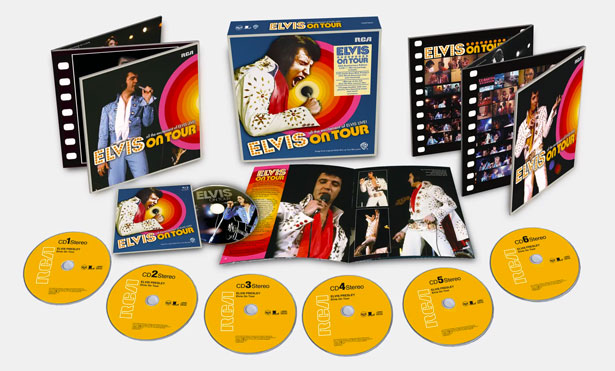
ELVIS ON TOUR (Sony, 2023) | Credit: Sony

The box art isn’t bad. I like the vintage style logos. Elvis has always looked a little “off” in Elvis On Tour to me, and that is reflected in many of the related photos.

It’s the music I care about, though, so on with Disc 1. I don’t even know which show is up first! Let’s see…

Well, the disc doesn’t even bother to say. Let me check the booklet.

Disc 1 is the Hampton Coliseum in Virginia, April 9, 1972. This concert formed the bulk of the Elvis On Tour movie, for which the four concerts included in this set were recorded and filmed. Outside of the film footage itself, only “An American Trilogy” from this Hampton show has been officially released on audio until now.

Let me hook up my headphones. I don’t want to blast the family out of the house.

The show is over 66 minutes – pretty long for an Elvis concert. He usually kept them at about an hour, probably due to the influence of his Las Vegas stints on his tour shows. The hotel’s priority in Vegas was to get the audience back out into the casino to gamble, so management did not like when his show lasted over an hour. While that wouldn’t have been a consideration as he criss-crossed the country on multiple tours throughout the 1970s, Elvis was definitely a creature of habit.

Also Sprach Zarathustra: Best known as the theme to MGM’s 1968 movie 2001: A Space Odyssey, “Also Sprach Zarathustra” is an exciting way to begin a concert – perfect for Elvis, despite having been written in 1896! It’s unfortunate that a “sound-alike” piece was used in the film itself in lieu of “Also Sprach Zarathustra” due to rights issues with the composition. The inferior piece, called “2001 Alternate,” was re-used in 1981’s This Is Elvis as well. As proven here, Elvis concerts used the real version, not the one you hear in the Elvis On Tour and This Is Elvis movies.

See See Rider: Right off the bat, Elvis sounds a little off. I know this is a good show, though, based on the movie, so I’m not too concerned. This song was used in the 1972 film.

I Got A Woman: This track has audio issues on Elvis’ vocals. He is in the background only. A disappointing way to start the set, I have to say. This song is used in the movie without these kinds of issues. Okay, about a minute or so in, Elvis is now fully audible. Why wouldn’t they fix this? Some fans have done so, taking minutes. Why not a company with the resources of Sony? I will never understand these kinds of missteps on Elvis releases. Well, no matter, it’s just a minute, and on a lesser song at that.

“I’d like to tell you it’s a pleasure to be here in West Virginia,” Elvis jokes. And then we’re on to the next song.

Never Been To Spain: In the realm of useless trivia, former racecar driver Dale Earnhardt, Jr.’s favorite song is Elvis’ version of “Never Been To Spain” (presumably from the As Recorded At Madison Square Garden album). Here in Hampton, this is a decent version. James Burton on electric guitar is a highlight.

You Gave Me A Mountain: Oh, Elvis, it’s too early in the set for such a downer song. But here we go. Just a few weeks into his separation from his wife Priscilla, this is where Elvis was at this time in his life, and I respect that he was attempting to heal through his music. “You Gave Me A Mountain” has never been a huge favorite of mine, but this is certainly a decent and committed version. You can hear the pain in his voice as he sings, “My woman got tired of the heartaches.” This rendition appears in the film.

Okay, I got bored during “You Gave Me A Mountain” and looked up what day of the week this concert was held. It was a Sunday.

Until It’s Time For You To Go: Elvis keeps the pace slow. This was one of his singles in 1972, and it wasn’t a good choice. His voice sure is pretty on it, though. I wasn’t even born when Elvis performed this show, but how I wish I could have somehow been there. I was only two when Elvis died, so never had the chance to see him in concert. In some ways, you could say my intense fandom of Elvis Presley is due to him being ripped away from the world too soon… and this has all been my quest to experience what it would have been like to witness Elvis first-hand.

Polk Salad Annie: Here we go! Elvis picks the pace back up. This song is a showcase for Jerry Scheff on bass. You’ll recognize this performance from the movie, too. It is great to hear the Sweet Inspirations – as this is a showcase song at times for them as well.

“I’d like to do a few oldies but goodies for you, ladies and gentlemen,” Elvis says before launching into “Love Me.” I believe this is the first time I’ve heard Elvis use that phrase – and about his own classic songs at that.

Love Me: It’s a typical 1972 version. In the recent past, he did it much better in 1970.

All Shook Up: The video of this one made its debut on Elvis: The Lost Performances VHS in 1992. This is its first official audio release. It’s really not that notable, however.

Teddy Bear/Don’t Be Cruel: Also from Elvis: The Lost Performances, Elvis has fun with Glen D. Hardin by making him begin the song on piano multiple times before finally singing. This medley isn’t a favorite, but it’s a decent version. Unfortunately, the audio of the “Don’t Be Cruel” part of this performance was later used in the 2010 DVD & Blu-ray release of Elvis On Tour to replace “Johnny B. Goode” over the opening credits due to rights issues. New old stock of that release was included in the physical version of this Elvis On Tour set – i.e., the Blu-ray included in this 2023 set has the butchered opening from 2010. The real selling points of this release are the CDs. I see the Blu-ray as a free bonus disc. Best used as a drink coaster. For the proper opening, I recommend watching the movie by buying/renting a digital version or streaming it. Or catch it during a TV broadcast, of course (how quaint!).

Are You Lonesome Tonight: A beautiful rendition of one of my favorite songs. Featured in The Lost Performances, I’m thrilled finally to have this rendition in my collection.

“Please ‘Release Me,’ baby,” Elvis says, but Glen instead launches into “I Can’t Stop Loving You.” Getting Elvis back for that “Teddy Bear” fun?

I Can’t Stop Loving You: Okay, so I guess the whole segment from “All Shook Up” to “I Can’t Stop Loving You” was in The Lost Performances. Between that release and Elvis On Tour itself, we have most of this concert available in video form. I never thought it would take over 30 years for this audio from The Lost Performances to be released – much less 50 for the audio from the film proper.

Hound Dog: This has the “bluesy” intro, as later featured on the As Recorded At Madison Square Garden album (June 10, 1972). I practically grew up on that album, so I like it. This Hampton version has a little too much “scatting” from Elvis for my taste, though.

Bridge Over Trouble Water: Elvis absolutely conquered this song in 1970. By 1972, it just wasn’t the same, though. Elvis had an unfortunate tendency to speed up a song over time. I guess to fit as much into those 60 minutes as possible.

Suspicious Minds: Wow, this feels way too early in the show for this song. This is a fast version, but he sounds good. His best versions are from 1969 and 1970, but if you can put that aside, the 1972 and 1973 versions are good on their own terms. Oh, to have been there! “Suspicious Minds” is one of those songs I always look forward to on a new-to-me concert. This one was a slight let-down due to Elvis playing around a bit with the audience, but still good. This was my Mom’s favorite song (specifically the Alternate Aloha version).

For The Good Times: Better than the sleepy version later recorded at Madison Square Garden.

Comin’ Home, Baby/Introductions By Elvis

An American Trilogy: Dixie/Battle Hymn Of The Republic/All My Trials – The video and audio from this first appeared in 1981’s This Is Elvis movie and album, albeit with additional instrumental overdubs added after Elvis’ 1977 death. That version is by far my favorite of “An American Trilogy.” The more authentic version here is unfortunately disappointing by comparison. The prominent scream from an audience member prior to the reprise of “Battle Hymn Of The Republic” is still there, at least (I used to wonder if that was overdubbed as well).

I mean, it’s still a great version, but it loses something. Maybe due to not having the overdubs. Anyway, it’s wonderful finally to have it in the context of the full show. A version of this song recorded during a February Las Vegas show was another 1972 single for Elvis. While a powerful and dramatic song in concert, this didn’t make for a great single choice, either.

Love Me Tender: Not a bad version until ruined by Elvis joking near the end of the song.

A Big Hunk O’ Love: By 1972, Elvis wasn’t treating many of his “oldies but goodies” with very much respect. This one is an exception. Fantastic version. This appears in the movie.

How Great Thou Art: Stunning. Probably his best live version. The highlight of this show so far. This can also be viewed on The Lost Performances.

Sweet, Sweet Spirit (J.D. Sumner And The Stamps): I didn’t really “get” this song and thought it was a waste of time in Elvis On Tour until I finally saw the movie on the big screen in 2010. Watching Elvis become lost in the moment while hearing his backing vocalists perform this gospel song at his request was really something special, particularly while being part of the theater audience – and I wasn’t even saved yet at that point of my life.

Lawdy, Miss Clawdy: Oh no, based on what I remember from the movie, the show is nearing its end. No, Elvis, we want more! This is a great version for the 1970s. Probably the best one from that decade, at least of the ones I’ve heard, of course. This one appears in the movie.

Can’t Help Falling In Love: Noooo, the show is indeed ending! This rendition appears in the movie. What a terrific concert. Songs from throughout his career. Different styles. A strong voice.

All in all, a wonderful start to exploring the Elvis On Tour set.

Elvis Presley performing at the Hampton Coliseum on Sunday, April 9, 1972 (MGM)


“After his baptism, as Jesus came up out of the water, the heavens were opened and he saw the Spirit of God descending like a dove and settling on him.”
Matthew 3:16

Where Country Met the Blues: Elvis Presley’s First Single

Today marks the 68th anniversary of the release of Elvis Presley’s first record on July 19, 1954.

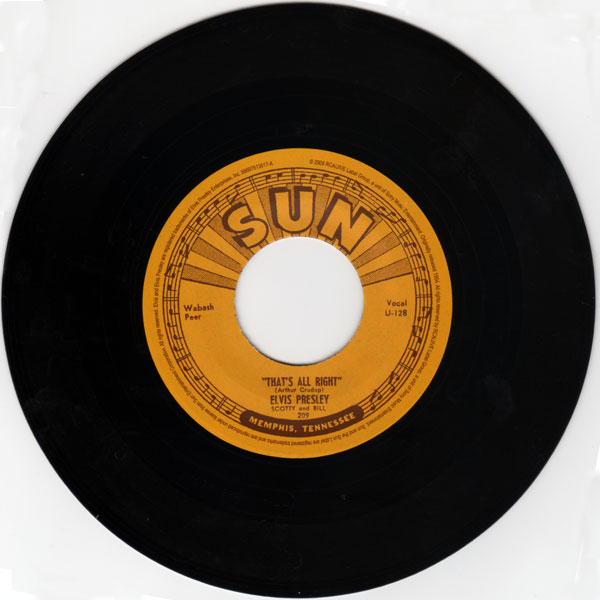
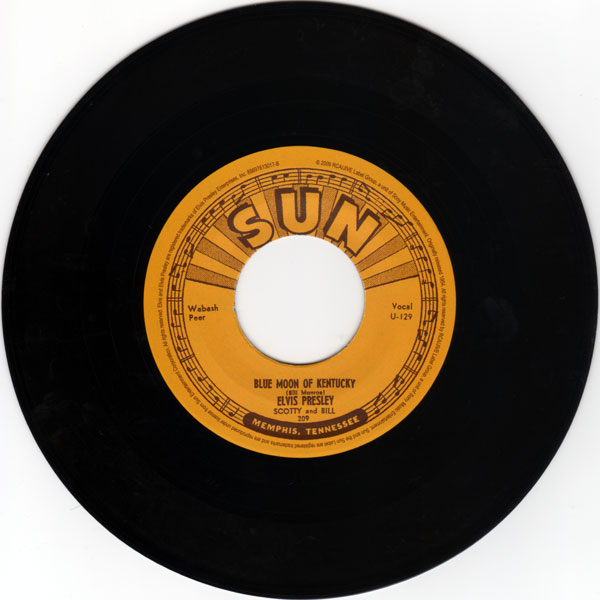
I have two near-mint copies of That’s All Right/Blue Moon of Kentucky.

By far, they would be the most financially valuable pieces of my entire record collection or of all of my collections of anything, for that matter, except that they were both pressed in 2009, rather than 1954. Oh well. It’s not about the money, it’s about the music. Always has been.

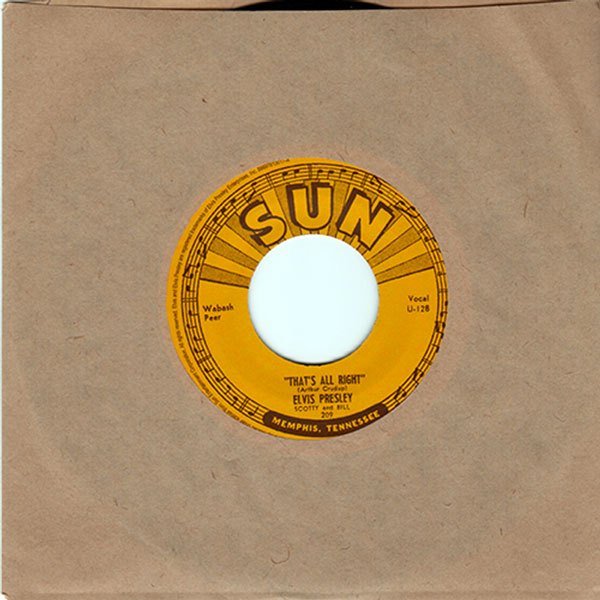
THAT'S ALL RIGHT/BLUE MOON OF KENTUCKY (Single; Sun, 1954; Reissue: Sony RCA/Legacy 2009--included as bonus with the Franklin Mint's ELVIS: THE COMPLETE MASTERS COLLECTION CD set; from TY's collection)

THAT’S ALL RIGHT/BLUE MOON OF KENTUCKY (Single; Sun, 1954; Reissue: Sony RCA/Legacy 2009–included as bonus with the Franklin Mint’s ELVIS: THE COMPLETE MASTERS COLLECTION CD set; from TY’s collection)

That’s All Right/Blue Moon of Kentucky (Single)
Label: Sun [Reissue: Sony RCA/Legacy]
Catalog Number: 209 [Reissue: 88697613017 (Label) / 88697673597 (2010 Outer Sleeve)]
Recorded: 1954 | Memphis, TN
Released: 1954 [Reissue: 2009]

Packaged in a plain, brown sleeve much like the original, my first copy of the record was included with Franklin Mint’s Elvis: The Complete Masters Collection CD set from 2009. A few years ago, I acquired a second copy of That’s All Right/Blue Moon of Kentucky, which Sony had released back in April 2010 for Record Store Day. Unlike the simple brown sleeve, this one included a gaudy cover, but I was surprised to discover that the record contained within is actually identical to the one that shipped with the Franklin Mint set. Sony must have been thinking ahead and pressed extra copies for the Record Store Day promotion.

Side A

Side A of THAT'S ALL RIGHT/BLUE MOON OF KENTUCKY (Single; Sun, 1954; Reissue: Sony RCA/Legacy 2009; from TY's collection)

Side A of THAT’S ALL RIGHT/BLUE MOON OF KENTUCKY (Single; Sun, 1954; Reissue: Sony RCA/Legacy 2009; from TY’s collection)

“That’s All Right” (1954)
One of the endearing aspects of this performance of “That’s All Right” is the sheer joy in the voice of Elvis as he sings. He finally has his opportunity in the studio, and he is making the most of it.

Elvis in 1970 reflected on his style, stating that it was “a combination of country music and gospel and rhythm & blues […]. That’s what it really was. As a child, I was influenced by all that.”

He added, “Of course, the Grand Ole Opry is the first thing I ever heard, probably, but I liked the blues, and I liked the gospel music–gospel quartets–and all that.”

On this first single, the blues and country influences are as clear as they ever would be. Some credit That’s All Right/Blue Moon of Kentucky as the first rock ‘n’ roll record, but to say Elvis invented the style is to make a false assumption that any one person actually did.

Rock ‘n’ roll evolved from the very sources that Elvis himself described. Besides, “Rocket 88,” “Rock Around the Clock,” and other potential contenders pre-date Elvis’ version of “That’s All Right.”

What Elvis did with his early records for Sun and RCA, though, was ignite the smoldering evolution of rock ‘n’ roll into a full-blown blaze. By melding country into the blues of “That’s All Right,” Elvis in 1954 unleashed a sound that not only built upon the foundation established by Arthur “Big Boy” Crudup‘s original 1946 recording, but took the song in a new direction. Absorbing the music of his youth, Elvis knew instinctively that blues and country explore many of the same themes, which allowed him to re-interpret these kinds of songs in a unique way.

Unfortunately, despite what the beautiful record label would have you believe, this reissue actually contains an RCA mastering of “That’s All Right,” rather than the original Sun mastering. It is the same 1954 recording, but RCA added echo to its versions not present on the Sun original.

A few years after this 2009 reissue of SUN 209, the “dry” version of “That’s All Right” finally became available again via FTD’s A Boy From Tupelo boxed set in 2012. Sony RCA/Legacy re-released A Boy From Tupelo in a much more affordable package for mainstream retail in 2017.

The dry version of “That’s All Right” is superior, though it takes some getting used to because the echo versions were used in every official release of the song from December 1955 through 2011. Unless, of course, you have been spinning a Sun original.

Side B

Side B of THAT'S ALL RIGHT/BLUE MOON OF KENTUCKY (Single; Sun, 1954; Reissue: Sony RCA/Legacy 2009; from TY's collection)

Side B of THAT’S ALL RIGHT/BLUE MOON OF KENTUCKY (Single; Sun, 1954; Reissue: Sony RCA/Legacy 2009; from TY’s collection)

Blue Moon of Kentucky (1954)
While Elvis added country to the blues of “That’s All Right,” he created a literal flip side by melding rhythm & blues into the country bluegrass of “Blue Moon of Kentucky.” Again, the sound is markedly different from Bill Monroe’s 1946 original. Again, there is that joy in Elvis’ voice.

A fun tidbit is That’s All Right/Blue Moon of Kentucky contains only three musicians: Elvis on acoustic guitar, Scotty Moore on electric guitar, and Bill Black on the upright bass.

One of the earliest rock ‘n’ roll records, and no drummer to be heard. Credit goes to Black, whose bass makes it sound like there must be a drummer.

A drummer did not join the group in the studio until the early 1955 session that produced “I’m Left, You’re Right, She’s Gone,” the flip side of Elvis’ fourth record for Sun.

“That’s All Right” and “Blue Moon of Kentucky” became regional hits for Elvis. He would follow-up the single with four more records on the Sun label before signing with RCA in late 1955.


“History merely repeats itself. It has all been done before. Nothing under the sun is truly new.”
Ecclesiastes 1:9

Elvis Movies: KID GALAHAD

Before we get started with the main feature, I want to take a brief moment to remind you that Baz Luhrmann’s ELVIS movie begins playing next week in many locations around the world. Based on the trailers, the attention to detail looks amazing. I love that this trailer throws in a couple of brief shots of the real Elvis as well.

I have also watched and read a few interviews with Austin Butler, who plays Elvis Presley, and he seems completely invested in the role. Many actors have tried and mostly failed to fill Elvis’ shoes before him, but this 30-year-old really seems to have discovered his spirit. We’ll find out soon.

As I’ve said before, after seeing so many horrible attempts to tell the Elvis Presley story in the past, I never even thought I’d watch this movie at all, much less go to the theater opening weekend as I’m now planning to do. The trailer above concludes with “Suspicious Minds (Caught In A Trap),” my mom’s favorite song. She would have been excited to see this movie with me and, though she passed away over three years ago now, I know she’ll be there next to me.

Continuing my rewatch of movies featuring the real Elvis Presley, next up is Kid Galahad – his 10th movie. I have only seen this one a couple of times before.


“Presley Packs the Screen’s Biggest Wallop…with the Gals…with the Gloves…with the Guitar!”

Kid Galahad (United Artists)
Wide Release: August 29, 1962 (United States)
Starring: Elvis Presley, Gig Young, Lola Albright, Joan Blackman
Screenplay By: William Fay
Story By: Francis Wallace
Music Score By: Jeff Alexander
Produced By: Davis Weisbart
Directed By: Phil Karlson
Running Time: 96 Minutes


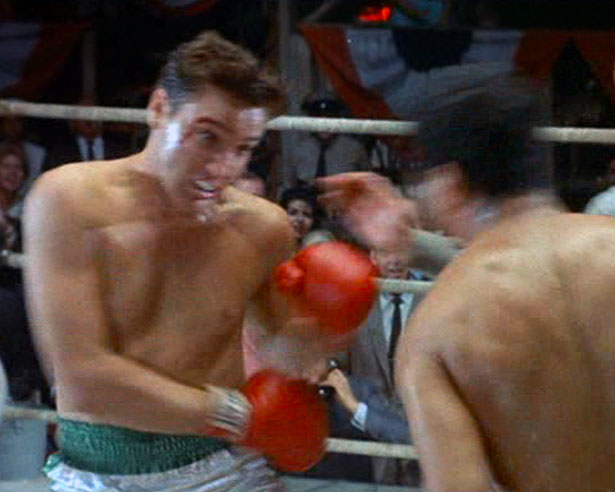
Sugarboy Romero (Orlando de la Fuente) faces off against Kid Galahad (Elvis Presley) in the climax of 1962's KID GALAHAD (United Artists)

Sugarboy Romero (Orlando de la Fuente) faces off against Kid Galahad (Elvis Presley) in the climax of 1962’s KID GALAHAD (United Artists)

Elvis Presley stars as Walter Gulick in Kid Galahad. After a stint in the Army, Walter returns to his hometown of Cream Valley, New York, for the first time since becoming an orphan at 14-months-old. The 22-year-old is looking for a job fixing cars, but since he arrives too early in the morning for the auto shop to be open, he naturally checks out a nearby boxing camp instead to see if they need a mechanic.

The fictitious Cream Valley, New York, coincidentally enough, looks remarkably like Idyllwild, California. I suppose that’s better than trying to pass off California as Europe, at least. “Cream Valley” – the name sounds like a magical place where they make salad dressing or something like that.

Shockingly enough, the boxing camp doesn’t need a mechanic. However, Walter does find a job there as a sparring partner. It turns out his Army background has provided him with both auto repair and boxing experience.

As a sparring parter, Walter is a bit of a failure. He stands there and takes a beating from the fighter – over 70 punches. Walter doesn’t try to defend himself or even at first throw any punches in return. He finally throws one punch, proceeding to knock out the now worn-out fighter. While this doesn’t make for a great sparring partner, the boxing camp’s owner, Willy (Gig Young), sees dollar signs and soon puts Walter on the professional boxing circuit.

Several movies before this one, the screenplay adaptation of A Stone For Danny Fisher was changed once Elvis was attached to the project such that the boxer lead character became a singer instead. That 1958 movie, one of Elvis’ best performances as an actor, was also eventually renamed King Creole, after one of the songs in the film.

A few years later, in Kid Galahad, Elvis finally got his chance to play a boxer. According to longtime friend Sonny West, if Elvis had his way, he would have reunited with King Creole director Michael Curtiz (Casablanca) on this film, which was produced in late 1961. Curtiz had also directed the original 1937 version of Kid Galahad, starring Edward G. Robinson, Bette Davis, and Humphrey Bogart. Despite Elvis’ campaign, Phil Karlson received the directing nod instead. Curtiz passed away in April 1962 at the age of 74.

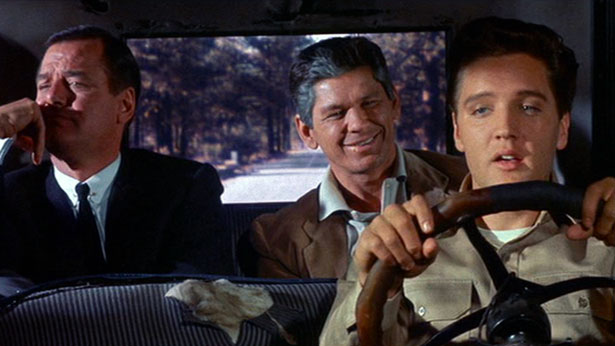
Willy (Gig Young) and Lew (Charles Bronson) listen as Walter (Elvis Presley) sings "Riding The Rainbow" while driving a Model T Ford in 1962's KID GALAHAD (United Artists)

Willy (Gig Young) and Lew (Charles Bronson) listen as Walter (Elvis Presley) sings “Riding The Rainbow” in a Model T Ford in 1962’s KID GALAHAD (United Artists)

Charles Bronson appears in Kid Galahad as Lew, who acts as Walter’s trainer. Lew seems genuinely enamored of “the kid” and tries to look out for him. Bronson does a terrific job in this role and is a highlight of the film. This is apparently one of the few movies where Bronson smiles – and he smiles early and often in Kid Galahad.

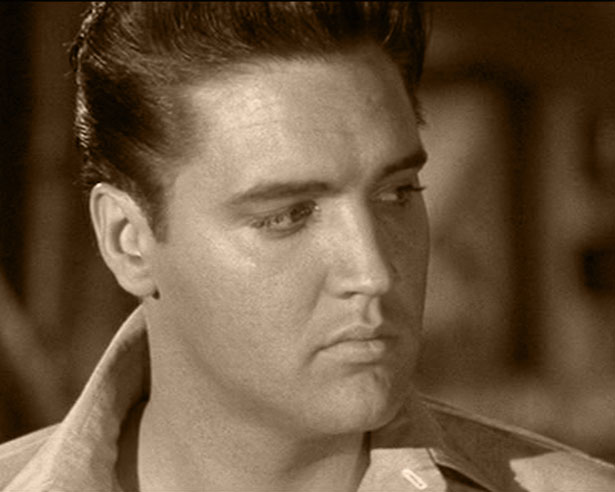
Elvis Presley is Walter Gulick in 1962's KID GALAHAD (United Artists)

Elvis Presley is Walter Gulick in 1962’s KID GALAHAD (United Artists)

Willy, it turns out, has gambling and other problems that are putting his boxing camp in jeopardy. A mobster leaves two thugs to stay at the camp for insurance.

When Ralphie (Jeff Morris), one of the goons, makes an unwanted advance at Willy’s long-time fiancée, Dolly (Lola Albright), Walter knocks him flat out without even needing to take a beating first this time. “It wouldn’t have happened, but he don’t know how to behave himself with a lady,” explains Walter.

Dolly says, “Thanks, Galahad” to Walter, and the name sticks.

“Dolly, please take the Eagle Scout out of here before Ralphie wakes up and kills him,” quips Lew before they find a loaded gun on Ralphie. Incidentally, I must note that it is hard to take a mafia henchman seriously with a name like “Ralphie.”

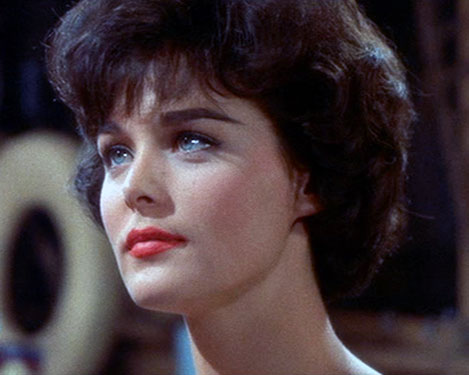
Joan Blackman is Rose in 1962's KID GALAHAD (United Artists)

Joan Blackman is Rose in 1962’s KID GALAHAD (United Artists)

Willy’s kid sister, Rose (Joan Blackman), travels in from the Bronx to reorganize the camp when he keeps phoning her for money. She owns half of the business, apparently an inheritance from their father. Galahad is immediately all googly eyes for her. Blackman had appeared with Elvis before in Blue Hawaii, and the pair here manage to show more chemistry together than they did in that 1961 movie – which is admittedly a pretty low bar.

Willy is not too happy when the couple gets engaged. “You can’t yell loud enough to make me shut up,” Galahad tells him during a heated argument. “I’m not marrying Rose because she’s your sister, Willy, but in spite of it.”

Hearing the ruckus, Dolly intervenes and asks Willy what’s wrong as he is about to punch Galahad. “What’s the matter with me? This cream-headed clown wants to marry my sister, that’s what’s the matter with me,” he answers.

The long-suffering Dolly delivers this stinger, causing Willy to storm off: “Well, at least he’s not asking her to hang around for three or four years, Willy.”

Soon enough, Dolly leaves Willy (what is with the names in this movie?). This exchange is one of my favorites in the film – great acting from Lola Albright. Dolly at first seems happily surprised when Willy appears to give in, thinking he is finally going to marry her – but then realization dawns and she becomes sad again.

Dolly: “It’s just that you and marriage have never learned to mix.”
Willy: “All right.”
Dolly: “‘All right’ what?”
Willy: “I’ll lay you 3-to-1, angel, I never bet on another horse. … What’s the matter? What did I do now?”
Dolly: “You’ll probably never know. Excuse me.”

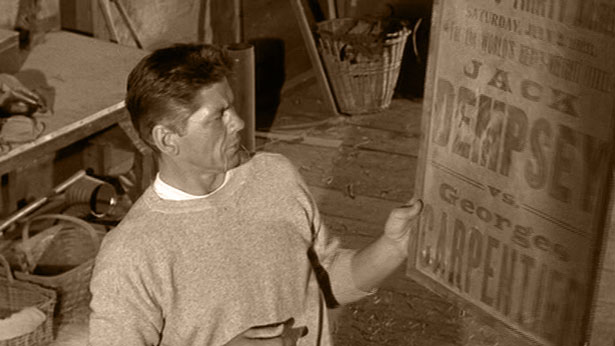
Lew (Charles Bronson) holds up an old poster found advertising 1921's Dempsey vs. Carpentier fight in 1962's KID GALAHAD (United Artists)

Lew (Charles Bronson) holds up an old poster found advertising 1921’s Dempsey vs. Carpentier fight in 1962’s KID GALAHAD (United Artists)

In a fun, blink-and-you-miss-it moment, Galahad tosses Lew an old boxing poster he found. The poster advertises a real match that took place on July 2, 1921: Jack Dempsey vs. Georges Carpentier – “the fight of the century.” The event was over 40 years old at the time of Kid Galahad and is, of course, over 100 years old now.

Galahad proves an unexpected success in boxing. He uses the same strategy each time – stand and take a beating for awhile and then throw one punch to knock out the other fighter. He identifies himself as being from Cream Valley, and the little town loves him for it. One of the locals notes, “All these other muscleheads up here, not one of them said he was from Cream Valley.”

I kept expecting a relative or at least an old family friend to show up from Galahad’s past – especially when a priest looks incredulously at his 1939 Cream Valley baptism certificate. Alas, Lew is apparently not Galahad’s long-lost older brother.

Ed Asner is Frank Gerson in 1962’s KID GALAHAD (United Artists)

The legendary Ed Asner makes his first appearance in a feature film in Kid Galahad, playing a district attorney who is trying to get Willy to testify against the mobsters.

Galahad (Elvis Presley) trains with Lew (Charles Bronson) for the big fight in 1962's KID GALAHAD (United Artists)

Galahad (Elvis Presley) trains with Lew (Charles Bronson) for the big fight in 1962’s KID GALAHAD (United Artists)

Willy signs Galahad up for a fight against an especially tough opponent, Ramon “Sugarboy” Romero (Orlando de la Fuente), so Lew works hard with him to prepare for the climactic battle. All that’s missing is the Rocky theme.

Speaking of music, most of the songs in Kid Galahad are unfortunately mediocre or worse. Though not mentioned if he learned this skill in the Army as well, Galahad, of course, is a singer.

“I Got Lucky” is a bit of a highlight, including Galahad doing “the Twist” with Rose.

The film’s best song, the clever “King Of The Whole Wide World,” is ruined by jazzy overdubs during the movie’s opening titles. The best version of this song can still be found on 1986’s Return Of The Rocker album – the first release of the extended master including Boots Randolph’s complete saxophone solo.

One thing I will note is, I doubt there are any other boxing movies out there where the fighter who was knocked out in the previous scene invites the guy who just walloped him to sing a song with him. Ah, Elvis Movies, you’ve gotta love them.

Kid Galahad is notable for another reason – Elvis’ hair. This is one of only two color movies for which Elvis did not dye his hair black. Instead, he opted for his natural brown hair.

Elvis Presley is Walter "Kid Galahad" Gulick in 1962's KID GALAHAD (United Artists)

Elvis Presley is Walter “Kid Galahad” Gulick in 1962’s KID GALAHAD (United Artists)

Kid Galahad is often enjoyable and certainly stands apart from many of Elvis’ other movies, particularly in terms of effort – most notably with the boxing details. Though it never quite delivers a knockout punch, Kid Galahad is still a winner.


Boldly Go

Michael Dante plays Joie in Kid Galahad and appears as Maab in the 1967 Star Trek episode “Friday’s Child.”

Joie (Michael Dante) spars with Galahad (Elvis Presley) in 1962's KID GALAHAD (United Artists)

Joie (Michael Dante) spars with Galahad (Elvis Presley) in 1962’s KID GALAHAD (United Artists)

Michael Dante is Maab in the 1967 STAR TREK episode "Friday's Child" (Paramount)

Michael Dante is Maab in the 1967 STAR TREK episode “Friday’s Child” (Paramount)

In addition, multiple uncredited cast members from Kid Galahad went on to appear in Star Trek, including:

  • Dave Cadiente [Kid Galahad: Boxer | Star Trek: Enterprise Crewmember in “The Tholian Web” (1968) and the Klingon Sergeant in Star Trek III: The Search For Spock (1984)]
  • Al Cavens [Kid Galahad: Fight Spectator | Star Trek: Klingon Crewman in “Day Of The Dove” (1968) and Second Fop in “All Our Yesterdays” (1969)]
  • Louie Elias [Kid Galahad: Boxer | Star Trek: Various roles in “Dagger Of The Mind” (1966), “And The Children Shall Lead” (1968), “Is There In Truth No Beauty?” (1968), “The Tholian Web” (1968), and “The Cloud Minders” (1969)]
  • Seamon Glass [Kid Galahad: Boxer | Star Trek: Benton in “Mudd’s Women” (1966)]
  • Gil Perkins [Kid Galahad: Freddie | Star Trek: Slave #3 in “Bread And Circuses” (1968)]
  • Paul Sorensen [Kid Galahad: Joe | Star Trek: Merchantman Captain in Star Trek III: The Search For Spock (1984)]
  • Bill Zuckert [Kid Galahad: O’Grady | Star Trek: Johnny Behan in “Spectre Of The Gun” (1968)]

Honorable mentions:

  • Nick Dimitri [Kid Galahad: Boxer | Various roles in Star Trek: The Next Generation and Star Trek: Deep Space Nine in the 1990s]
  • Bert Remsen [Kid Galahad: Max | Kubus in Star Trek: Deep Space Nine – “The Collaborator” (1994)]

While researching the various Star Trek connections, I also noticed there are tons of cast and crew crossovers between Kid Galahad and the Rocky movies. I just don’t have the energy to capture them here, so I leave it to a more industrious Elvis or Rocky fan in the future to document them elsewhere.


Elvis Presley is Kid Galahad and Orlando de la Fuente is Sugarboy Romero in 1962’s KID GALAHAD (United Artists)

Kid Galahad Tote Board

  • Punches: 334 (including 11 knockouts)
  • Kisses: 10
  • Songs: 7

Songs In Kid Galahad

  1. “King Of The Whole Wide World” (1961), written by Ruth Batchelor & Bob Roberts
  2. “This Is Living” (1961), written by Fred Wise & Ben Weisman
  3. “Riding The Rainbow” (1961), written by Fred Wise & Ben Weisman
  4. “Home Is Where The Heart Is” (1961), written by Sherman Edwards & Hal David
  5. “I Got Lucky” (1961) [performed twice], written by Dolores Fuller, Fred Wise, & Ben Weisman
  6. “A Whistling Tune” (1961), written by Sherman Edwards & Hal David

The Mystery Train’s Kid Galahad Scorecard

  • Story: 6 (out of 10)
  • Acting: 8
  • Fun: 4
  • Songs: 4
  • Overall: 6 (Worth Watching)

Kid Galahad Around The Web


Click image for larger, full-color version


“I run with purpose in every step. I am not just shadowboxing. I discipline my body like an athlete, training it to do what it should. Otherwise, I fear that after preaching to others I myself might be disqualified.”
1 Corinthians 9:26-27

Elvis Movies: ROUSTABOUT

Earlier this year, I began a rewatch of Elvis Presley’s movies. Today’s focus is one that I have not seen as often as some of the others – Elvis’ 16th movie, Roustabout.


“Elvis Presley as a Roving, Restless, Reckless, Roustabout”

Roustabout (Paramount)
Wide Release: November 11, 1964 (United States)
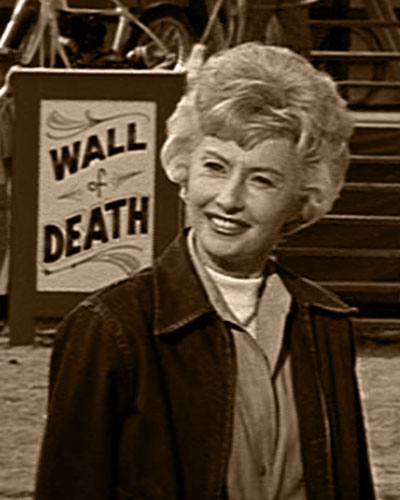
Starring: Elvis Presley, Barbara Stanwyck, Joan Freeman
Screenplay By: Anthony Lawrence and Allan Weiss
Story By: Allan Weiss
Music Score By: Joseph J. Lilley
Produced By: Hal B. Wallis
Directed By: John Rich
Running Time: 101 Minutes


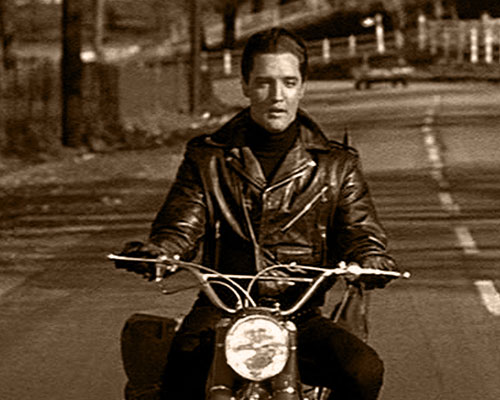
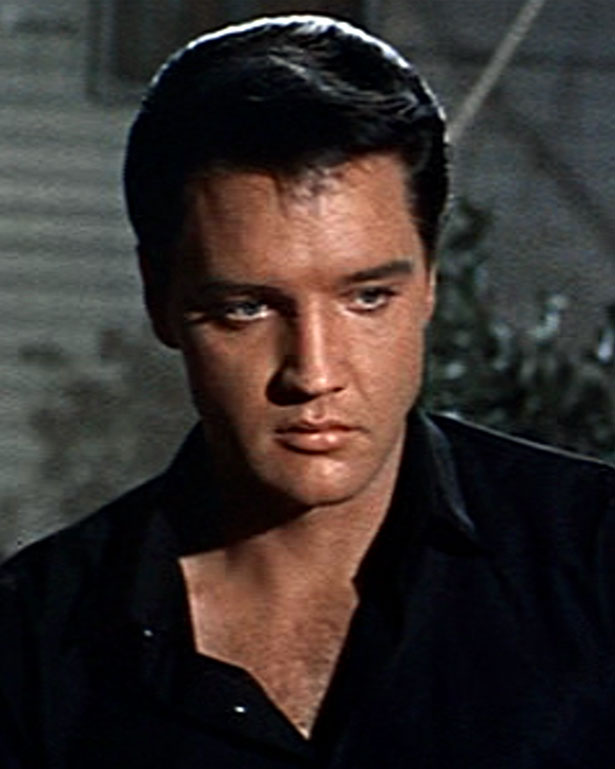
Elvis Presley is Charlie Rogers in 1964’s ROUSTABOUT (Paramount)

Elvis Presley is Charlie Rogers in 1964’s ROUSTABOUT (Paramount)

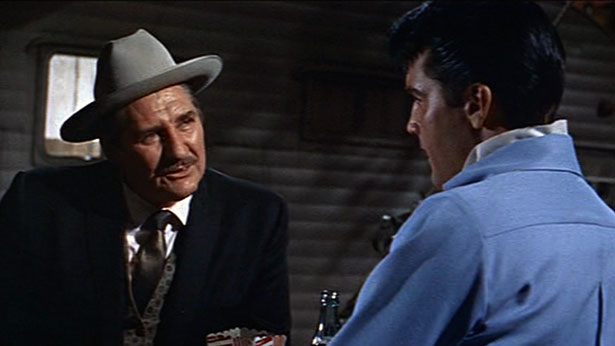
In Roustabout, Elvis Presley stars as Charlie Rogers, a singer who ends up working at a carnival when Joe (Leif Erickson), a grouchy old carny, runs him off the road, damaging his motorcycle and destroying his guitar. Ah, Elvis Movies, you gotta love ’em.

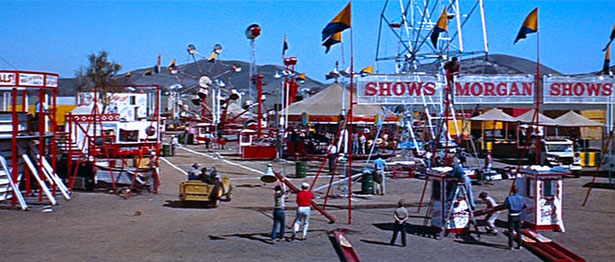
The Morgan Shows carnival in 1964's ROUSTABOUT (Paramount)

The Morgan Shows carnival in 1964’s ROUSTABOUT (Paramount)

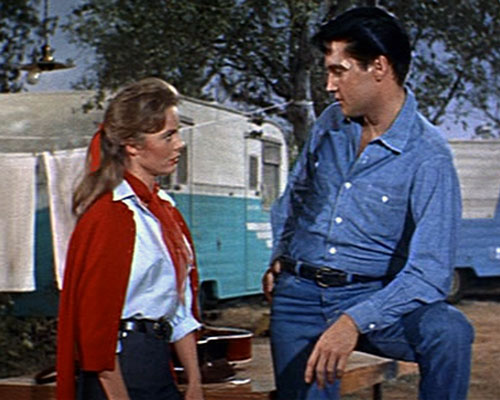
Despite the inane setup, Roustabout is pretty good! When Maggie (Barbara Stanwyck), the owner of the carnival, pays for a new guitar and repairs to his motorcycle, Charlie stays on as a roustabout until his bike is ready in order to spend more time with Cathy (Joan Freeman), Joe’s daughter. Joe, of course, is not amused by this turn of events.

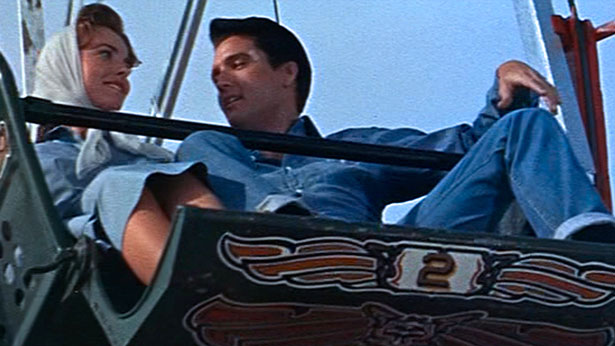
Joan Freeman is Cathy and Elvis Presley is Charlie in 1964's ROUSTABOUT (Paramount)

Joan Freeman is Cathy and Elvis Presley is Charlie in 1964’s ROUSTABOUT (Paramount)

Outside of this movie, “roustabout” is not a term I have encountered. It essentially means an unskilled laborer. It seems to be used most often today in the oil rigging industry. In this case, Charlie does odd jobs at the carnival, such as helping to set up rides or even filling in at a candy apple stand.

When attempting to attract players for a game that Cathy is promoting, Charlie winds up singing and drawing a crowd. His roustabout days are soon behind him, for Maggie signs him on as a singer instead.

Charlie Rogers (Elvis Presley) begins to draw a crowd for Morgan Shows when the carnival signs him on as a singer in 1964's ROUSTABOUT (Paramount)

Charlie Rogers (Elvis Presley) begins to draw a crowd for Morgan Shows when the carnival signs him on as a singer in 1964’s ROUSTABOUT (Paramount)

It turns out that Maggie has a habit of bailing Joe out of trouble, and her carnival is facing financial ruin because of it. Charlie brings in the teen money, and the situation begins to improve until things come to a head between him and Joe, causing Charlie to switch to a rival carnival.

Barbara Stanwyck is Maggie Morgan in 1964's ROUSTABOUT (Paramount)

Barbara Stanwyck is Maggie Morgan in 1964’s ROUSTABOUT (Paramount)

Elvis does a fine job acting in certain parts of Roustabout. A scene between him and Barbara Stanwyck is my favorite of the film:

Charlie: “You collect strays, Maggie. And you got one in Joe. Why don’t you stop recruiting? They don’t make a family.”
Maggie: “What would you know about a family?”
Charlie: “Nothing!”

After Maggie walks away and can no longer hear him, Charlie repeats the line again, softly, sadly: “Nothing…” It is a quick moment, but certainly one of Elvis’ best in his 1960s movies.

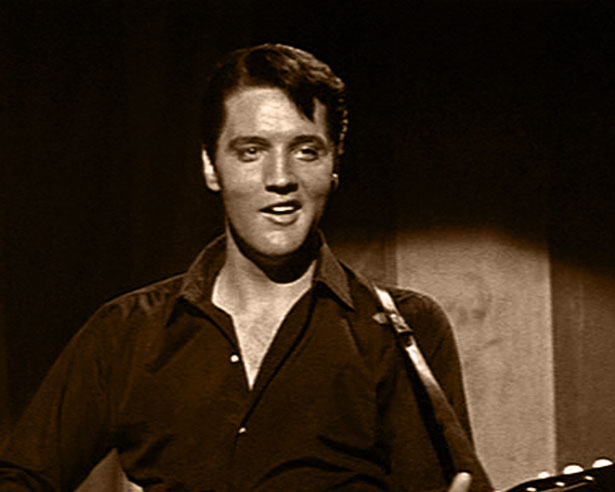
Elvis Presley is Charlie Rogers in 1964's ROUSTABOUT (Paramount)

Elvis Presley is Charlie Rogers in 1964’s ROUSTABOUT (Paramount)

The rebellious Charlie is reminiscent of some of Elvis’ earliest film roles. For instance, Charlie remarks early on, “Look, if you’re not tough in this world, you get squashed, honey.” These words could have been taken right out of Vince Everett’s mouth in Jailhouse Rock (1957). Charlie also has traces of Deke Rivers from Loving You (1957) and even a little bit of Danny Fisher from King Creole (1958). At 29 during production of Roustabout, however, Elvis does seem a little old at times to be playing a rebel.

Even some of Elvis’ mannerisms in Roustabout remind me of his 1950s presence, otherwise left out of many of his 1960s movies. Elvis’ performance of “One Track Heart” in Roustabout, for instance, is quite reminiscent of his 1956 “Blue Suede Shoes” screen test, except with a less exciting song. Later on, during “Hard Knocks,” he does his more typical 1960s movie hand-clapping thing, though.

Elvis’ natural flair for comedy comes into play a few times in Roustabout. One example:

Cathy: “You must get your face slapped a lot.”
Charlie: “About 50–50.”

Pat Buttram does a terrific job playing the villainous Harry, the owner of the big-time carnival that is looking to put Maggie out of business. Another great couple of lines:

Charlie: “Not everybody is as big a crook as you are, Harry.”
Harry: “Well, everybody tries.”

Pat Buttram is Harry and Elvis Presley is Charlie in 1964's ROUSTABOUT (Paramount)

Pat Buttram is Harry and Elvis Presley is Charlie in 1964’s ROUSTABOUT (Paramount)

Charlie’s show goes over well, and Harry asks him to do an encore. “Nah,” says Charlie. “Always leave ’em wanting more.” This phrase, of course, was the philosophy of a real-life carny huckster, “Colonel” Tom Parker, when it came to managing Elvis. Parker also served as technical advisor on Roustabout and most of Elvis’ other films.

I try not to review soundtrack albums in this series, focusing any discussion of songs instead on how they appear in the movies themselves. However, I do want to point out in this case that Roustabout has one of the worst soundtrack albums – with nary a hit or highlight in sight. I was surprised, then, that just about all of the songs work perfectly in the context of the actual film. Perhaps based on the fun of seeing the movie, fans propelled the otherwise lackluster Roustabout soundtrack to Billboard‘s number one album position in January 1965. It would be over eight years before Elvis scored another number one album (1973’s Aloha From Hawaii via Satellite).

Joan Freeman is Cathy and Elvis Presley is Charlie in 1964’s ROUSTABOUT (Paramount)

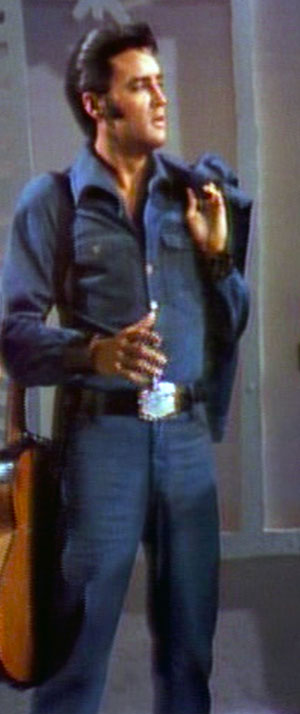
Elvis Presley in a production number taped for 1968's ELVIS television special (NBC)

Elvis Presley in a production number taped for 1968’s ELVIS television special (NBC)

Roustabout obviously had an influence on some of the production numbers created for the 1968 ELVIS television special, even down to costuming. The denim outfit that Elvis wears at times in the movie is almost identical to one he wears during portions of the special, for instance. Roustabout is also one of the few times we see Elvis in leather prior to the special. The barker lines on the ELVIS-TV Special soundtrack album might even have been directly lifted from recordings made for this movie. The performance of “Little Egypt” in the ’68 special is better than the cringey one in Roustabout, incidentally, though the outdated song is a detriment to both productions anyway.

Charlie Rogers (Elvis Presley) at Harry’s carnival in 1964’s ROUSTABOUT (Paramount)


Boldly Go

Multiple uncredited cast members from Roustabout went on to play roles in Star Trek.

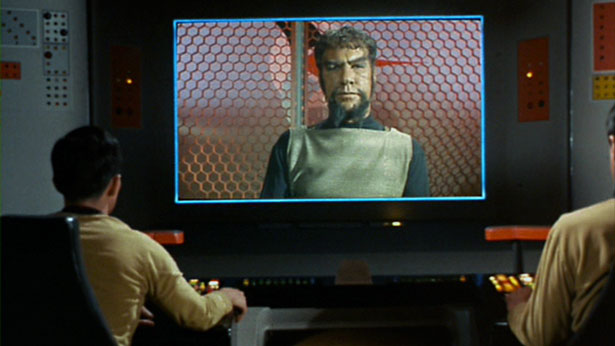
K.L. Smith plays the Sheriff in Roustabout and appears as a Klingon in the Star Trek episode “Elaan Of Troyius” in 1968.

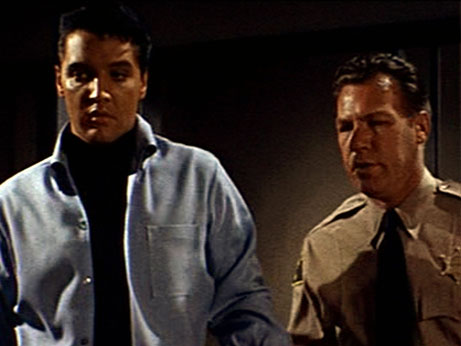
Elvis Presley is Charlie and K.L. Smith is the Sheriff in 1964's ROUSTABOUT (Paramount)

Elvis Presley is Charlie and K.L. Smith is the Sheriff in 1964’s ROUSTABOUT (Paramount)

K.L. Smith is a Klingon captain in the 1968 STAR TREK episode "Elaan Of Troyius" (Paramount)

K.L. Smith is a Klingon captain in the 1968 STAR TREK episode “Elaan Of Troyius” (Paramount)

Other cross-overs include:

  • Dick Cherney [Roustabout: Carnival patron | Star Trek: A council member in “A Taste Of Armageddon” (1967) and a passerby in “The City On The Edge Of Forever” (1967)]
  • Carey Foster [Roustabout: College girl | Star Trek: An Enterprise crewmember in “The Squire Of Gothos” (1967), “This Side Of Paradise” (1967), and “The Alternative Factor” (1967)]
  • Teri Garr [Roustabout: Carnival dancer | Star Trek: Roberta Lincoln in “Assignment: Earth” (1968)]
  • Marianna Hill [Roustabout: Viola | Star Trek: Helen Noel in “Dagger Of The Mind” (1966)]
  • Jesse Wayne [Roustabout: Carnival worker | Star Trek: Chekov stunt double in “The Tholian Web” (1968)]

Some of these players will show up again in other Elvis movies not yet covered, giving them another chance to be featured here on The Mystery Train Elvis Blog.

An honorable mention goes to Elvis’ pal Lance LeGault, who appears as a barker in Roustabout and plays Captain K’Temoc in the Star Trek: The Next Generation episode “The Emissary” in 1989.


Elvis Presley takes a pummeling as Charlie Rogers in 1964's ROUSTABOUT (Paramount)

Elvis Presley takes a pummeling as Charlie Rogers in 1964’s ROUSTABOUT (Paramount)

Roustabout Tote Board

    • Songs: 12
    • Punches: 11
    • Kisses: 8
    • Karate Chops: 4
    • Slaps: 2
    • Motorcycle Crashes: 2

Songs In Roustabout

  1. “Roustabout” (1964), written by Bill Giant, Bernie Baum, & Florence Kay
  2. “Poison Ivy League” (1964), written by Bill Giant, Bernie Baum, & Florence Kay
  3. “Wheels On My Heels” (1964), written by Sid Tepper & Roy C. Bennett
  4. “It’s A Wonderful World” (1964), written by Sid Tepper & Roy C. Bennett
  5. “It’s Carnival Time” (1964) [performed twice], written by Ben Weisman & Sid Wayne
  6. “Carny Town” (1964), written by Fred Wise & Randy Starr
  7. “One Track Heart” (1964), written by Bill Giant, Bernie Baum, & Florence Kay
  8. “Hard Knocks” (1964), written by Joy Byers
  9. “Little Egypt” (1964), written by Jerry Leiber & Mike Stoller
  10. “Big Love, Big Heartache” (1964), written by Dolores Fuller, Lee Morris, & Sonny Hendrix
  11. “There’s A Brand New Day On The Horizon” (1964), written by Joy Byers

The Mystery Train’s Roustabout Scorecard

  • Story: 6 (out of 10)
  • Acting: 8
  • Fun: 8
  • Songs: 6
  • Overall: 7 (Worth Watching)

Roustabout Around The Web


Click image for larger, full-color version


“Since Jacob was in love with Rachel, he told her father, ‘I’ll work for you for seven years if you’ll give me Rachel, your younger daughter, as my wife.’ ‘Agreed!’ Laban replied. ‘I’d rather give her to you than to anyone else. Stay and work with me.’ So Jacob worked seven years to pay for Rachel. But his love for her was so strong that it seemed to him but a few days.”
Genesis 29:18-20