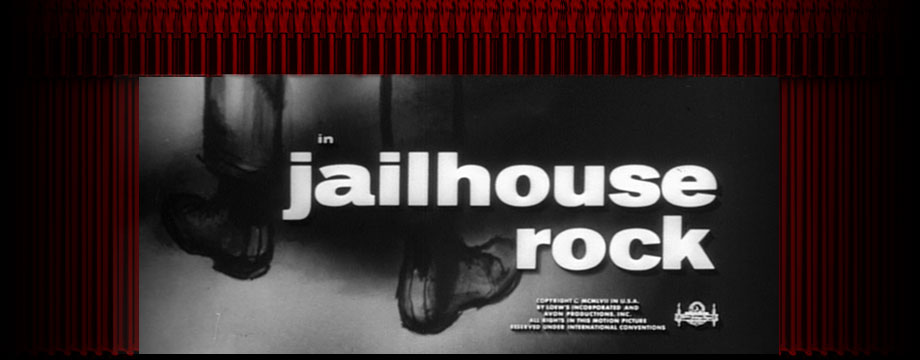
Elvis Movies: JAILHOUSE ROCK

Hey folks, I didn’t expect it to be this long between posts but here I am. It’s been over a year since the last entry in my random rewatch of Elvis Presley movies. It sure doesn’t feel that long ago. As a great philosopher once asked, “Ain’t it funny how time slips away?”

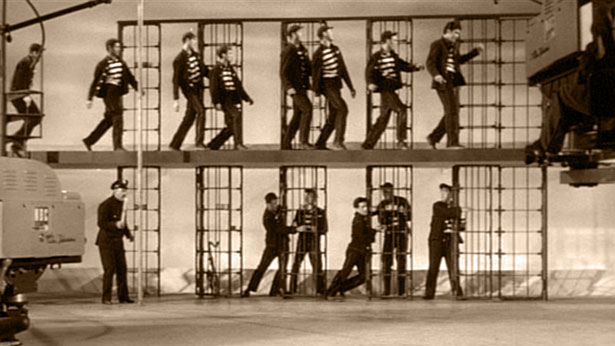
Elvis’ 3rd movie was called Jailhouse Rock. It is the 2nd of 3 Elvis movies shot in black & white, which certainly adds to the gritty tone.


“Elvis in Action as Never Before!”

Jailhouse Rock, now playing at a train near you

Jailhouse Rock (MGM)
Wide Release: November 8, 1957 (United States)
Starring: Elvis Presley, Judy Tyler, Mickey Shaughnessy
Screen Play By: Guy Trosper
Story By: Ned Young
Music Supervised By: Jeff Alexander
Produced By: Pandro S. Berman
Directed By: Richard Thorpe
Running Time: 96 Minutes


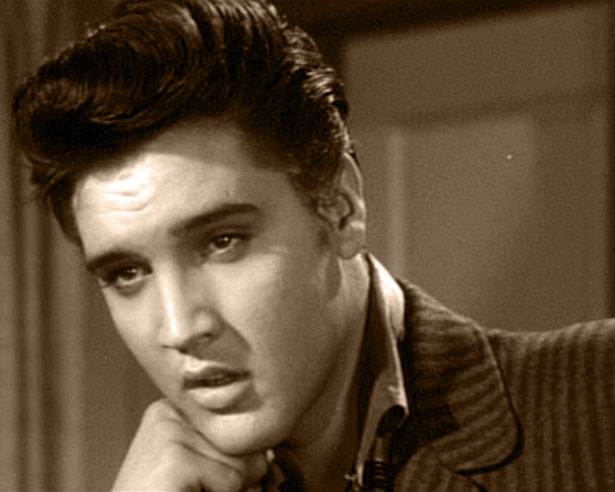
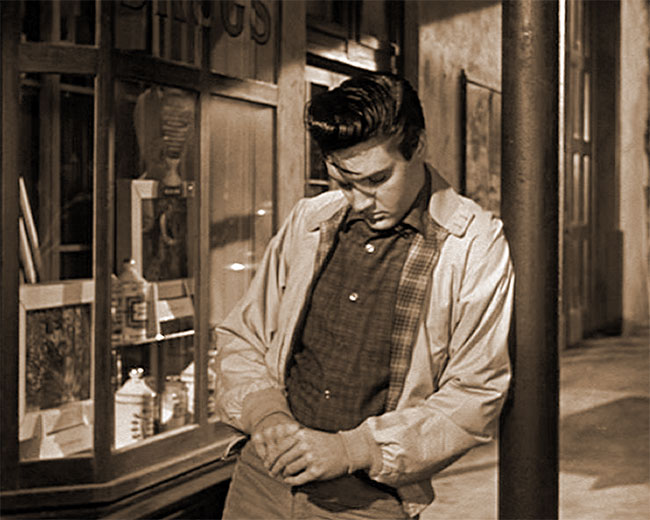
Elvis Presley stars in 1957's JAILHOUSE ROCK (MGM)

Elvis Presley stars in 1957’s JAILHOUSE ROCK (MGM)

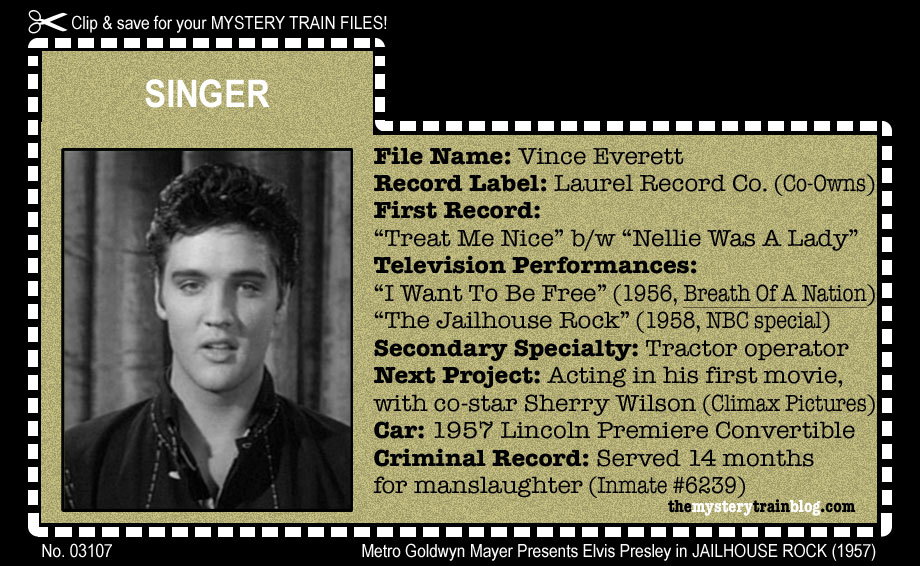
Elvis stars in Jailhouse Rock as Vince Everett, a tractor driver who has just received his weekly paycheck. As is his custom, he cashes the check at the neighborhood bar and then arm wrestles the proprietor. After losing, Vince good-naturedly buys a round of drinks for everyone at the bar. The film soon takes a dark turn when another patron roughs up a woman for talking to Vince. Vince tells him to leave her alone.

“Look, buster, you want some teeth knocked out? Just keep it up,” warns the man.

“You scare me,” says Vince. “Woman-beaters always scare me.”

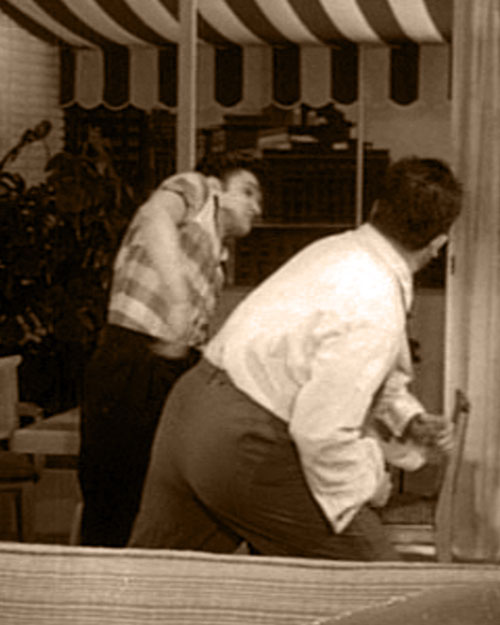
This being an Elvis movie, a fistfight of course ensues.

Much like in Loving You, released earlier in 1957, the fight concludes with the Elvis character punching his opponent into a jukebox. In Loving You, the Presley Maneuver causes the jukebox to turn on. In Jailhouse Rock, it turns the jukebox off.

Unlike most Elvis movies, though, this fight turns out to have lethal consequences. When the woman-beater dies, Vince is convicted of manslaughter and sentenced to 1 to 10 years in the state penitentiary. If only he had cashed his check at a bank instead of a bar.

Before we go much further, I want to jump back for a moment to the credits. I love the opening theme of Jailhouse Rock, an overture of sorts that includes instrumental renditions of portions of “Baby, I Don’t Care,” “Jailhouse Rock,” and “Young And Beautiful.”

This jazzy version of “Jailhouse Rock” is quite a treat. I played trumpet in our middle school jazz band, and when I first saw the movie on TV as a teenager back then, the “Jailhouse Rock” instrumental reminded me of the arrangement we were using for the same song.

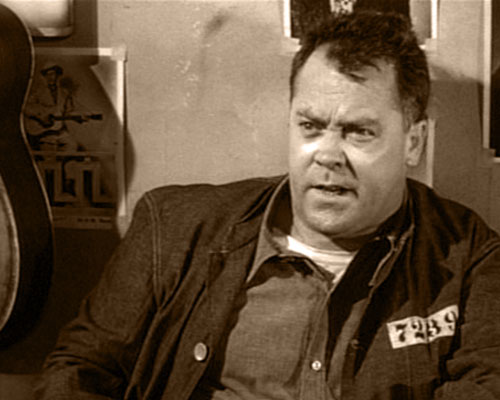
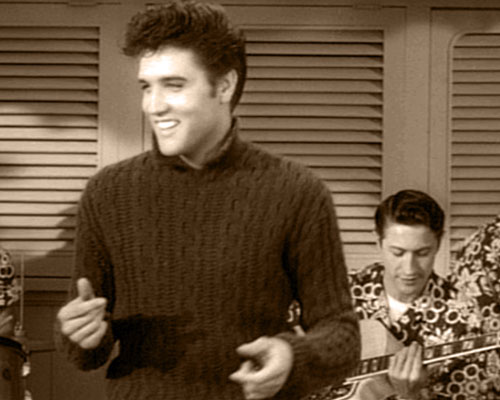
Mickey Shaughnessy is Hunk Houghton in 1957's JAILHOUSE ROCK (MGM)

Mickey Shaughnessy is Hunk Houghton in 1957’s JAILHOUSE ROCK (MGM)

Anyway, Vince shares a cell with Hunk Houghton (Mickey Shaughnessy), a washed-up country singer. Hunk is near the end of an 18-year term for robbing a bank. Despite some of the variances, Jailhouse Rock is still an Elvis movie, so Hunk of course has a guitar hanging on the prison cell wall that draws Vince’s attention. Though Hunk is annoyed at first, he softens and teaches Vince some chords. When Hunk tells him about his 10-year career, Vince says, “I never heard of anybody paying money to hear a guitar player” and Elvis seems barely able to hold a straight face delivering the line. He is, after all, the highest paid “guitar player” in the world by this point.

Elvis performs Vince’s early songs in Jailhouse Rock as intentionally flat and tentative, reflecting the character’s inexperience with singing. However, Hunk hears something in the young man and offers him a spot in Breath of a Nation, a nationwide television special he is producing for the warden. You see, a state inspection committee is coming to review prison conditions, and the warden wants the prisoners to put on a show as a smokescreen. Conditions at this prison must be pretty rough to require a national television special to cover things up.

Vince sings “I Want To Be Free” in his segment, and, unlike Hunk or anyone else, he receives a large bag full of fan mail from all over the country. Hunk sees to it that Vince does not learn of the mail, saving face with the mailroom workers by saying he made a mistake by giving Vince the best spot in the show. He soon offers Vince a partnership contract for the pair to perform together and split everything 50/50. Great shades of Colonel Parker!

“Alone, son, you’d be like a lamb in a pack of wolves,” Hunk tells him. Vince signs the contract, thinking that the deal is in his favor since Hunk is the established “star.”

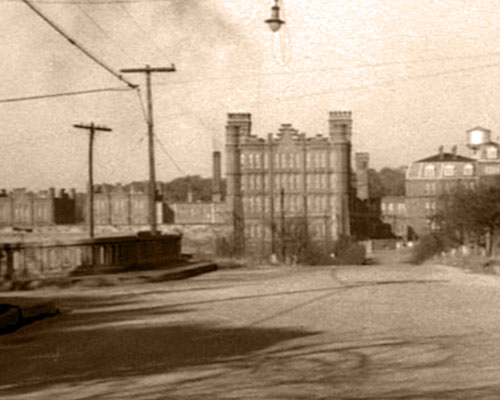
The State Pen in 1957's JAILHOUSE ROCK (MGM)

The State Pen in 1957’s JAILHOUSE ROCK (MGM)

Soon thereafter, a food fight turned riot breaks out in the prison over the poor conditions. Hunk tries to get Vince back to their cell, but a guard roughly handles Vince. Having apparently not yet learned his lesson from the barroom brawl, Vince swings his fists. He is caught and whipped. Outtakes of this scene surfaced on the 1993 VHS Elvis In Hollywood: The 50s. The original Jailhouse Rock film trailer also shows a clip that did not make it to the final film where Vince lunges at the warden when the guards untie his hands after the whipping.

Back in their cell, Hunk states that he tried to pay off the guards to prevent Vince’s whipping but he didn’t have enough money. He emphasizes the importance of having money to Vince and also teaches him his twisted version of the Golden Rule: “Do unto others as they would do unto you, only do it first.”

Hunk still has 10 months to go, but Vince is released from prison after serving 14 months – including 2 extra months for the riot incident. The warden gives Vince his remaining pay from the state. He also gives him the large bag of fan mail from the television special 8 months earlier. Vince realizes that Hunk helped keep the letters secret.

Vince buys a guitar from a pawnshop and goes to a bar where Hunk has arranged a job for him with an old contact. There, he meets Peggy Van Alden (Judy Tyler), who looks at some indicators inside of a jukebox and makes notes. He is curious what she is up to, but she is not impressed at all that Vince is a singer. However, she does say she’ll tell him more about her job if he buys her a fresh drink.

“Buy your own drink,” Vince says, wryly – no doubt remembering that the last time he bought a woman a drink in a bar he ended up in prison.

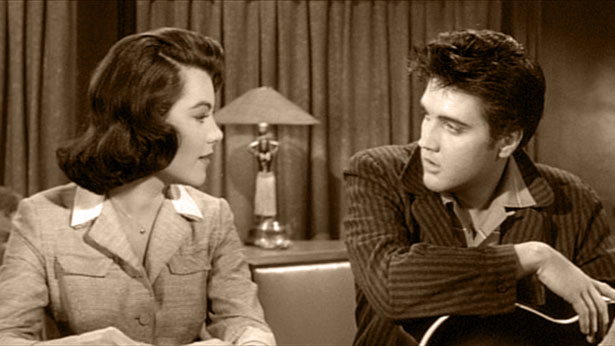
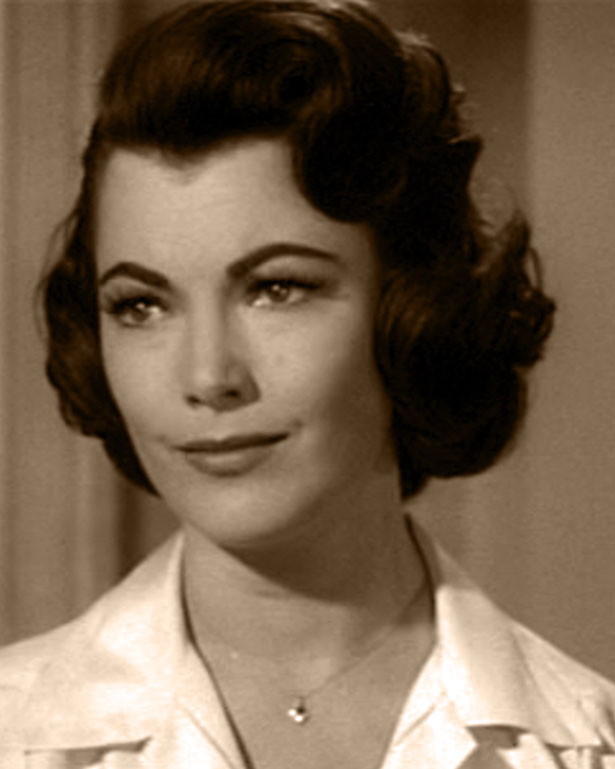
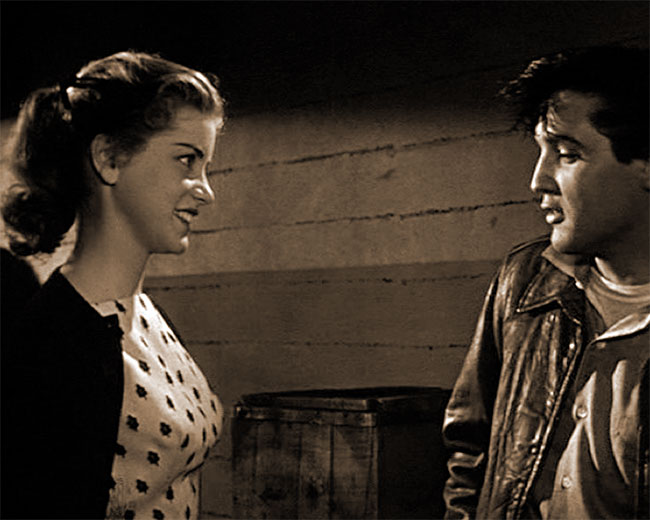
Judy Tyler is Peggy Van Alden and Elvis Presley is Vince Everett in 1957's JAILHOUSE ROCK (MGM)

Judy Tyler is Peggy Van Alden and Elvis Presley is Vince Everett in 1957’s JAILHOUSE ROCK (MGM)

“Is yours the approved manner with ladies in the backwoods?” Peggy fires back at him, but then goes on to explain that she is an “exploitation man” in the record business. “I work for Mickey Alba, you’ve heard of him?”

“Word sometimes gets to the backwoods,” says Vince. Alba (Don Burnett with vocals by Bill Lee) is a popular singer along the lines of Pat Boone.

Vince meets the bar’s owner, thinking he is going to be hired on as a singer. However, it turns out the job Hunk secured for him is as a barboy, essentially a bartender’s helper (“make setups, bring ice”). Vince is disappointed and forces his way on stage. Hey, it’s Scotty Moore, Bill Black, and DJ Fontana! Elvis’ real band! And Mike Stoller (composer of “Jailhouse Rock” and many other Elvis classics) on piano. Vince sings, “Young And Beautiful.” The owner actually seems to like the song, but a guy keeps laughing and carrying on in the audience, distracting both him and Vince.

Finally, Vince jumps from the stage and smashes his guitar into the obnoxious patron’s table. However, he refrains from killing him. That’s called character development.

Vince storms out, with Peggy trailing. “Hey, you forgot something,” she calls.

“What?”

“Me!”

So, before this re-watch, it had been over a decade since I last saw Jailhouse Rock. While I’ve always liked it, in fact it’s one of my favorite Elvis movies, I never really saw much chemistry between Vince and Peggy. Watching it through this time, though, I disagree with my past self. Now I see it.

Anyway, Peggy suggests Vince make a recording of himself to discover what’s wrong with his singing. This is not as simple a task as it is these days. Vince rents out a recording studio for $20 to make a demonstration recording. Peggy supplies a borrowed guitar and the background musicians. It’s Scotty, Bill, DJ, and Mike again! I guess Peggy knew them from the bar.

Vince records a faltering version of “Don’t Leave Me Now.” However, Peggy loosens him up a bit, and he also decides to ditch the guitar. He tries again, and they decide the resulting demo is good enough to shop around to the record labels. Jack Lease (Peter Adams), Peggy’s contact at Geneva Records, which is Mickey Alba’s label, seems unimpressed, but he decides to borrow the tape to play over the phone to someone else in New York later.

After it turns out to be a rejection anyway, Vince shows up disgruntled and late for a dinner meeting with Peggy. Even when she tells him the good news that she has gotten them a deal with another label, Deltona Records, he is still rude to her. He just wants to brood. “When the money starts rolling in, then I’ll say I’m happy,” he says.

After a celebratory steak dinner, they head out to meet Peggy’s parents, who are having a party. They seem to know all about Vince, including that he sold his first record that day. However, Peggy has not told them about his stay in the state penitentiary. He expects this information to shock them, but it does not phase them. Instead, they start the record player and a technical discussion begins about jazz.

Another guest tries to involve Vince. “I say atonality is just a passing phase in jazz music. What do you think, Mr. Everett?”

Vince’s response is classic and one that I’ve had to bite my tongue not to use in various situations over the years: “Lady, I don’t know what the hell you talking about.”

Judy Tyler is Peggy Van Alden and Elvis Presley is Vince Everett in 1957's JAILHOUSE ROCK (MGM)

Judy Tyler is Peggy Van Alden and Elvis Presley is Vince Everett in 1957’s JAILHOUSE ROCK (MGM)

He storms out, and Peggy chases after him again. She is angry and embarrassed by his behavior – noting they were only trying to draw him into the conversation.

“They can shove their conversation,” he retorts. “I’m not even sure they were talking English!”

When Vince decides to walk home after their bickering, Peggy says, “I think I’m gonna just hate you.”

“You ain’t gonna hate me. I ain’t gonna let you hate me.” He grabs and kisses her.

“How dare you think such cheap tactics would work with me,” she exclaims. He kisses her again.

“That ain’t tactics, honey. That’s just the beast in me.”

On paper, the scene sounds creepy, but it is extremely well-executed by both performers – one of the best acted scenes in any Elvis movie.

Vince half-heartedly apologizes to Peggy on the way into the record store on the release day of “Don’t Leave Me Now.”

The girl at the cash register states that the record is flying off the shelves. Vince asks for a half dozen copies. Peggy looks alarmed when she sees the stack of records, and Vince looks over one curiously, reading aloud, “‘Don’t Leave Me Now’ by Mickey Alba? Geneva Record Company.” It turns out that Lease, the Geneva executive, only borrowed the tape so Alba could copy Vince’s arrangement and style. Vince’s record is gone – somehow squashed by Geneva.

Vince makes an unscheduled visit to Lease. “You’re a thievin’ rat” Vince exclaims and goes to punch him. However, seeing as how no jukebox is available to land the body on, he just slaps him a couple of times instead. “Go back under your rock, you snake!”

Later, he speaks of his time in prison to Peggy: “On the inside, they’re cub scouts compared to Jack Lease. If you make something, they might steal it from you, but they’d be too honorable to say they made it themselves.”

Vince suggests they start their own record company, and they form Laurel Records – splitting things 60/40. “I’m the artist, don’t forget,” Vince explains when Peggy at first objects to holding only 40%. After Peggy agrees to the deal, they have the following conversation – illustrating how they are both on different pages.

“This really calls for a celebration, Vince.”

“Do you know a lawyer? We need a good one. . .”

“Do you know how to dance?” asks Peggy.

“. . .A guy with an eye for a buck. Do you know a lawyer?”

Peggy is disappointed. “Yeah, I know a lawyer. Mr. Shores. . .”

After Vince makes it clear he is only interested in money, they form the record company. Vince records “Treat Me Nice,” which becomes a big hit. Vince makes reservations at a fancy restaurant to celebrate with Peggy but is disappointed when she points out that he failed to make reservations with her. She has a date, and states, “Vince, I will not be subject to your beck and call.” Go, Peggy! That’s a bold stance in 1957, especially in the male-dominated world of Jailhouse Rock.

Despite emotional setbacks, Vince’s career continues to skyrocket, including appearances in Las Vegas. After Vince agrees to do an NBC television special, Peggy shows up to ask him to record more records. Vince is rude to her, but reaches out right as she is leaving, almost like he wants to apologize or say something else – but his heart is still too hardened to get the words out. As Peggy exits, Hunk returns – fresh out of prison and looking for his spot in the TV special.

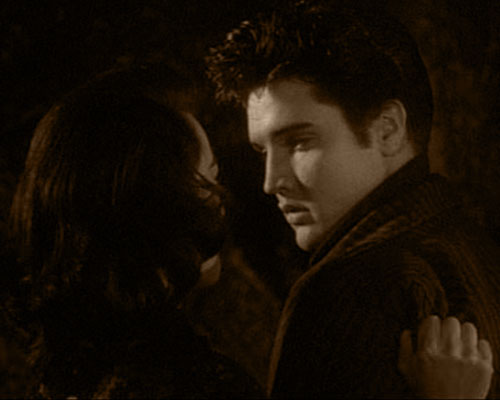
Elvis Presley is Vince Everett in 1957's JAILHOUSE ROCK (MGM)

Elvis Presley is Vince Everett in 1957’s JAILHOUSE ROCK (MGM)

The character of Vince is an unusual one in the Elvis cinematic universe. For most of the film, as many have pointed out over the years, Vince is a conceited jerk seemingly obsessed with money. Most of Elvis’ characters are likable guys cut from the same cloth. Vince is different, primarily due to his stay in prison, and offers a refreshing change of pace from the run-of-the-mill Elvis character. Vince should not be dismissed as a complete jerk, however. In several scenes, Elvis convincingly displays the emotional turmoil going on inside the man. He outwardly says he is all about the money, but you can also see that he loves Peggy and even Hunk.

In the music department, Jailhouse Rock is more than solid. The title song is a bonafide Elvis masterpiece. While the single version, one of Elvis’ greatest recordings, is used as the underlying track here in the film, the guitar riff opening of the song is unnecessarily hacked off. The screen version of the song is also hampered by awful overdubs of instruments and backing male vocals. Only the strength of Elvis’ underlying performance and the stellar production number save the tune. What were they thinking?

“Baby, I Don’t Care” and “Treat Me Nice” are also fantastic renditions. While “Young And Beautiful” is not quite up to the same par established by those three songs, it is still a lovely performance. “I Want To Be Free” and “Don’t Leave Me Now” serve their purposes well in the context of the film as does Mickey Shaughnessy’s “One More Day” — which is reminiscent of the classic folk song “Sixteen Tons.”

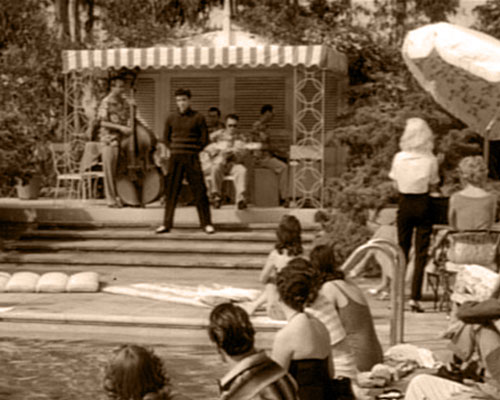
Vince Everett (Elvis Presley) sings "Baby, I Don't Care" at a pool party as a guitarist (Scotty Moore) plays along in the background in 1957's JAILHOUSE ROCK (MGM)

Vince Everett (Elvis Presley) sings “Baby, I Don’t Care” at a pool party as a guitarist (Scotty Moore) plays along in the background in 1957’s JAILHOUSE ROCK (MGM)

There is an oft-noted continuity error in Jailhouse Rock. During the “Baby, I Don’t Care” scene, guitarist Scotty Moore is shown wearing sunglasses in the wide shots but no eyewear in the closeups.

Vince Everett (Elvis Presley) sings "Baby, I Don't Care" at a pool party as a band (Bill Black, DJ Fontana, Scotty Moore, Mike Stoller) plays along in the background in 1957's JAILHOUSE ROCK (MGM)

Vince Everett (Elvis Presley) sings “Baby, I Don’t Care” at a pool party as a band (Bill Black, DJ Fontana, Scotty Moore, Mike Stoller) plays along in the background in 1957’s JAILHOUSE ROCK (MGM)

Another error is one I just noticed for the first time – a 1957 calendar is shown on the wall during a strikethrough sequence when Vince is in prison. When the calendar page is ripped down to show the next year, it is a 1957 calendar again. Talk about a life sentence! For the purposes of the Action File at the end of this post for Vince Everett, my conjecture is that the initial calendar was supposed to represent 1956 and that he was released in 1957.

One supposed error that is sometimes referenced with this film is that the prison ID number stamped on Vince’s shirt changes. Vince’s number is consistent during the penitentiary portions of the movie, however. Later, during the “Jailhouse Rock” production number, well after he has been released from actual prison, Vince wears a costume with a different number stamped on it. One was the character’s actual prison garb, the other was simply a costume. So calling it an error is . . . an error.

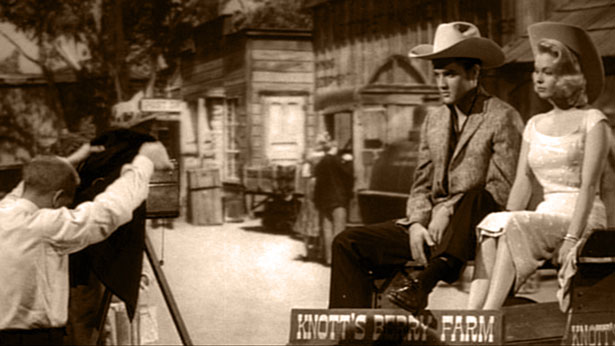
When Vince makes it to Hollywood, he takes his leading lady (played by Jennifer Holden) to Knott’s Berry Farm – a real amusement park in California that is still open to the public, including the “Old West” town represented in Jailhouse Rock.

A photographer prepares to take a souvenir picture of Vince Everett (Elvis Presley) and Sherry Wilson (Jennifer Holden) at Knott's Berry Farm in 1957's JAILHOUSE ROCK (MGM)

A photographer prepares to take a souvenir picture of Vince Everett (Elvis Presley) and Sherry Wilson (Jennifer Holden) at Knott’s Berry Farm in 1957’s JAILHOUSE ROCK (MGM)

Elvis released 33 movies during his lifetime, but Jailhouse Rock is one of only a small handful that is a serious contender as his very best. It was inducted into the US Library of Congress’ National Film Registry in 2004, the only Elvis movie to achieve this honor.

Just a few days after filming wrapped on Jailhouse Rock, actress Judy Tyler (Peggy) was killed at the age of 24 in a horrific car accident on July 3, 1957. Tyler’s husband and a passenger in another vehicle were also killed in the crash.

Elvis was devastated and according to many sources never watched the completed movie. Peter Guralnick & Ernst Jorgensen’s Elvis: Day By Day – The Definitive Record Of His Life And Music, however, notes that Elvis watched a special screening of the film with his parents on October 2, 1957. The book provides no further details, nor does Guralnick’s Last Train To Memphis: The Rise Of Elvis Presley, but perhaps Elvis was unable to finish the screening — thus validating both versions of the story.

Judy Tyler is Peggy Van Alden in 1957's JAILHOUSE ROCK (MGM)

Judy Tyler is Peggy Van Alden in 1957’s JAILHOUSE ROCK (MGM)

Jaihouse Rock was Tyler’s second and final movie. Her first, Bop Girl Goes Calypso, hit theaters only a couple of weeks after her death. While Jailhouse Rock, released in November 1957, carries no dedication to Tyler – I am not even sure that kind of thing was done back then – there is a moment in the closing scene during “Young And Beautiful” where the edit seems to linger on her more than it perhaps otherwise would have. In the magic of the movies, she will indeed remain forever young and beautiful.


Boldly Go

Multiple uncredited cast members from Jailhouse Rock went on to play roles in Star Trek.

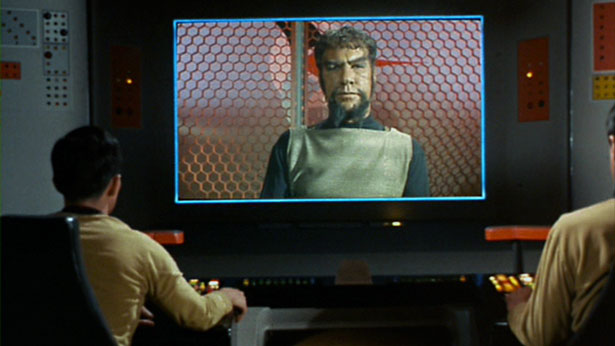
K.L. Smith appears in the opening bar scene in Jailhouse Rock and appears as a Klingon in the Star Trek episode “Elaan Of Troyius” in 1968. Eagle-eyed readers will note that I also referenced Smith in a previous “Boldly Go” installment for his appearance in 1964’s Roustabout. Speaking of eagle eyes, thank you once again to Elvis movie superfan Gary Wells for pointing out where Smith shows up in Jailhouse Rock for me.

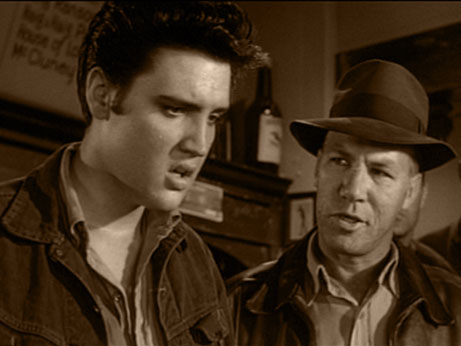
Elvis Presley and K.L. Smith in 1957's JAILHOUSE ROCK (MGM)

Elvis Presley and K.L. Smith in 1957’s JAILHOUSE ROCK (MGM)

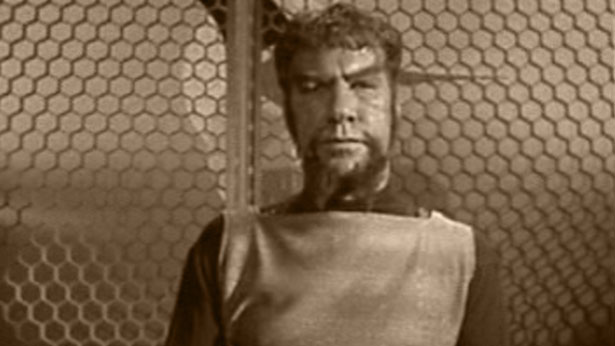
K.L. Smith is a Klingon captain in the 1968 STAR TREK episode "Elaan Of Troyius" (Paramount)

K.L. Smith is a Klingon captain in the 1968 STAR TREK episode “Elaan Of Troyius” (Paramount)

Other cross-overs include:

  • Buzz Barbee [Jailhouse Rock: Apartment party guest | Star Trek: Ambassador Fox’s aide in “A Taste Of Armageddon” (1967) and maiden voyage official in Star Trek Generations (1994)]
  • Albert Cavens [Jailhouse Rock: Nightclub patron | Star Trek: Klingon crewmember in “Day Of The Dove” (1968) and fop 2 in “All Our Yesterdays” (1969)]
  • Noble “Kid” Chissell [Jailhouse Rock: Convict | Star Trek: Server in “The City On The Edge Of Forever” (1967)]
  • Richard Dial [Jailhouse Rock: Minor role | Star Trek: Sam in “The Devil In The Dark” (1967), Kaplan in “The Apple” (1967), security guard in “And The Children Shall Lead” (1968) and Fabrini guard in “For The World Is Hollow And I Have Touched The Sky” (1968)]
  • Shep Houghton [Jailhouse Rock: Nightclub patron | Star Trek: Cameraman in “Bread And Circuses” (1968)]
  • Arthur Tovey [Jailhouse Rock: Record shop owner in montage | Star Trek: Vulcan citizen in Star Trek: The Motion Picture (1979)]

Elvis Presley is Vince Everett and Mickey Shaughnessy is Hunk Houghton in 1957's JAILHOUSE ROCK (MGM)

Elvis Presley is Vince Everett and Mickey Shaughnessy is Hunk Houghton in 1957’s JAILHOUSE ROCK (MGM)

Jailhouse Rock Tote Board

  • Punches: 23
  • Songs: 15
  • Kisses: 12
  • Storm-Outs: 4
  • Slaps: 2

Songs In Jailhouse Rock

  1. Mickey Shaughnessy: “One More Day” (1957) [performed twice], written by Sid Tepper & Roy C. Bennett
  2. Elvis Presley: “Young And Beautiful” (1957) [performed 3 times], written by Abner Silver & Aaron Schroeder
  3. Elvis Presley: “I Want To Be Free” (1957), written by Jerry Leiber & Mike Stoller
  4. “Don’t Leave Me Now” (1957) [performed three times by Elvis Presley and once by Bill Lee], written by Aaron Schroeder & Ben Weisman
  5. Elvis Presley: “Treat Me Nice” (1957) [performed three times], written by Jerry Leiber & Mike Stoller
  6. Elvis Presley: “Jailhouse Rock” (1957), written by Jerry Leiber & Mike Stoller
  7. Elvis Presley: “Baby, I Don’t Care” (1957), written by Jerry Leiber & Mike Stoller

The Mystery Train’s Jailhouse Rock Scorecard

  • Story: 8 (out of 10)
  • Acting: 10
  • Entertainment Value: 8
  • Songs: 9
  • Overall: 9 (Must See)

Jailhouse Rock Around The Web


Click image for larger, color version


“But to you who are willing to listen, I say, love your enemies! Do good to those who hate you. Bless those who curse you. Pray for those who hurt you. If someone slaps you on one cheek, offer the other cheek also. If someone demands your coat, offer your shirt also. Give to anyone who asks; and when things are taken away from you, don’t try to get them back. Do to others as you would like them to do to you.”
Luke 6:27-31 NLT
Elvis Movies: ROUSTABOUT

Earlier this year, I began a rewatch of Elvis Presley’s movies. Today’s focus is one that I have not seen as often as some of the others – Elvis’ 16th movie, Roustabout.


“Elvis Presley as a Roving, Restless, Reckless, Roustabout”

Roustabout (Paramount)
Wide Release: November 11, 1964 (United States)
Starring: Elvis Presley, Barbara Stanwyck, Joan Freeman
Screenplay By: Anthony Lawrence and Allan Weiss
Story By: Allan Weiss
Music Score By: Joseph J. Lilley
Produced By: Hal B. Wallis
Directed By: John Rich
Running Time: 101 Minutes


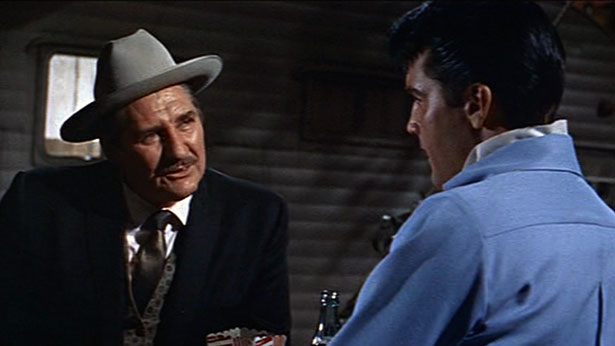
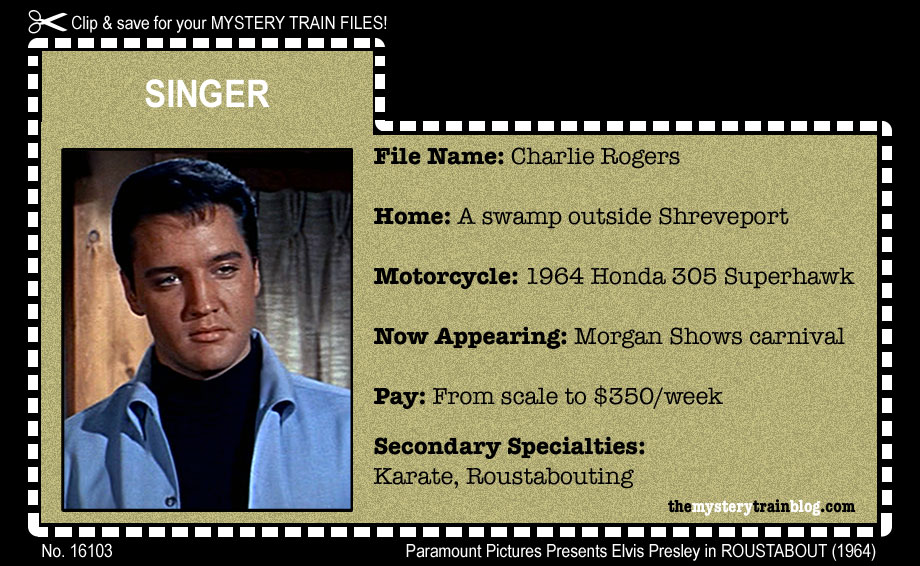
Elvis Presley is Charlie Rogers in 1964’s ROUSTABOUT (Paramount)

Elvis Presley is Charlie Rogers in 1964’s ROUSTABOUT (Paramount)

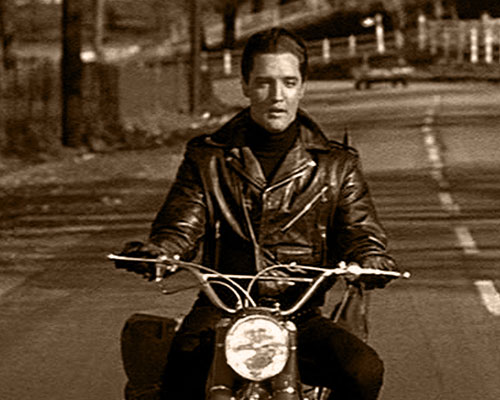
In Roustabout, Elvis Presley stars as Charlie Rogers, a singer who ends up working at a carnival when Joe (Leif Erickson), a grouchy old carny, runs him off the road, damaging his motorcycle and destroying his guitar. Ah, Elvis Movies, you gotta love ’em.

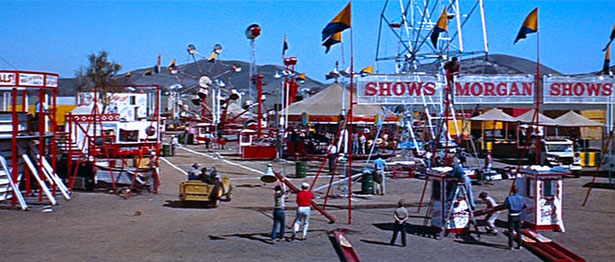
The Morgan Shows carnival in 1964's ROUSTABOUT (Paramount)

The Morgan Shows carnival in 1964’s ROUSTABOUT (Paramount)

Despite the inane setup, Roustabout is pretty good! When Maggie (Barbara Stanwyck), the owner of the carnival, pays for a new guitar and repairs to his motorcycle, Charlie stays on as a roustabout until his bike is ready in order to spend more time with Cathy (Joan Freeman), Joe’s daughter. Joe, of course, is not amused by this turn of events.

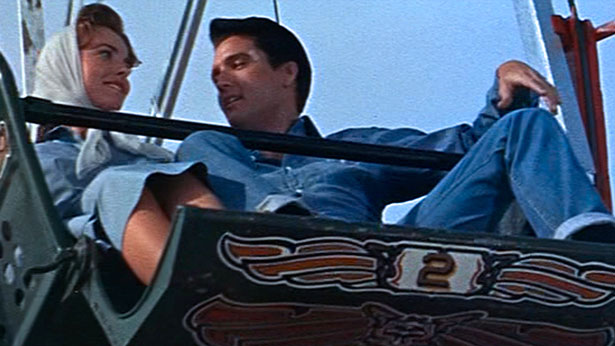
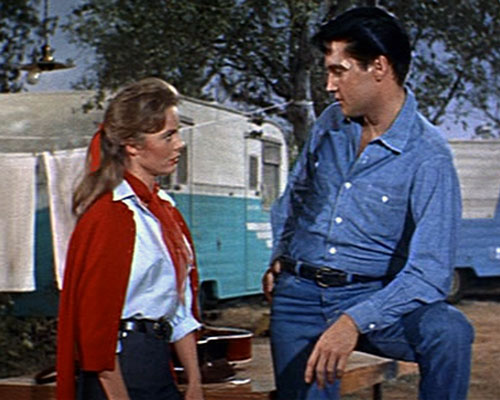
Joan Freeman is Cathy and Elvis Presley is Charlie in 1964's ROUSTABOUT (Paramount)

Joan Freeman is Cathy and Elvis Presley is Charlie in 1964’s ROUSTABOUT (Paramount)

Outside of this movie, “roustabout” is not a term I have encountered. It essentially means an unskilled laborer. It seems to be used most often today in the oil rigging industry. In this case, Charlie does odd jobs at the carnival, such as helping to set up rides or even filling in at a candy apple stand.

When attempting to attract players for a game that Cathy is promoting, Charlie winds up singing and drawing a crowd. His roustabout days are soon behind him, for Maggie signs him on as a singer instead.

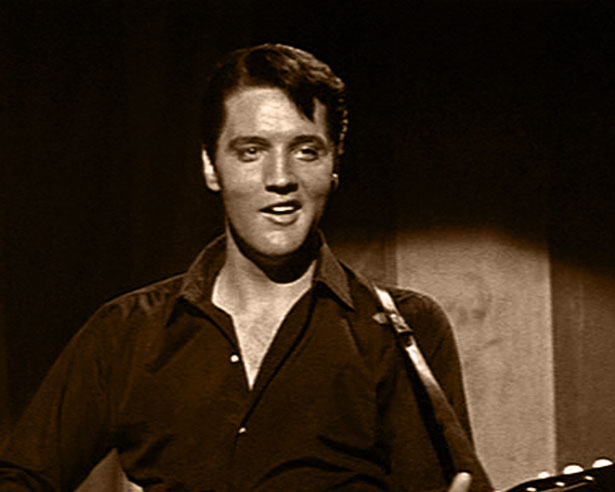
Charlie Rogers (Elvis Presley) begins to draw a crowd for Morgan Shows when the carnival signs him on as a singer in 1964's ROUSTABOUT (Paramount)

Charlie Rogers (Elvis Presley) begins to draw a crowd for Morgan Shows when the carnival signs him on as a singer in 1964’s ROUSTABOUT (Paramount)

It turns out that Maggie has a habit of bailing Joe out of trouble, and her carnival is facing financial ruin because of it. Charlie brings in the teen money, and the situation begins to improve until things come to a head between him and Joe, causing Charlie to switch to a rival carnival.

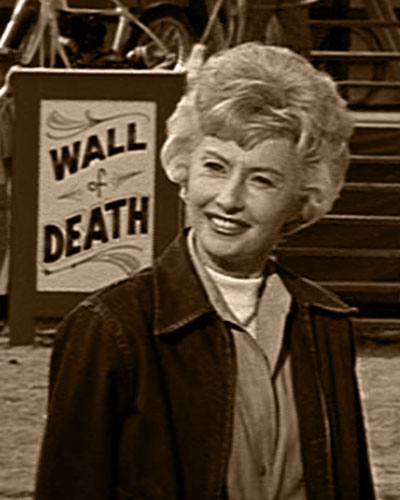
Barbara Stanwyck is Maggie Morgan in 1964's ROUSTABOUT (Paramount)

Barbara Stanwyck is Maggie Morgan in 1964’s ROUSTABOUT (Paramount)

Elvis does a fine job acting in certain parts of Roustabout. A scene between him and Barbara Stanwyck is my favorite of the film:

Charlie: “You collect strays, Maggie. And you got one in Joe. Why don’t you stop recruiting? They don’t make a family.”
Maggie: “What would you know about a family?”
Charlie: “Nothing!”

After Maggie walks away and can no longer hear him, Charlie repeats the line again, softly, sadly: “Nothing…” It is a quick moment, but certainly one of Elvis’ best in his 1960s movies.

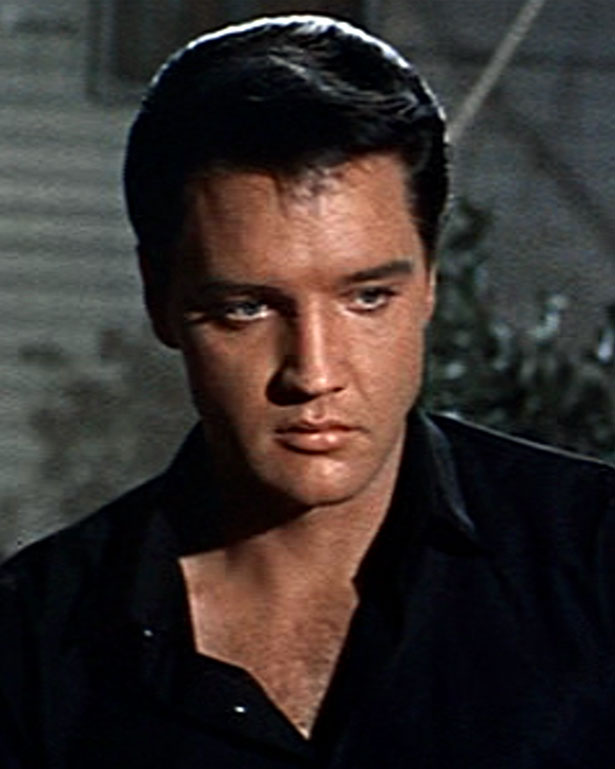
Elvis Presley is Charlie Rogers in 1964's ROUSTABOUT (Paramount)

Elvis Presley is Charlie Rogers in 1964’s ROUSTABOUT (Paramount)

The rebellious Charlie is reminiscent of some of Elvis’ earliest film roles. For instance, Charlie remarks early on, “Look, if you’re not tough in this world, you get squashed, honey.” These words could have been taken right out of Vince Everett’s mouth in Jailhouse Rock (1957). Charlie also has traces of Deke Rivers from Loving You (1957) and even a little bit of Danny Fisher from King Creole (1958). At 29 during production of Roustabout, however, Elvis does seem a little old at times to be playing a rebel.

Even some of Elvis’ mannerisms in Roustabout remind me of his 1950s presence, otherwise left out of many of his 1960s movies. Elvis’ performance of “One Track Heart” in Roustabout, for instance, is quite reminiscent of his 1956 “Blue Suede Shoes” screen test, except with a less exciting song. Later on, during “Hard Knocks,” he does his more typical 1960s movie hand-clapping thing, though.

Elvis’ natural flair for comedy comes into play a few times in Roustabout. One example:

Cathy: “You must get your face slapped a lot.”
Charlie: “About 50–50.”

Pat Buttram does a terrific job playing the villainous Harry, the owner of the big-time carnival that is looking to put Maggie out of business. Another great couple of lines:

Charlie: “Not everybody is as big a crook as you are, Harry.”
Harry: “Well, everybody tries.”

Pat Buttram is Harry and Elvis Presley is Charlie in 1964's ROUSTABOUT (Paramount)

Pat Buttram is Harry and Elvis Presley is Charlie in 1964’s ROUSTABOUT (Paramount)

Charlie’s show goes over well, and Harry asks him to do an encore. “Nah,” says Charlie. “Always leave ’em wanting more.” This phrase, of course, was the philosophy of a real-life carny huckster, “Colonel” Tom Parker, when it came to managing Elvis. Parker also served as technical advisor on Roustabout and most of Elvis’ other films.

I try not to review soundtrack albums in this series, focusing any discussion of songs instead on how they appear in the movies themselves. However, I do want to point out in this case that Roustabout has one of the worst soundtrack albums – with nary a hit or highlight in sight. I was surprised, then, that just about all of the songs work perfectly in the context of the actual film. Perhaps based on the fun of seeing the movie, fans propelled the otherwise lackluster Roustabout soundtrack to Billboard‘s number one album position in January 1965. It would be over eight years before Elvis scored another number one album (1973’s Aloha From Hawaii via Satellite).

Joan Freeman is Cathy and Elvis Presley is Charlie in 1964’s ROUSTABOUT (Paramount)

Elvis Presley in a production number taped for 1968's ELVIS television special (NBC)

Elvis Presley in a production number taped for 1968’s ELVIS television special (NBC)

Roustabout obviously had an influence on some of the production numbers created for the 1968 ELVIS television special, even down to costuming. The denim outfit that Elvis wears at times in the movie is almost identical to one he wears during portions of the special, for instance. Roustabout is also one of the few times we see Elvis in leather prior to the special. The barker lines on the ELVIS-TV Special soundtrack album might even have been directly lifted from recordings made for this movie. The performance of “Little Egypt” in the ’68 special is better than the cringey one in Roustabout, incidentally, though the outdated song is a detriment to both productions anyway.

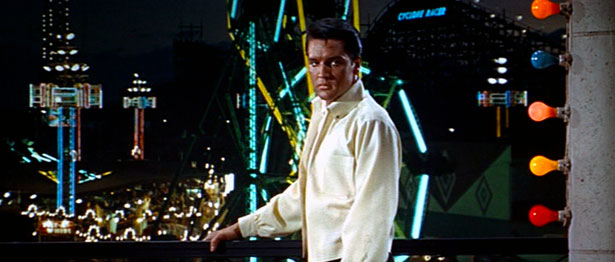
Charlie Rogers (Elvis Presley) at Harry’s carnival in 1964’s ROUSTABOUT (Paramount)


Boldly Go

Multiple uncredited cast members from Roustabout went on to play roles in Star Trek.

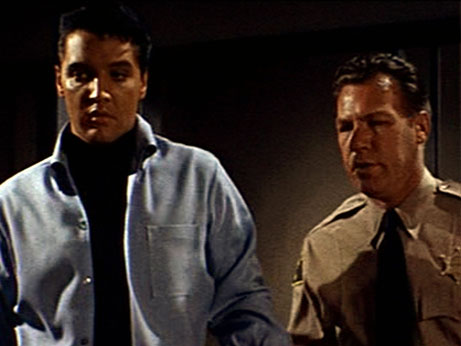
K.L. Smith plays the Sheriff in Roustabout and appears as a Klingon in the Star Trek episode “Elaan Of Troyius” in 1968.

Elvis Presley is Charlie and K.L. Smith is the Sheriff in 1964's ROUSTABOUT (Paramount)

Elvis Presley is Charlie and K.L. Smith is the Sheriff in 1964’s ROUSTABOUT (Paramount)

K.L. Smith is a Klingon captain in the 1968 STAR TREK episode "Elaan Of Troyius" (Paramount)

K.L. Smith is a Klingon captain in the 1968 STAR TREK episode “Elaan Of Troyius” (Paramount)

Other cross-overs include:

  • Dick Cherney [Roustabout: Carnival patron | Star Trek: A council member in “A Taste Of Armageddon” (1967) and a passerby in “The City On The Edge Of Forever” (1967)]
  • Carey Foster [Roustabout: College girl | Star Trek: An Enterprise crewmember in “The Squire Of Gothos” (1967), “This Side Of Paradise” (1967), and “The Alternative Factor” (1967)]
  • Teri Garr [Roustabout: Carnival dancer | Star Trek: Roberta Lincoln in “Assignment: Earth” (1968)]
  • Marianna Hill [Roustabout: Viola | Star Trek: Helen Noel in “Dagger Of The Mind” (1966)]
  • Jesse Wayne [Roustabout: Carnival worker | Star Trek: Chekov stunt double in “The Tholian Web” (1968)]

Some of these players will show up again in other Elvis movies not yet covered, giving them another chance to be featured here on The Mystery Train Elvis Blog.

An honorable mention goes to Elvis’ pal Lance LeGault, who appears as a barker in Roustabout and plays Captain K’Temoc in the Star Trek: The Next Generation episode “The Emissary” in 1989.


Elvis Presley takes a pummeling as Charlie Rogers in 1964's ROUSTABOUT (Paramount)

Elvis Presley takes a pummeling as Charlie Rogers in 1964’s ROUSTABOUT (Paramount)

Roustabout Tote Board

    • Songs: 12
    • Punches: 11
    • Kisses: 8
    • Karate Chops: 4
    • Slaps: 2
    • Motorcycle Crashes: 2

Songs In Roustabout

  1. “Roustabout” (1964), written by Bill Giant, Bernie Baum, & Florence Kay
  2. “Poison Ivy League” (1964), written by Bill Giant, Bernie Baum, & Florence Kay
  3. “Wheels On My Heels” (1964), written by Sid Tepper & Roy C. Bennett
  4. “It’s A Wonderful World” (1964), written by Sid Tepper & Roy C. Bennett
  5. “It’s Carnival Time” (1964) [performed twice], written by Ben Weisman & Sid Wayne
  6. “Carny Town” (1964), written by Fred Wise & Randy Starr
  7. “One Track Heart” (1964), written by Bill Giant, Bernie Baum, & Florence Kay
  8. “Hard Knocks” (1964), written by Joy Byers
  9. “Little Egypt” (1964), written by Jerry Leiber & Mike Stoller
  10. “Big Love, Big Heartache” (1964), written by Dolores Fuller, Lee Morris, & Sonny Hendrix
  11. “There’s A Brand New Day On The Horizon” (1964), written by Joy Byers

The Mystery Train’s Roustabout Scorecard

  • Story: 6 (out of 10)
  • Acting: 8
  • Fun: 8
  • Songs: 6
  • Overall: 7 (Worth Watching)

Roustabout Around The Web


Click image for larger, full-color version


“Since Jacob was in love with Rachel, he told her father, ‘I’ll work for you for seven years if you’ll give me Rachel, your younger daughter, as my wife.’ ‘Agreed!’ Laban replied. ‘I’d rather give her to you than to anyone else. Stay and work with me.’ So Jacob worked seven years to pay for Rachel. But his love for her was so strong that it seemed to him but a few days.”
Genesis 29:18-20

King Creole: The Making Of The Movie

Elvis Presley, 1958

Elvis Presley in King Creole, 1958

King Creole was based on the 1952 novel A Stone For Danny Fisher by Harold Robbins. The novel’s protagonist is a boxer in New York, which the movie adapted into a singer in New Orleans to better suit audience expectations of its star, Elvis Presley. Elvis read the novel as part of his preparations for the role of Danny Fisher.

Producer Hal Wallis had been trying to get the film version of A Stone For Danny Fisher off the ground since 1955, long before Elvis was attached to the project. At that time, A Stone For Danny Fisher was also playing as an off-Broadway production.

James Dean was even rumored to have been in the running for the movie’s lead at one point. This was Wallis’ second Elvis movie. He would go on to produce nine Elvis movies in all.

Hal Wallis: “Michael Curtiz directed the film and he has a very sharp but romantic instinct. Walter Matthau made an excellent heavy and we had marvelous locations in New Orleans” (1).

Controversy swirled around King Creole before shooting even began. In late 1957, Elvis received his draft notice ordering him into the US Army as of January 1958.

With production slated to begin in Hollywood that same month, Paramount requested a deferment from the Memphis draft board, citing $300,000 it had already pumped into the movie during pre-production. Milton Bowers of the draft board replied that a deferment might be possible under the circumstances, but that Elvis would have to be the one to request it.

On Christmas Eve, 1957, Elvis wrote a letter requesting extra time before reporting to the Army in order to make King Creole. He completed the letter by wishing a “Merry Christmas” to the draft board members. Bowers and the draft board indeed granted his extension request, but soon received heat from other organizations – including the national chapter of the American Legion – calling for the immediate induction of Elvis.

Milton Bowers: “You know what made me angry about the entire thing is that he would have automatically gotten the extension if he hadn’t been Elvis Presley the superstar” (2).

Elvis Presley: “I’m glad they were nice enough to let me make this picture because I think it will be the best one I’ve made” (3).

On January 10, 1958, just two days after celebrating his 23rd birthday, Elvis departed Memphis on a train for Los Angeles. He brought along several friends, including Alan Fortas.

Alan Fortas: “Every town we passed through, no matter what time of morning or night, the whole station was jam-packed. These people knew as soon as Elvis finished this movie, he was going in the Army, so most of them considered it the last time to see him. […] People knew and they were lined up along the tracks all the way across America” (4).

Elvis arrived in Hollywood on January 13 and reported for pre-production. During the week, he also began work on the soundtrack at Radio Recorders.

During pre-production, the movie was titled Sing, You Sinners. This title was changed to Danny, and finally King Creole, based on the strength of the rock ‘n’ roll tune Jerry Leiber and Mike Stoller wrote for the soundtrack.

Filming began on January 20. Many of Elvis’ early scenes were with Jan Shepard, who played his sister, Mimi.

Jan Shepard: “[W]e worked together alone for about a week, because we did the opening of the show. He was […] just a lot of fun and buoyant, not guarded at all. There was a five-and-dime store on our set, and in the morning I would find earrings and little bracelets, little five-and-dime stuff on my dressing room table. I used to call him the last of the big-time spenders!” (5)

Because of his character’s name, Elvis often sang “Danny Boy” on set. He would return to the folk song many times over the years, including a 1959 home recording captured while he was stationed in Germany (available on the posthumous release A Golden Celebration). He formally recorded the song in 1976 at Graceland for the album From Elvis Presley Boulevard, Memphis, Tennessee. An organist played the song at the beginning of Elvis’ funeral in 1977.

Dolores Hart appeared as Nellie, one of Danny’s love interests. She had previously appeared with Elvis in 1957’s Loving You, also a Hal Wallis production.

Elvis Presley: “[King Creole] was quite a challenge for me because it was written for a more experienced actor” (6).

Dolores Hart: “Elvis, no matter what anyone says, deserves credit as a person of talent. There is no reason he shouldn’t soar to the heights the kings [of the screen] occupy now” (7).

Jan Shepard: “[Elvis] was very concentrated, very focused on playing Danny. For a kid coming in and just beginning his career he had a great sense of timing; there was great honesty in his acting. He was a very good listener, and he just became the young boy […]. Just like in his music, he really got involved in his acting” (5).

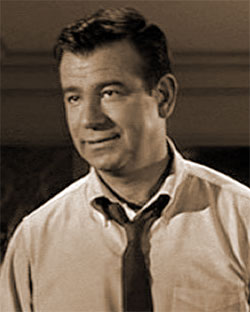
Walter Matthau played Fisher’s antagonist, Maxie Fields. It was his sixth film.

Walter Matthau, 1958

Walter Matthau in King Creole

Walter Matthau: “I almost hesitate, I creep up to the sentence, [Elvis] was an instinctive actor. Because that is almost a derogation of his talents. That’s saying, ‘Well, you know, he’s just a dumb animal who does it well by instinct.’ No, he was quite bright, too. He was very intelligent. Also, he was intelligent enough to understand what a character was and how to play the character simply by being himself through the means of the story” (8).

Michael Curtiz’s directing credits extended back to 1912. In addition to 1942’s Casablanca, for which he won an Oscar, his other work, from among nearly 200 films, included the 1937 original version of Kid Galahad, Yankee Doodle Dandy (1942), and White Christmas (1954). Curtiz was attached to King Creole before it was transformed into an Elvis movie.

Jan Shepard: “Curtiz said he thought Elvis was going to be a very conceited boy, but when he started working with him, he said, ‘No, this is a lovely boy, and he’s going to be a wonderful actor'” (5).

Walter Matthau: “Michael Curtiz used to call him Elvy and he’d call me Valty. He’d say, ‘Now Elvy and Valty, come here, now Valty, this is not Academy Award scene. Don’t act so much. You are high-price actor. Make believe you are low-price actor. Let Elvy act.’ But Elvy didn’t overact. He was not a punk. He was very elegant, sedate . . . refined and sophisticated” (8).

Jan Shepard: “You just didn’t have a lot of fooling around with Curtiz […]. But no matter what Curtiz would ask of Elvis, he would say, ‘Okay, you’re the boss'” (5).

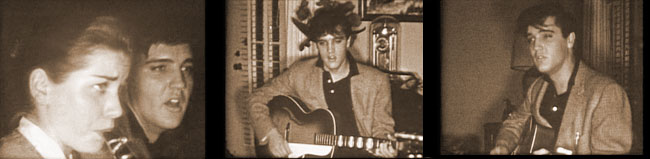
Elvis at a party in 1958

Elvis performing at Jan Shepard’s birthday party on February 22, 1958. Also pictured is Dolores Hart on clarinet.

Hart threw a birthday party for Shepard on February 22. Elvis showed up with a stuffed tiger that he named “Danny Boy.” His birthday gift for Shepard was a movie camera, definitely not from the five-and-dime store. He also played guitar and sang at the party.

King Creole was the first Elvis movie to include location shooting. On March 1, the film’s cast and crew headed for New Orleans by train. At this point, Red West, Elvis’ friend since his high school days, and actor Nick Adams, who Elvis had befriended in 1956, joined up with the rest of his entourage for the trip.

Carolyn Jones played Ronnie, Danny’s other love interest. She brought her husband, actor Aaron Spelling, along for the train ride to New Orleans. The couple would divorce in 1964. Spelling later went on to produce dozens of television series, including Charlie’s Angels and Beverly Hills 90210.

Tom Parker, Elvis’ manager, expressed concerns about security on the location shoot to Wallis. Wallis assured Parker that they could handle it. After all, he had worked with Dean Martin and Jerry Lewis at the peak of the duo’s popularity.

Alan Fortas: “There were thousands of people. Hal Wallis couldn’t believe it. […] I never saw so many people in my life. They declared it Elvis Presley Day and let the kids out of school and it took us two hours to get back to the hotel no matter where we were, even from across the street” (9).

In the French Quarter, the car carrying Elvis was almost overturned by the massive crowd.

Carolyn Jones: “[Elvis] had to ride in an old sedan, lying on the floor in the back, so his fans couldn’t mob him” (10).

Elvis took over the tenth floor of the Roosevelt Hotel, one block from where they were filming in the French Quarter. Hotel security was so tight that no one was admitted to the tenth floor. As a joke, Hart, Jones, and Adams armed themselves with toy guns and held up the elevator operator to force their way to Elvis’ floor. The elevator operator was not in on the joke and was apparently still shaken the next day.

Alan Fortas: “[W]e got on the elevator and we said, ‘Tenth floor, please.’ The elevator operator said, ‘No, sir, I can’t stop on the tenth floor. Mr. Presley is up there and we just can’t stop.’ Elvis was on the elevator with us and he said, ‘Yeah, I know. I’m Elvis.’ The elevator operator looked straight at him and said, ‘I’m sorry, sir, I can’t stop on that floor for anybody.’ We had to go to the eleventh floor and walk down” (9).

The film’s climax was shot at a house on stilts at Lake Pontchartrain. Elvis and Jones shared scenes there.

Carolyn Jones: “[Elvis] was always asking a lot of questions. God, he was young! I didn’t think anyone could be that young. He was always talking about his folks and about the house [Graceland] he’d just bought them” (8).

When onlookers at Lake Pontchartrain became unmanageable, Elvis had to escape through the back of the house to a motorboat that whisked him away.

Though Memphis was tantalizingly close, the group had to return by train to Hollywood to be released from King Creole. Elvis attended a wrap party on March 12, and then he and his friends were on yet another train. Destination: Memphis.

Alan Fortas: “We’d just sit and talk [on the train], try to write songs, try to sing. You know, just typical ol’ boys. But it got to us by the time we got to Dallas. We couldn’t take it any longer. So we got off that train and rented some Cadillacs and drove the rest of the way home” (11).

Elvis arrived home on March 14 and was inducted into the Army on March 24.

Paramount released King Creole throughout the United States on July 2. It peaked at #5 on the Variety charts. At this time, Private Presley was still stationed at Fort Hood in Texas.

Hal Wallis: “Now, although I don’t have all the figures, I believe that one of the least successful of Elvis’s films was King Creole. But that was my favorite!” (1)

Dolores Hart and Elvis Presley in King Creole

Dolores Hart and Elvis in King Creole

Dolores Hart: “Elvis is a young man with an enormous capacity of love . . . but I don’t think he has found his happiness. I think he is terribly lonely” (12).

According to longtime friend Sonny West, if Elvis had his way, he would have reunited with director Michael Curtiz when Elvis was cast in a remake of Kid Galahad, which filmed in late 1961 (13). This time, Elvis actually played a boxer, albeit a singing one. Despite Elvis’ campaign, Phil Karlson received the directing nod instead. Curtiz passed away in April 1962 at the age of 74.

Elvis later reunited with Jan Shepard in 1966’s Paradise, Hawaiian Style, in which she played Betty Kohana. Shepard had maintained a friendship with Hart after King Creole. By this time, the quality of Elvis’ movies had declined. While King Creole is a contender for Elvis’ best movie, Paradise, Hawaiian Style is a contender for his worst.

Jan Shepard: “One time [Elvis] asked about Dolores Hart, and we had a little bit of a conversation. In the quiet moments, he was still very sweet. When we reminisced about Creole, he said, ‘Honey, that was my favorite picture'” (14).


Bibliography

  • Careless Love: The Unmaking Of Elvis Presley by Peter Guralnick, Little, Brown And Company, Boston, 1999.
  • Down At The End Of Lonely Street: The Life And Death Of Elvis Presley by Peter Harry Brown and Pat H. Broeske, Dutton, New York, 1997.
  • ELVIS: The Biography by Jerry Hopkins, Plexus, London, 2007.
  • Elvis Commemorative Edition, compiled by Bill DeNight, Sharon Fox, and Ger Rijff, Publications International, Lincolnwood, IL, 2002.
  • Elvis Day By Day: The Definitive Record Of His Life And Music by Peter Guralnick and Ernst Jorgensen, Ballantine Books, New York, 1999.
  • The Elvis Encyclopedia by Adam Victor, Overlook Duckworth, New York, 2008.
  • Elvis: The Great Performances, dir. Andrew Solt, perf. Elvis Presley, 1989, DVD, SOFA, 2011.
  • Elvis: His Life From A To Z by Fred L. Worth and Steve D. Tamerius, Wings Books, New York, 1990.
  • Elvis In Private, edited by Peter Haining, St. Martin’s Press, New York, 1987.
  • Elvis: Still Taking Care Of Business by Sonny West with Marshall Terrill, Triumph Books, Chicago, 2007.
  • Good Rockin’ Tonight: Twenty Years On The Road And On The Town With Elvis by Joe Esposito and Elena Oumano, Avon Books, New York, 1994.
  • Internet Movie Database, accessed March 23, 2013.
  • King Creole, dir. Michael Curtiz, perf. Elvis Presley, Carolyn Jones, and Walter Matthau, 1958, DVD, Paramount, 2000.
  • Last Train To Memphis: The Rise Of Elvis Presley by Peter Guralnick, Little, Brown And Company, Boston, 1994.
  • Viva Las Elvis: Celebrating The King, compiled by Peggy Thompson, Arsenal Pulp Press, Vancouver, 1994.

References

(1) Elvis In Private, p. 92
(2) Down At The End Of Lonely Street, p. 137
(3) Last Train To Memphis, p. 446
(4) ELVIS: The Biography, p. 129
(5) Last Train To Memphis, p. 450
(6) Last Train To Memphis, p. 456
(7) Elvis Commemorative Edition, p. 112
(8) Last Train To Memphis, p. 451
(9) ELVIS: The Biography, p. 130
(10) Down At The End Of Lonely Street, p. 139
(11) ELVIS: The Biography, p. 131
(12) Elvis: His Life From A To Z, p. 85
(13) Elvis: Still Taking Care Of Business, p. 120
(14) Careless Love, p. 209


My grandmother worked in the ticket booth of a theater for decades. I dedicate this series of movie posts to her, who would have turned 103 this month. I often remember her when I watch movies.

For Trivia Fans Only: Thomas wins Elvis Trivialities #14

Y’all had plenty of chances, but Thomas proved yet again to be an unstoppable force when it comes to Elvis trivia by winning Elvis Trivialities #14.

Thomas’ trophy shelf of bragging rights must be getting really crowded, for this marks his seventh victory. He also maintains a spot of honor among The Mystery Train’s Night Riders.

And the answer is…

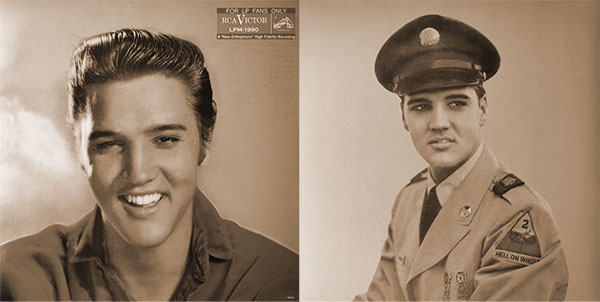
For LP Fans Only was the first Elvis Presley album to receive a Grammy nomination.

For LP Fans Only was nominated for “Best Album Cover” of 1959. The honoree of this art direction nomination was none other than Tom Parker, Elvis’ manager.

Front and back covers of For LP Fans Only

Front and back covers of For LP Fans Only

I have no idea if this contributed to its nomination, but For LP Fans Only is distinctive among Elvis releases in that it was the first of only two RCA albums released during his lifetime that did not include his name on the front or back covers (the second was On Stage).

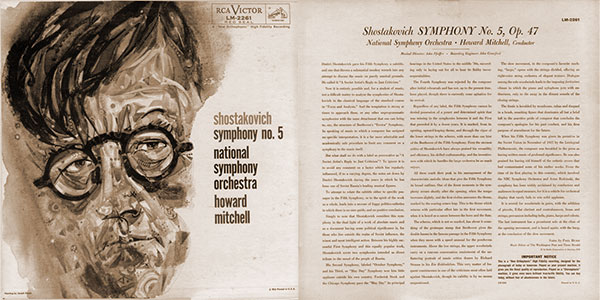
For LP Fans Only lost out on the Grammy to Shostakovich: Symphony No. 5, also an RCA release.

Front and back covers of Shostakovich Symphony No. 5

Front and back covers of Shostakovich Symphony No. 5

* * *

Do you think you have enough Elvis power to beat Thomas next time? Subscribe to The Mystery Train using the feature below this post. Then, you’ll be notified whenever there is a new post – because you never know when the next trivia challenge might come along.


The Mystery Train’s Night Riders

  • February 22, 2013: Thomas (13:36)
  • January 11, 2013: George Millar (4:19)
  • December 23, 2012: Thomas (0:36)
  • October 9, 2012: David (14:38) | Honorable Mention: John (22:06)
  • February 4, 2012: Thomas (13:52)
  • February 3, 2012: Thomas (2:18)
  • December 21, 2011: Wellsy (2:37)
  • October 31, 2011: Thomas (17:32)
  • October 1, 2011: Jimmy Cool (1:01)
  • September 9, 2011: Steve Brogdon (0:17) <— Record time
  • August 6, 2011: Thomas (2:26)
  • July 9, 2011: Thomas (5:26)
  • June 23, 2011: Fred Wolfe (0:18)
  • June 22, 2011: Ty stumps the train (no winner)

Elvis 1967: Season’s Greetings From Elvis

As part of The Mystery Train’s year-long celebration of 1967, below is a repost of a feature I wrote last year about Elvis’ first Christmas special.


While Elvis’ 1968 Christmas special is legendary, nearly lost to time is Elvis’ Christmas special from the previous year. His 1967 Christmas special no doubt inspired the original concept of the ELVIS (’68 Comeback) special.

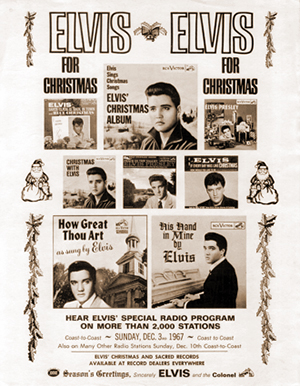
Exactly 44 years ago today, on Sunday, December 3, 1967, a special called Season’s Greetings From Elvis aired on over 2,000 stations across the United States. Why is it mostly forgotten? Season’s Greetings From Elvis was a radio special.

Season's Greetings From Elvis flyer (1967)

Season's Greetings From Elvis flyer (1967)

The special contained no new numbers by Elvis, but instead featured previously released Christmas and religious music. The songs in the half-hour show included:

  • Here Comes Santa Claus (1957)
  • Blue Christmas (1957)
  • O Little Town Of Bethlehem (1957)
  • Silent Night (1957)
  • I’ll Be Home For Christmas (1957)
  • I Believe (1957)
  • If Every Day Was Like Christmas (1966)
  • How Great Thou Art (1966)
  • His Hand In Mine (1960)
  • I’ll Be Home For Christmas (1957)

The special’s finale, “I’ll Be Home For Christmas,” contained a new voice-over by Elvis: “Thank you for listening. I’d like to wish you a merry Christmas and a wonderful New Year.” Oddly, this 1967 audio was later placed on top of “Silent Night” on 1982’s Memories Of Christmas and re-released on 1994’s If Every Day Was Like Christmas. However, the beginning music of “I’ll Be Home For Christmas” and not “Silent Night” can still be heard in the background on those releases as Elvis speaks the lines.

Exactly one year later, on December 3, 1968, the more famous Elvis Christmas special aired for the first time. Colonel Tom Parker’s original concept for the ’68 special sounded like little more than a TV version of Season’s Greetings From Elvis. The eventual show turned out much different, of course, and changed everything.


Image Source
Thank you to Holger Bock at Rare Elvis for providing the original image of an RCA promotional flyer for the 1967 radio special. Please do not reproduce this image without obtaining permission of Holger at Rare Elvis.

Research Sources

  • Careless Love: The Unmaking Of Elvis Presley by Peter Guralnick, Little, Brown And Company, Boston, 1999 (page 282).
  • Season’s Greetings From Elvis, Elvis In Norway, 2010.
  • Elvis: Word For Word by Jerry Osborne, Harmony Books, New York, 2000 (page 204).
  • Elvis: The Biography by Jerry Hopkins, Plexus, London, 2007 (page 205).
  • ELVIS: His Life From A To Z by Fred Worth and Steve Tamerius, Wings Books, New York, 1992 (page 560).

Throughout 2011, The Mystery Train has been commemorating the 44th anniversary of 1967. Find out why here. Surf in again next week for the exciting conclusion to this series.

Experience Elvis at full throttle in Young Man With The Big Beat (UPDATE: Individual songs available for purchase on Amazon)

Available today from Sony’s RCA/Legacy label, the five-CD boxed set Young Man With The Big Beat features a ton of 1956 material. For die-hard fans, the crown jewel of the set is the first-ever release of Elvis’ December 15, 1956, concert that marked the singer’s final appearance on the Louisiana Hayride radio program.

Also released today is the Sony Legacy edition of his debut album, Elvis Presley, which is paired with his second album, Elvis.

Note that this set is also available for purchase in digital format (audio only) at a substantially reduced price for the full set.

UPDATE: Possibly along with others, Amazon US is offering the opportunity to buy individual tracks in digital format. This means fans who only want the Hayride material do not have to purchase the entire set. Thank you to Sony for this consideration.

Below is a full break-down of the Young Man With The Big Beat set, adapted from Sony’s press release and marketing material.

Disc 1: Studio Recordings

17 tracks recorded in New York, Nashville, and Hollywood, starting with the 12 songs on the debut LP, Elvis Presley (‘1254’), followed by non-LP single A-sides and B-sides, and EP tracks.

  1. Blue Suede Shoes
  2. I’m Counting On You
  3. I Got A Woman
  4. One-Sided Love Affair
  5. I Love You Because
  6. Just Because
  7. Tutti Frutti
  8. Trying To Get To You
  9. I’m Gonna Sit Right Down And Cry (Over You)
  10. I’ll Never Let You Go (Little Darlin’)
  11. Blue Moon
  12. Money Honey
  13. Heartbreak Hotel
  14. I Was The One
  15. My Baby Left Me
  16. Lawdy, Miss Clawdy
  17. Shake, Rattle And Roll

Disc 2: Studio Recordings

22 tracks recorded in New York, Nashville, and Memphis, starting with the 12 songs on the second LP, Elvis (‘1382’), followed by non-LP single A-sides and B-sides, and EP tracks.

  1. Rip It Up
  2. Love Me
  3. When My Blue Moon Turns To Gold Again
  4. Long Tall Sally
  5. First In Line
  6. Paralyzed
  7. So Glad You’re Mine
  8. Old Shep
  9. Ready Teddy
  10. Anyplace Is Paradise
  11. How’s The World Treating You
  12. How Do You Think I Feel
  13. I Want You, I Need You, I Love You
  14. Hound Dog
  15. Don’t Be Cruel
  16. Any Way You Want Me (That’s How I Will Be)
  17. Too Much
  18. Playing For Keeps
  19. Love Me Tender
  20. Let Me
  21. Poor Boy
  22. We’re Gonna Move

Disc 3: Live Recordings

Rare remasters of shows at the Frontier Hotel in Las Vegas (four songs); Little Rock, Arkansas (seven songs); and a recently discovered, previously unreleased concert in Shreveport, Louisiana, in December (ten songs).

Recorded Live At The Venus Room, Frontier Hotel, Las Vegas, May 6

1.  Heartbreak Hotel
2.  Long Tall Sally
3.  Blue Suede Shoes
4.  Money Honey

Recorded Live At The Robinson Memorial Auditorium, Little Rock, Arkansas, May 16

5.  Heartbreak Hotel
6.  Long Tall Sally
7.  I Was The One
8.  Money Honey
9.  I Got A Woman
10. Blue Suede Shoes
11. Hound Dog

Recorded Live At The Hirsch Youth Center, Louisiana Fairgrounds, Shreveport, Louisiana, December 15

12. Heartbreak Hotel
13. Long Tall Sally
14. I Was The One
15. Love Me Tender
16. Don’t Be Cruel
17. Love Me
18. I Got A Woman
19. When My Blue Moon Turns To Gold Again
20. Paralyzed
21. Hound Dog

Disc 4: Outtakes

Four outtakes from the first historic RCA session in January (“I Got A Woman,” “Heartbreak Hotel,” “I’m Counting On You,” “I Was The One”), segueing into the complete session of February 3rd (11 takes of “Lawdy, Miss Clawdy” and 12 takes of “Shake, Rattle And Roll”); plus the first of the interviews – the complete Warwick Hotel (NYC) interview by Robert Brown in March.

  1. I Got A Woman – take unknown
  2. Heartbreak Hotel – take 06
  3. I’m Counting On You – take 13
  4. I Was The One – take 02
  5. Lawdy, Miss Clawdy – take 01
  6. Lawdy, Miss Clawdy – take 03
  7. Lawdy, Miss Clawdy – take 04
  8. Lawdy, Miss Clawdy – take 05
  9. Lawdy, Miss Clawdy – take 06
  10. Lawdy, Miss Clawdy – takes 07, 08, 09
  11. Lawdy, Miss Clawdy – take 10 (master)
  12. Lawdy, Miss Clawdy – takes 11, 12
  13. Shake, Rattle And Roll – takes 01, 02
  14. Shake, Rattle And Roll – takes 03, 05, 06, 07
  15. Shake, Rattle And Roll – take 08
  16. Shake, Rattle And Roll – takes 09, 10, 11, 12, 12 (undubbed master)
  17. The Complete Warwick Hotel Interview

Disc 5: Interviews

The Paul Wilder interview, plus his interviews with Colonel Parker and Oscar Davis; plus two segments of Elvis’ rarely heard candid monologue, “The Truth About Me,” and two advertisements for RCA Victrolas.

  1. The Complete TV Guide Presents Elvis interview
  2. Colonel Parker Interview
  3. The Truth About Me
  4. The Truth About Me Interview
  5. Victrola Radio ad 1
  6. Victrola Radio ad 2

Book

The focal point of the book, spread across its 80 pages, will be a unique, meticulously-researched, day-by-day chronology of Elvis’ iconic year, including every concert, every recording date, every television appearance, personal events in Elvis’ life, and much more. A dazzling photo array of memorabilia will illustrate each day and entry. Concert ticket stubs, RCA memoranda, letters from fans, postcards from Elvis to his family, tour itineraries, magazine covers and articles, trade charts, fan club relics, RCA publicity photos, concert photos, candid photos, and more will be a feast for the eyes and the imagination as 1956 unfolds.

Other Items

Will also include five rare 8×10 photographs, five original-size poster replicas, and a replica concert ticket stub.

Sony releasing 5-CD boxed set celebrating 1956 – includes December 15 Louisiana Hayride concert

Today’s post was originally scheduled to be the conclusion of my coverage of Elvis Sings Guitar Man. Sony made a huge Elvis announcement today, though, so I’m shelving that piece for now.

Arriving on September 27 from Sony’s RCA/Legacy label, Young Man With The Big Beat features a plethora of 1956 material. For die-hard fans, the crown jewel of the 5-CD boxed set is the first-ever release of Elvis’ December 15, 1956, concert that marked the singer’s final appearance on the Louisiana Hayride radio program.

Only a portion of one song, “Hound Dog,” has been released from this show in the past. Based on that one song alone, I can tell you that we’re all in for one exciting ride.

The set can be pre-ordered at http://www.elvis.com/1956. From the press release, here is some additional information on a pre-order bonus:

Pre-order customers will also receive an exclusive replica vinyl 7” of Elvis’ first 45rpm EP for RCA Records. Sharing the same striking cover art as Elvis’ debut album, the EP features “Blue Suede Shoes,” “Tutti Frutti,” “I Got A Woman” and “Just Because.” This vinyl single is only available through this special website offer, and it will ship upon payment for the box set.”

Released the same day will be the Sony Legacy edition of Elvis Presley, which will be paired with Elvis.

Below is a full break-down of the Young Man With The Big Beat set, adapted from the press release and marketing material.

Disc 1: Studio Recordings

17 tracks recorded in New York, Nashville, and Hollywood, starting with the 12 songs on the debut LP, Elvis Presley (‘1254’), followed by non-LP single A-sides and B-sides, and EP tracks.

  1. Blue Suede Shoes
  2. I’m Counting On You
  3. I Got A Woman
  4. One-Sided Love Affair
  5. I Love You Because
  6. Just Because
  7. Tutti Frutti
  8. Trying To Get To You
  9. I’m Gonna Sit Right Down And Cry (Over You)
  10. I’ll Never Let You Go (Little Darlin’)
  11. Blue Moon
  12. Money Honey
  13. Heartbreak Hotel
  14. I Was The One
  15. My Baby Left Me
  16. Lawdy, Miss Clawdy
  17. Shake, Rattle And Roll

Disc 2: Studio Recordings

22 tracks recorded in New York, Nashville, and Memphis, starting with the 12 songs on the second LP, Elvis (‘1382’), followed by non-LP single A-sides and B-sides, and EP tracks.

  1. Rip It Up
  2. Love Me
  3. When My Blue Moon Turns To Gold Again
  4. Long Tall Sally
  5. First In Line
  6. Paralyzed
  7. So Glad You’re Mine
  8. Old Shep
  9. Ready Teddy
  10. Anyplace Is Paradise
  11. How’s The World Treating You
  12. How Do You Think I Feel
  13. I Want You, I Need You, I Love You
  14. Hound Dog
  15. Don’t Be Cruel
  16. Any Way You Want Me (That’s How I Will Be)
  17. Too Much
  18. Playing For Keeps
  19. Love Me Tender
  20. Let Me
  21. Poor Boy
  22. We’re Gonna Move

Disc 3: Live Recordings

Rare remasters of shows at the Frontier Hotel in Las Vegas (four songs); Little Rock, Arkansas (seven songs); and a recently discovered, previously unreleased concert in Shreveport, Louisiana, in December (ten songs).

Recorded Live At The Venus Room, Frontier Hotel, Las Vegas, May 6

 1.  Heartbreak Hotel
 2.  Long Tall Sally
 3.  Blue Suede Shoes
 4.  Money Honey

Recorded Live At The Robinson Memorial Auditorium, Little Rock, Arkansas, May 16

 5.  Heartbreak Hotel
 6.  Long Tall Sally
 7.  I Was The One
 8.  Money Honey
 9.  I Got A Woman
10. Blue Suede Shoes
11. Hound Dog

Recorded Live At The Hirsch Youth Center, Louisiana Fairgrounds, Shreveport, Louisiana, December 15

12. Heartbreak Hotel
13. Long Tall Sally
14. I Was The One
15. Love Me Tender
16. Don’t Be Cruel
17. Love Me
18. I Got A Woman
19. When My Blue Moon Turns To Gold Again
20. Paralyzed
21. Hound Dog

Disc 4: Outtakes

Four outtakes from the first historic RCA session in January (“I Got A Woman,” “Heartbreak Hotel,” “I’m Counting On You,” “I Was The One”), segueing into the complete session of February 3rd (11 takes of “Lawdy, Miss Clawdy” and 12 takes of “Shake, Rattle And Roll”); plus the first of the interviews – the complete Warwick Hotel (NYC) interview by Robert Brown in March.

  1. I Got A Woman – take unknown
  2. Heartbreak Hotel – take 06
  3. I’m Counting On You – take 13
  4. I Was The One – take 02
  5. Lawdy, Miss Clawdy – take 01
  6. Lawdy, Miss Clawdy – take 03
  7. Lawdy, Miss Clawdy – take 04
  8. Lawdy, Miss Clawdy – take 05
  9. Lawdy, Miss Clawdy – take 06
  10. Lawdy, Miss Clawdy – takes 07, 08, 09
  11. Lawdy, Miss Clawdy – take 10 (master)
  12. Lawdy, Miss Clawdy – takes 11, 12
  13. Shake, Rattle And Roll – takes 01, 02
  14. Shake, Rattle And Roll – takes 03, 05, 06, 07
  15. Shake, Rattle And Roll – take 08
  16. Shake, Rattle And Roll – takes 09, 10, 11, 12, 12 (undubbed master)
  17. The Complete Warwick Hotel Interview

Disc 5: Interviews

The Paul Wilder interview, plus his interviews with Colonel Parker and Oscar Davis; plus two segments of Elvis’ rarely heard candid monologue, “The Truth About Me,” and two advertisements for RCA Victrolas.

  1. The Complete TV Guide Presents Elvis interview
  2. Colonel Parker Interview
  3. The Truth About Me
  4. The Truth About Me Interview
  5. Victrola Radio ad 1
  6. Victrola Radio ad 2

Book

The focal point of the book, spread across its 80 pages, will be a unique, meticulously-researched, day-by-day chronology of Elvis’ iconic year, including every concert, every recording date, every television appearance, personal events in Elvis’ life, and much more. A dazzling photo array of memorabilia will illustrate each day and entry. Concert ticket stubs, RCA memoranda, letters from fans, postcards from Elvis to his family, tour itineraries, magazine covers and articles, trade charts, fan club relics, RCA publicity photos, concert photos, candid photos, and more will be a feast for the eyes and the imagination as 1956 unfolds.

Other Items

Will also include five rare 8×10 photographs, five original-size poster replicas, and a replica concert ticket stub.

* * *

I’ve lamented the seemingly constant focus on 1956 in the past. However, Elvis’ achievements in that year certainly cannot be overstated. This looks like a spectacular release, and the best part is that it’s on the mainstream label. This will certainly capture the attention of music critics and fans alike.

It wouldn’t be an Elvis boxed set without the inclusion of those four songs recorded live in Las Vegas on May 6, 1956, now would it? Those same performances, tracks 1-4 on Disc 3, have appeared on the following Elvis boxed sets:

  • Elvis Aron Presley
  • ELVIS: The King of Rock ‘n’ Roll – The Complete 50s Masters
  • Live In Las Vegas
The early to mid 1990s focused on decade boxed sets, while the late 1990s to early 2000s focused on outtake boxed sets. Will the 2010s become the decade of year boxed sets? Will success for this set mean that we’ll get a box for another year in the future? Who knows, but I can tell you one thing: Since 1977, there has never been a better time to be an Elvis Presley fan.